
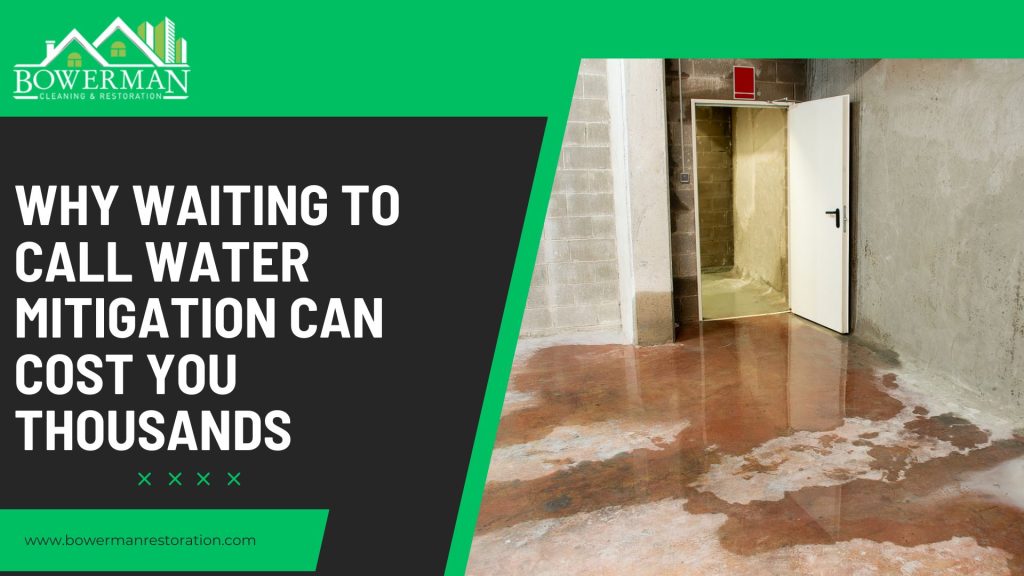
It starts small. A drip under the sink, a wet patch on the ceiling, or maybe a puddle in the basement after a storm. You look at it and think, “I can handle this with a few towels and a fan.” It is a natural reaction. No one wants to make that panicked phone call or deal with insurance if they do not have to. But water is deceptive. While you are drying the surface, the water is migrating. It is wicking up your drywall, soaking into the insulation, and seeping into the subfloor. By the time you realize the towels aren’t working, the clock has already run out on a simple fix.
Knowing exactly when to call water mitigation services is the single most important factor in limiting the damage to your home. In the restoration industry, we operate by the “Golden Hours”—the first 24 to 48 hours after a leak. During this window, materials can often be saved. After this window, they often have to be destroyed. This guide will walk you through the critical decision points, helping you distinguish between a DIY cleanup and a professional emergency.
Key Takeaways
- The 24-Hour Threshold: Mold can begin to grow on damp surfaces within 24 to 48 hours. Calling before this window closes is vital.
- The “Touch” Test is Flawed: Just because a surface feels dry to the touch doesn’t mean the structure underneath is dry.
- Category Matters: Any water containing sewage or outside contaminants (Category 3) requires immediate professional intervention, regardless of the volume.
- Insurance Implications: Delaying the call can be interpreted as negligence, potentially jeopardizing your insurance claim coverage.
- Hidden Costs: The cost of mitigation is significantly lower than the cost of reconstruction required if rot sets in.
Overview
Water damage operates on a strict timeline. What starts as a “Class 1” loss (part of a room affected) can rapidly escalate into a “Class 4” loss (deep structural saturation) if left untreated. When to call water mitigation isn’t just a question of volume; it is a question of time and material density. This article explores the science behind water migration, the immediate risks of delay, and the specific signs that indicate you need professional help right now. We will also debunk the myth that you can effectively dry structural elements with consumer-grade fans. By the end, you will have a clear checklist to protect your property and your wallet.
The Science of the “Golden Hours”
Why do restoration professionals harp on the first 24 hours? It isn’t a sales tactic; it’s biology. Mold spores are microscopic and omnipresent. They are in the air right now. However, they need moisture and an organic food source (like paper on drywall or wood studs) to colonize.

Once water hits these materials, the clock starts.
- 0–24 Hours: Water spreads laterally and vertically. Materials swell. Furniture stains carpets. The “musty smell” is not yet present.
- 24–48 Hours: Mold spores begin to germinate. Drywall swells and disintegrates. Metal surfaces start to corrode.
- 48 Hours+: Microbial growth becomes visible. The water may degrade in category (becoming “grey” or “black” water due to bacterial growth).
If you act within the first day, we can often dry the carpet and drywall in place. If you wait until day three, we usually have to cut the drywall out and throw the carpet away. The difference in cost between drying a wall and rebuilding a wall is massive.
The Volume Myth: It’s Not Just About Standing Water
A common misconception is that you only need to call for help if you are ankle-deep in water. This is dangerous thinking. Some of the most expensive claims we see come from slow leaks or small puddles that were ignored.
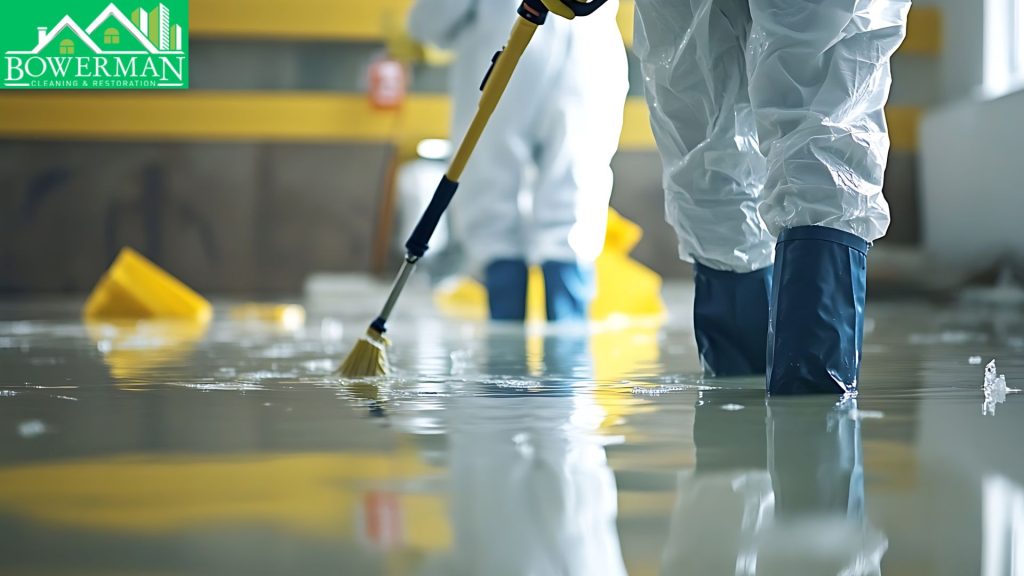
Water follows the path of least resistance. If you spill five gallons of water on a hardwood floor and only mop up four gallons, that remaining gallon doesn’t just evaporate. It seeps into the grooves and gets trapped between the wood and the subfloor. This trapped moisture causes “cupping” (where the edges of the planks rise) and eventually rot.
You must evaluate the situation, not just the puddle. If the water has touched porous materials—drywall, insulation, particle board cabinets—it is absorbed instantly. You cannot squeeze that water out with a rag. This is a clear signal of when to call water mitigation professionals who have the specialized equipment to pull that moisture back out.
Category of Water: The Instant Trigger
Not all water is created equal. The industry classifies water into three categories, and knowing them simplifies your decision-making process.
Category 1: Clean Water
This comes from a broken supply line, a overflowing sink, or a rainwater leak. If you catch this immediately, you might be able to handle a very small area yourself. But if it sits, it degrades into Category 2.
Category 2: Grey Water
This water has some level of contamination. Examples include dishwasher discharge, washing machine overflows, or toilet water with urine but no feces. This water can cause illness. You should not be handling this without protective gear. Call a professional.
Category 3: Black Water
This is grossly unsanitary. Sewage backups, rising floodwaters from rivers, or toilet overflow with feces fall here. Do not attempt to clean this yourself. The health risks include Hepatitis, E. Coli, and Salmonella. If you see this type of water, the question of when to call water mitigation is answered immediately: Now.
The “Smell” Test: Trust Your Nose
Sometimes you don’t see the water at all. You just smell it. That distinct, earthy, musty odor is the off-gassing of microbial growth. It means the water damage has likely been happening for days or weeks behind a wall or under a floor.
If you smell mustiness but can’t find the source, you have a hidden leak. Waiting to “see if it goes away” allows the mold to spread through your HVAC system, contaminating the entire house. Professionals use thermal imaging cameras and moisture meters to pinpoint the source without tearing your house apart blindly. This diagnostic capability is a key reason to bring in experts early.
DIY vs. Professional Equipment
Many homeowners own a shop vac and a box fan. While these are great tools for a garage spill, they are wholly inadequate for structural drying.
The Physics of Drying
Drying requires a balance of airflow, temperature, and dehumidification.
- Air Movers: We use high-velocity axial fans that drive air into the structure, stripping the boundary layer of moisture off surfaces.
- LGR Dehumidifiers: A standard home dehumidifier removes about 30-50 pints of water per day. Our Low Grain Refrigerant (LGR) units remove vast amounts more and, crucially, can lower the humidity to levels that force moisture out of dense materials like hardwood and concrete.
If you use fans without dehumidification, you are just blowing wet air around. You might dry the surface of the drywall, but the insulation behind it remains soaked. This “surface drying” creates a false sense of security while the studs rot from the inside out.
Insurance Implications of Waiting
Your homeowners insurance policy likely has a clause regarding your “duties after a loss.” One of these duties is to take reasonable steps to mitigate further damage.
If a pipe bursts and you wait a week to call a professional, the insurance adjuster may deny the claim for the mold removal, arguing that it was preventable negligence. They might cover the initial water damage but refuse to pay for the secondary damage caused by the delay.
Calling a professional immediately creates a paper trail. We document the time of arrival, the moisture readings, and the steps taken to stop the damage. This documentation is invaluable when negotiating with your insurance carrier. It proves you acted responsibly and promptly.
The Hidden Dangers of “Wait and See”
We often hear, “I’ll give it another day to dry out.” This “wait and see” approach is the most expensive decision you can make.
Structural Integrity
Water weakens glue. Laminate floors delaminate. Particle board cabinets crumble. Drywall becomes mushy and loses its ability to hold screws. If you wait, you aren’t just paying for drying; you are paying for demolition and reconstruction.
Electrical Safety
Water and electricity are a fatal combination. Water can travel along conduit lines and pool in light fixtures or outlets. A professional team knows how to safely isolate power to the affected areas before beginning work. Attempting to vacuum water near submerged outlets is a risk no homeowner should take.
Checklist: When to Call Immediately
If you check any of the boxes below, stop what you are doing and call a professional.
- [ ] The water has been standing for more than 24 hours.
- [ ] The water is from a sewage backup or outside flood (Category 3).
- [ ] You can smell a musty odor.
- [ ] The water has affected more than one room.
- [ ] The water has soaked into drywall, cabinetry, or hardwood floors.
- [ ] You see visible mold growth.
- [ ] You feel overwhelmed or unsure if you can clean it 100%.
Why Professional Inspection is Worth It
Even if you think you cleaned it up, a professional inspection can offer peace of mind. Many reputable restoration companies offer free or low-cost initial assessments. We can come in with a moisture meter and verify if your DIY efforts were successful.
If the meter beeps red on a wall that looks dry, you know you have a problem. Catching that trapped moisture now might cost a few hundred dollars in equipment rental. Catching it in six months when the mold shows through the paint will cost thousands in remediation.
How We Help You Recover
At Bowerman Cleaning & Restoration, we understand that making the call is stressful. You are inviting strangers into your home during a crisis. But our goal is to minimize the disruption.
Bowerman Cleaning & Restoration
Locations Serving You:
- White Plains: 7 Intervale Street, White Plains, NY, 10606 (+1 844 269 3762)
- Nyack: 99 Main St, Nyack, NY, 10960 (+1 844 269 3762)
- Stamford: 6 Landmark Square 4th Floor, Stamford, CT, 06901 (+1 844 269 3762)
We bring more than just equipment; we bring certainty to a chaotic situation. We offer:
- 24/7 Service: Disaster doesn’t track business hours, and neither do we.
- Free Inspections: We will tell you the truth about whether you need professional help.
- 50+ Years Experience: We have seen every scenario and know the exact protocols to save your home.
- Family Owned / Operated: We are accountable to our neighbors, not a corporate board.
- Eco-Friendly Products: We use safe, botanical-based antimicrobials.
- Locals / Local Expertise: We understand the regional climate and how it affects drying.
- Certified Excellence: IICRC certified and licensed in mold remediation.
- Home Improvement License: If reconstruction is needed, we handle that too.
- Proven Track Record: Our Google reviews speak to our commitment to customer care.
Common Questions About when to call water mitigation
Q: Can I wait until morning to call if a pipe bursts at night?
A: Ideally, no. Water spreads every minute it sits. However, if you can turn off the main water shut-off valve to stop the flow, you stop the source. But the standing water is still absorbing into your floors. Calling a 24/7 service ensures extraction starts immediately, drastically increasing the chance of saving your floors.
Q: Is it expensive to call water mitigation services?
A: The cost varies by the size of the loss. However, compare it to the alternative. Water damage restoration (rebuilding) is always more expensive than mitigation (drying). Insurance typically covers mitigation because it saves them money on the final claim.
Q: Do I need to call my insurance company first?
A: You can, but you don’t have to wait for them to give you “permission” to stop the damage. Most policies require you to act fast. You can call a restoration company to start the emergency extraction and then file the claim. We can even help you navigate the initial call with your adjuster.
Q: What if the water looks clean?
A: Even clean water damages materials. Hardwood floors can permanently cup within days of exposure to clean water. The “cleanliness” of the water only determines safety protocols, not the urgency of removal.
Q: How do I know if the water is behind the wall?
A: You often can’t tell without tools. If the baseboards are wet, it is almost certain the wall cavity is wet. Professionals use non-penetrating moisture meters and infrared cameras to “see” inside the walls without cutting holes.
Q: Can I just rent a dehumidifier from a hardware store?
A: You can, but it likely won’t be enough. Commercial LGR dehumidifiers are powerful enough to pull deep moisture out of structural wood. Hardware store units are designed to keep a damp basement dry, not to dry out a flood.
Q: Will the mitigation team tear up my house?
A: Not necessarily. Our goal is to dry “in place” whenever possible. We use specialized mats to draw water out of hardwood floors and injection systems to dry wall cavities. Demolition is a last resort, used only when materials are unsalvageable or to access safety hazards.
Q: How long does the process take once I call?
A: Response time is usually within hours. The drying process itself typically takes 3 to 5 days. We monitor it daily. The sooner you call, the shorter this timeline usually is.
Conclusion: Action is Your Best Defense
The “24-Hour Rule” isn’t a suggestion; it is the boundary between a cleanup and a reconstruction project. Understanding when to call water mitigation empowers you to act decisively. Do not let the fear of a service bill paralyze you into a “wait and see” approach that could cost you your floors, your walls, and your peace of mind.
If you are staring at a wet floor and wondering what to do, make the call. It is the safest, smartest, and most cost-effective move you can make.
Contact Bowerman Cleaning & Restoration Today for Your Free Inspection
Author & Process: This guide adheres to the IICRC S500 Standard for Professional Water Damage Restoration. It prioritizes homeowner safety and financial protection by offering fact-based advice on damage timelines and mitigation protocols. For more details on local services, see our guide to Water Damage Restoration in Stamford CT.