
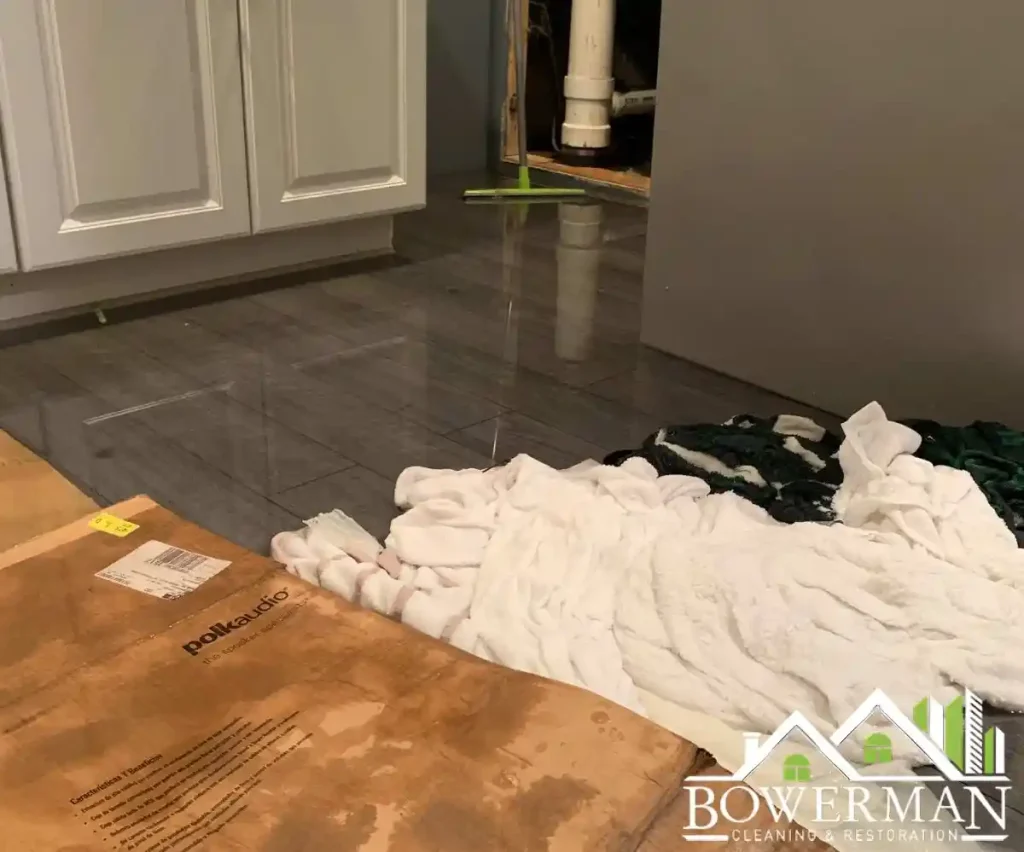
Burst pipe flood restoration involves five structured steps: emergency water extraction, structural drying, moisture monitoring, sanitization, and final reconstruction — and when a pipe fails in winter, every hour of delay adds to the damage.
That’s exactly what one homeowner discovered last January. A supply line in their finished basement burst during a cold snap overnight. By the time they found the flooding at 6 a.m., standing water had already reached several inches across the entire lower level, soaking drywall, subfloor, furniture, and insulation.
Key Takeaways
- Burst pipe flooding is a Category 1 water emergency that escalates quickly if extraction doesn’t begin within the first few hours.
- The restoration process follows five stages: inspection and documentation, water extraction, structural drying, cleaning and sanitization, and final restoration.
- Mold can begin developing within 24 to 48 hours of water intrusion, making professional response time critical.
- IICRC-certified technicians use thermal cameras, moisture meters, and industrial drying systems that consumer equipment cannot match.
- Insurance documentation starts at step one — proper moisture readings and photos at inspection protect your claim.
- Restoration, not just cleanup, is the goal — returning the structure to pre-loss condition requires licensed contractors, not just fans and dehumidifiers.
What the Bowerman Team Found on Arrival
The Bowerman crew arrived within hours of the emergency call. Technicians began with a full inspection using moisture detectors, hygrometers, and thermal imaging cameras to map the true extent of saturation — well beyond what was visible to the eye. The subfloor had absorbed significant moisture, and the lower portions of two drywall sections had wicked water upward several feet.
Everything was documented for the homeowner’s insurance claim. Accurate, timestamped documentation at this stage is one of the most important parts of water damage restoration services — it protects the homeowner and speeds up the claims process.
Extraction and Drying: Where the Real Work Begins
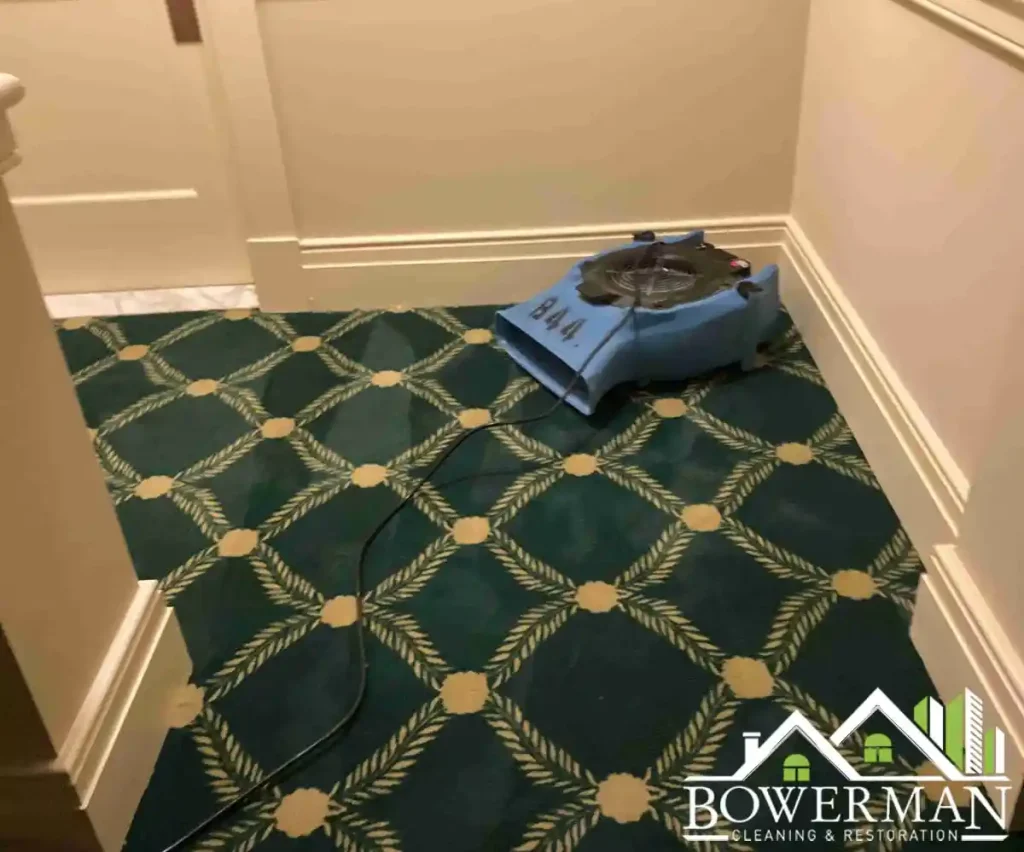
Truck-mounted extraction units removed standing water from the entire basement level. Portable units addressed furniture, carpet pad, and hard-to-reach corners where water had migrated under framing. The IICRC sets the industry standard for water damage restoration, and the process followed those protocols at every stage.
Once extraction was complete, the drying phase began. Industrial low-grain refrigerant dehumidifiers and high-speed air movers were positioned throughout the space to create consistent cross-airflow. The goal is to reduce structural moisture content to pre-loss levels — not simply to the point where a surface feels dry to the touch.
Moisture readings were taken every day across all affected materials. The basement required four days of active drying before materials tested within acceptable ranges. This kind of monitoring is what separates a proper mold removal and remediation prevention approach from a surface-level fix.
Sanitization and the Final Rebuild
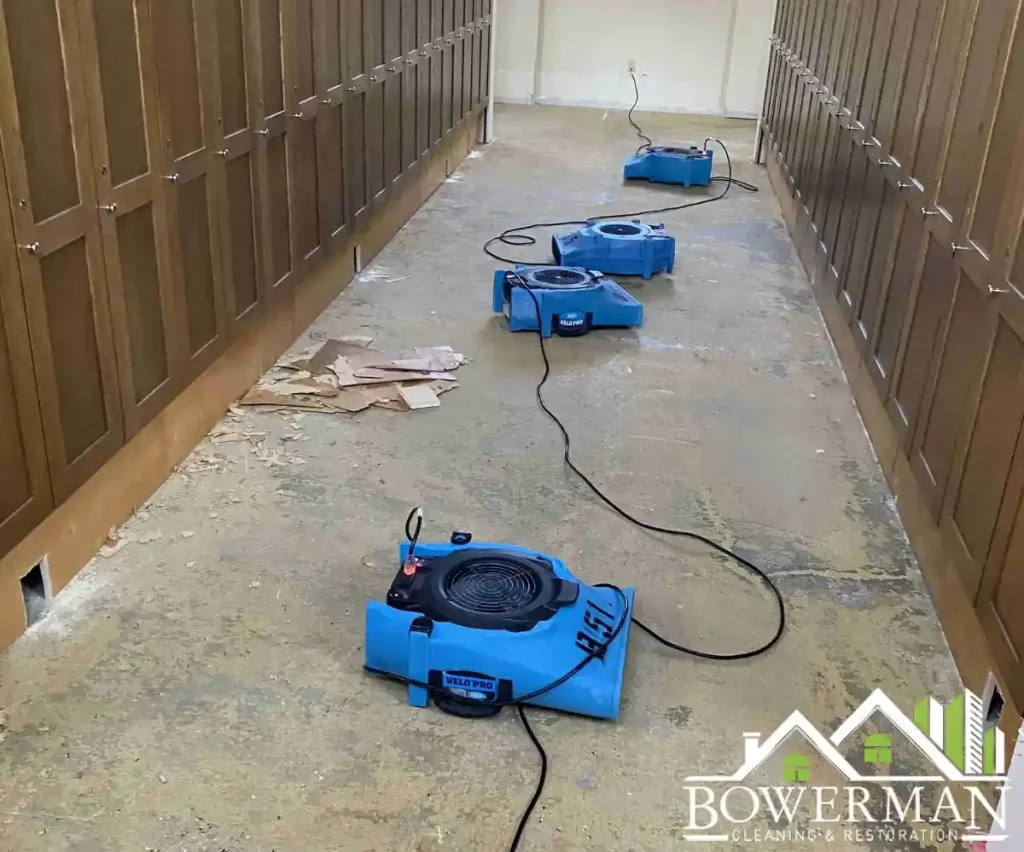
With the structure confirmed dry, technicians applied antimicrobial and disinfecting treatments to all affected surfaces. Bowerman’s Clean Green approach uses products that are 100% biodegradable and non-toxic — protecting the home’s air quality as well as its structure.
Damaged drywall sections were removed and replaced. New insulation was installed in the affected wall cavities. Subfloor repairs were completed under the supervision of a licensed general contractor, and the space was restored to match the original condition. The homeowner was also walked through the insurance claims process step by step, with Bowerman’s team communicating directly with the carrier to keep things moving.
The total timeline from emergency call to completed rebuild: eleven days.
If your home has experienced a burst pipe, don’t wait on professional help. Bowerman Cleaning & Restoration has handled burst pipe flood restoration and storm damage recovery for over 50 years. We are IICRC certified and available 24/7/365. Call 1-844-BOWERMAN or visit us at 7 Intervale Street, White Plains, NY to schedule an emergency response or inspection.
Common Questions About Burst Pipe Flood Restoration
Q: How quickly should I call for burst pipe flood restoration?
Call immediately — ideally within the first hour. Water migrates fast, saturating walls, flooring, and insulation within minutes. The longer extraction is delayed, the deeper the damage extends and the higher the risk of secondary issues like mold growth and structural weakening.
Q: Will my homeowner’s insurance cover burst pipe flood restoration?
Most standard homeowner’s policies cover sudden and accidental pipe failures, including the resulting water damage. They typically do not cover gradual leaks or maintenance neglect. A certified restoration company can document damage properly from the start, which makes the claims process significantly smoother.
Q: What is the difference between water cleanup and full flood restoration?
Cleanup removes visible water. Flood restoration addresses the full scope — extracting hidden moisture, drying structural materials to proper levels, sanitizing affected areas, and completing any necessary reconstruction. Restoration returns your home to pre-loss condition; cleanup alone often leaves moisture trapped inside walls and flooring.
Q: How long does burst pipe flood restoration take?
It depends on the extent of saturation and the scope of structural damage. A contained basement flood might take seven to fourteen days from emergency extraction through final reconstruction. Larger events with significant structural damage can take longer. Drying alone typically takes three to five days when handled with industrial equipment.
Q: Can mold develop after a burst pipe flood?
Yes. Mold can begin to develop within 24 to 48 hours in wet conditions, according to the EPA. This is why professional drying and antimicrobial treatment are critical parts of the restoration process, not optional add-ons. Surface drying without treating underlying materials can leave conditions that support mold growth inside wall cavities and under flooring.
Q: What equipment do professionals use for burst pipe restoration?
Professionals use truck-mounted and portable water extraction units, industrial low-grain refrigerant dehumidifiers, high-speed air movers, thermal imaging cameras, moisture meters, and hygrometers. This equipment reaches saturation levels and drying targets that consumer fans and shop vacuums cannot achieve.
Q: Do I need to leave my home during burst pipe flood restoration?
Not always. For contained flooding, many homeowners remain in the property during restoration. If the damage is extensive, affects HVAC systems, or involves hazardous materials like asbestos or mold in older homes, temporary relocation may be advisable. Your restoration team will assess the situation and give you a clear recommendation.
Q: What is the role of a licensed general contractor in flood restoration?
A licensed general contractor oversees and executes the reconstruction phase — replacing drywall, repairing subfloors, restoring insulation, and returning the space to its pre-loss condition. Not all restoration companies have licensed contractors on staff, which can create handoff delays. Bowerman’s team includes project management and licensed contractors in every full restoration job.
Q: How do I know when my home is fully dry after a burst pipe flood?
Your home is confirmed dry when moisture readings across all affected materials return to acceptable baseline levels — not just when surfaces feel dry to the touch. Certified technicians use moisture meters and daily monitoring to track this. Declaring dryness too early is one of the most common causes of long-term damage after water events.
Q: What should I do immediately after a pipe bursts?
Shut off the main water supply to stop the flow, then call a certified restoration company. Avoid using electrical fixtures in the affected area. Move valuables out of standing water if you can do so safely. Do not run standard fans over standing water, as this can spread contamination. Document what you see with photos before any cleanup begins.
Conclusion
What does burst pipe flood restoration involve? It involves a disciplined, multi-step process that goes far beyond removing visible water. From the initial inspection with thermal cameras to daily moisture monitoring, antimicrobial treatment, and licensed reconstruction, every stage plays a role in protecting your home and preventing long-term damage. A fast, professional response makes all the difference — and that’s exactly what Bowerman Cleaning & Restoration delivers.