
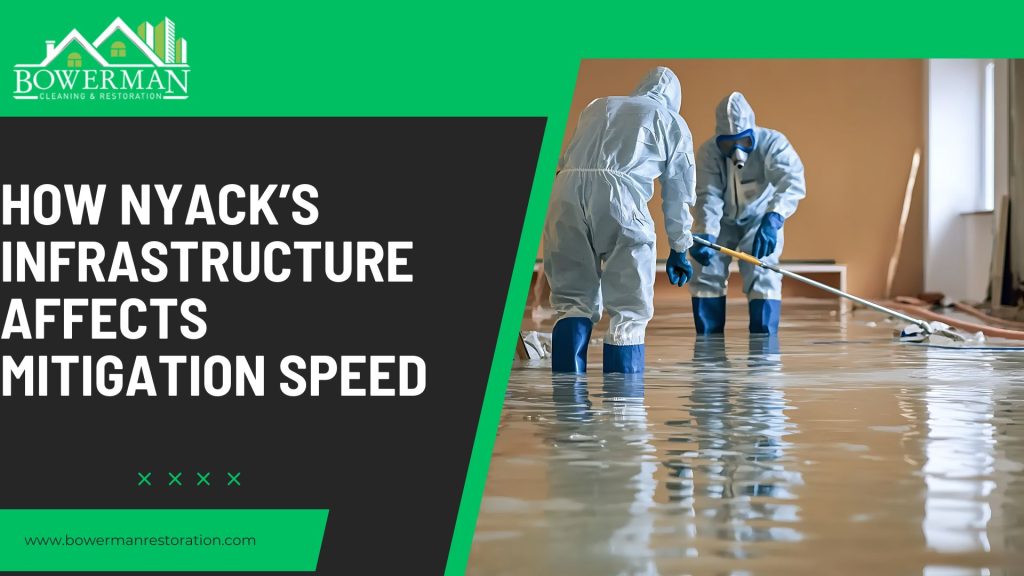
You turn on the faucet in your Victorian home on North Midland Avenue, and the pipes groan. It is part of the charm of living in Nyack. But that groan is often a warning. Beneath the surface of our riverfront village lies a network of aging infrastructure—both municipal water mains and residential plumbing systems dating back to the 1920s or earlier. When these systems fail, they rarely do so gracefully.
If you are currently standing in a wet basement asking, “How long is this going to take to fix?”, you need a realistic answer that accounts for your specific environment. A simple spill might dry in three days. But a pinhole leak in a 60-year-old copper pipe that has been saturating your plaster walls for weeks? That is a different story.
Understanding how long does water mitigation take in nyack ny requires us to look beyond the standard estimates. While the industry average is 3 to 5 days, Nyack’s “Old Pipe Factor”—the prevalence of degraded plumbing materials and historic building methods—often pushes projects into the 7 to 10-day range. This guide will explain why our local infrastructure complicates the drying process and how professional intervention helps you beat the clock.
Key Takeaways
- The Baseline: Standard water mitigation typically lasts 3 to 5 days, but this assumes modern materials and a fresh leak.
- The “Old Pipe” Delay: Leaks from aging galvanized or cast iron pipes often go undetected for weeks, causing “Class 4” saturation that takes longer to dry.
- Historic Materials: Drying the lath and plaster found in many Nyack homes is a slower, more delicate process than drying modern drywall.
- River Humidity: The ambient moisture from the Hudson River can slow down evaporation, requiring industrial-grade dehumidification.
- Hidden Mold: Old leaks often trigger mold growth before you even see the water, adding remediation time to the project schedule.
- Infrastructure Stress: Fluctuating water pressure in the village’s aging mains can cause sudden bursts, leading to rapid, high-volume flooding.
Overview
Water mitigation is the process of stabilizing your home after a leak. It involves stopping the water, extracting it, and drying the structure to preventing secondary damage. In a perfect world, this takes about three days. However, Nyack is not a “perfect world” of standardized new construction. It is a village of character, history, and, unfortunately, aging plumbing.
For local homeowners, the answer to how long does water mitigation take in nyack ny depends heavily on how long the water was there before you found it. Old pipes tend to develop slow, insidious leaks rather than sudden bursts. By the time you notice a stain on the ceiling, the structural timbers have likely been soaking for a month. This deep saturation requires specialized heat drying and extended timelines. This guide explores how these local factors influence your recovery and what you can do to speed it up.
The Standard Timeline vs. The Nyack Reality
In the restoration industry, we use a standard “drying curve” to estimate job duration.
- Days 1-2: Removal of bulk water and evaporation of surface moisture.
- Day 3: Drying of porous materials like carpet and modern drywall.
- Days 4-5: Final drying of denser materials and structural framing.
In a modern condo in Upper Nyack, this timeline usually holds true. But if you live in a home built before 1970, the “Old Pipe Factor” comes into play.
Why Old Pipes Extend the Clock
Older plumbing systems—specifically galvanized steel and early copper—corrode from the inside out. They develop “pinhole leaks.” Unlike a frozen pipe that bursts loudly, a pinhole leak sprays a fine mist of water inside your wall cavity.

- The Discovery Lag: You might not see evidence of this leak for weeks.
- The Saturation: During those weeks, the water is absorbed deeply into the wood studs, the lath behind your plaster, and the subfloor.
- The Result: We are not just drying surface water; we are drying “bound water” that has chemically bonded with the wood cells. This moves the project from a Class 2 loss to a Class 4 loss, often doubling the mitigation time.
The Infrastructure Impact: Municipal Strain
Nyack’s charm is built on old foundations, and that includes the water mains running under our streets. We have seen instances where aging municipal infrastructure leads to pressure surges or main breaks that affect residential properties.
When a water main breaks, the influx of water is sudden and typically contains sediment or soil (Category 2 or 3 water).
- Cleanup Time: We cannot just dry this water. We must remove the silt and sanitize the basement first. This cleaning phase adds 1 to 2 days to the start of the project.
- Volume: These events often flood basements to a depth of several feet. Extracting this volume takes time, and the hydrostatic pressure can force water into the concrete foundation itself, which takes weeks to release its moisture.
According to the Environmental Protection Agency (EPA), drying must occur within 24-48 hours to prevent mold. When infrastructure fails, meeting this deadline requires massive resources.
Material Density: The Plaster Problem
As we discussed in our guide on Plaster vs. Drywall, historic Nyack homes are built differently.
- Drywall: Porous, dries in 3 days.
- Plaster: Dense, multi-layered, dries in 7+ days.

If your “old pipe” leak saturates a plaster wall, we cannot blast it with high heat or the plaster will crack. We must use a “low and slow” approach with desiccant dehumidifiers. This gentle extraction protects the historic integrity of your home but inevitably extends the answer to how long does water mitigation take in nyack ny.
The Hudson River Factor: Ambient Humidity
Physics dictates that wet materials dry faster when the surrounding air is dry. Nyack’s geography works against us here. Being right on the Hudson River means our ambient humidity is often higher than inland areas like Nanuet or Pearl River.
fighting the Fog
If we open a window in a Nyack home during the summer, we let in air that is 80% saturated with moisture. This stops the drying process cold.
- The Solution: We must create a “closed drying system.” We seal the house and use industrial LGR dehumidifiers to artificially lower the indoor humidity to 25-30%.
- The Timeline: It takes time to condition the air in a large, drafty Victorian home. Achieving this stable environment can add 24 hours to the project setup.
Hidden Mold: The Consequence of Delay
Because “old pipe” leaks are often slow, mold has frequently already started growing by the time we arrive.
- Mitigation Pause: If we find mold behind a wet wall, we cannot turn on the fans immediately. Blowing air on mold spreads spores throughout the house.
- Remediation Phase: We must switch to Mold Remediation protocols. We build containment chambers and set up air scrubbers. Only after the mold is physically removed can we proceed with drying. This can add 3 to 5 days to the total timeline.
Mitigation vs. Restoration: Understanding the Phases
Homeowners often confuse “drying” with “finished.”
- Mitigation (The Drying): 3 to 10 days. This is what we are discussing here.
- Restoration (The Rebuilding): 2 to 6 weeks. This involves putting back the drywall, painting, and refinishing the floors.
If you have a historic home with custom millwork, the restoration phase will take longer. However, the mitigation phase must be completed first. You can read more about the difference in our article: Water Mitigation vs. Restoration in Nyack.
The Danger of DIY in Historic Homes
We often see homeowners trying to dry their own basements with shop vacs to save time. In Nyack, this is particularly risky.
- Lead and Asbestos: Older homes often contain lead paint or asbestos insulation. Cutting into a wet wall without testing puts your family at risk. We are certified in Asbestos Removal and handle these materials safely.
- Structural Rot: Using a fan might dry the surface of a wood beam, but leave the core wet. Over time, this leads to dry rot, threatening the stability of your historic home.
How to Speed Up the Process
While you cannot change the age of your pipes or the weather, you can influence the timeline.
- Call Immediately: The difference between a 3-day job and a 10-day job is often just 24 hours of waiting.
- Leave Equipment On: Turning off fans at night extends the drying time by days.
- Clear the Area: Moving furniture out of the affected room allows our technicians to work faster.
Why Bowerman is Nyack’s Mitigation Expert
We don’t just work in Nyack; we understand the buildings here. We know that a leak in a 1920s Colonial behaves differently than a leak in a new build.
Bowerman Cleaning & Restoration
Nyack Location: 99 Main St, Nyack, NY, 10960-3109, United States Phone: +1 844 269 3762
We bring specialized expertise to every job:
- 24/7 Service: We respond before the water has time to soak in deep.
- Free Inspections: We map the moisture to give you an accurate timeline.
- 50+ Years Experience: We have dried countless historic Rockland County homes.
- Family Owned / Operated: We treat your property with respect, not just as a job site.
- Eco-Friendly Products: Safe for the river ecosystem and your pets.
- Locals / Local Expertise: We know the municipal water issues and how to navigate them.
- Certified Excellence: IICRC certified in Water Damage Restoration.
- Home Improvement License: We can handle the delicate restoration of your historic finishes.
- Proven Track Record: Our reputation is built on saving homes others said were ruined.
Common Questions About how long does water mitigation take in nyack ny
Q: Does it take longer to dry a basement in Nyack?
A: Often, yes. Nyack basements in older homes often have stone foundations that are porous and allow ground moisture to seep in. This constant source of moisture means we have to use more dehumidifiers than in a modern poured-concrete basement.
Q: What if the leak is from a lead pipe?
A: If you have lead supply lines (rare but possible in very old homes), we must coordinate with a plumber to replace the line immediately. We cannot dry the structure until the leak is stopped. Disturbance of lead pipes requires strict safety protocols.
Q: Can you save my original pine floors?
A: It depends on how long the “old pipe” was leaking. If the floors have been saturated for weeks (cupping), they may be permanently warped. If it was a sudden burst and we arrive within 24 hours, we can use mat drying systems to save them, though this takes 7-10 days.
Q: Will the vibration of the equipment damage my plaster walls?
A: We are very careful in historic homes. We position air movers to create airflow across the surface without directing aggressive force at fragile plaster keys.
Q: How do I know if the water is behind the wall?
A: You can’t see it, but we can. We use thermal imaging cameras that show temperature differences caused by evaporation. This allows us to “see” the leak from your old pipe without cutting holes initially.
Q: Does insurance cover leaks from old pipes?
A: Usually, yes. Insurance covers the “resulting damage” (the wet floor), even if they don’t cover the pipe itself due to “wear and tear.” However, if the leak was visible and ignored for months, coverage might be denied. Read more in our guide on When to Call Water Mitigation.
Q: Can I open windows to help dry the house?
A: In Nyack, usually no. The river humidity makes the outside air too wet. It is more efficient to keep the windows closed and let our dehumidifiers do the work.
Q: What if I have a septic backup?
A: Many older properties in the area are on septic. A backup is Category 3 water. Mitigation takes longer because we must perform deep cleaning and sanitization before drying can begin.
Conclusion: Respect the Age of Your Home
Nyack’s historic charm comes with unique responsibilities. The “Old Pipe Factor” is a reality we all live with, but it doesn’t have to spell disaster. While the answer to how long does water mitigation take in nyack ny might be longer than the national average due to our aging infrastructure, the right team can minimize that time significantly.
Do not ignore the groan of the pipes or the slight musty smell in the hallway. These are the early warning signs. Catching them now saves weeks of reconstruction later.
Contact Bowerman Cleaning & Restoration Today for Your Free Inspection