
You are standing in your hallway, staring at a water stain that seems to be growing by the minute. Panic sets in. You pick up the phone to call for help, but you are immediately bombarded with industry jargon. “Do you need mitigation?” “Are you looking for restoration?” To the average homeowner, these words sound interchangeable. But in the world of property damage, confusing them can lead to denied insurance claims, delayed repairs, and long-term structural issues.
So, is restoration and mitigation the same thing? The short answer is no. They are two distinct medical procedures for your home. One saves the patient’s life; the other reconstructs the damage. Mitigation is the ambulance ride and the emergency room—focused on stopping the bleeding and stabilizing the patient. Restoration is the reconstructive surgery and physical therapy—focused on repairing the damage and getting you back to normal.
Understanding this distinction is not just about vocabulary; it is about protecting your financial investment. If you try to restore a home before you mitigate it, you are painting over a festering wound. This guide will break down the critical differences, explain why you likely need both, and help you manage the confusing gap between the two.
Key Takeaways
- Mitigation is Urgent: It is the emergency phase focused on stopping the damage, extracting water, and preventing mold. Speed is the priority.
- Restoration is Planned: It is the construction phase focused on rebuilding walls, floors, and finishes. Precision and aesthetics are the priorities.
- Separate Timelines: Mitigation takes days (3-5 typically); restoration takes weeks or months.
- Insurance Distinctions: You will often receive two separate checks and deal with different coverage limits for each phase.
- The “Gap”: There is often a pause between the end of mitigation and the start of restoration while insurance approvals are processed.
Overview
When disaster strikes—whether it is a burst pipe in the attic or a flooded basement from a storm—the recovery process follows a strict linear path. Mitigation must happen first. Its sole purpose is to limit the loss. This involves the loud, aggressive work of water extraction, demolition of unsalvageable materials, and the deployment of industrial drying equipment. Once the data confirms the structure is dry, Restoration begins. This is the careful work of hanging drywall, laying carpet, and painting that returns your home to its pre-loss condition.
For homeowners, asking is restoration and mitigation the same thing is the first step in managing expectations. You will not be choosing cabinet finishes while the water extractors are running. This guide provides a detailed roadmap of each phase, the transition between them, and why hiring a unified team is the safest route to a fully recovered home.
Phase 1: The Emergency Room (Mitigation)
Think of mitigation as damage control. When water intrudes into your home, it starts a clock. Within minutes, it spreads. Within hours, it swells wood and stains carpet. Within 48 hours, it triggers mold growth. Mitigation is the race to beat that clock.
The Goal: Stop the Bleeding
The primary objective of mitigation is to prevent “secondary damage.” Primary damage is the wet carpet. Secondary damage is the black mold growing on the drywall two days later because the humidity wasn’t controlled. If you ask a professional is restoration and mitigation the same thing, they will explain that mitigation is purely functional. It is not about making it look pretty; it is about saving the structure.
Core Mitigation Tasks
- Water Extraction: We use powerful truck-mounted vacuums to physically remove standing water. This is 1,200 times faster than dehumidification alone.
- Controlled Demolition: We remove wet drywall, sodden insulation, and ruined carpet pads. This “opens up” the structure so it can dry.
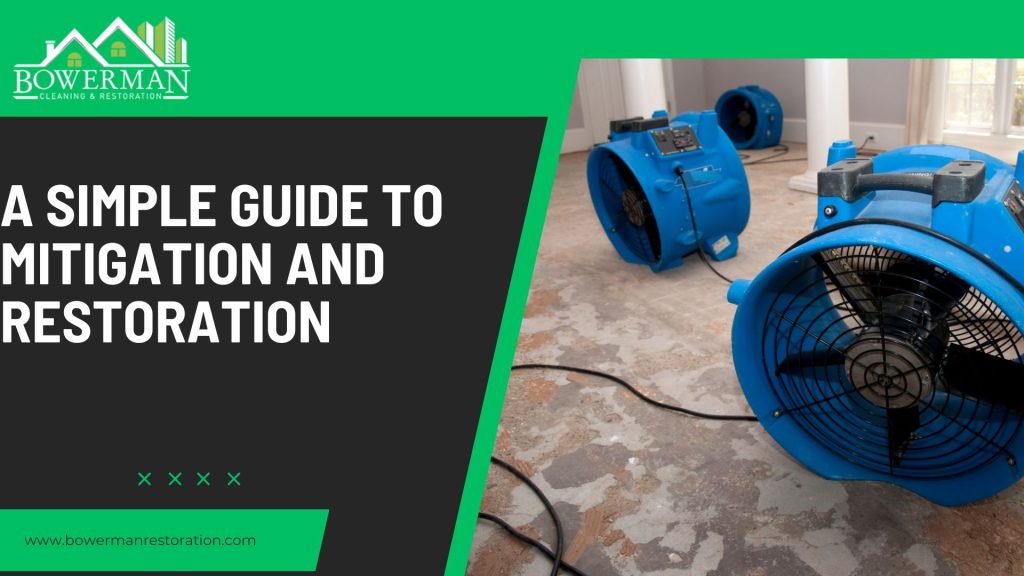
- Stabilization: We install high-velocity air movers and LGR (Low Grain Refrigerant) dehumidifiers. These machines create a low-humidity environment that forces moisture out of the studs and subfloor.
- Antimicrobial Application: We treat surfaces to inhibit mold growth.
Mitigation is loud, intrusive, and absolutely necessary. Without it, the house continues to rot. For a deeper dive into when this is needed, read our guide on When to Call Water Mitigation.
Phase 2: Reconstructive Surgery (Restoration)
Once the fans are removed and the moisture meters read “dry,” the mitigation phase ends. Your home is now stable, but it likely looks like a construction site. You might have exposed studs, bare concrete floors, and missing baseboards. This is where restoration begins.
The Goal: Return to Normal
Restoration is the process of putting the house back together. Unlike mitigation, which runs 24/7 until the job is done, restoration follows a standard construction schedule. It involves skilled tradespeople—carpenters, painters, flooring installers—working to rebuild what was lost.
Core Restoration Tasks
- Structural Repairs: Replacing rotted subfloors or damaged framing.
- Drywall Installation: Hanging, taping, and sanding new sheetrock.
- Flooring: Installing new hardwood, tile, or carpet.
- Finishing Touches: Painting walls, installing trim, and resetting cabinetry.
Restoration is where you get your life back. It is where the house stops being a “loss” and starts being a “home” again. However, it cannot happen until mitigation is certified complete.
The Mental Model: Why Order Matters
To truly grasp if restoration and mitigation are the same, consider the medical analogy again.
- The Trauma: You break your leg in a car accident.
- The ER (Mitigation): Paramedics rush you to the hospital. They stop the bleeding, set the bone, and prevent infection. They don’t worry about the scar; they worry about saving the leg.
- The Recovery: You go home to heal. The swelling goes down.
- The Surgery (Restoration): Months later, you might have surgery to reduce scarring or improve function.
If you try to perform plastic surgery while the patient is still bleeding in the ER, the patient is in trouble. Similarly, if you try to rebuild a house while it is still wet, you trap moisture inside the walls. This leads to mold growth behind the new drywall, ruining the investment.
The Financial Divide: Two Checks, One House
One of the most confusing aspects for homeowners is how insurance handles these two phases. You will likely not receive one giant check for the whole job.

Mitigation Coverage
Insurance policies typically cover mitigation under “Emergency Services” or “Reasonable Repairs.” Because stopping the damage saves the insurance company money in the long run, approvals for mitigation are usually fast. The check for this work is often sent directly to the restoration company within days.
Restoration Coverage
Restoration is covered under “Dwelling Coverage.” This part of the claim is more scrutinized. An adjuster will often need to visit the site, measure the damage, and approve a detailed scope of work. They will look at the age of your carpet or cabinets and may apply “depreciation” (Actual Cash Value vs. Replacement Cost). The check for restoration often comes later and may be made out to both you and your mortgage company.
Understanding this financial separation explains why you might get a bill for the drying work before the reconstruction even starts.
The “Gap” Between Phases
There is often a pause between the day the drying equipment is removed (End of Mitigation) and the day the carpenters arrive (Start of Restoration). This gap typically lasts anywhere from a few days to a few weeks.
Why the Delay?
- Insurance Review: The adjuster needs to review the mitigation report (drying logs and photos) to confirm what was removed before approving the budget to put it back.
- Material Selection: Mitigation uses our equipment. Restoration uses materials you choose. Picking out new flooring, ordering custom cabinets, or matching paint colors takes time.
- Moisture Verification: We sometimes wait an extra 24 hours after removing equipment to verify the “dry standard” holds and no deep moisture wicks back to the surface.
Why You Need a Unified Team
While some companies only do “drying” and others only do “building,” hiring a full-service provider like Bowerman Cleaning & Restoration bridges the gap.
The Danger of Fragmentation
If you hire Company A to dry and Company B to build, you risk a “blame game.”
- Company B might say, “Company A cut out too much drywall, we have to charge you extra to patch it.”
- Company B might say, “The floor is still wet,” while Company A argues, “It was dry when we left.”
The Integrated Advantage
When you use one team for both, the transition is seamless. Our mitigation manager hands the file directly to our construction manager. We know exactly what was removed and why. We know the moisture readings were accurate. Most importantly, we are accountable for the entire warranty.
For more on our integrated process, visit our Water Damage Restoration in Westchester page.
The Mold Factor: The Consequence of Confusion
The stakes of asking is restoration and mitigation the same thing are highest when it comes to mold. Mold needs moisture to grow. If mitigation is stopped too early—because a homeowner thinks “it looks dry enough” and wants to start rebuilding—mold will grow behind the new repairs.
According to the EPA, you have 24-48 hours to dry a structure before mold becomes a risk. If you skip professional mitigation and jump straight to repairs, you are essentially creating a mold incubator. This turns a simple water claim into a complex, expensive mold remediation project that insurance might not fully cover if they deem it negligence.
How to Prepare for Each Phase
During Mitigation
- Clear Access: Move furniture to give technicians a clear path.
- Power On: Ensure electricity is available for dehumidifiers.
- Expect Noise: Air movers are loud; this is unavoidable but temporary.
During Restoration
- Be Decisive: Select your flooring and paint colors quickly to keep the project moving.
- Plan for Dust: Even with containment, construction creates dust. Cover valuables.
- Living Arrangements: If the kitchen or bathroom is being rebuilt, you may need temporary housing.
Common Misconceptions
“I can do the mitigation myself with a shop vac.”
You can extract surface water, but you cannot dry structural wood or insulation without commercial dehumidification. DIY mitigation is a leading cause of denied claims for secondary damage.
“Restoration makes my house better than it was.”
Insurance covers “pre-loss condition.” They pay to replace what you had. If you want to upgrade from laminate to granite countertops, you can, but you will pay the difference out of pocket.
“If I have restoration, I don’t need mitigation.”
Impossible. You cannot repair a house that is currently rotting. Mitigation is the foundation for restoration.
When to Call for Help
Whether you need emergency extraction right now or are looking for a quote to rebuild after a flood, we are here to guide you through both phases.
Bowerman Cleaning & Restoration
Locations Serving You:
- White Plains: 7 Intervale Street, White Plains, NY, 10606 (+1 844 269 3762)
- Nyack: 99 Main St, Nyack, NY, 10960 (+1 844 269 3762)
- Stamford: 6 Landmark Square 4th Floor, Stamford, CT, 06901 (+1 844 269 3762)
We offer:
- 24/7 Service: We start mitigation immediately to prevent further loss.
- Free Inspections: We explain the entire roadmap from day one.
- 50+ Years Experience: We have navigated thousands of claims in the Tri-State area.
- Family Owned / Operated: A personal commitment to your recovery.
- Eco-Friendly Products: Safe for your family and pets.
- Locals / Local Expertise: We understand the specific construction challenges of our region.
- Certified Excellence: IICRC certified and licensed in asbestos removal.
- Home Improvement License: Fully qualified to handle the reconstruction.
- High Satisfaction: Check our Google reviews to see how we help neighbors like you.
Common Questions About is restoration and mitigation the same thing
Q: Does one company always do both?
A: Not always. Some franchises are “mitigation only.” Others are general contractors who don’t own drying equipment. We recommend using a full-service provider to simplify the process and ensure accountability.
Q: Which is more expensive, mitigation or restoration?
A: Usually, restoration is more expensive because it involves purchasing materials (cabinets, flooring) and skilled labor (carpenters, painters). Mitigation is labor-intensive but shorter in duration.
Q: How long does mitigation take vs. restoration?
A: Mitigation typically takes 3 to 5 days. Restoration can take anywhere from 1 week to several months, depending on the complexity of the repairs and supply chain. See our guide on How Long Does Water Mitigation Take in Stamford CT for more details.
Q: Can I live in the house during these phases?
A: During mitigation, yes, if the noise doesn’t bother you. During restoration, it depends on the scope. If your only bathroom is being rebuilt, you may need to relocate.
Q: Will my insurance deductible apply to both?
A: You usually pay one deductible per claim. It is subtracted from the total payout, typically applied to the first check issued (often the mitigation check).
Q: What happens if I find more damage during restoration?
A: This is common. If we open a wall to hang drywall and find hidden damage, we submit a “supplement” to your insurance carrier for additional funds.
Q: Do I have to use the restoration company my insurance suggests?
A: No. You have the right to choose your contractor. While insurers have “preferred vendors,” you are free to hire a specialist like Bowerman Cleaning & Restoration who works for you.
Q: Is mold remediation considered mitigation or restoration?
A: It is a form of mitigation because it removes a hazard. However, it requires distinct protocols and containment.
Conclusion: Two Steps, One Goal
While the terms are different, the goal is the same: getting your home back. Asking is restoration and mitigation the same thing is the first step toward becoming an empowered homeowner.
Mitigation saves the structure; restoration saves the home. By respecting the process and hiring a team that excels at both, you ensure that your property value is protected and your family is safe.