
Owning a historic home in North Stamford or Springdale is a labor of love. You appreciate the craftsmanship of the crown molding, the solidity of the original hardwood floors, and the character of the lath and plaster walls. But that solidity comes with a vulnerability. When water intrudes—whether from a burst pipe in the attic or a leaky roof during a Nor’easter—those historic materials react very differently than modern drywall.
If you are currently staring at a water stain on your 1920s plaster ceiling, you need to understand two critical terms immediately. Whats the difference between restoration and mitigation in stamford ct? It is not just semantics. One saves the structure from collapse; the other rebuilds the beauty. Confusing the two, or assuming they are the same step, is the fastest way to lose the historic fabric of your home to mold and gravity.
This guide explains why plaster walls require a specific mitigation approach, why the timeline for saving them is incredibly short, and how our local climate impacts the drying process.
Key Takeaways
- Plaster Weight: Wet plaster is incredibly heavy and prone to sudden collapse if the “keys” holding it to the lath dissolve.
- Mitigation First: This phase stabilizes the environment and removes water to prevent the plaster from detaching.
- Restoration Second: This phase involves the skilled repair or replication of the plaster surface after it is dry.
- Stamford Climate: Our coastal humidity means natural drying is impossible; industrial dehumidification is mandatory.
- The Mold Risk: In lath and plaster walls, mold grows on the hidden wooden lath first, often undetected until it spreads.
Overview
For homeowners in Stamford, specifically those in older neighborhoods, water damage is a race against time. Mitigation is the emergency response. Its goal is to stop the damage. For plaster walls, this means aggressive drying to preserve the mechanical bond between the plaster and the wood lath. Restoration is the art of bringing that wall back to its original glory.
Understanding whats the difference between restoration and mitigation in stamford ct is vital because plaster behaves like a sponge. It absorbs water, holds it, and becomes heavy. If you wait for “restoration” (rebuilding), you might find your ceiling on the floor. Mitigation must happen within hours, not days. This article details the specific risks to historic materials and how professional intervention preserves your home’s value.
The Physics of Plaster: Why Mitigation is Urgent
To understand why we rush, you must understand how your walls are built. Modern homes use drywall sheets screwed into studs. Historic Stamford homes use lath and plaster.

The Mechanics of Failure
Plaster is applied wet over horizontal wooden strips called lath. The plaster oozes through the gaps and hardens, forming a “key” on the backside. This key is the only thing holding the wall up.
- The Water Effect: When water hits this system, the wooden lath swells. This expansion can crush the plaster keys. Simultaneously, the water softens the plaster itself.
- The Weight Factor: Dry plaster is heavy. Wet plaster is significantly heavier. As the keys weaken and the weight increases, gravity takes over. The plaster separates from the lath and crashes down.
Mitigation stops this process. By injecting dry air into the wall cavities and reducing the room’s humidity, we shrink the lath back to size and harden the plaster before the keys fail.
Defining the Difference in Stamford
When you call a professional, you will hear these terms used for specific phases of the project.
What is Mitigation?
Mitigation is the science of drying. In a North Stamford colonial, this involves:
- Emergency Stabilization: Installing support jacks if a ceiling is sagging.
- Water Extraction: Physically removing water from floors to lower ambient humidity.
- Desiccant Drying: Using specialized dehumidifiers that produce ultra-low humidity air, which is gentle enough to dry plaster without cracking it.
- Selective Demolition: Carefully removing only the damaged sections of lath to access the wall cavity, while preserving as much original material as possible.
What is Restoration?
Restoration is the craft of rebuilding. Once the moisture meters confirm the historic materials are dry, the work shifts to:
- Plaster Repair: Using a lime-based finish to patch holes and match the texture of the 100-year-old walls.
- Molding Replication: Creating custom knives to milling new wood trim that matches the water-damaged baseboards perfectly.
- Painting: Applying period-correct finishes.
If you skip mitigation and go straight to a general contractor for restoration, they will likely rip out the entire wall because they don’t know how to dry it. This destroys the historic value of the room.
The Coastal Factor: Why Stamford Homes Don’t “Air Dry”
Stamford’s location on the Long Island Sound creates a specific microclimate. Our humidity is consistently high, especially in the summer.
The Vapor Pressure Challenge
Drying requires the air to be thirstier than the wet material. In Stamford, the outside air is often 70-80% saturated. If you open a window to “air dry” your plaster walls, you are feeding them moisture, not removing it.
- The Professional Solution: We create a “closed drying system.” We seal the room and use LGR (Low Grain Refrigerant) dehumidifiers to drop the indoor humidity to 25%. This extreme difference forces the moisture out of the dense plaster and into our machines.
Understanding whats the difference between restoration and mitigation in stamford ct means realizing that our local climate fights against you. You need industrial power to win.
The Hidden Mold Threat in Lath
One of the most dangerous aspects of plaster walls is their ability to hide mold. The plaster surface might look dry and hard, but the wooden lath behind it acts as a wick.
The Incubator Effect
The space between the plaster and the exterior siding is often insulated with old materials like rock wool or even newspaper. When this gets wet, it stays wet for weeks.
- The Result: Mold colonizes the lath and insulation.
- The Detection: You won’t see this mold until it eats through the plaster. By then, the room is contaminated.
During the mitigation phase, we use thermal imaging cameras to see inside the walls. We track the evaporation progress to ensure the deep structure is dry, not just the surface. This prevents the need for massive mold remediation later during the restoration phase.
Insurance Implications: Two Checks, One Goal
Homeowners are often confused when they receive separate checks from their insurance company. This is standard procedure.
Emergency Services Coverage
Your policy likely has a section for “Reasonable Repairs” or “Emergency Services.” This pays for the mitigation—the fans, the dehumidifiers, and the extraction. This is usually paid quickly to stop the damage.
Dwelling Coverage
The restoration work—the plaster repair and painting—is paid under your dwelling coverage. This often requires a more detailed estimate and may be subject to depreciation.
By understanding whats the difference between restoration and mitigation in stamford ct, you can advocate for the proper coverage. You can explain to your adjuster that the expensive drying equipment is necessary to save the even more expensive historic plaster ceiling.
The Danger of DIY in Historic Homes
We often see well-meaning homeowners try to manage a leak themselves. In a modern home with drywall, you might get away with it. In a historic Stamford home, the risks are higher.
Asbestos and Lead
Homes built before 1980 often contain asbestos in the plaster binder or joint compound, and lead paint on the surface. Cutting into a wet wall with a Sawzall releases these fibers into the air.
- The Professional Approach: We test materials before disturbing them. If hazardous materials are present, we use containment protocols during mitigation to keep your family safe.
Structural Integrity
As mentioned, wet plaster is heavy. A sagging ceiling is a physical hazard. Professional mitigation teams know how to brace a ceiling to dry it safely, whereas a DIY approach might end in injury.
Why One Team is Better
The transition from drying to rebuilding is critical. If you hire one company to dry and another to restore, details get lost.
- The Disconnect: The restoration contractor might say the wall is still too wet to paint, while the mitigation company claims they are done.
- The Unified Solution: When you use Bowerman for both, there is no gap. We are responsible for the entire warranty. We don’t start restoring until we know the mitigation was successful.
Checklist: When to Call for Plaster Walls
If you see any of these signs in your historic home, call immediately.
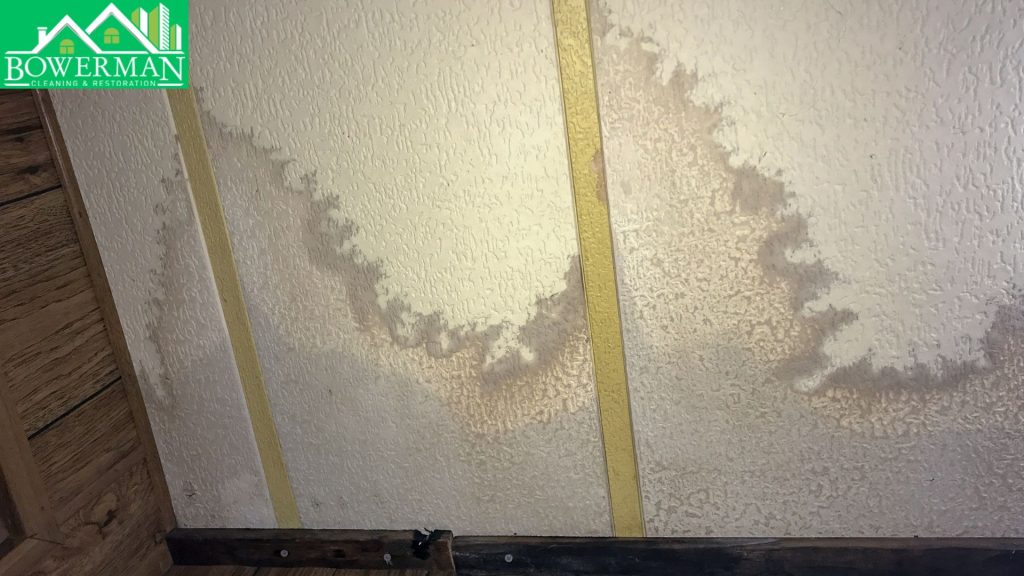
- [ ] A brown ring or “coffee stain” on the ceiling.
- [ ] A slight belly or sag in the wall surface.
- [ ] Cracking in the plaster that wasn’t there yesterday.
- [ ] A musty smell in a room with original wallpaper.
- [ ] Water pooling near radiators (common in older homes).
Restoring Stamford’s Charm
At Bowerman Cleaning & Restoration, we are passionate about preserving the history of Fairfield County. We know that once original plaster is gone, it is gone forever.
Bowerman Cleaning & Restoration
Stamford Location: 6 Landmark Square 4th Floor, Stamford, CT, 06901, United States Phone: +1 844 269 3762
We offer the specialized care your historic home needs:
- 24/7 Service: We respond immediately to stabilize heavy plaster ceilings.
- Free Inspections: We use moisture meters to assess the risk to your historic materials.
- 50+ Years Experience: We understand the construction methods of Stamford’s past.
- Family Owned / Operated: We treat your home as a piece of history, not a job site.
- Eco-Friendly Products: Safe for your family and pets.
- Locals / Local Expertise: We know how coastal humidity affects drying times.
- Certified Excellence: IICRC certified and licensed in asbestos removal.
- Home Improvement License: We have the skilled craftsmen to restore plaster finishes.
- Proven Track Record: Our clients trust us with their most valuable assets.
Common Questions About whats the difference between restoration and mitigation in stamford ct
Q: Can you save my wet plaster ceiling?
A: It depends on the severity and speed. If the “keys” are still holding and we can start drying immediately, yes, we often can. If the ceiling has detached from the lath (sagging significantly), it becomes a safety hazard and usually must be removed.
Q: How long does it take to dry plaster?
A: Plaster is denser than drywall and takes longer to release moisture. While drywall might dry in 3 days, plaster often takes 5 to 7 days of controlled drying. Rushing it with too much heat can cause the plaster to crack.
Q: Do I need a special contractor for the repairs?
A: Yes. Repairing lath and plaster requires different skills than hanging drywall. You need a craftsman who understands how to bond new plaster to old surfaces. Our restoration team has this expertise.
Q: Is mold inevitable with wet plaster?
A: Not if mitigation starts fast enough. Mold needs 24-48 hours to grow. If we lower the humidity and start airflow within that window, we can prevent growth.
Q: Will my insurance pay for the extra time to dry plaster?
A: They should. The alternative (tearing out and rebuilding a historic wall) is often much more expensive. We document the necessity of the extended drying time to justify the cost to your adjuster.
Q: What if the water contains sewage?
A: If the water is Category 3 (contaminated), porous materials like plaster usually cannot be saved. The health risk is too high. In this case, mitigation involves safe removal and sanitization before restoration begins.
Q: Can I stay in the house?
A: Usually, yes. However, the equipment is noisy. If we are drying a plaster ceiling in your bedroom, you might want to sleep in a different room or a hotel for a few nights.
Q: How do you match the paint on old walls?
A: During the restoration phase, we use computer matching to analyze a chip of the existing paint. We can often blend the new paint into the old so the repair is invisible.
Conclusion: Preserve Your Piece of History
Your historic Stamford home is irreplaceable. Don’t let a water leak turn into a renovation nightmare because of a misunderstanding. Knowing whats the difference between restoration and mitigation in stamford ct empowers you to make the right call: Mitigation first, fast, and professional.
Preserve the character of your home. If you suspect water damage, call the team that knows how to save history.
Contact Bowerman Cleaning & Restoration Today for Your Free Inspection