
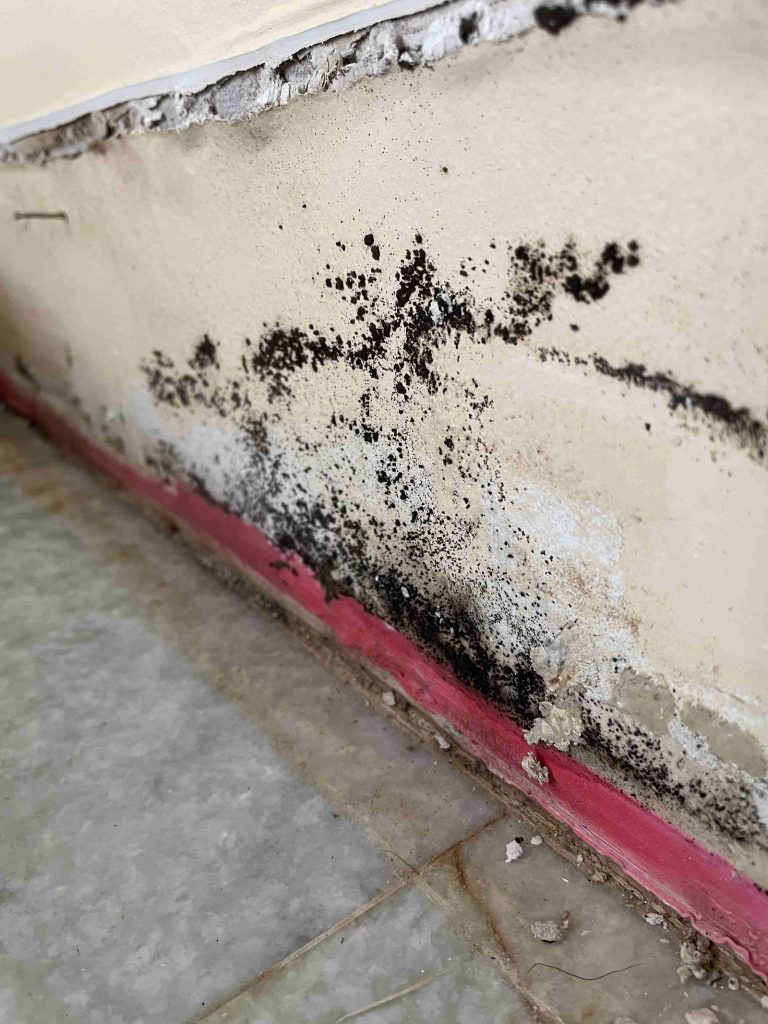
Professional mold remediation vs household cleaning products is a limits question. A store-bought spray or a bleach solution can help on some hard, non-porous surfaces after the moisture is fixed. It cannot contain a work area, open a wet wall, dry a cavity, or replace an independent NY assessment. The product has a place, but not the full job.
Written by the Bowerman Cleaning and Restoration Team · June 2, 2026
Key Takeaways
- Household products are, at most, a surface tool on appropriate materials once moisture is under control.
- Bleach is a poor choice as a routine treatment on porous materials such as drywall.
- Products do not provide containment, measured drying, or a written remediation scope.
- In New York, testing and clearance are still handled by an independent assessor, not by a spray and not by the remediator.
In This Guide
- What Can Household Cleaning Products Actually Do?
- What Are the Limits of Bleach and Similar Products?
- What Does Professional Remediation Add That a Product Does Not?
- How Do You Decide Which Approach Fits?
- Professional Mold Remediation vs Household Cleaning Products FAQs
What Can Household Cleaning Products Actually Do?
Short answer: they can help clean some hard, non-porous surfaces after the moisture problem is already under control. That is a narrower job than the marketing language on a bottle sometimes suggests.
The EPA mold cleanup guidance describes small cleanups on hard surfaces, often with detergent and water, plus thorough drying. A commercial mold spray may be used according to its label on a suitable surface, but the label does not make it a remediation plan. The product cannot find a leak, open a wall, or document dryness.
Companion articles on removing mold without a professional and on whether you can remediate mold yourself draw a similar line: a careful, limited cleanup is one situation; a hidden or large problem is another.
What Are the Limits of Bleach and Similar Products?
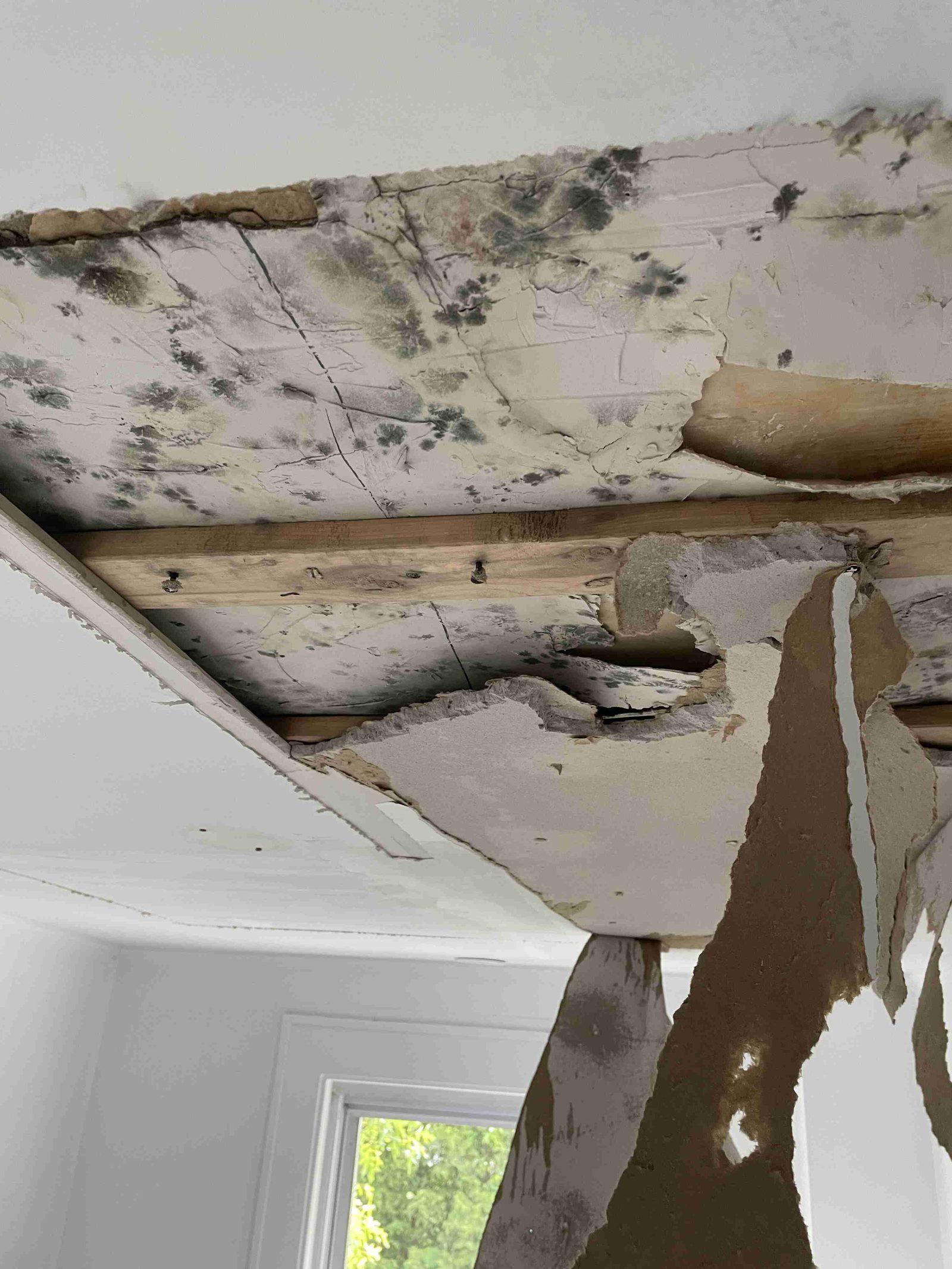
Short answer: they may lighten a stain on a hard surface, but they do not fix wet porous materials or a still-active leak. A lighter patch can look like progress while the wall remains damp.
Bleach is often the first product people reach for. On a hard, non-porous surface it may lighten discoloration. On paper-faced drywall or wet wood, it can leave growth in the material and add more water to an already damp surface. The EPA brief guide keeps the emphasis on moisture control, not on a single disinfectant.
Claims that a product “kills mold permanently” or “kills all spores” are not a reliable basis for closing a wall or skipping a scope. If the surface gets wet again, new growth can appear whether or not a spray was used.
What Does Professional Remediation Add That a Product Does Not?
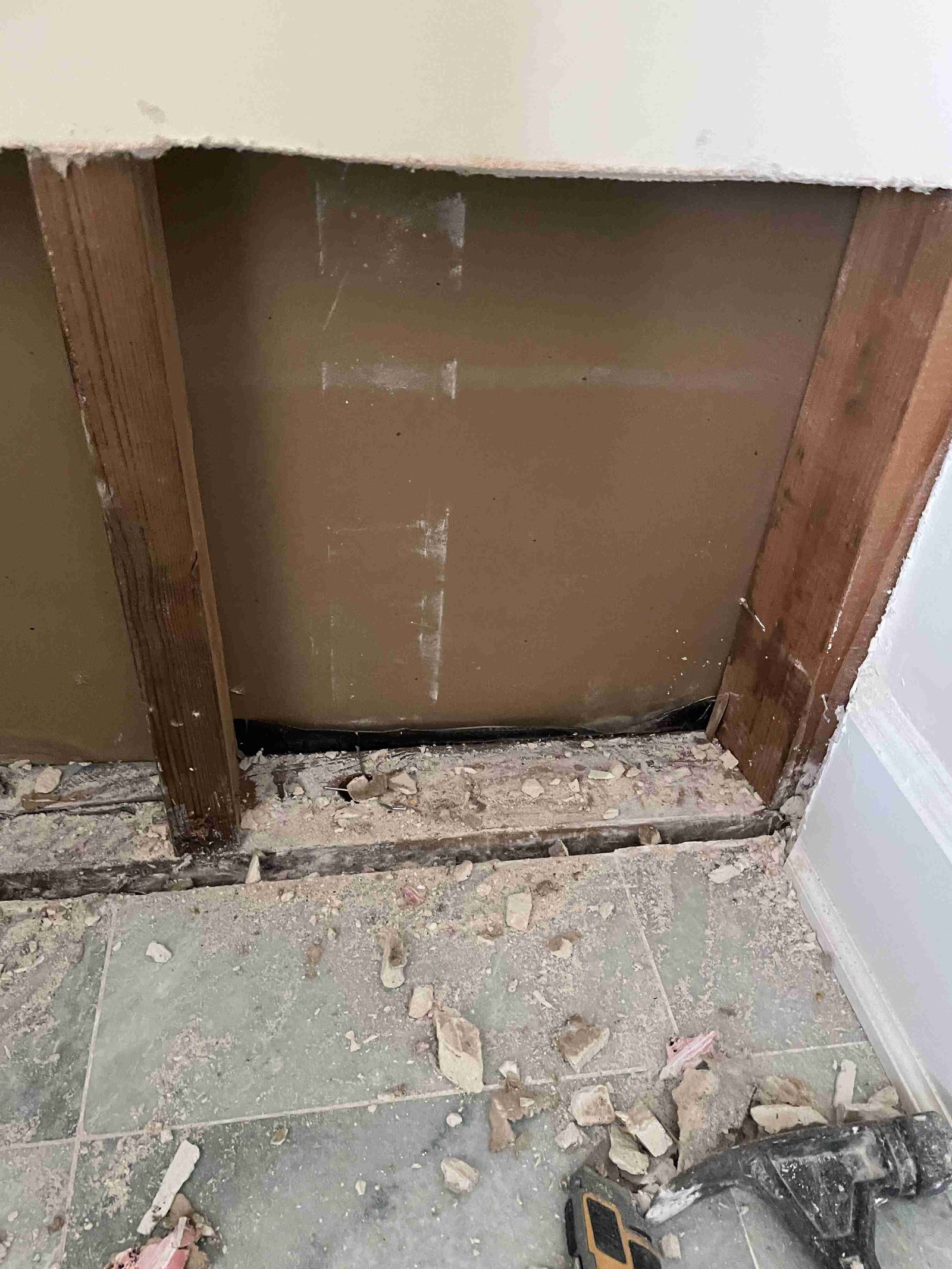
Short answer: a defined scope, containment, controlled removal or cleaning, measured drying, and, in NY, a separate assessment. Those are project steps, not ingredients in a bottle.
| Task | Household product | Professional remediation |
|---|---|---|
| Small hard-surface film, moisture already fixed | Often a reasonable tool | Usually unnecessary if the area is truly limited |
| Growth on drywall, insulation, or in a cavity | Cannot reach or remove the material | Materials are removed or cleaned under a written scope |
| Dust control while a wall is opened | Not provided | Containment and often filtered air |
| Confirming the structure is dry | Not provided | Moisture readings against a dry target |
| Official assessment or clearance in NY | Not provided | Done by an independent mold assessor, not the remediator |
What mold remediation is, and what professional mold remediation services include, is the fuller picture of those steps. A product can still have a role on a remaining hard surface after that work, according to its label. It is a finishing tool, not the project.
Questions about a mold problem in Westchester County, NY? Bowerman Cleaning & Restoration answers 24/7.
How Do You Decide Which Approach Fits?
Short answer: start with the material, the size of the area, and whether moisture is still present. When those answers are unclear, investigation should come before another product.
- If the spot is small, on a hard surface, and already dry, a careful product or detergent cleanup may be enough.
- If the material is porous, the area is large, or a stain has returned, a product-only approach is likely to fall short.
- If a wall may hide growth, opening and a defined scope come before another spray.
- In New York, any official assessment or testing should be arranged with an independent licensed mold assessor.
There is no useful guarantee that a professional job or a household product will prevent growth from ever returning if the building gets wet again. Moisture control remains the deciding habit.
Professional Mold Remediation vs Household Cleaning Products FAQs
Can I use bleach on moldy drywall?
It is a poor routine choice. Drywall is porous. Bleach may lighten the face and still leave the board damp or affected. Removal or a proper scope is the more reliable path once growth is in that material.
Are “mold killing” sprays a substitute for remediation?
No. Even when a product is used correctly on a suitable surface, it does not contain the work area, dry a cavity, or replace a written scope. Marketing language is not a work plan.
Do I need a special mold product, or is soap and water enough?
For some small, hard-surface cleanups, detergent and water plus thorough drying are consistent with EPA guidance. Follow product labels if you use a commercial cleaner, and fix the moisture either way.
Should a remediator sell a spray instead of opening a wet wall?
If growth is in a cavity or on porous material, a spray on the paint is not a complete approach. Ask for a written scope, and in New York have that scope come from an independent assessor.
Will a stronger product keep mold from coming back?
No. Strength of a cleaner does not override a leak or high humidity. If moisture returns, growth can return as well.
Weighing professional mold remediation vs household cleaning products in a Westchester NY home? Bowerman Restoration LLC d/b/a Bowerman Cleaning & Restoration, 7 Intervale Street, White Plains, NY 10606, answers 24/7 at (844) 269-3762.