
The step by step asbestos abatement process in NY follows a set order: confirm the material, plan the method, notify as required, build containment, work wet, clean, and clear the area with independent air sampling before anyone treats the room as ordinary space again. Skipping a step, or reversing the order, is how fibers spread and how jobs have to be redone. This guide walks through that sequence so a property owner can follow what should happen from the first survey to the last bag leaving the site.
Written by the Bowerman Cleaning and Restoration Team · July 16, 2026
Key Takeaways
- The process starts with an independent survey and lab results, not with demolition.
- Containment and negative air go up before any asbestos-containing material is disturbed.
- Material is wetted, removed or sealed, bagged, and cleaned up inside that work area.
- Containment comes down only after independent clearance air sampling meets the required level.
In This Guide
- What Happens Before Any Material Is Touched?
- What Are the On-Site Work Steps?
- How Does the Area Get Cleaned and Cleared?
- What Happens After the Process Is Complete?
- Step by Step Asbestos Abatement Process FAQs
What Happens Before Any Material Is Touched?
Short answer: an independent survey, a written scope, and any required notifications come first. Those steps decide the method and keep the project on the right side of NY rules.
An independent licensed inspector inspects the areas that will be disturbed and collects samples for an accredited lab. Appearance is not enough. Pipe wrap, floor tile, ceiling texture, and joint compound can look similar with or without asbestos. The report is what the rest of the job is built on.
The abatement contractor then writes a scope that lists each material, the method (removal, encapsulation, or enclosure), the work area, and the controls. In New York, many asbestos projects also require notification to the Department of Labor before work starts. The NYS Department of Labor asbestos program explains those project rules under Industrial Code Rule 56.
This is also the time to empty the work area, clear a path for equipment, and plan where people and pets will stay. Belongings should be moved by the household or the renovation crew, not handled as an afterthought once the regulated area is up. The EPA page on protecting your family from asbestos also stresses leaving suspect material alone until the plan is in place.
What Are the On-Site Work Steps?
Short answer: the crew builds containment, sets negative air, then wets and removes or seals the material, and bags the waste. Each of those steps is meant to keep fibers inside the work area.
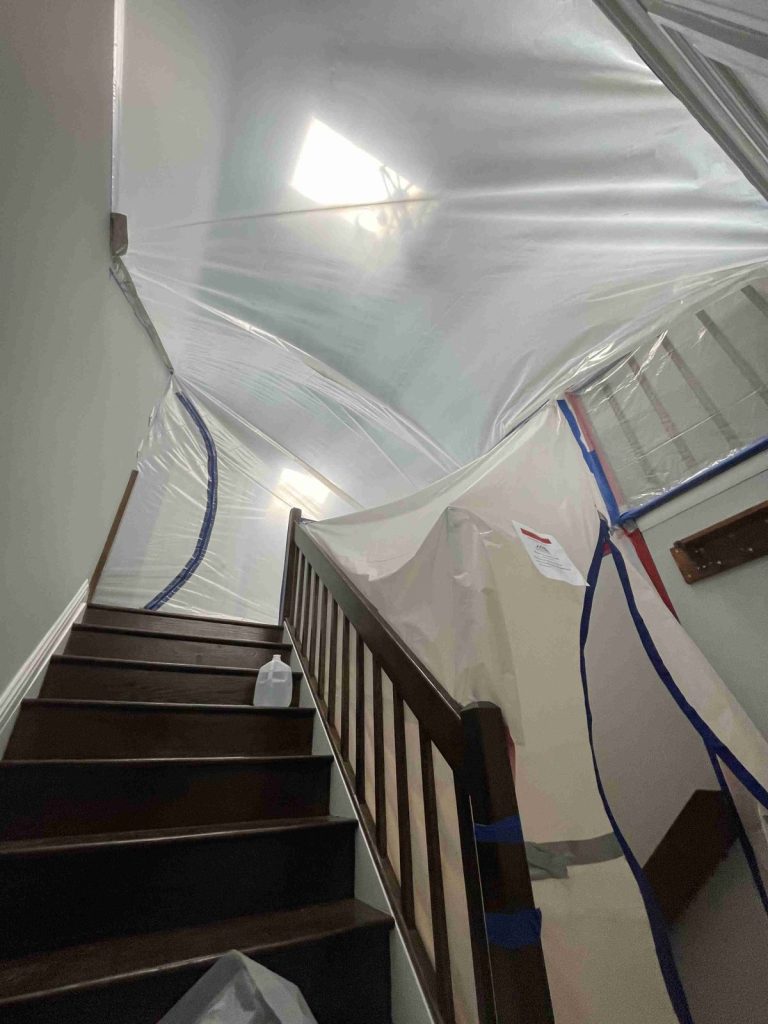
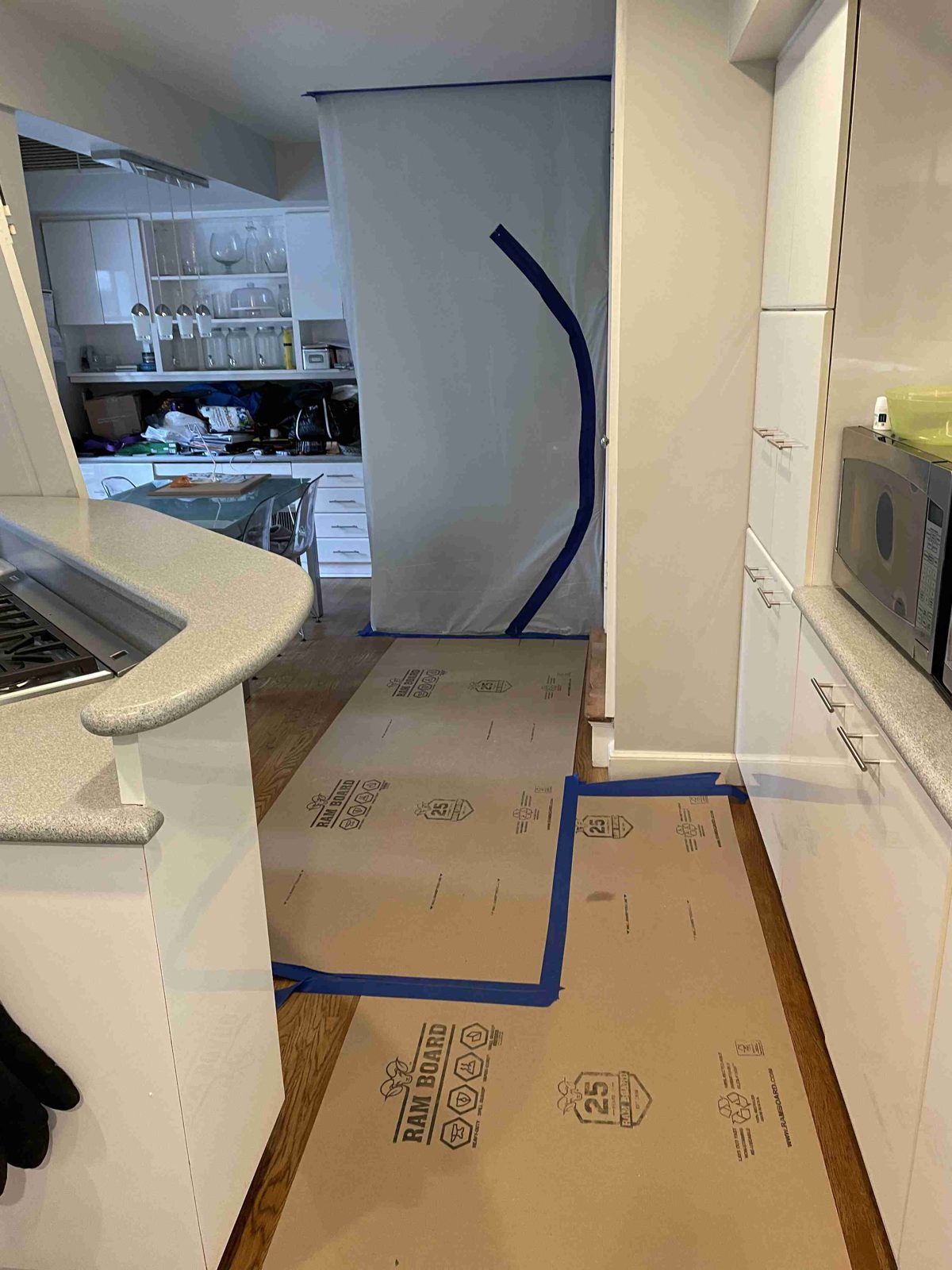
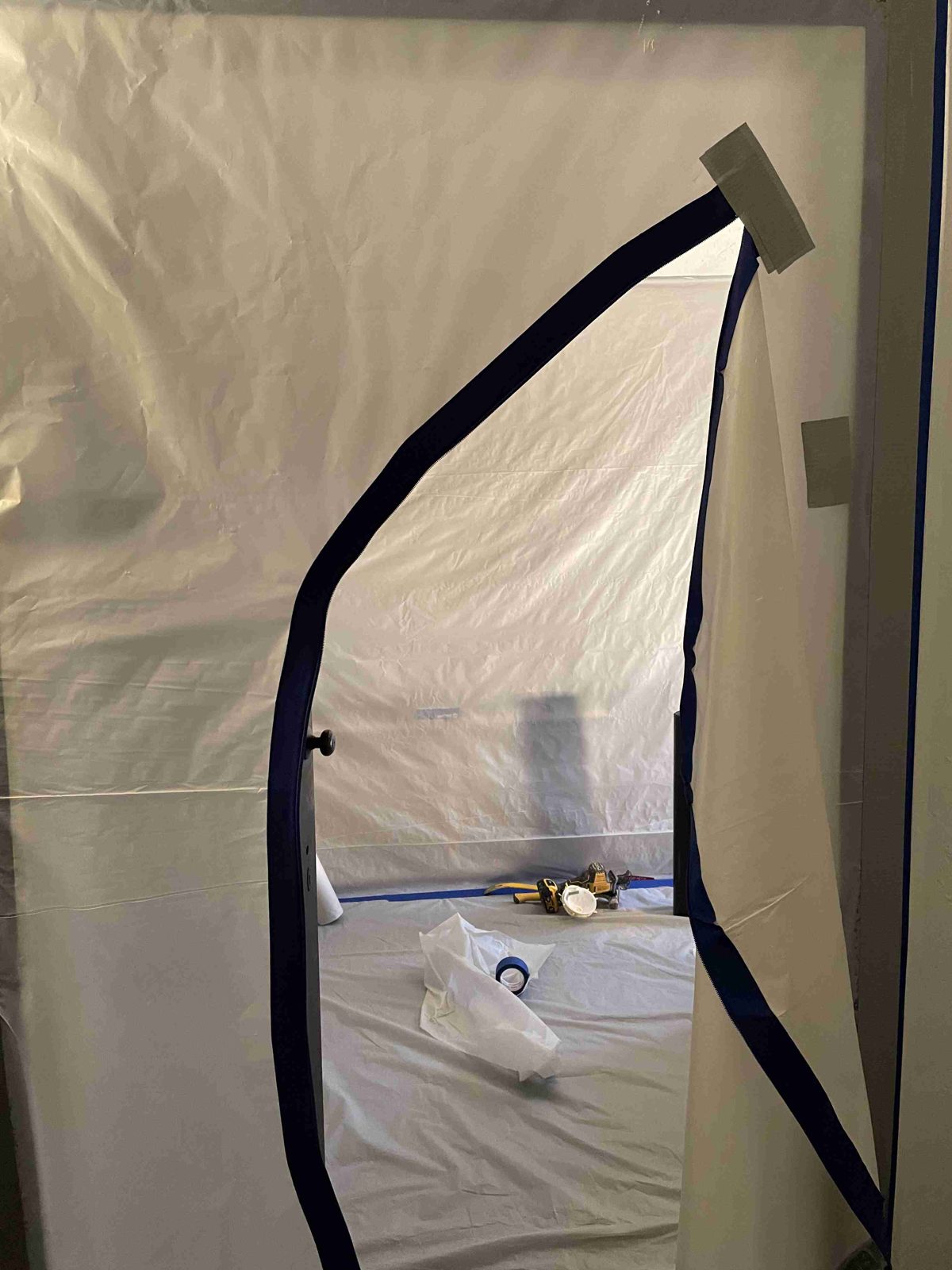
- Build containment. Plastic barriers, sealed vents and openings, a decontamination unit, and a controlled load-out are set up around the work area.
- Start negative air. HEPA-filtered machines pull air into the work area so any gap draws clean air in rather than dusty air out.
- Wet the material. Amended water is applied so fibers stay bound while the material is handled.
- Remove or seal. The crew takes the material off the substrate, or applies the agreed encapsulant or enclosure, following the scope.
- Bag and clean the waste. Waste, used poly, and disposable gear are sealed in labeled bags and taken out through the load-out, not through living space.
How asbestos abatement is done and how asbestos removal is done describe these work practices in more detail. Wet methods matter: dry scraping or a household vacuum can spread fibers through rooms that were never part of the job.
Occupied homes add a few practical constraints. HVAC serving the work area is usually shut down and sealed. Shared halls and stairways may become part of the barrier system. Entry into the regulated area is limited to trained, protected workers. Viewing ports or photos are a safer way to follow progress than walking in to look.
Planning work around suspect asbestos material in Westchester County, NY? Bowerman Cleaning and Restoration answers 24/7.
How Does the Area Get Cleaned and Cleared?
Short answer: gross debris is removed, surfaces are HEPA-vacuumed and wet-wiped, the area is inspected, and an independent firm collects clearance air samples. The crew doing the abatement does not certify its own work.
- Gross cleanup. Bulk debris is bagged and the obvious waste is taken out.
- Fine cleaning. Every surface in the work area is HEPA-vacuumed and wet-wiped, including ledges, piping, and the plastic itself.
- Visual inspection. The area is checked for remaining debris or dusty residue. Cleaning is repeated if anything remains.
- Lockdown, when used. A sealant may be applied to bind any remaining fibers on surfaces or substrates.
- Clearance air sampling. An independent licensed inspector or lab collects air samples and compares them with the required clearance level.
- Teardown and disposal. Only after a pass do the barriers come down. The plastic is disposed of as asbestos waste, and the waste shipment record is completed.
If clearance fails, the work area stays closed, cleaning is repeated, and the air is sampled again. Opening the room because the calendar is tight is not a substitute for a pass. How long it is safe to return after asbestos removal depends on this step, not on when the last bag was tied.
What Happens After the Process Is Complete?
Short answer: the household or renovation crew can return to the area, and the records should be kept with the property file. Those records matter later for sale, insurance, or the next remodel.
Once containment is down, finishes that were removed can be rebuilt, and rooms can return to normal use. HVAC filters that served the area are often replaced. The owner should receive, or should ask for, the survey, the scope, any notifications, the clearance results, and the waste shipment record.
Timeline varies with the amount of material, access, and lab scheduling. Small, well-prepared jobs may finish in a day or two of on-site work; larger or multi-room projects take longer. How long asbestos abatement takes covers the factors that stretch or shrink the calendar. For the service, see asbestos removal and abatement. The pillar guide, what is asbestos abatement, places this sequence in the wider job.
Step by Step Asbestos Abatement Process FAQs
Does every asbestos job follow the same steps?
The order is consistent: survey, plan, notify as required, contain, work wet, clean, and clear. The method inside the work area can be removal, encapsulation, or enclosure, depending on the material and the scope.
Why does clearance air sampling have to be independent?
The firm that did the abatement should not certify its own result. An independent licensed inspector or lab collects and evaluates the samples so the clearance decision is separate from the crew.
Can renovation start the same day containment comes down?
Often yes, once clearance has passed and the barriers are down. Rebuild of finishes is a separate trade and may start as soon as the area is released.
What if suspect material is found after the survey?
Work in that spot should stop until the new material is sampled and the scope is updated. Continuing to demolish around an untested material can spread fibers and expand the job.
Do people have to leave the house for the whole process?
Not always. It depends on the size and location of the work area and whether it shares air with living space. That question should be settled before the start date.
Questions about the step by step asbestos abatement process in a Westchester NY home? Bowerman Restoration LLC d/b/a Bowerman Cleaning & Restoration, 7 Intervale Street, White Plains, NY 10606, answers 24/7 at (844) 269-3762.