
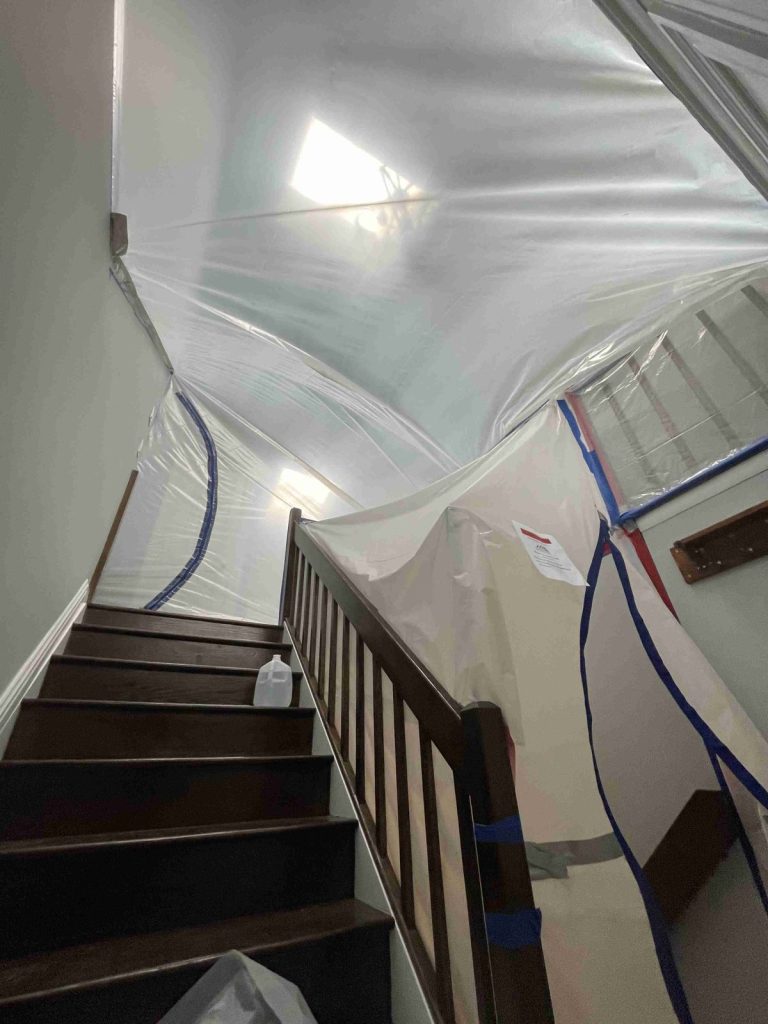
Asbestos containment is the system of barriers, airflow controls, and entry rules that keeps fibers inside a work area while asbestos-containing material is removed or sealed. In NY homes, containment usually goes up before any of that material is touched and stays up until independent air sampling shows the area is ready to be opened. Plastic sheeting alone is not containment. The sheeting, the sealed openings, the negative air machines, and the decontamination unit have to work together.
Written by the Bowerman Cleaning and Restoration Team · July 17, 2026
Key Takeaways
- Containment combines plastic barriers, sealed openings, negative air, and a decontamination unit.
- Negative air machines with HEPA filters keep the work area at lower pressure than the rest of the house.
- Workers and waste leave through controlled exits so dust does not ride out on clothing, tools, or bag surfaces.
- Barriers come down only after cleaning and independent clearance air sampling.
In This Guide
- What Are the Parts of an Asbestos Containment?
- How Does Negative Air Keep Fibers In?
- How Do Workers and Waste Enter and Leave?
- When Can Containment Come Down?
- Asbestos Containment FAQs
What Are the Parts of an Asbestos Containment?
Short answer: critical barriers, floor and wall sheeting, negative air, a decontamination unit, and a waste load-out. Each part covers a different way fibers could escape the work area.
| Part | What it does |
|---|---|
| Critical barriers | Seals over vents, doors, windows, and other openings that cannot be closed any other way |
| Floor and wall sheeting | Layers of polyethylene that catch debris and make the final cleaning more complete |
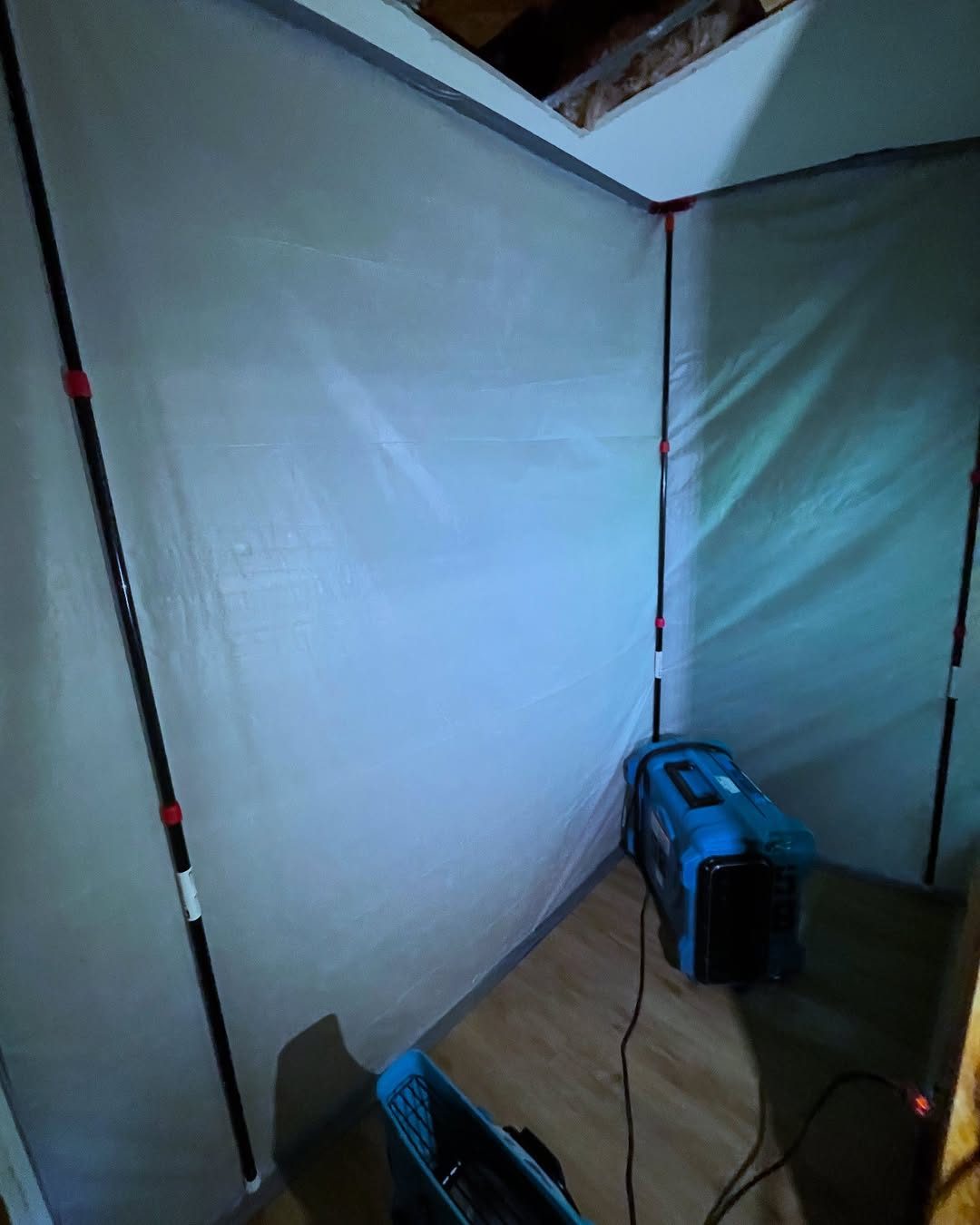
| Negative air machines | HEPA-filtered fans that exhaust air so it flows into the work area, not out of it |
| Decontamination unit | A series of chambers where workers remove protective clothing and wash before leaving |
| Waste load-out | A controlled exit used only for sealed, cleaned waste bags |
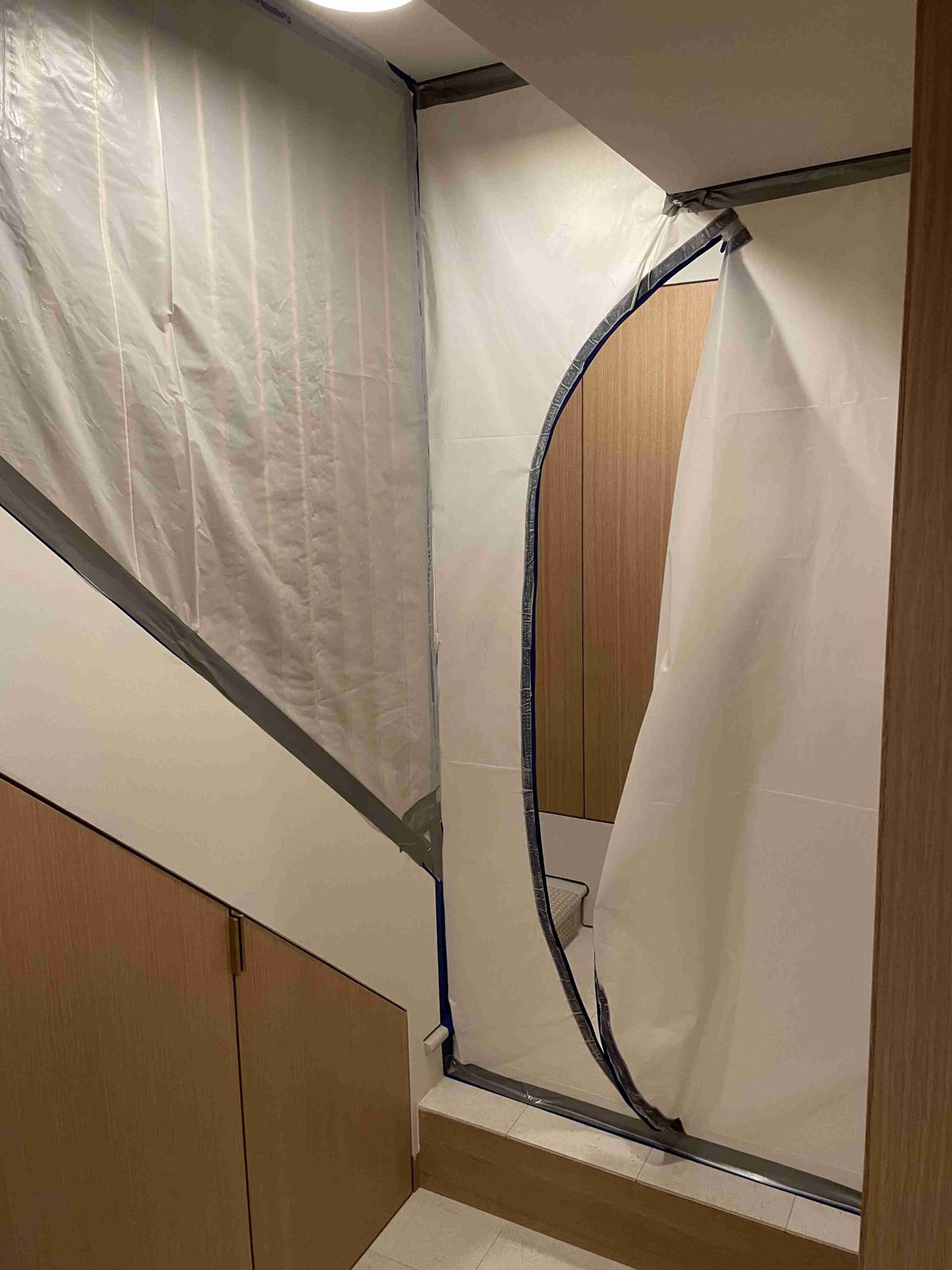
In a house, these parts are fitted around real architecture: stairwells, hallways, kitchens, and shared ducts. A stairway may be sheeted so fibers cannot drift to another floor. A doorway may become a zippered or flapped entry. Registers and returns in the work area are sealed so the HVAC system cannot move dust. State rules spell out many of these details. The NYS Department of Labor asbestos program oversees asbestos projects under Industrial Code Rule 56.
The quality of the tape joints, the overlap of the poly, and the way floor protection is detailed all matter. A gap at a baseboard, an unsealed can light, or a closet that was left out of the plan can become a path out of the work area.
How Does Negative Air Keep Fibers In?
Short answer: by pulling more air out of the work area than leaks in, so any gap draws clean air inward instead of letting dusty air out. The exhaust is filtered through HEPA media before it leaves.
When the machines run, the plastic walls often bow slightly inward. That inward bow is a simple visual sign that pressure is lower inside than in the rest of the house. Many crews also use a manometer to record the pressure difference and to notice if a door was left open or a machine was turned off.
Filter care is part of the system. Loaded filters reduce airflow and can weaken the pressure difference. Exhaust should be directed where the filtered air will not blow back into the work area or into a neighbor’s space. Wetting the material is the other half of fiber control. Dry scraping releases far more dust than wet removal, and no amount of plastic can make a sloppy dry method safe. How asbestos removal is done covers wet methods in more detail.
Forced-air heating and cooling that serves the work area is usually shut down for the duration, and the openings are sealed. Running those systems during work can pull dust into the ducts and push it to rooms that were never inside the containment.
Planning work around suspect asbestos material in Westchester County, NY? Bowerman Cleaning and Restoration answers 24/7.
How Do Workers and Waste Enter and Leave?
Short answer: through a decontamination unit for people and a separate load-out for sealed bags. Everyday doorways left open defeat the rest of the system.
A decontamination unit is typically a series of chambers: a dirty side where protective clothing is removed, a shower or wash area, and a clean side for street clothes. The point is to keep dust from riding out on coveralls, boots, hair, or tools. Tools that must leave the area are cleaned first. The load-out for waste is separate. Bags are sealed, the outsides are wet-wiped or HEPA-vacuumed, and only then are they carried to a lined, enclosed vehicle.
Household traffic should not share that path. In a two-story house, that may mean a temporary change in how people use the stairs. Pets should stay out entirely. A viewing window or photo updates are a better way to check progress than stepping inside the regulated area.
When Can Containment Come Down?
Short answer: after all visible debris is gone, surfaces are cleaned, and clearance air samples from an independent firm meet the required level. The crew that did the abatement does not certify its own work.
- Gross removal. Bulk material is wetted, removed, and bagged.
- Fine cleaning. Surfaces are HEPA-vacuumed and wet-wiped.
- Visual inspection. The work area is checked for remaining debris or dusty residue.
- Lockdown, when used. A sealant may be applied to bind any remaining fibers.
- Clearance air sampling. An independent licensed inspector or lab collects and analyzes air samples.
- Teardown. Plastic is removed and disposed of as asbestos waste, and the area is released.
If the air samples fail, the barriers stay up and cleaning is repeated. How safe is asbestos removal depends on these controls being kept in place until clearance passes. What asbestos abatement is places containment inside the larger job, and how asbestos abatement is done walks through the surrounding steps. For the service, see asbestos removal and abatement.
Asbestos Containment FAQs
Is plastic sheeting enough on its own?
No. Without negative air, sealed openings, and controlled entry, dust can move through seams, gaps, and the HVAC system.
Why does the plastic bow inward?
The negative air machines lower pressure inside the work area, so the surrounding air pushes the plastic slightly in. That bow is a useful sign that the system is running.
Can the HVAC system run during containment?
Systems serving the work area are usually shut down and their openings sealed so they do not carry dust to other rooms.
How long does containment stay up?
Until removal or sealing, cleaning, and clearance are complete. Small jobs may be a day or two; larger or multi-room jobs take longer.
Who checks that containment worked?
An independent air sampling firm, separate from the abatement crew, collects and evaluates clearance samples.
Need asbestos containment set up for a project in a Westchester NY home? Bowerman Restoration LLC d/b/a Bowerman Cleaning & Restoration, 7 Intervale Street, White Plains, NY 10606, answers 24/7 at (844) 269-3762.