
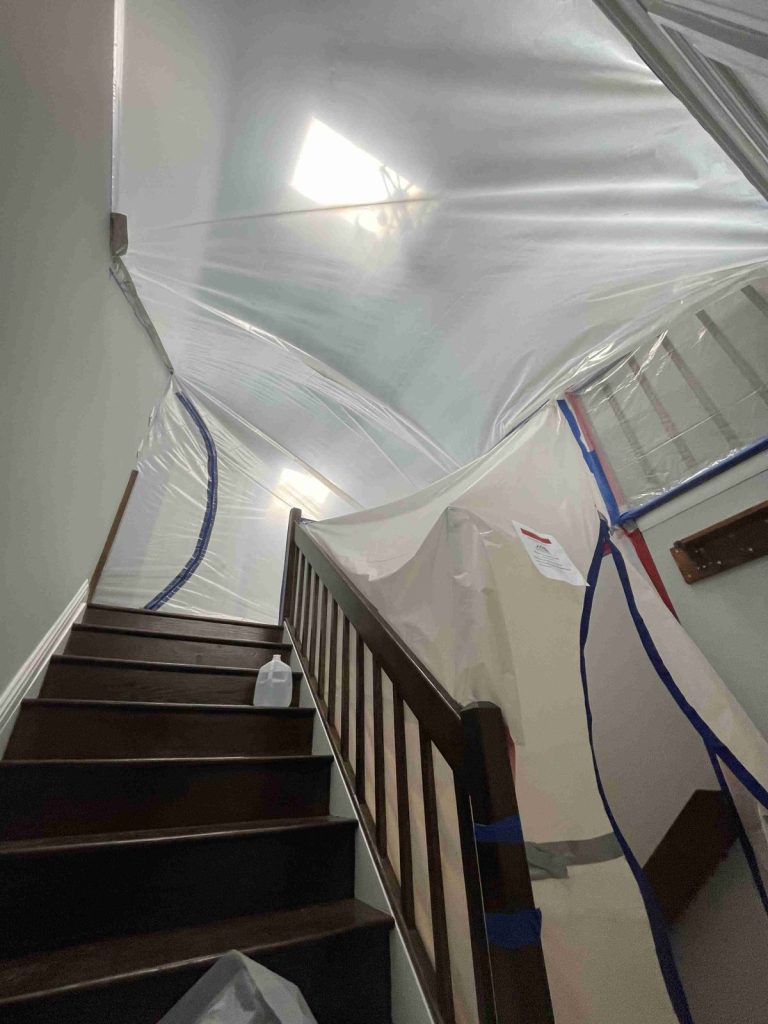
Asbestos abatement vs general demolition is a sequencing issue, not a wording preference. In a NY renovation or a tear-down of part of a house, the two crews are not interchangeable. Abatement is the regulated work of removing or sealing asbestos-containing material under containment. General demolition is the tearing out of finishes and assemblies that are not being handled as asbestos waste. When those jobs are reversed, or when a demo crew is asked to “just take it all,” fibers can spread into rooms that were never in the plan.
Written by the Bowerman Cleaning and Restoration Team · August 6, 2026
Key Takeaways
- Abatement comes first in any area where confirmed asbestos-containing material will be disturbed.
- A general demolition crew should not treat asbestos work as ordinary tear-out.
- The two scopes should be written separately, even when they happen in the same house in the same week.
- If suspect material appears during demolition, work in that spot should stop until it is sampled.
In This Guide
- What Is the Difference Between Abatement and General Demolition?
- Why Does Abatement Have to Come First?
- How Should the Two Crews Work Together?
- What If Demolition Uncovers Suspect Material?
- Asbestos Abatement vs General Demolition FAQs
What Is the Difference Between Abatement and General Demolition?
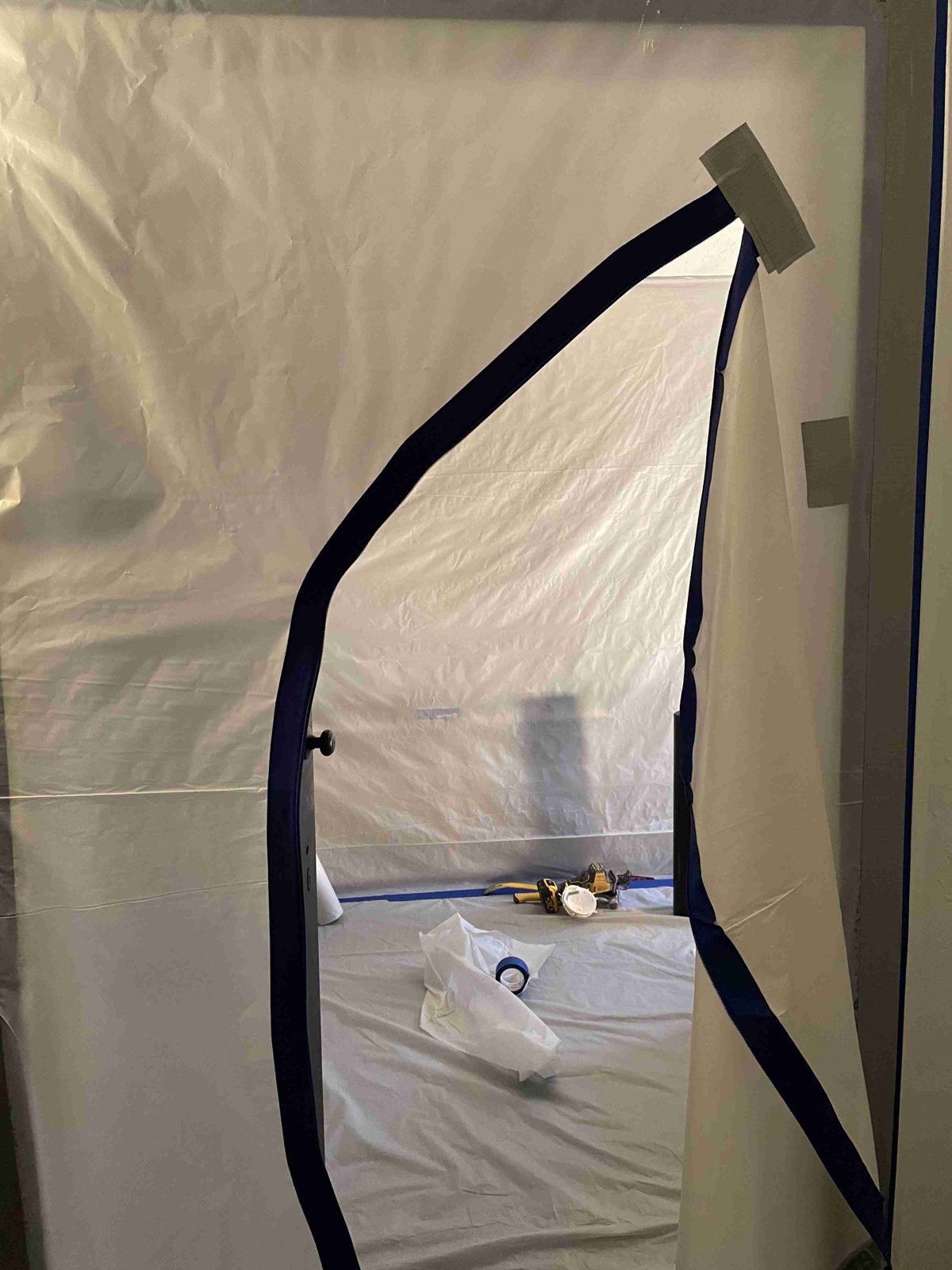
Short answer: abatement controls and removes or seals asbestos-containing material under project rules; general demolition removes other finishes after that material is out of the way. The tools may look similar to a bystander; the controls, waste, and paperwork do not.
| Question | Asbestos abatement | General demolition |
|---|---|---|
| Purpose | Control asbestos-containing material | Take out finishes and assemblies that are not in the asbestos scope |
| Work area | Contained, with negative air and controlled entry | May use dust control, but not an asbestos regulated area |
| Waste | Labeled, sealed, taken to a permitted landfill | Ordinary construction debris, once the asbestos is gone |
| Who does it | A firm qualified for asbestos abatement in NY | A demolition or renovation contractor |
| When it happens | First, in the affected areas | After those areas are cleared, or in areas that were never in the asbestos scope |
How asbestos abatement is done describes the contained sequence. General demolition after clearance can look like a normal remodel: walls open, floors up, dumpsters in the driveway. That everyday look is only appropriate once the asbestos-containing material in the path has been addressed.
Why Does Abatement Have to Come First?
Short answer: because demolition is a high-disturbance activity, and it will break whatever is still in the wall, floor, or ceiling. Doing demo first makes the later abatement larger and less controlled.
If floor tile that contains asbestos is still in place, a demolition crew that starts ripping up the kitchen will break it. If pipe wrap is still on the lines, cutting those lines or pulling a boiler will tear it. The dust then settles on debris, in hallways, and sometimes in HVAC. Cleaning that up is slower than taking the material out first under containment.
New York project rules are built around that order. The NYS Department of Labor asbestos program sets expectations for surveys and asbestos projects before renovation or demolition that may disturb the material. A survey that is ignored, or a demolition crew’s promise to be careful, is not a substitute for that sequence.
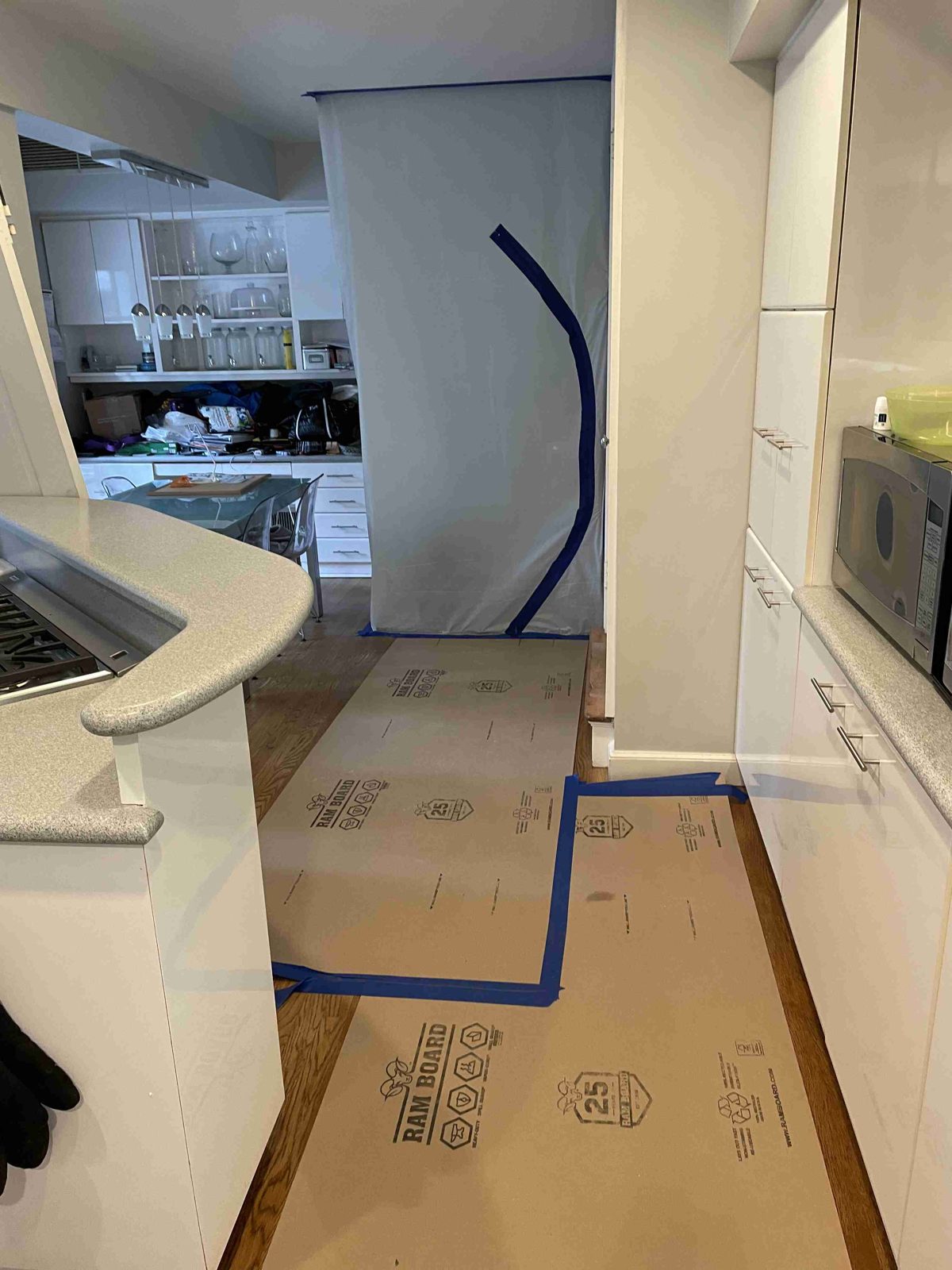
Asbestos abatement during a kitchen renovation is a typical case: the tile, mastic, or plaster is addressed, the area is cleared, and only then does the kitchen demolition finish.
Planning work around suspect asbestos material in Westchester County, NY? Bowerman Cleaning and Restoration answers 24/7.
How Should the Two Crews Work Together?
Short answer: with written scopes, a shared schedule, and a clear handoff after clearance. They may be on the site in the same week, but they should not share the same uncontrolled work area.
The abatement scope should list materials, methods, and areas. The demolition scope should list what comes out after those areas are released, and what will be left for the rebuild. Access paths, parking, and dumpster placement should be planned so ordinary debris does not mix with bagged asbestos waste. HVAC and occupancy rules during the abatement window should be understood by both contractors.
In a two-family house or a townhouse, neighbors and the building manager may also need to know which days the contained work is underway, as opposed to ordinary demolition days.
What If Demolition Uncovers Suspect Material?
Short answer: stop in that area, keep the debris in place, and have the material sampled before going further. Continuing to load a dumpster after a mid-demo find is one of the usual ways a job expands.
Hidden layers of flooring, boxed-in pipes, and unexpected coatings are not rare. The demolition crew should be told in advance to stop if something like that appears. An independent licensed inspector can then sample the material. If it is confirmed, abatement returns to the site, and demolition resumes after clearance.
For the overall process, see what is asbestos abatement. For the service, see asbestos removal and abatement.
Written handoff dates prevent a second common failure: a demolition dumpster arriving while bagged asbestos waste is still being staged, or trades arriving to open walls on a day clearance has not yet passed. The schedule should show the last day of abatement, the expected clearance, and the first day general demolition may enter each room. If clearance fails, demolition does not move up; cleaning is repeated and the air is sampled again. That pause is part of the sequence, not an optional delay.
Asbestos Abatement vs General Demolition FAQs
Can one company do both abatement and demolition?
Some firms offer both, but the asbestos work still has to be performed as an asbestos project, with the right controls and records, not as a casual add-on to demo day.
Why can’t the demolition crew just wet the material and be careful?
Wetting is one control used during abatement, not a complete substitute for containment, training, waste handling, and independent clearance.
Should the dumpster arrive during abatement?
Ordinary demolition dumpsters should not be used for asbestos waste and are often better scheduled after the asbestos waste has already left the site.
Does a full house tear-down still need abatement first?
If asbestos-containing materials are present, they still have to be handled under asbestos project rules before or as part of the demolition plan, not mixed into a general debris pile.
Who decides when demolition can start in a room?
After the abatement in that room is complete and, where required, independent clearance has passed and the area has been released.
Sorting out asbestos abatement vs general demolition for a Westchester NY project? Bowerman Restoration LLC d/b/a Bowerman Cleaning & Restoration, 7 Intervale Street, White Plains, NY 10606, answers 24/7 at (844) 269-3762.