
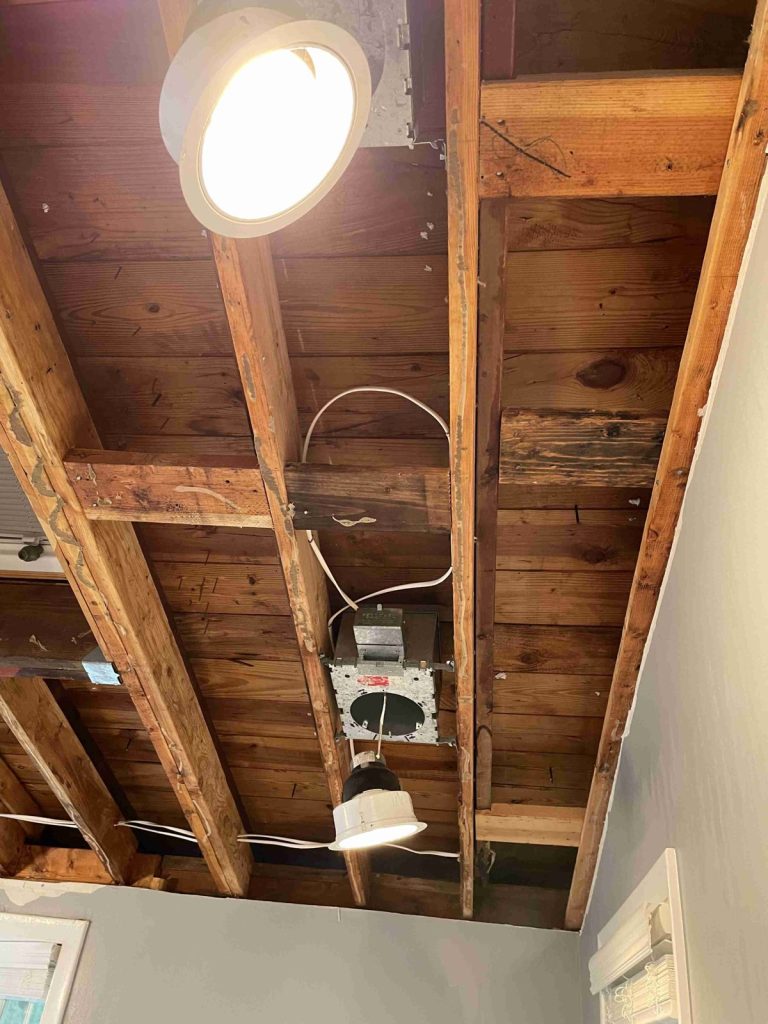
Asbestos during renovation is a planning issue in many NY homes, especially those built before about 1980. Floor tile under a new kitchen, pipe wrap behind a bathroom wall, or textured coating on a ceiling can all be asbestos-containing material. The safest sequence is to find that out before demolition starts, abate what will be disturbed, and only then let the renovation crew open the room. When the material is found mid-job instead, the renovation has to stop in that area until it is sampled and addressed.
Written by the Bowerman Cleaning and Restoration Team · July 24, 2026
Key Takeaways
- Order an asbestos survey before demolition in older homes, not after walls or floors are opened.
- Abatement of confirmed material happens before the renovation crew disturbs those areas.
- If suspect material appears mid-job, stop work, limit air movement, and have it sampled.
- Renovation can resume in the area only after abatement and independent clearance.
In This Guide
- What Should Happen Before a Renovation Starts?
- How Is the Renovation Coordinated With Abatement?
- What If Asbestos Is Found in the Middle of the Renovation?
- When Can the Renovation Start Again?
- Asbestos During Renovation FAQs
What Should Happen Before a Renovation Starts?
Short answer: a survey of the areas that will be opened, then a plan to abate any confirmed material before demolition. A planned window is faster and cleaner than a mid-project stop.
New York rules generally expect an asbestos survey before renovation or demolition that may disturb suspect materials. An independent licensed inspector collects samples, and an accredited lab analyzes them. The renovation contractor needs that report before cutting, sanding, or tearing out finishes. The NYS Department of Labor asbestos program outlines the project requirements behind that sequence.
Kitchen guts, bath remodels, basement finishing, attic conversions, and flooring replacement are the projects that most often disturb older materials. Asbestos abatement during a kitchen renovation and asbestos abatement during a loft conversion show how the survey and the abatement window fit into a real remodel schedule.
If the survey finds no asbestos in the work area, the renovation can go ahead with fewer unknowns. If it finds asbestos, the abatement contractor works first, the area is cleaned and cleared, and the renovation crew returns. Trying to have both crews work in the same unfinished room at the same time is how scopes collide and fibers spread.
How Is the Renovation Coordinated With Abatement?
Short answer: the two jobs are sequenced: abatement and clearance first in the affected areas, then demolition and rebuild. Shared calendars, access, and dust control need to be agreed on in writing.
A useful project plan states which rooms are in the asbestos scope, when the abatement crew will be on site, and when the area will be released. The renovation contractor should not begin demo in those rooms until that release happens. If only part of the house is affected, the rest of the project can sometimes continue, as long as the work areas do not share open air or a common path.
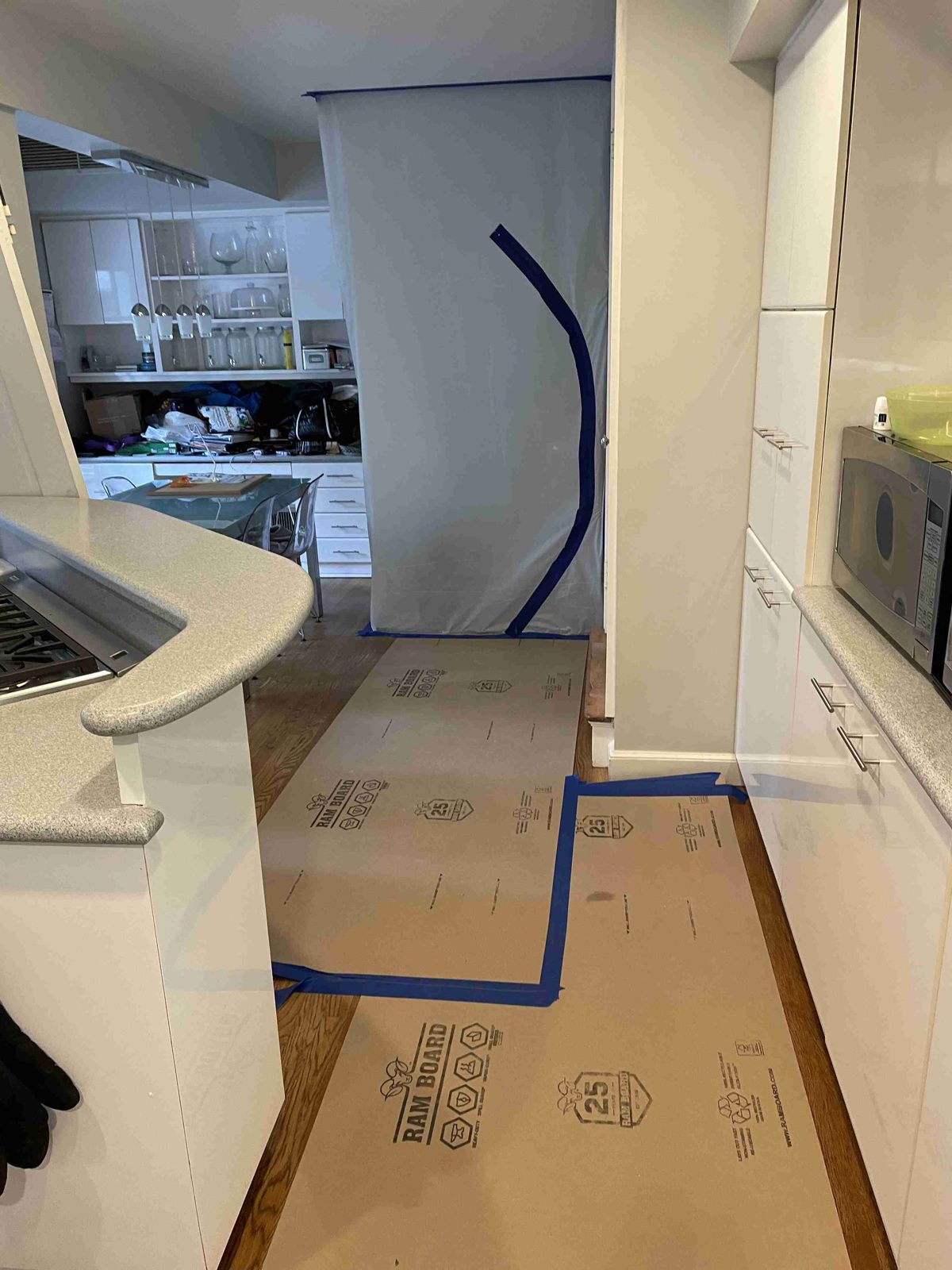
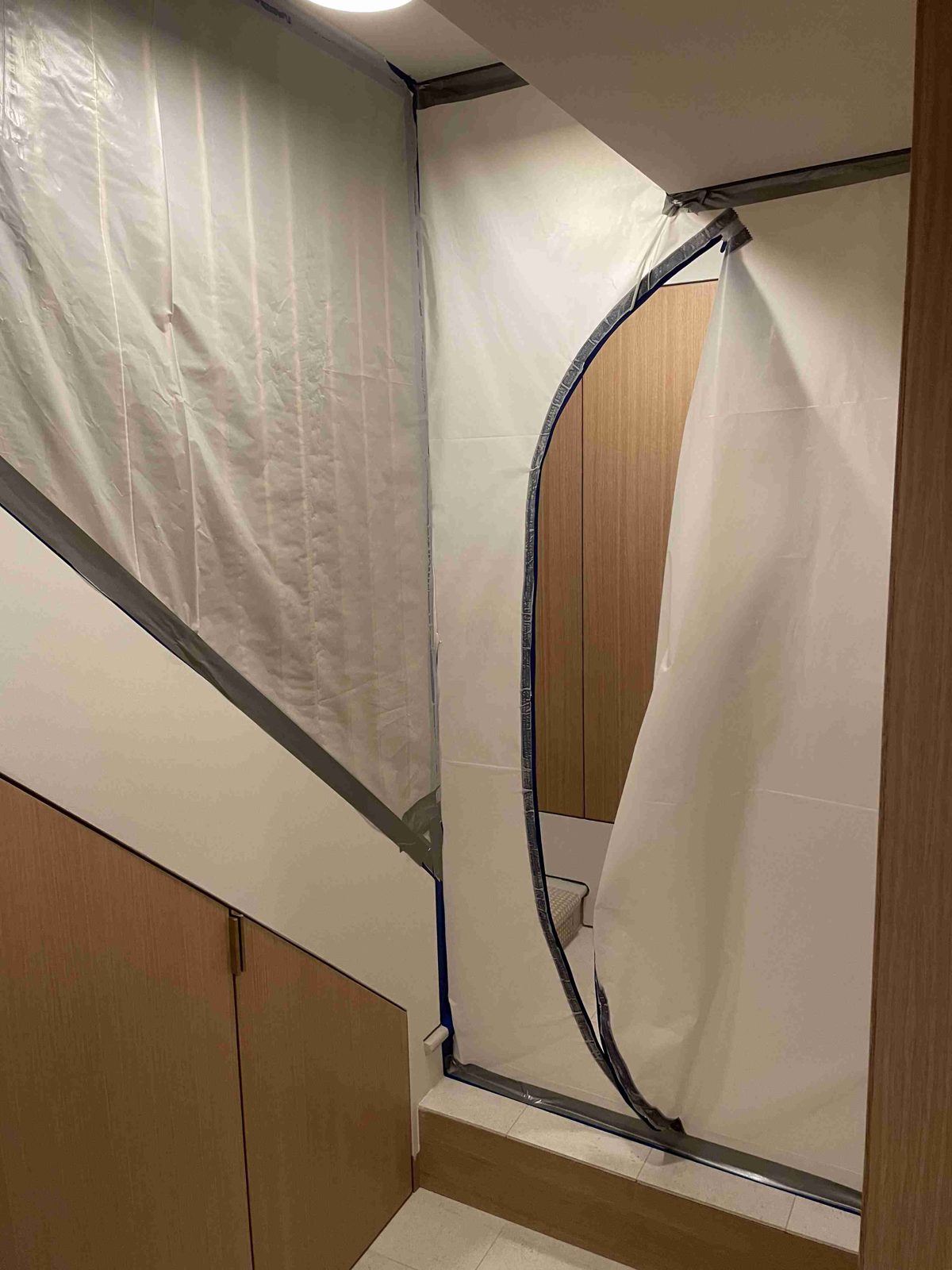
Owners should also plan for containment that may block halls, stairs, or a kitchen for several days. Belongings need to be out of the work area. HVAC serving that area is usually shut down and sealed for the duration. These are the same controls described in how asbestos abatement is done, applied to a remodel instead of a stand-alone removal.
Change orders are common when a second layer of flooring, an unexpected soffit, or a hidden pipe run appears after the first finishes come out. The right response is to sample first and update the scope, not to keep cutting while the lab result is pending.
Planning work around suspect asbestos material in Westchester County, NY? Bowerman Cleaning and Restoration answers 24/7.
What If Asbestos Is Found in the Middle of the Renovation?
Short answer: stop work in that area, keep people out, limit air movement, document the material from a distance, and have it sampled. Continuing to cut, sweep, or bag the debris can spread fibers into rooms that were not part of the original scope.
- Stop work. The renovation crew should stop cutting, demolishing, or sanding in the affected area.
- Isolate the area. Close doors, keep people and pets out, and avoid walking debris into other rooms.
- Limit air movement. Turn off forced-air systems serving that area so dust is not pulled through ducts.
- Document. Photograph the material from a distance and note where it is. Do not touch, sweep, or vacuum it.
- Get it sampled. An independent licensed inspector collects samples and sends them to an accredited lab.
The EPA guidance on protecting your family from asbestos also advises leaving suspect material alone until it is checked. If the lab confirms asbestos, abatement proceeds under containment, and the renovation resumes after clearance. If debris has already been tracked into other rooms, the scope may have to include cleaning those areas as well.
When Can the Renovation Start Again?
Short answer: after the affected area has been abated, cleaned, and cleared by an independent firm. The remodel then continues under the original design, with any newly opened areas added to the record.
A short delay for sampling and abatement is inconvenient. A fiber release from mid-project demolition is worse, and it can cost more than a planned abatement would have. Owners who already have a survey from the start of the job are in a stronger position when something unexpected appears, because the project team already knows who will sample and who will abate.
Keep the survey, the abatement scope, clearance results, and waste records with the renovation file. They help later if the house is sold or if another project opens a different area. For the overall method, see what is asbestos abatement. For the service, see asbestos removal and abatement.
Asbestos During Renovation FAQs
Is an asbestos survey required before renovating a NY home?
New York generally expects a survey before renovation or demolition that may disturb suspect materials. An independent licensed inspector and an accredited lab handle the sampling and analysis.
Can the renovation contractor remove the asbestos?
Only if that firm is qualified to perform asbestos abatement under NY rules. Many general contractors are not, and the work should not be treated as ordinary demolition.
What should happen if old tile is found under a newer floor?
Stop lifting the floor in that area and have the tile and mastic sampled. Hidden layers are one of the most common mid-renovation finds.
How long will a mid-project find delay the remodel?
It depends on lab turnaround, the amount of material, and contractor availability. A planned survey at the start usually causes less delay than a surprise after demo has begun.
Who pays for abatement found during a renovation?
Usually the owner, unless the contract assigns it differently. Standard homeowners insurance rarely covers asbestos found during planned remodeling.
Planning around asbestos during renovation in a Westchester NY home? Bowerman Restoration LLC d/b/a Bowerman Cleaning & Restoration, 7 Intervale Street, White Plains, NY 10606, answers 24/7 at (844) 269-3762.