
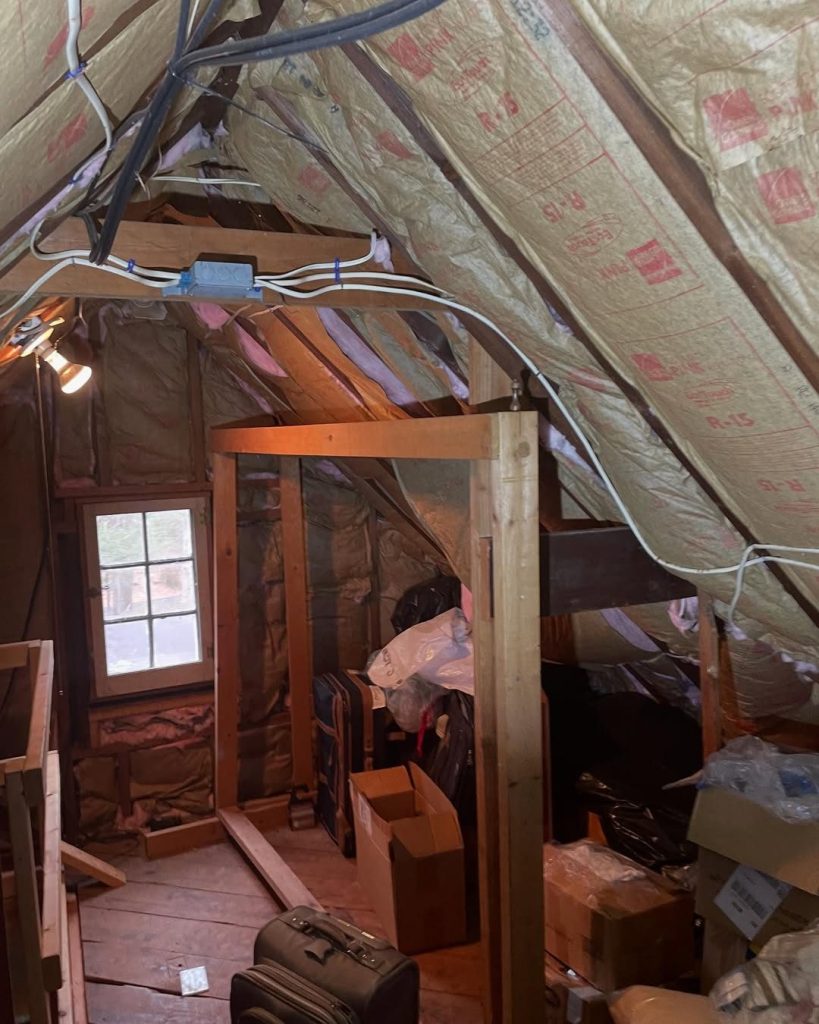
Mold in attic insulation removal is often the practical step when insulation has stayed damp or has supported growth. The material is porous, hard to clean in place, and can hide wet decking or framing. In NY attics, the usual path is to contain the work, remove the affected insulation, and dry what remains.
Written by the Bowerman Cleaning and Restoration Team · May 14, 2026
Key Takeaways
- Insulation that has stayed wet or supported growth is usually removed, not washed and put back.
- The moisture source (roof leaks, bypasses, or ventilation problems) still has to be repaired, or new insulation can have the same problem.
- Removal should happen under containment, with the material bagged so dust does not fall into the house.
- Replacement insulation goes in only after the attic structure is dry and, in NY, after any required independent assessment is complete.
In This Guide
- Why Is Affected Attic Insulation Usually Removed?
- How Is Moldy Attic Insulation Taken Out?
- What Causes Mold in Attic Insulation in NY Homes?
- When Can New Insulation Go Back In?
- Mold in Attic Insulation Removal FAQs
Why Is Affected Attic Insulation Usually Removed?
Short answer: it is porous, it holds moisture, and it cannot be reliably cleaned the way a hard surface can. Trying to dry or spray insulation in place often leaves wet or dusty material behind.
The EPA mold cleanup guidance treats porous materials that have supported mold as items that often cannot be salvaged. Attic insulation sits in that group. Water from a roof leak, ice dam, or bathroom bypass soaks into the fibers. Growth can be on the insulation, on the back of it, or on the deck and joists it was covering.
A related, location-specific article on mold-affected insulation removal in Scarsdale, NY describes this kind of work in one Westchester community. The same logic applies more generally: take out the affected insulation, then deal with the wood and the moisture source.
How Is Moldy Attic Insulation Taken Out?
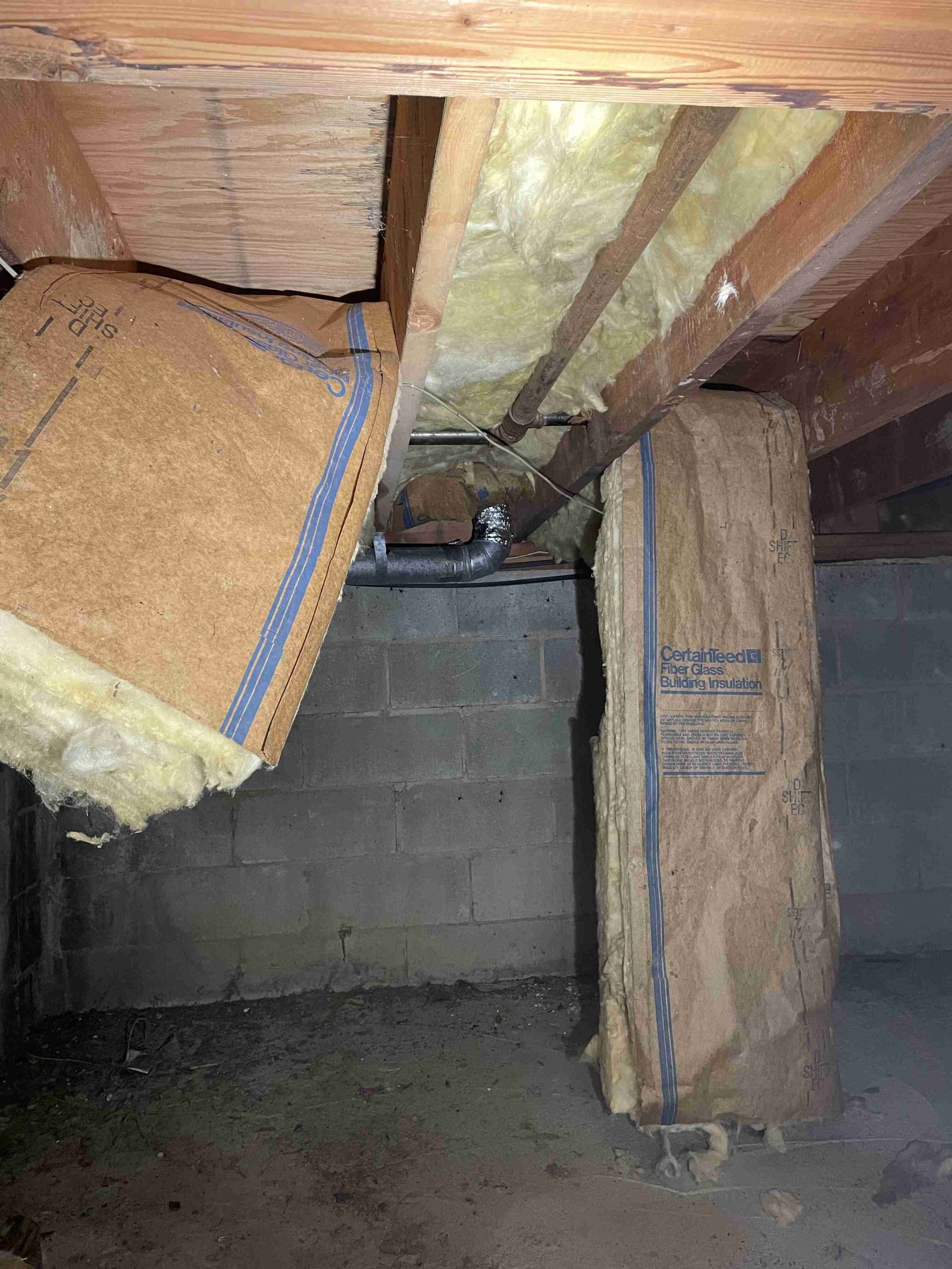
Short answer: the work area is contained, the insulation is bagged or extracted under control, and the remaining structure is cleaned as needed and dried. Loose-fill that is dumped down an open hatch can spread dust through the house.
- Find and address the moisture source. A roof leak, ice dam, unblocked exhaust, or air leak from the living space has to be understood before new insulation goes in.
- Contain the attic access and the work area. Plastic at the hatch, protected floors below, and sometimes a fuller enclosure keep fibers and dust from falling into living space.
- Remove the affected insulation. Batts are typically bagged in place. Loose-fill may be bagged or vacuumed with equipment meant for that job, not with a household vacuum.
- Clean and dry the remaining structure. Decking, joists, and any remaining residue are addressed as the scope requires, then dried to a documented target.
- Review, then replace. In New York, an independent mold assessor typically reviews completed remediation before new insulation and finishes go back. The remediator does not perform that official assessment or any clearance testing.
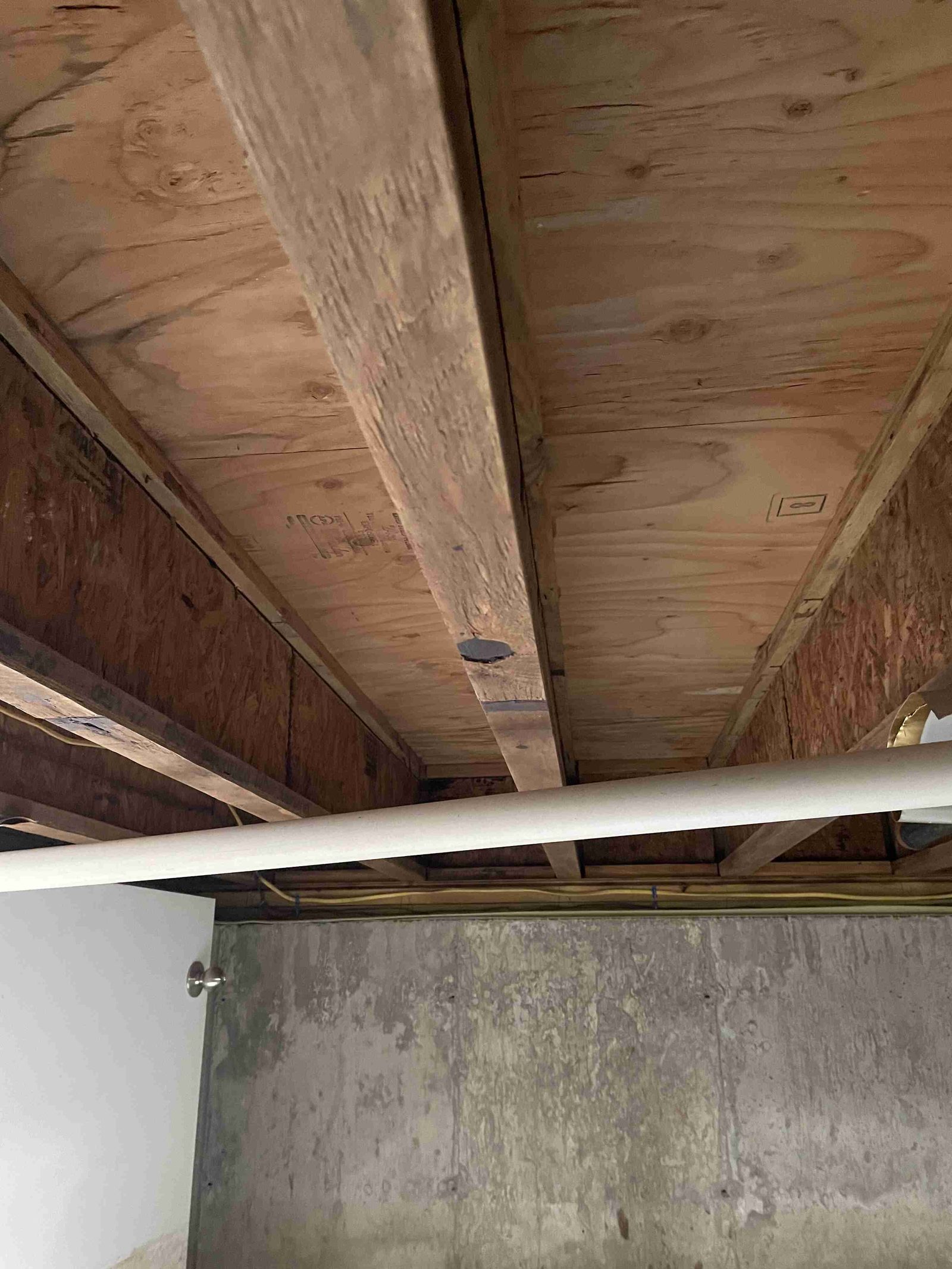
What mold remediation is puts this removal step in the larger sequence used by professional mold remediation services. If the moisture started in a crawl space rather than an attic, what crawl space mold remediation involves after flooding is the closer companion.
What Causes Mold in Attic Insulation in NY Homes?
Short answer: roof leaks, ice dams, bathroom or kitchen exhaust dumping into the attic, and warm indoor air leaking into a cold roof space. Westchester winters make ice dams and condensation more than a theoretical problem.
- A leak in the roof covering or flashing that wets the deck and the insulation under it.
- Ice dams along the eaves that back water under shingles.
- Bath or kitchen fans that terminate in the attic instead of outdoors.
- Gaps around hatches, lights, or chimneys that let warm, moist indoor air into the attic.
- Limited ventilation that keeps an attic damp after a wetting event.
Fixing only the insulation leaves those paths in place. The EPA brief guide again puts moisture control first.
Questions about a mold problem in Westchester County, NY? Bowerman Cleaning & Restoration answers 24/7.
When Can New Insulation Go Back In?
Short answer: after the source is repaired, the structure is dry, and any required independent post-remediation assessment is complete. New insulation on wet wood can trap the same problem you just removed.
Replacement is the last step, not a way to hide staining on the deck. Depth and type of the new insulation should also match the plan for ventilation and air sealing, or the attic can collect moisture again. There is no useful promise that growth will never return if the roof or the air leaks are left as they were.
Mold in Attic Insulation Removal FAQs
Can attic insulation be cleaned instead of removed?
Usually no, once it has stayed wet or supported growth. The material is porous and hard to clean thoroughly. Removal, followed by drying of the structure, is the more reliable path.
Is a musty attic always a reason to tear out all the insulation?
Not automatically. The extent matters, and so does whether the material is actually wet or has visible growth. In New York, an independent mold assessor typically defines that scope. A smell alone is a reason to investigate, not a complete diagnosis.
Does the remediator test the attic air after removal?
No. Any air sampling or post-remediation assessment on a New York project should be done by a separate licensed mold assessor, not by the company that removed the insulation.
Can new insulation go in the same day the old insulation comes out?
Only if the remaining structure is already dry and any required review is complete. In practice, drying often takes additional time after the insulation is gone.
Will removing insulation contaminate the rooms below?
It can, if the hatch is left open and material is carried out without containment. A planned removal bags the insulation and protects the path through the house.
Have questions about mold in attic insulation removal in a Westchester NY home? Bowerman Restoration LLC d/b/a Bowerman Cleaning & Restoration, 7 Intervale Street, White Plains, NY 10606, answers 24/7 at (844) 269-3762.