
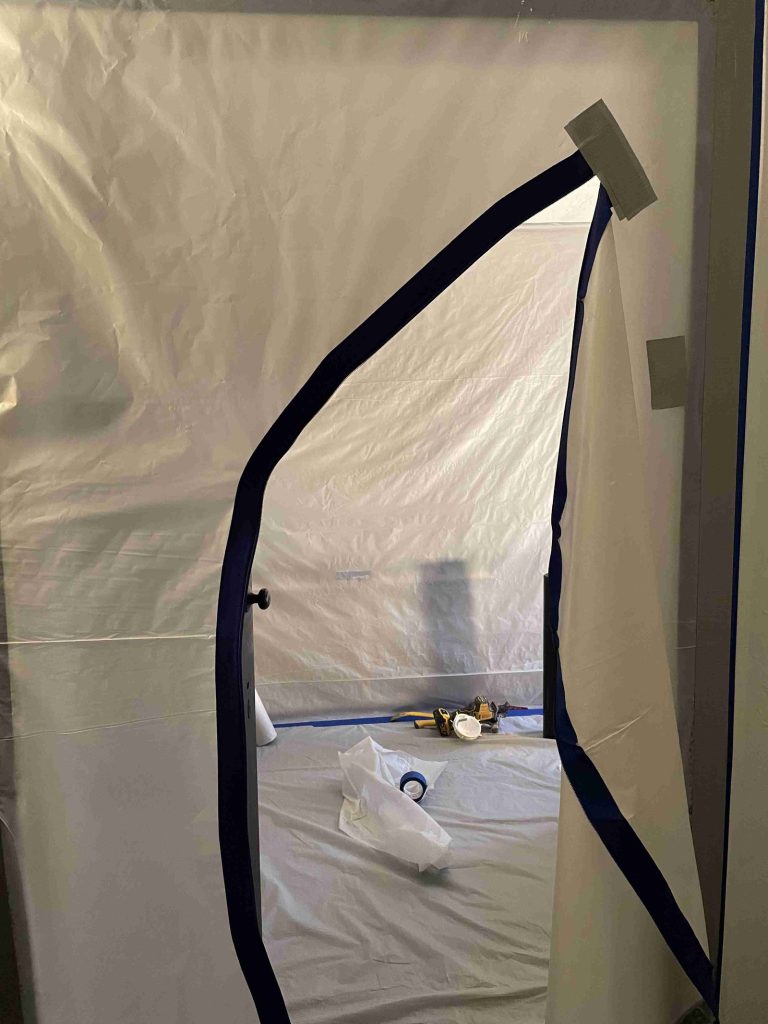
Mold remediation containment is the barrier system that isolates a work area before any affected material is opened. Plastic sheeting, taped seams, a zipper door, and often filtered air keep dust and spores from traveling into the rest of a NY home. It is a first step in professional mold remediation services, not a finish treatment.
Written by the Bowerman Cleaning and Restoration Team · May 12, 2026
Key Takeaways
- Containment is built before drywall, insulation, or other affected material is disturbed.
- A typical setup includes plastic barriers, taped seams, protected floors, and often a zipper door.
- Filtered air equipment, often called an air scrubber, is commonly used with the barriers.
- Walking in and out of the work area without using the designed entry can defeat the setup.
In This Guide
- Why Is Containment Used in Mold Remediation?
- What Does a Containment Setup Usually Include?
- Can You Stay in the House While Containment Is Up?
- When Does the Containment Come Down?
- Mold Remediation Containment FAQs
Why Is Containment Used in Mold Remediation?
Short answer: disturbing affected materials can release dust and spores, and the barrier is meant to keep that material in the work area. A careful cleanup in one room is of little use if the next room receives that dust.
As soon as drywall is cut or insulation is pulled, particles can move on air currents and on clothing or tools. Containment limits those paths. The IICRC S520 standard treats isolation of the work area as part of a controlled remediation, not as an optional wrap at the end.
This is one reason what mold remediation is is broader than wiping a stain. A related look at what mold remediation involves behind drywall shows how quickly a small opening can create dust.
What Does a Containment Setup Usually Include?
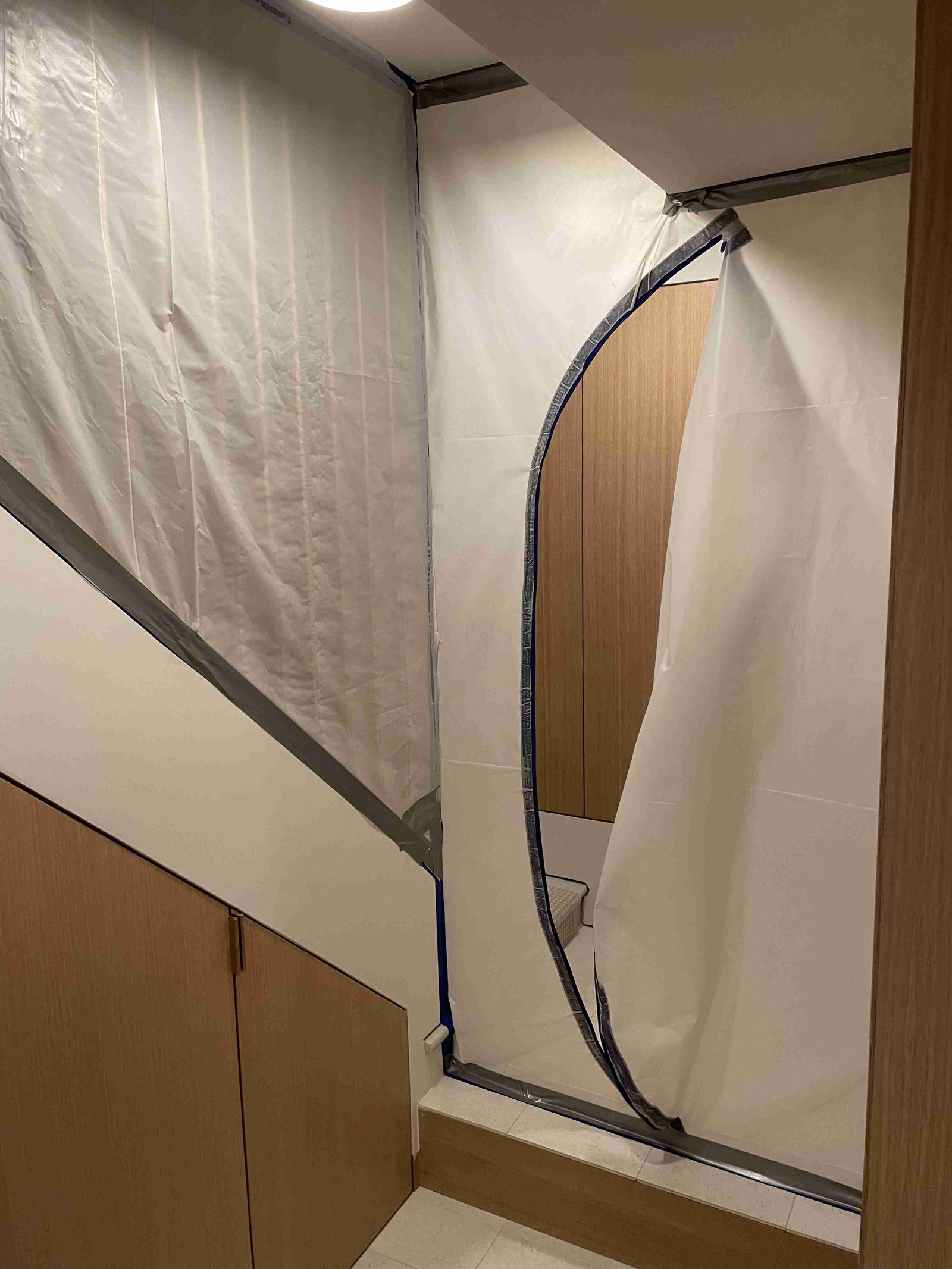
Short answer: plastic walls or ceilings, taped seams, floor protection, a defined entry, and often an air scrubber. The details change with the layout of the house, but the idea stays the same.
| Part of the setup | What it does |
|---|---|
| Plastic sheeting | Creates a temporary wall, ceiling cover, or room enclosure |
| Tape at seams and edges | Closes gaps at trim, floors, and corners |
| Zipper or flap door | Gives a single, controlled way in and out |
| Floor protection | Keeps debris and foot traffic off finished floors outside the cut area |
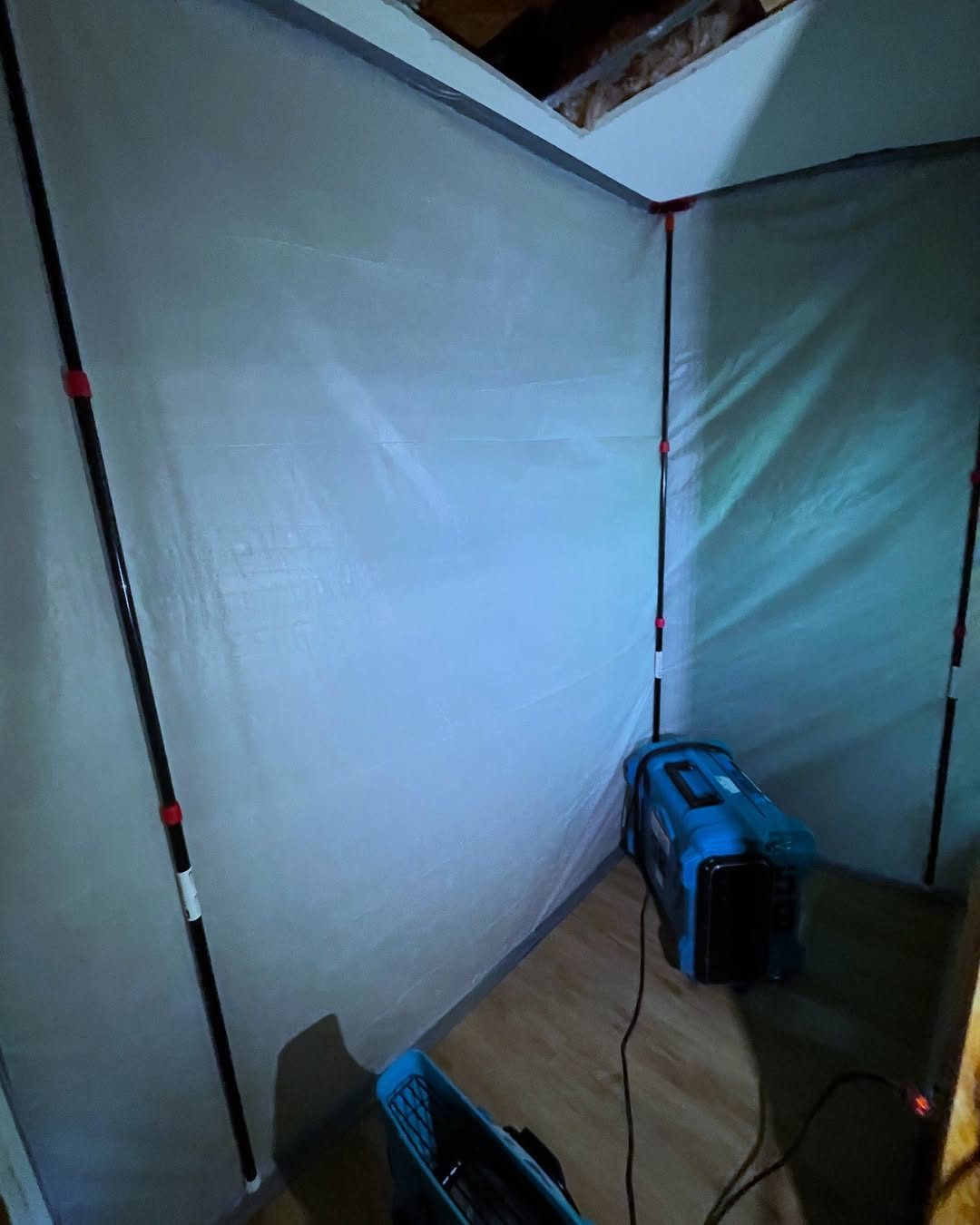
| Air scrubber | Filters air in the work area while materials are disturbed |
| Signage and closed doors | Keeps household traffic out of the zone |
On a compact job, the barrier may be a single doorway and a smaller enclosure around one wall. On a larger job, a hallway, stair, or entire floor may be wrapped so living space remains on the other side. What happens during mold remediation usually begins with this setup.
Can You Stay in the House While Containment Is Up?
Short answer: often yes, if the work area is sealed off and household traffic stays out of it, but that decision depends on the layout and the scope. This is a practical access question, not a medical clearance.
Many jobs are designed so bedrooms or a kitchen remain usable on the other side of the barrier. That only works if doors stay closed, equipment stays on, and no one cuts a shortcut through the plastic. If the only stair or the only bathroom is inside the enclosure, staying in the house may not be practical until that phase is over.
A New York mold assessor, who is independent of the remediator on a covered project, may also note access limits in the written scope. The remediator should explain how long the barriers will stay up and which rooms will be unavailable. This article does not advise anyone to occupy a space for health reasons; a doctor is the right source for those questions.
Questions about a mold problem in Westchester County, NY? Bowerman Cleaning & Restoration answers 24/7.
When Does the Containment Come Down?
Short answer: after removal and cleaning are finished, dust has been cleaned up, and the area is ready for drying or for the assessor’s review. Taking the plastic down too early can spread leftover dust into cleaned rooms.
Barriers typically stay up through the messy work and the detailed cleanup of the work area. Drying equipment may continue after that. The independent post-remediation assessment, when it is part of a New York project, is easier to schedule if the area is still controlled or at least has not been opened to household traffic too soon. The EPA mold cleanup guidance also stresses limiting the spread of dust during cleanup.
Once the barrier is down, it should not be necessary to walk affected debris through living space. That material should already have been bagged and taken out while the enclosure was in place.
Mold Remediation Containment FAQs
Is plastic sheeting over a door enough containment?
A sealed doorway can be enough for a very small, well-defined job. Larger openings, stairs, or work that will throw a lot of dust usually need a fuller enclosure and a controlled entry, not only a loose sheet.
What is an air scrubber?
It is a portable machine that draws room air through a filter while work is underway. It supports the plastic barriers. It is not a substitute for them, and it is not the same thing as clearance testing.
Can household fans be used instead of a professional setup?
A household fan can push dust into other rooms if the area is not contained. Direction and filtration matter. This is one reason a box fan in an open doorway is a poor stand-in for a planned setup.
Who decides how large the contained area should be?
In New York, the independent mold assessor’s scope often describes the work area. The remediator then builds a barrier that matches that area and the layout of the house.
Should pets and children enter the contained room?
No. The work area should stay closed to household traffic until the contractor says it is ready. That is a dust-control practice, not a medical finding.
Have questions about mold remediation containment in a Westchester NY home? Bowerman Restoration LLC d/b/a Bowerman Cleaning & Restoration, 7 Intervale Street, White Plains, NY 10606, answers 24/7 at (844) 269-3762.