
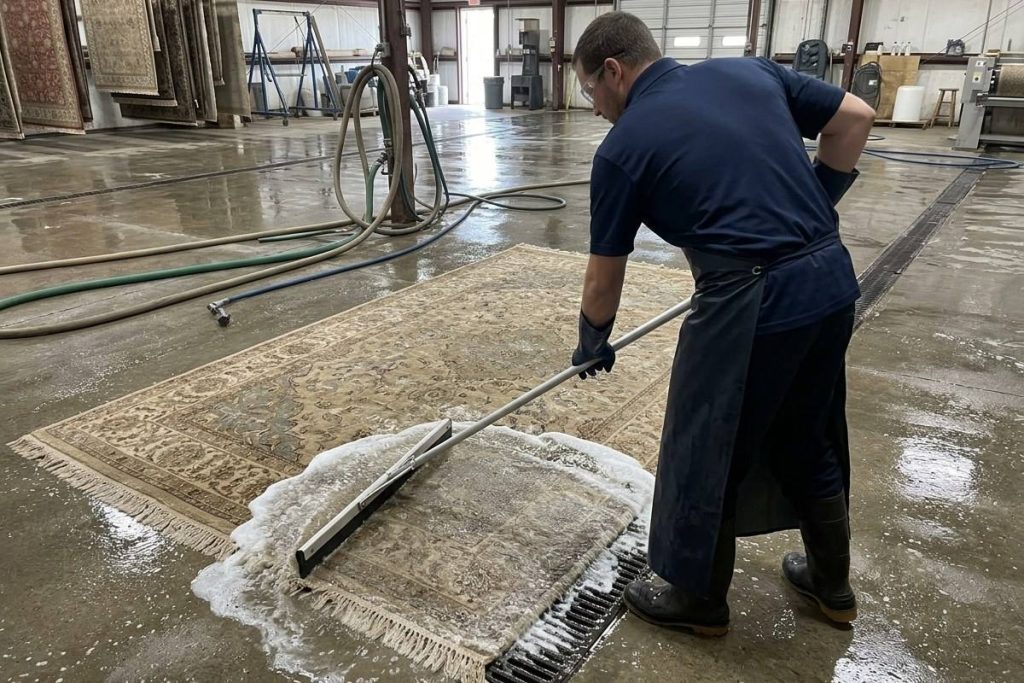
The oriental rug cleaning process runs in about seven steps: inspection, dye testing, dusting, pre-treatment, washing and rinsing, controlled drying, and grooming. In NY, a full cycle usually takes one to two weeks, mostly because dusting and drying are done slowly to protect the dyes and the cotton foundation of the rug.
Written by the Bowerman Cleaning and Restoration Team · September 21, 2026
Key Takeaways
- Inspection and dye testing come first, before any water touches the rug.
- Dusting removes dry grit from the foundation so it does not turn to mud during washing.
- Rinsing until clear matters as much as washing, because residue attracts new soil.
- Controlled drying prevents dye bleeding, browning, and mildew.
In This Guide
- What Are the Steps in the Process?
- Why Does Dusting Come Before Washing?
- Why Is Drying the Most Important Stage?
- How Long Does the Process Take?
- Oriental Rug Cleaning Process FAQs
What Are the Steps in the Process?
Short answer: inspect, test, dust, pre-treat, wash and rinse, dry, then groom and inspect again.
- Inspect and document. The rug is measured and photographed, and its fiber, construction, stains, and existing damage are recorded.
- Test the dyes. Each color is tested with a damp white cloth to see whether it will bleed during washing.
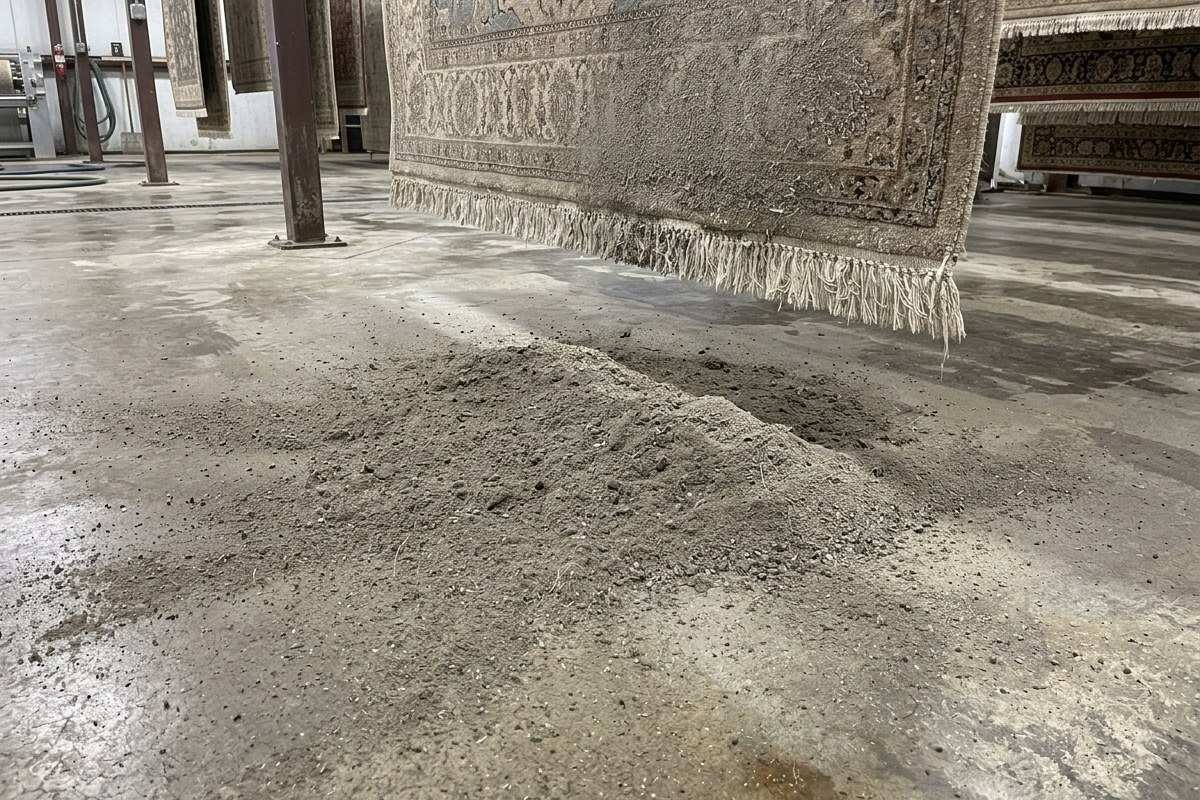
- Dust. Dry soil is removed from the back of the rug by beating, vibration, or a dusting machine, then vacuumed from the face.
- Pre-treat. Spots, pet urine, and heavily soiled areas are treated with products matched to the fiber and dye.
- Wash and rinse. The rug is washed with a mild, fiber-safe solution and rinsed until the water runs clear.
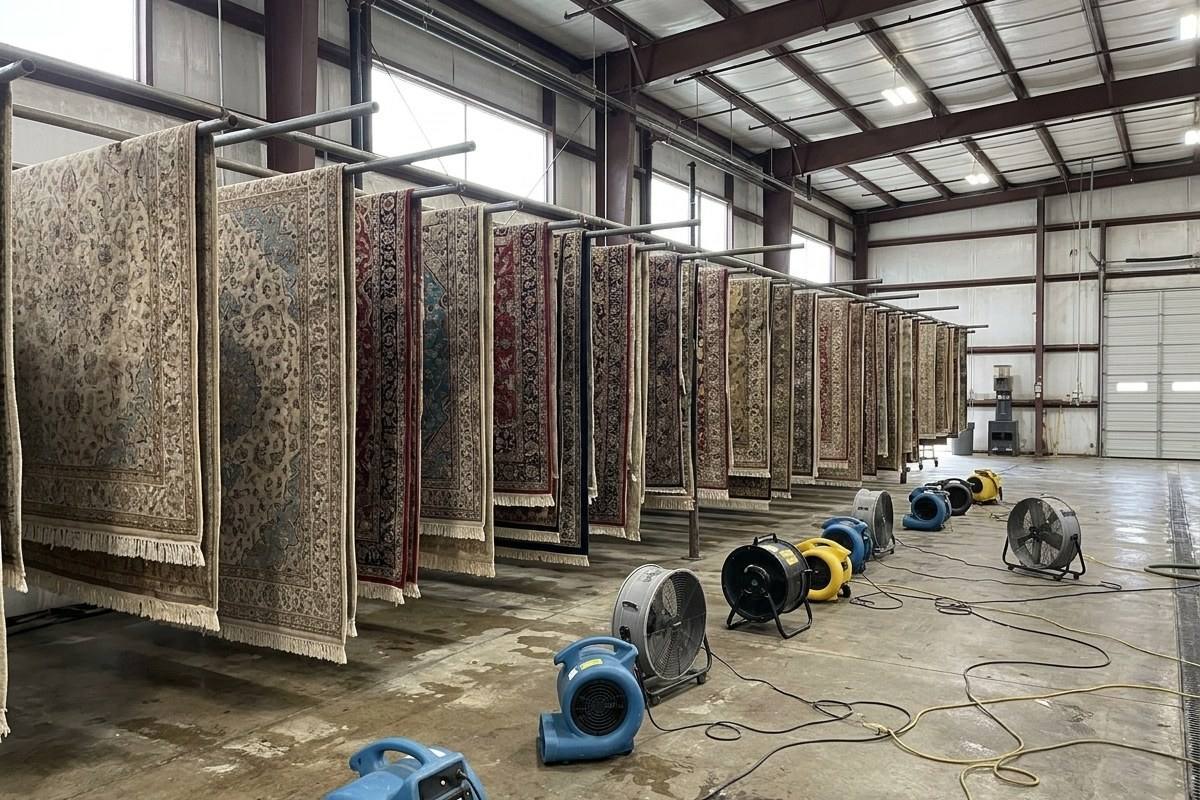
- Extract water and dry. Excess water is removed, then the rug dries flat or hung with airflow and humidity control.
- Groom, finish, and inspect. The pile is brushed in its natural direction, fringe is cleaned, and the rug is checked before it is rolled for return.
The order is the point. Each step protects the next one: testing decides how wet the rug can get, dusting keeps grit out of the wash water, and rinsing keeps residue out of the dry rug. The live service page on oriental and area rug cleaning lists the stages used for in-plant work. A full overview of the work is in what is oriental rug cleaning and repair.
Why Does Dusting Come Before Washing?
Short answer: dry soil sinks to the foundation, grinds the fibers, and turns to mud if the rug is washed first.
Hand-knotted rugs trap a surprising amount of dry soil at the base of the pile. The Canadian Conservation Institute notes that dirt and dust act like sandpaper on the base of a rug. Regular vacuuming only reaches the top layer. Dusting from the back vibrates the soil loose so it falls out instead of being pushed deeper.
Skipping dusting makes washing harder. Wet grit becomes a slurry that clings to the fibers, takes extra rinsing to remove, and can leave a dull film once the rug is dry. Fire-damaged rugs need the same dry-first approach for soot, as the live guide to soot cleanup explains. The oriental rug cleaning methods guide covers this in more detail.
Fine rug that needs cleaning or repair in Westchester County, NY? Bowerman Cleaning and Restoration answers 24/7.
Why Is Drying the Most Important Stage?
Short answer: a rug that stays wet too long can bleed, shrink, brown, smell, or rot in the foundation.
| Drying problem | What causes it | How controlled drying prevents it |
|---|---|---|
| Dye bleeding | Moisture lingering in the pile lets loose dye migrate | Fast, even drying with airflow across the face and back |
| Browning | Water wicks up through cotton and carries residue to the tips | Thorough rinsing and drying from both sides |
| Shrinkage or rippling | Uneven drying or high heat | Drying flat or hung at room temperature with steady airflow |
| Mildew odor | Damp foundation left in still air | Dehumidification and moisture checks before rolling |
| Dry rot | Cotton foundation kept damp for days | Drying fully before the rug goes back on a floor or pad |
The EPA advises drying wet materials within 24 to 48 hours to prevent mold growth, and rugs are no exception. The same airflow and dehumidification ideas used to dry buildings are explained in the water damage drying process and air movers vs dehumidifiers.
How Long Does the Process Take?
Short answer: usually one to two weeks from pickup to return, longer when repairs or heavy odor treatment are needed.
| Stage | Typical time |
|---|---|
| Inspection, testing, and dusting | 1 to 2 days |
| Pre-treatment and washing | 1 day, longer for urine treatment |
| Drying | 1 to 3 days, depending on rug thickness and weather |
| Grooming and final inspection | About 1 day |
| Repairs, if needed | Days to weeks, depending on the work |
Thick wool rugs and rugs treated for pet urine take the longest to dry. Rugs pulled from a flooded room should be handled as soon as possible; the live guide to salvageable items after water damage explains why timing matters for soaked textiles.
Oriental Rug Cleaning Process FAQs
How many steps are in the oriental rug cleaning process?
Most full cleanings follow about seven steps: inspection, dye testing, dusting, pre-treatment, washing and rinsing, drying, and grooming. The oriental rug pet odor removal guide covers this in more detail.
Is the fringe cleaned too?
Yes. Fringe is usually cleaned by hand during washing and brushed during grooming. Damaged fringe may need repair.
Why does cleaning take so long?
Dusting and drying are done slowly to protect the rug. Rushing either step risks soil left behind or dye problems.
Can the process remove all stains?
Many stains lighten or disappear, but some, such as old urine or dye bleed, may be permanent.
What happens after the rug is clean?
It is groomed, inspected, and usually rolled with a protective wrap for return or storage.
Curious how the oriental rug cleaning process would apply to a rug in a Westchester NY home? Bowerman Restoration LLC d/b/a Bowerman Cleaning & Restoration, 7 Intervale Street, White Plains, NY 10606, answers 24/7 at (844) 269-3762.