
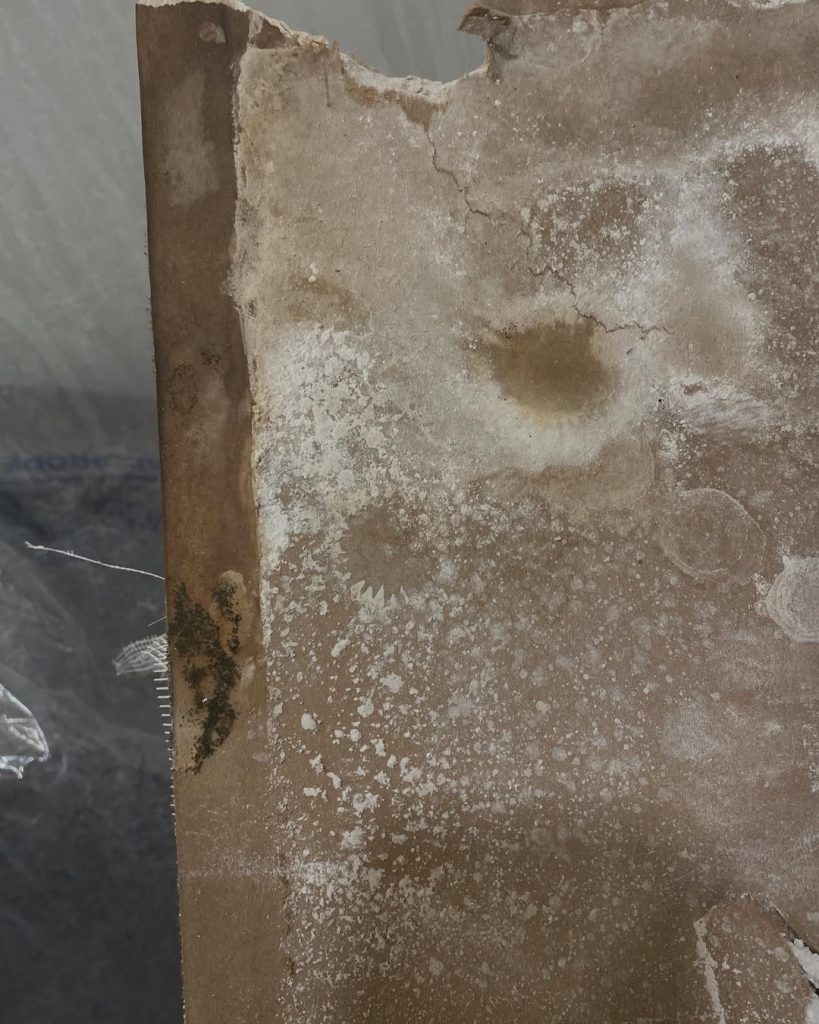
Surface mold vs wall mold is the difference between growth on a reachable face and growth inside a cavity. A film on tile may be a surface problem once moisture is controlled. A returning stain, a musty wall, or a past leak behind drywall is often a cavity problem. In NY homes, that second kind usually means opening the wall. Professional mold remediation services treat a surface film and a cavity problem as different jobs, which is why the wall is opened only when the growth is no longer just on the face.
Written by the Bowerman Cleaning and Restoration Team · June 5, 2026
Key Takeaways
- Surface growth sits on a reachable face and, on some hard materials, can be cleaned after the source is fixed.
- Wall or cavity growth sits behind the finish and usually requires opening the wall so material can be removed and the cavity can dry.
- A clean-looking coat of paint does not prove the cavity is clean or dry.
- In New York, an independent assessor typically defines whether, and how far, a wall should be opened.
In This Guide
- What Is the Difference Between Surface Mold and Wall Mold?
- When Does a Wall Need to Be Opened?
- When Is a Surface Cleanup Still Appropriate?
- Who Decides, in New York, Whether the Wall Stays Closed?
- Surface Mold vs Wall Mold FAQs
What Is the Difference Between Surface Mold and Wall Mold?
Short answer: surface growth is on a face you can reach; wall mold is in or behind the assembly and often cannot be treated from the paint alone. The same stain can start as one and hide the other.
| Point of comparison | Surface growth | Wall or cavity growth |
|---|---|---|
| Where it is | On tile, glass, a hard panel, or the face of a finish | On the back of drywall, on insulation, or on framing |
| Typical first approach | Clean the surface after moisture is fixed, if the material allows it | Open the wall, remove or clean affected material, and dry the cavity |
| Containment need | Lower for a small, careful wipe on a hard surface | Higher, because opening the wall creates dust |
| Clues | A film or spot that stays on the face and does not return after a dry cleanup | Odor, returning stains, soft drywall, or high readings behind the finish |
| Risk of a wipe-only job | Low when the material is truly non-porous and dry | High; the cavity is left untouched |
Two existing guides go deeper on the hidden side: how you know if mold is behind drywall and what mold remediation involves behind drywall. What mold remediation is places both situations in the larger sequence.
When Does a Wall Need to Be Opened?
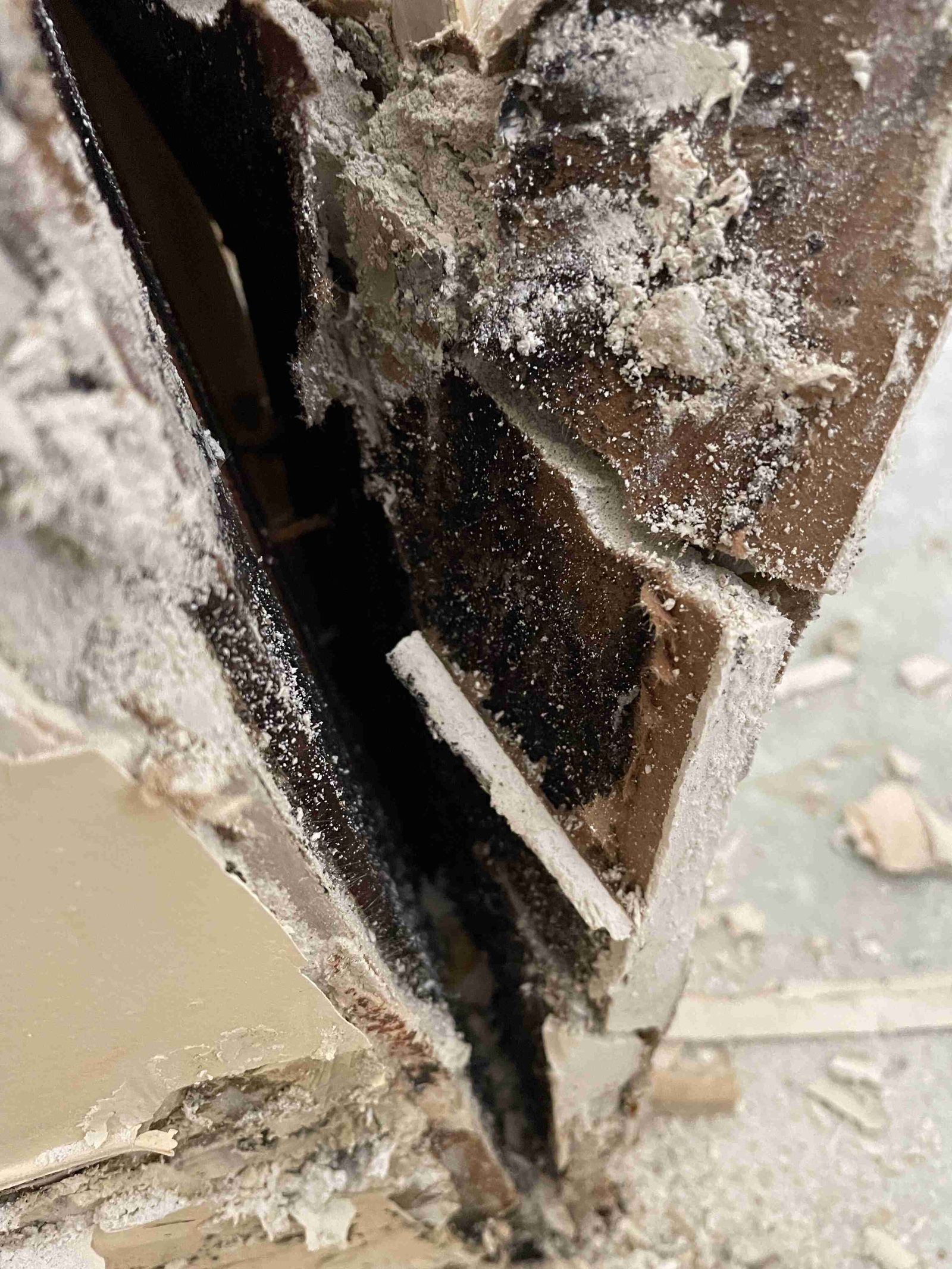
Short answer: when there is reason to think the cavity is wet or affected, or when a surface cleanup has already failed. Opening a wall is a decision, not a default for every visible spot.
- Moisture readings stay high behind the finish.
- A stain or odor returns after paint or a surface cleaning.
- The wall was wet in a leak or flood, even if the paint now looks better.
- The board is soft, swollen, or crumbling.
- An independent NY mold assessor includes opening the wall in the written scope.
The EPA mold cleanup guidance treats larger or more complicated jobs, including hidden growth, as work that often needs a professional approach rather than a household wipe.
When Is a Surface Cleanup Still Appropriate?
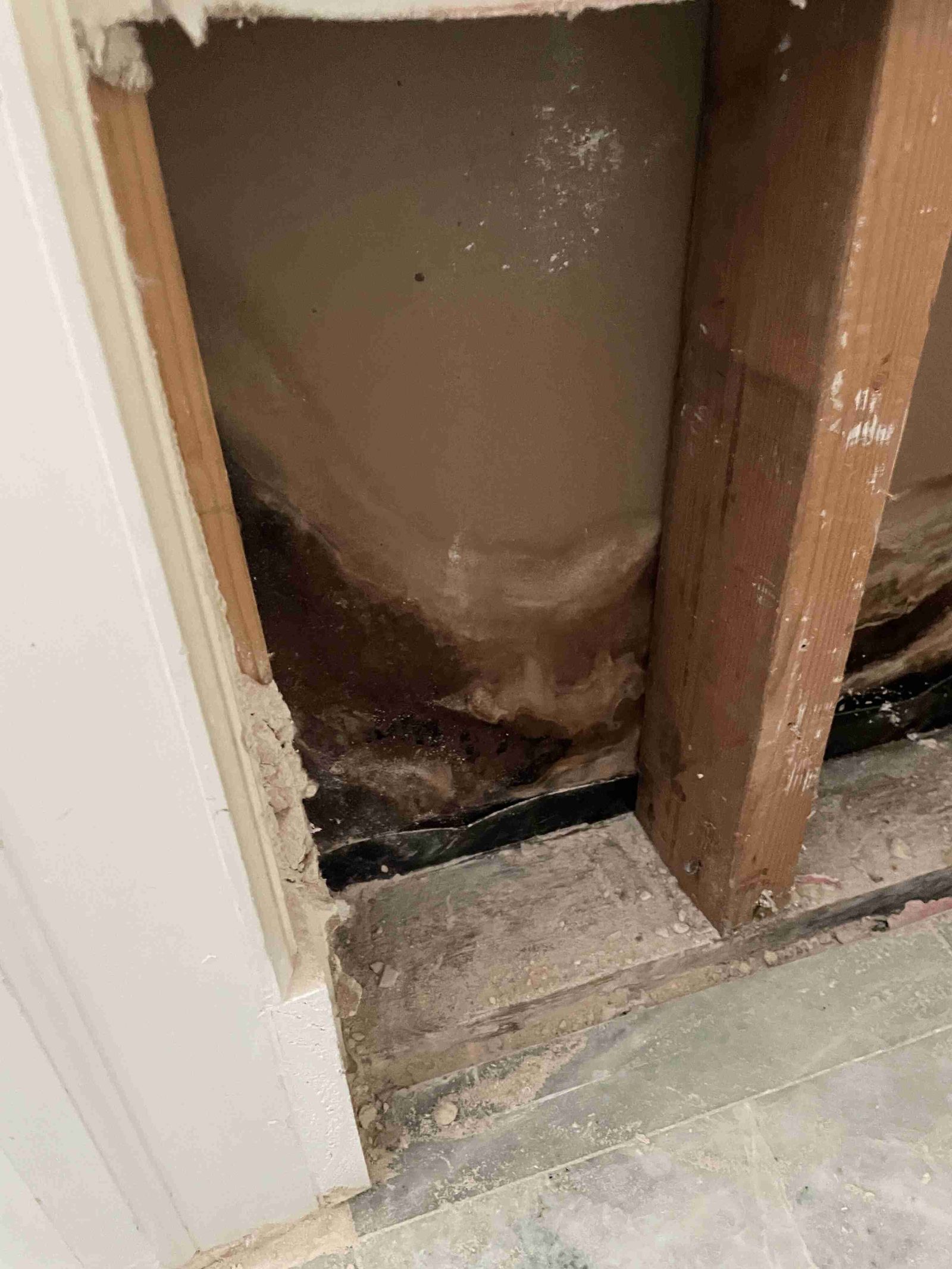
Short answer: when the growth is limited, the material is hard and non-porous, and the moisture source is already under control. Paper-faced drywall is not in that easy group, even when the growth looks like only a surface film.
Tile, glass, and some hard trim can often be cleaned and dried. Drywall is porous. Growth on the paper face may have already reached the board or the cavity, which is why a bleach wipe on painted drywall is a common disappointment. When in doubt, treat drywall as a material that may need to be opened or removed, not as a countertop.
Questions about a mold problem in Westchester County, NY? Bowerman Cleaning & Restoration answers 24/7.
Who Decides, in New York, Whether the Wall Stays Closed?
Short answer: an independent mold assessor typically defines that part of the scope on a covered project. The remediator then performs the work and does not also perform the official testing.
The NY Mold Program requires an independent assessment to define remediation work and prohibits the same company from assessing and remediating the same property. If a wall may hide growth, that is a reason for a formal look, not for the remediator to “test it and then open it” as a single bundled service. After the wall is open, drying still has to be documented, and any post-remediation assessment is also independent.
New finishes should wait until the cavity is dry. Closing a wall because the surface looks clean is how a surface problem becomes a hidden one.
Surface Mold vs Wall Mold FAQs
Can surface mold turn into wall mold?
Growth can start on a face and also be present, or later spread, in a cavity if the assembly stays wet. The useful question is whether the wall is only dirty on the paint, or also damp or affected behind it.
Is a musty smell enough to open a wall?
It is a reason to investigate, not an automatic order to demolish a room. Moisture readings, stains, a leak history, and, in NY, an independent assessor’s scope help decide.
Can I clean the surface and leave the wall closed?
On a hard, non-porous, already-dry surface, yes, that can be appropriate. On drywall with a returning stain or a known leak, leaving the wall closed can hide the real extent.
Does opening the wall always mean the whole room comes down?
No. Many jobs open only the affected area, often a lower flood cut or a limited run of board. The scope should say how far the opening needs to go.
Who does the testing if I need to know what is in the wall?
An independent licensed mold assessor or industrial hygienist, not the remediator on the same New York project. Visual inspection and moisture readings also inform the decision to open a wall.
Trying to sort out surface mold vs wall mold in a Westchester NY home? Bowerman Restoration LLC d/b/a Bowerman Cleaning & Restoration, 7 Intervale Street, White Plains, NY 10606, answers 24/7 at (844) 269-3762.