
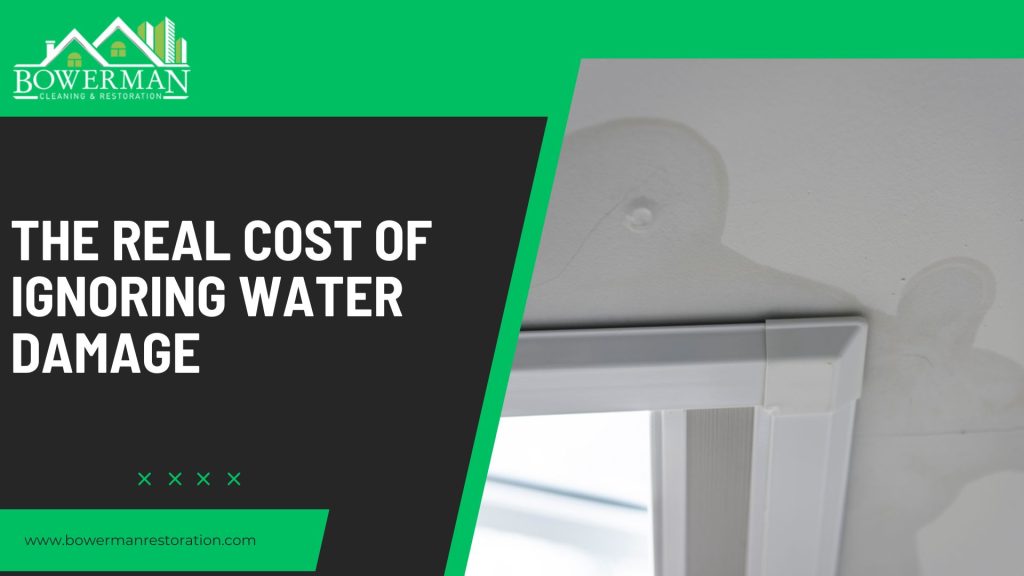
It often starts small—a faint yellow ring on the ceiling of your Highlands colonial or a musty smell in the basement of your Gedney Farms home. In the busy rush of life in Westchester County, it is easy to dismiss these signs. You might think, “I’ll deal with it next week.” But in the world of property damage, time is your greatest enemy.
Ignoring a water leak does not just lead to a bigger mess; it fundamentally changes how your insurance company views the incident. What begins as a covered “accident” can quickly transform into an uncovered “maintenance issue,” leaving you with a bill for tens of thousands of dollars. This guide explores the financial, legal, and structural realities of procrastination, answering the critical question: what happens if you dont fix water damage in white plains ny?
Key Takeaways
- Loss of Coverage: Insurance policies generally cover “sudden and accidental” events. If you wait, the damage becomes “gradual,” which is often excluded from coverage.
- New Disclosure Laws: As of 2024, New York State law requires sellers to disclose flood and water history; you can no longer pay a $500 credit to opt out, making unresolved damage a permanent stain on your property record.
- Rapid Mold Growth: In White Plains’ humid climate, mold can colonize damp drywall in as little as 24 to 48 hours, escalating remediation costs significantly.
- Structural Decay: Water rots wood framing and delaminates subfloors, threatening the structural integrity of older Westchester homes.
- Escalating Costs: Restoration costs can triple if clean water (Category 1) degrades into contaminated water (Category 3) due to delay.
Overview
If you are wondering what happens if you dont fix water damage in white plains ny, the answer is a cascading series of failures—first structural, then financial. The timeline of destruction is unforgiving. In the first few hours, water spreads and absorbs into porous materials. By day two, mold begins to grow, and metal starts to corrode. By the time a week passes, structural rot sets in, and the water may become bio-hazardous.
Crucially, insurance carriers in New York are strict about the “duty to mitigate.” If an adjuster determines that you allowed the damage to worsen by ignoring it, they have the right to deny your claim entirely. We help homeowners intervene early to satisfy these insurance requirements and protect their property value.
The “Sudden vs. Gradual” Insurance Trap
Your homeowner’s insurance policy is a contract with specific definitions. Most standard policies cover “sudden and accidental” events—like a pipe bursting at 2:00 AM. They generally do not cover damage that happens over time due to lack of maintenance.
The Negligence Clause
If you notice a water spot on your ceiling but wait three months to call a professional, that damage is no longer “sudden.” It is “gradual.” When the adjuster arrives and sees mold rings or rot that clearly took weeks to form, they may classify the loss as negligence. In this scenario, you could be responsible for 100% of the repair costs.
Duty to Mitigate
New York insurance practice typically places a “duty to mitigate” on the policyholder. This means you are required to take reasonable steps to stop the damage from getting worse. This includes shutting off the water main, moving furniture, and calling a water damage restoration professional immediately. Failing to do so is often cited as a reason for claim denial.
New York’s 2024 Disclosure Law Changes
For decades, New York sellers could pay a $500 credit to the buyer to avoid filling out the Property Condition Disclosure Statement (PCDS). This allowed many homeowners to sell properties with history of water issues without explicitly detailing them.

That loophole is closed. Effective March 2024, New York law mandates that sellers provide the PCDS, and specifically requires disclosure of flood history and water issues. You can no longer pay $500 to hide the fact that your basement floods or that you had a major leak you didn’t fix properly. If you ignore water damage now, you are creating a legal liability that will haunt you when you try to sell. You must fix it, and you must have documentation proving it was remediated by certified professionals.
The 48-Hour Mold Countdown
White Plains experiences humid summers and wet springs, creating an ideal environment for microbial growth.
How Fast Does It Grow?
Mold spores are naturally present in the air, but they need moisture to activate. According to the U.S. Environmental Protection Agency (EPA), mold can begin growing on damp surfaces within 24 to 48 hours. Once mold creates a root system in your drywall or insulation, it cannot simply be wiped away; the material must be removed and replaced.
The Cost of Remediation
Dealing with a simple water leak is standard restoration. Dealing with a mold infestation involves containment chambers, negative air machines, and strict safety protocols. By waiting just two days, you can turn a standard cleanup job into a complex mold remediation project, significantly increasing the cost.
Structural Risks for Historic Westchester Homes
Many homes in White Plains are older, featuring building materials that are particularly vulnerable to moisture.
Wood Rot and Delamination
When water sits on a floor, it seeps into the subfloor. Over time, the glues holding plywood layers together break down, causing the floor to bubble or warp. More dangerously, water can rot the structural joists beneath. If left unchecked, this can lead to sagging floors or even ceiling collapses.
Insulation Damage
Water acts like a magnet for fiberglass insulation. Once wet, insulation clumps together and loses its R-value (its ability to keep your home warm). Wet insulation also holds moisture against the wooden studs of your house, accelerating rot. You can read more about finding these issues in our guide on identifying hidden water leaks.
Health Risks: Clean Water to Black Water
Water quality degrades over time. Restoration professionals categorize water into three types, and the danger increases the longer you wait.

- Category 1 (Clean): Water from a broken supply line. Safe to handle initially.
- Category 2 (Gray): After 24-48 hours, clean water degrades. Bacteria multiply, and the water becomes “gray.” It may also come from washing machines or dishwashers.
- Category 3 (Black): If left for days, or if it originates from a sewer backup, the water becomes “black.” It is grossly contaminated with pathogens and requires hazardous material protocols for sewage cleanup.
Waiting turns a safe cleanup into a biohazard situation that is waiting to happen.
Impact on Property Value
In the competitive Westchester real estate market, a history of unresolved water issues is a major red flag for buyers.
Stigma Damage
Even if you eventually fix the leak, leaving it too long can result in visible stains or a persistent musty odor. Home inspectors will flag these as signs of past neglect. This creates “stigma damage,” where buyers assume there are hidden problems behind the walls, leading to lower offers or a refusal to buy.
Protecting Your Equity
The only way to protect your home’s value is to address water issues immediately and retain proof of professional restoration. This documentation serves as a “clean bill of health” for the property, reassuring future buyers that the home is safe and dry.
If you have discovered a leak, do not wait to see what happens if you dont fix water damage in white plains ny. The risks to your insurance coverage and your home’s structure are too high. Contact Bowerman Cleaning & Restoration immediately. We serve the area from our local office at 7 Intervale Street, White Plains, NY, 10606, as well as from 99 Main St, Nyack, NY, 10960 and 6 Landmark Square 4th Floor, Stamford, CT, 06901. You can reach us 24/7 at +1 844 269 3762.
Common Questions About what happens if you dont fix water damage in white plains ny
Q: Will my insurance deny my claim if I wait to call a professional? A: It is very likely. Insurance covers sudden accidents. If an adjuster sees that water has been sitting for days or weeks (indicated by mold or rot), they may deny the claim citing negligence or failure to mitigate damages.
Q: How quickly does mold grow in White Plains homes? A: In our humid climate, mold can begin to colonize damp drywall and wood within 24 to 48 hours. Immediate drying is the only way to prevent this.
Q: Does New York law require me to disclose old water damage? A: Yes. As of March 2024, the Property Condition Disclosure Act requires sellers to disclose flood history and water issues. You can no longer pay a credit to opt out of this disclosure.
Q: What is the difference between “sudden” and “gradual” damage? A: Sudden damage happens instantly (like a burst pipe). Gradual damage happens over time (like a slow drip under a sink). Insurance typically covers sudden events but excludes gradual ones.
Q: Does water damage get worse over time? A: Yes. Water migrates to dry areas, spreading the damage. It also degrades from clean water to contaminated water as bacteria multiply, making cleanup more hazardous and expensive.
Q: Can I just paint over water stains? A: No. Painting over a stain traps moisture inside the wall, which accelerates mold growth and rot. You must fix the source of the water and dry the wall completely before making cosmetic repairs.
Q: How does water damage affect my electricity? A: Water is a conductor. If it reaches your electrical wiring, it can cause short circuits, corrode connections, and create a serious fire hazard.
Q: Do I need to replace wet insulation? A: Generally, yes. Fiberglass insulation loses its effectiveness when wet and is difficult to dry completely. It can also trap mold spores, so replacement is often the safest option.
Conclusion
The question of what happens if you dont fix water damage in white plains ny has a clear answer: nothing good. Delaying repairs invites mold, invites structural rot, and invites insurance adjusters to deny your claim. The money you think you are saving by waiting will be lost tenfold in secondary damage and devaluation.
Protect your home and your wallet with Bowerman Cleaning & Restoration. We offer:
- 24/7 Emergency Service to stop damage fast.
- Free Inspections to assess the situation immediately.
- 50+ Years of Experience navigating local insurance claims.
- Family Owned & Operated care for your property.
- Eco-Friendly Products that are safe for pets and kids.
- Local Expertise in Westchester’s specific building needs.
- IICRC Certified technicians licensed in mold and asbestos.
- Home Improvement License to handle repairs.
- Glowing Google Reviews from your neighbors.
Don’t let a small leak become a massive loss. Call us today.