
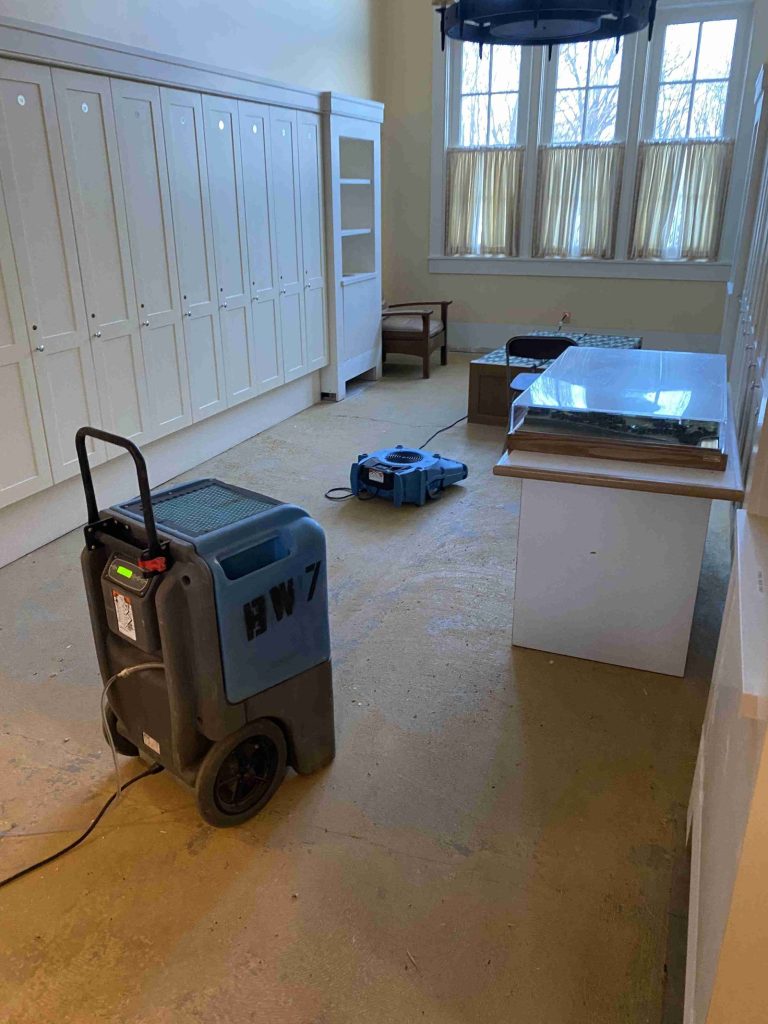
The water damage drying process removes the water you cannot see from floors, walls and framing. Air movers pull moisture out of materials, and dehumidifiers take it out of the air. Readings are tracked until everything reaches a dry target. In most NY homes, this step runs for several days.
Written by the Bowerman Cleaning and Restoration Team · April 8, 2026
Key Takeaways
- Drying works by moving air, removing humidity and controlling heat at the same time.
- Air movers alone just push damp air around, so dehumidifiers are essential.
- A dry target is set from an unaffected area of the same home.
- Equipment should come out only when readings match that target, not when surfaces feel dry.
In This Guide
- How Does the Water Damage Drying Process Work?
- What Are the Steps of the Drying Process?
- What Equipment Is Used for Drying?
- How Long Does Drying Take?
- Why Do Some Homes Take Longer to Dry?
- Water Damage Drying Process FAQs
How Does the Water Damage Drying Process Work?
Short answer: moisture moves from wet materials into the air, and the dehumidifier pulls it out. Think of it as a loop. Air movers blow across wet surfaces so water evaporates faster. Then dehumidifiers capture that moisture before it soaks back into the room.
Temperature matters too. Warm air holds more moisture, so drying rooms are often kept warmer than usual. The IICRC S500 Standard describes these drying principles in detail. For a deeper look at the science, read this explainer on the science of water mitigation and drying.
What Are the Steps of the Drying Process?
Short answer: measure, remove, set up, monitor, adjust and confirm. Here is how drying typically runs from the first day to the last.
- Measure. First, technicians map moisture with meters and take a dry reading from an unaffected area. That reading becomes the target.
- Remove water and wet materials. Next, standing water is extracted, and soaked pad or drywall that cannot dry in place comes out.
- Set up equipment. Then air movers go along walls and across floors, and dehumidifiers go where they can pull the most moisture.
- Open what needs air. Baseboards may come off, and small holes may be drilled to vent wall cavities.
- Monitor and adjust. At each visit, readings are recorded and equipment is moved from dry areas to wet ones.
- Confirm and remove. Finally, when readings match the dry target, the equipment comes out and the drying log is complete.
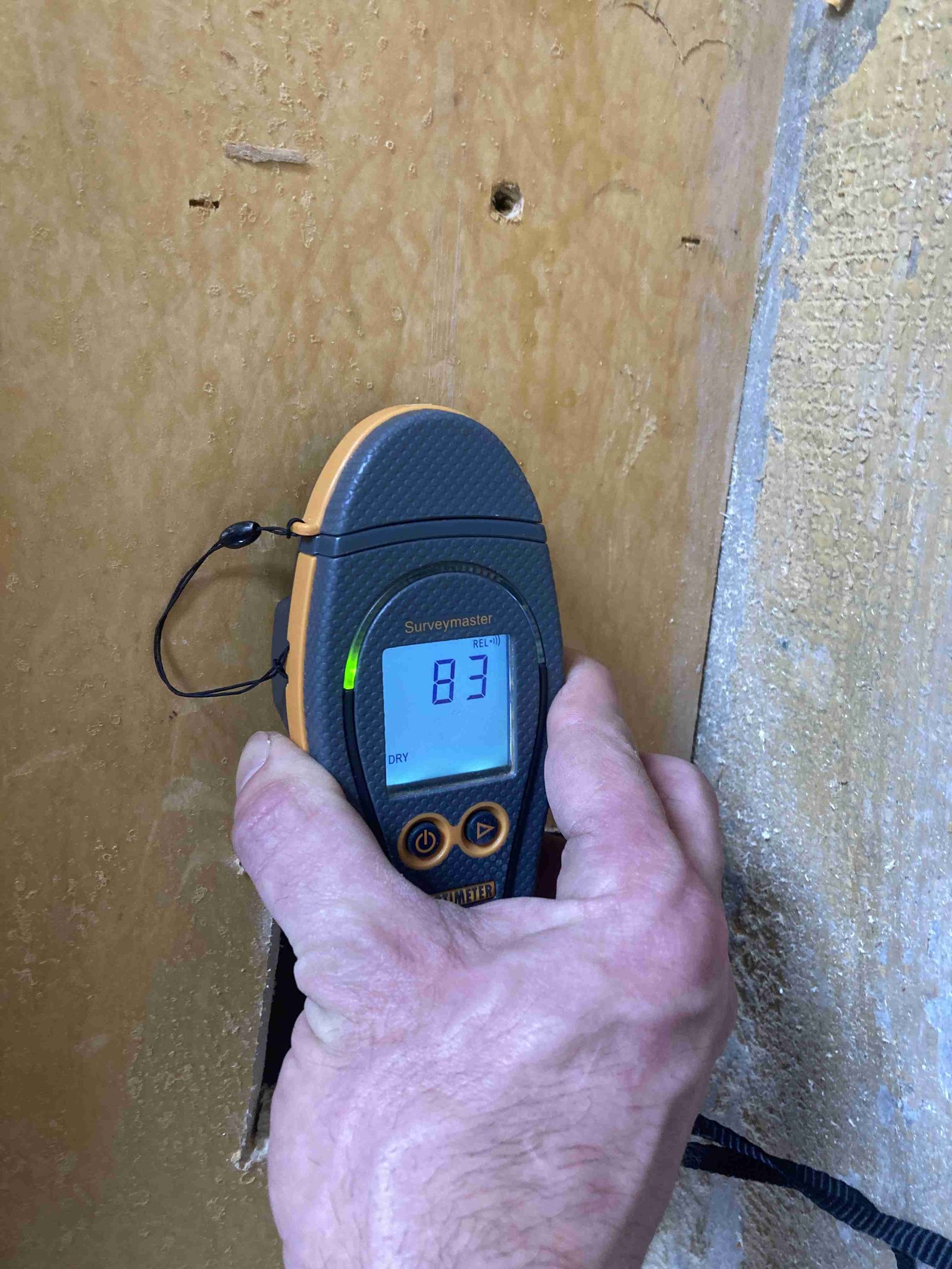
Drying is one part of a bigger job. Professional water damage restoration services include this measured drying step along with extraction, cleaning and rebuild. This overview of what water damage restoration is shows where it fits.
What Equipment Is Used for Drying?
Short answer: air movers, dehumidifiers and moisture meters, plus special tools for hard spots. Each tool has a job.
| Equipment | What it does | Where it is used |
|---|---|---|
| Air movers | Blow air across wet surfaces to speed evaporation | Along walls, under cabinets, across floors |
| Dehumidifiers | Pull moisture out of the air | Center of the room or a doorway |
| Moisture meters | Measure water inside materials | At every visit |
| Thermal cameras | Show cooler, possibly wet areas behind surfaces | During inspection |
| Specialty drying systems | Push air into wall cavities or under hardwood | Plaster walls and hardwood floors |
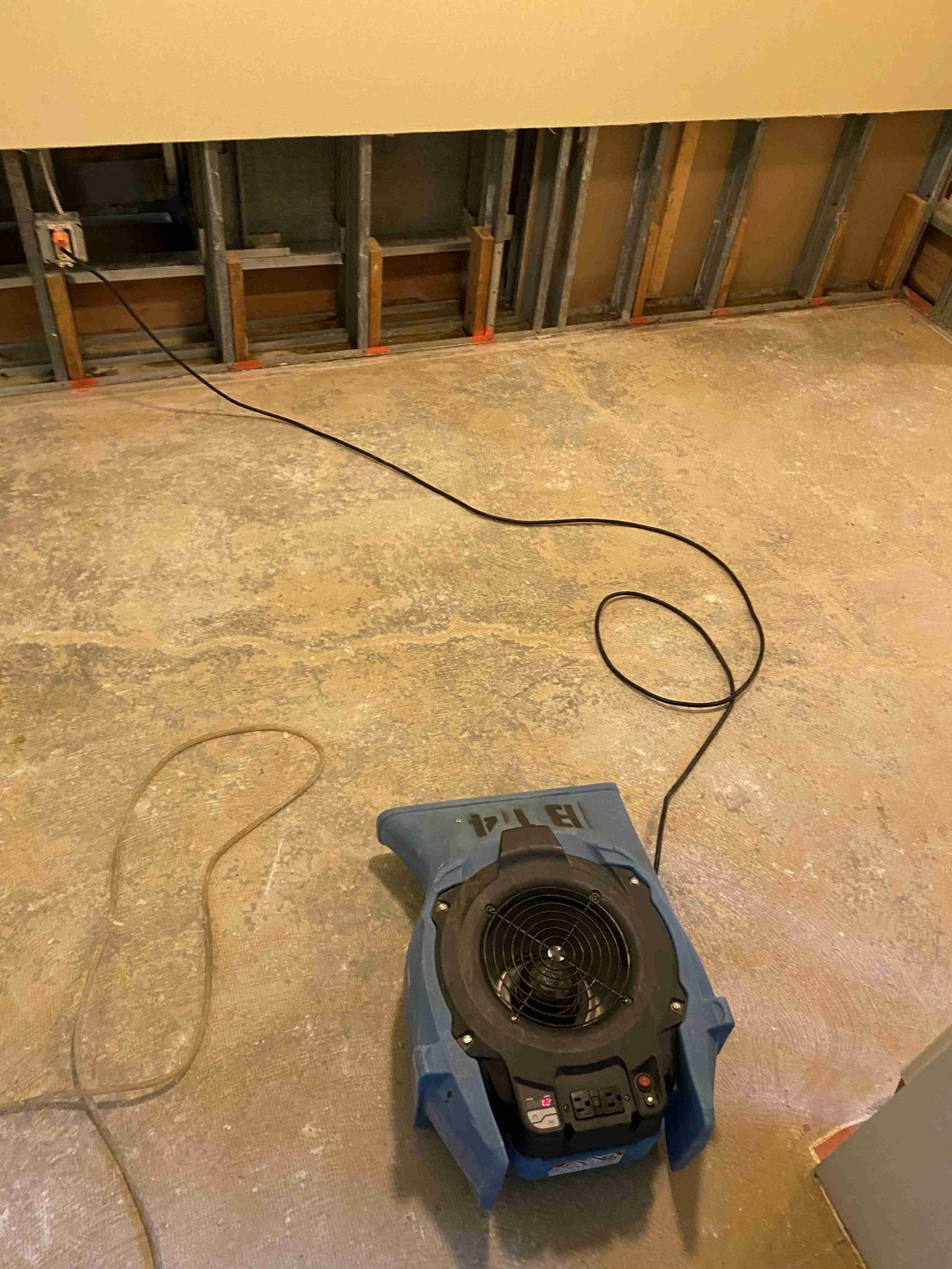
Fans running but the room still smells musty? Bowerman Cleaning & Restoration can take moisture readings across Westchester County.
How Long Does Drying Take?
Short answer: often several days, depending on the materials and how long they were wet. Drywall dries faster than plaster. Similarly, carpet over a concrete slab dries faster than hardwood over a wood subfloor.
Speed matters for mold, too. The EPA’s guide to mold and moisture advises drying water-damaged areas within 24 to 48 hours to help prevent mold growth. That is why drying equipment is usually set up on the first visit, even before the full scope is known. This article on how long water mitigation takes covers the factors that affect drying time.
Why Do Some Homes Take Longer to Dry?
Short answer: dense materials, below-grade spaces and humid weather all slow drying.
Plaster walls and hardwood floors
Many prewar homes in the New York area have plaster walls and solid hardwood. Both hold water longer, so drying may need specialty equipment and more visits.
Basements
Basements sit against cool, damp soil. As a result, dehumidifiers work harder there, and concrete slab readings take time to come down.
Summer humidity
On humid days, opening windows can add moisture instead of removing it. So it usually helps to keep windows closed and the equipment running.
Water Damage Drying Process FAQs
Can I turn off the drying equipment at night?
Ideally, no. Turning machines off lets humidity build back up, and that undoes part of the day’s progress. If the noise is a problem, ask whether any units can be moved or adjusted.
Why is the house so warm during drying?
Dehumidifiers and air movers give off heat, and warm air holds more moisture. A warmer room helps water leave materials faster. The temperature should still stay at a level that is safe for belongings.
Can I dry water damage with house fans?
House fans can help a small spill on a hard floor. They do not remove humidity, though, and they cannot reach water inside walls or under flooring. Without meters, there is no way to tell when the structure is actually dry.
Do wet walls always have to be cut open?
No. Drywall that got wet with clean water and was caught early can often dry in place with venting. However, walls soaked by dirty water, or with wet insulation behind them, usually need to be opened.
How do I know the drying is finished?
Ask to see the final readings next to the dry target. When wet areas match the reading from an unaffected part of the home, drying is done. A professional contractor should share that log with you.
Does the drying process remove mold?
No. Drying stops new mold from growing by removing the moisture it needs. Mold that has already grown needs to be removed and cleaned. If you see or smell mold, mention it so it can be planned for.
Need help drying a wet home in Westchester County? Bowerman Restoration LLC d/b/a Bowerman Cleaning & Restoration, 7 Intervale Street, White Plains, NY 10606, answers 24/7 at (844) 269-3762.