
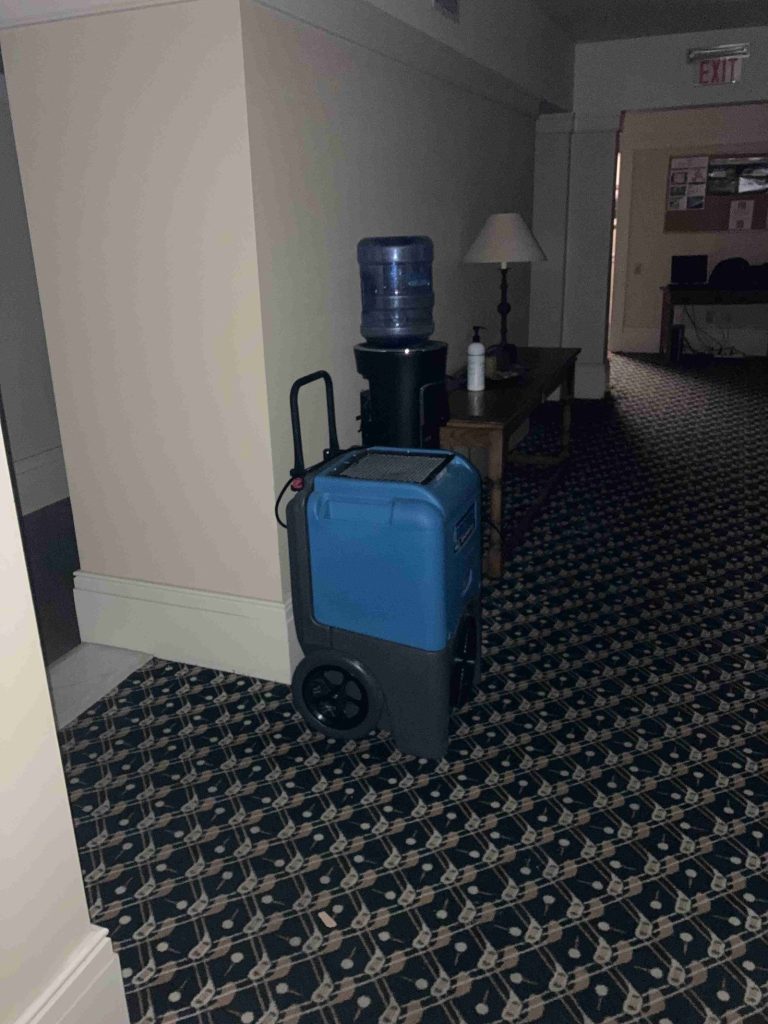
Air movers vs dehumidifiers is not a choice between identical tools. Air movers blow air across wet surfaces so moisture evaporates faster. Dehumidifiers then pull that moisture out of the air so it cannot soak back into the room. In NY homes, using only one of them often leaves hidden water behind.
Written by the Bowerman Cleaning and Restoration Team · May 5, 2026
Key Takeaways
- Air movers speed evaporation. They do not remove humidity from the room.
- Dehumidifiers capture the moisture that air movers put into the air.
- The two machines work as a loop, and one without the other leaves the job unfinished.
- Equipment should come out only when moisture readings hit a dry target, not when surfaces feel dry.
In This Guide
- What Is the Difference Between Air Movers and Dehumidifiers?
- Why Do You Need Both Air Movers and Dehumidifiers?
- How Are Air Movers and Dehumidifiers Typically Set Up?
- What Happens If You Use Only Fans, or Only a Dehumidifier?
- Why Does This Matter More in Humid NY Weather?
- Air Movers vs Dehumidifiers FAQs
What Is the Difference Between Air Movers and Dehumidifiers?
Short answer: air movers move moisture out of materials, and dehumidifiers take that moisture out of the air. Each machine has one job. Drying needs both jobs done at the same time.
| Point of comparison | Air movers | Dehumidifiers |
|---|---|---|
| What they do | Blow air across wet floors, walls and framing to speed evaporation | Pull moisture out of the air and collect or vent it |
| What they do not do | Remove humidity from the room | Reach water that is still sitting inside a closed material on their own |
| Where they usually sit | Along walls, under cabinets and across wet floors | In a central spot, a doorway or wherever they can process the room’s air |
| What you notice | Noise, strong airflow and sometimes dust | Warmth, a water reservoir or a drain hose |
| If used alone | The room can stay humid, and moisture can go back into materials | Evaporation is slower, so hidden water takes much longer to leave |
The IICRC S500 Standard describes this evaporation and dehumidification loop as the basis of professional drying. For the full drying sequence, see this guide to the water damage drying process.
Why Do You Need Both Air Movers and Dehumidifiers?
Short answer: evaporation without dehumidification just moves the water around. Think of a wet towel in front of a fan. The towel dries faster, but the room gets more humid unless something removes that moisture.
Air movers are the fan. They help water leave carpet, drywall and framing. If a dehumidifier is not running, that water stays in the air, and it can condense on windows or soak back into cooler surfaces. Used together, the air movers feed moist air to the dehumidifier, and the dehumidifier keeps the air dry enough for evaporation to continue. This explainer on the science of water mitigation and drying goes deeper on that cycle.
Tried house fans and the room still smells musty? Bowerman Cleaning & Restoration answers 24/7 across Westchester County.
How Are Air Movers and Dehumidifiers Typically Set Up?
Short answer: air movers aim at wet surfaces, and a dehumidifier processes the air in that same space. Placement matters as much as the number of machines.
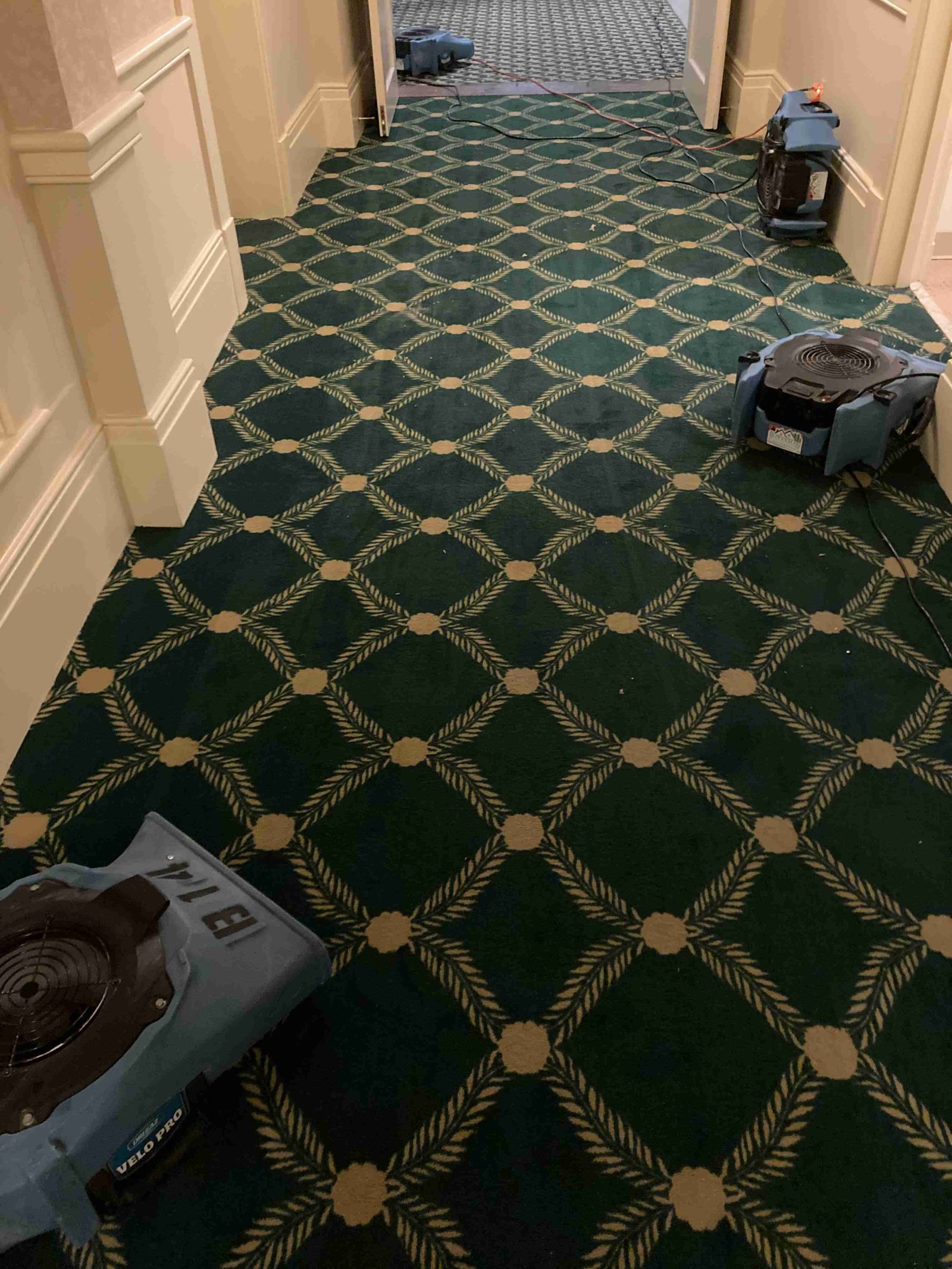
- Air movers are usually aimed along walls, into opened wall cavities and across wet floors, not randomly around the room.
- Dehumidifiers need enough open air around them to work, and a way to drain or empty collected water.
- Doors and windows are often kept closed so the dehumidifier is not fighting outdoor humidity.
- The layout changes as areas dry. Machines move from dry spots to areas that still read wet.
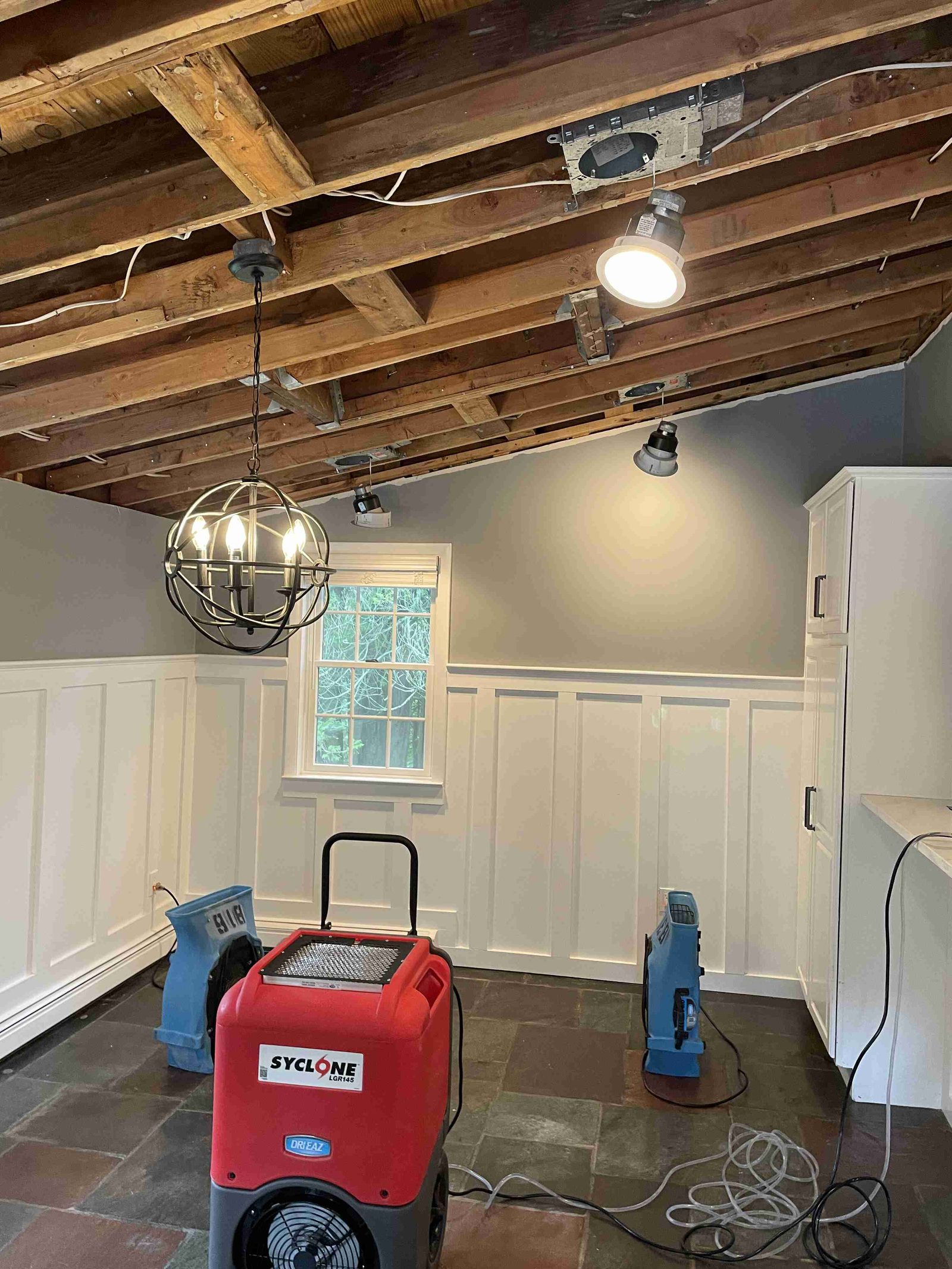
How long the equipment stays is a readings question, not a calendar question. This article on how long water mitigation takes covers the factors that affect that timeline.
What Happens If You Use Only Fans, or Only a Dehumidifier?
Short answer: the job slows down, and hidden moisture is easy to miss. Household fans and a basement dehumidifier are not a complete substitute, either.
- Fans only. Evaporation speeds up, but humidity stays high. Surfaces can feel dry while the wall cavity is still wet.
- A dehumidifier only. The air gets drier, but water inside carpet pad, hardwood or plaster leaves slowly without airflow across those surfaces.
- No moisture meter. There is no way to know when the structure has reached a dry target.
- Opening windows on a humid day. Outdoor moisture can replace the air the dehumidifier just dried.
The EPA’s guide to mold and moisture advises drying wet materials within 24 to 48 hours to help prevent mold growth. That timeline is why professional water damage restoration services usually set up both machines on the first visit. This overview of what water damage restoration is shows where drying fits in the rest of the job.
Why Does This Matter More in Humid NY Weather?
Short answer: humid air slows evaporation, so a dehumidifier has more work to do.
Summer days in the New York area often bring high outdoor humidity. Opening windows then can add moisture to a wet room instead of helping it dry. Basements are also cooler than the floors above, which makes it easier for humid air to condense on masonry and slab floors. In those conditions, air movers still help water leave the materials, but the dehumidifier is what keeps that moisture from settling back in.
Air Movers vs Dehumidifiers FAQs
Can I dry water damage with box fans instead of air movers?
Box fans can help a small spill on a hard floor. They move less air than restoration air movers, they do not aim as precisely along a wall, and they still do not remove humidity. For water in carpet, walls or floors, both air movers and dehumidifiers are needed.
Is a household dehumidifier enough after a leak?
It can help in a small, already-open area. It is usually too small for a wet room with soaked carpet or drywall, and it cannot reach water inside a wall cavity on its own. Professional units also drain more water than a typical home unit.
Why is the house so warm when both machines are running?
Both air movers and dehumidifiers give off heat, and warmer air holds more moisture, which helps evaporation. The room should still stay at a level that is safe for people and belongings.
How many air movers and dehumidifiers does a room need?
It depends on the size of the wet area, the class of the loss and the materials. A technician sizes the equipment after moisture mapping. More is not always better if the machines are fighting each other or blocking airflow.
Should I turn the equipment off at night?
It is better to leave it running. Turning machines off lets humidity rise again and can add days to the job. If noise is a problem, ask whether a unit can be moved or adjusted rather than switched off.
When do the air movers and dehumidifiers come out?
When moisture readings in the wet materials match a dry target, usually taken from an unaffected area of the same home. Equipment should not leave just because the surfaces feel dry.
Need a wet room dried in Westchester County? Bowerman Restoration LLC d/b/a Bowerman Cleaning & Restoration, 7 Intervale Street, White Plains, NY 10606, answers 24/7 at (844) 269-3762.