
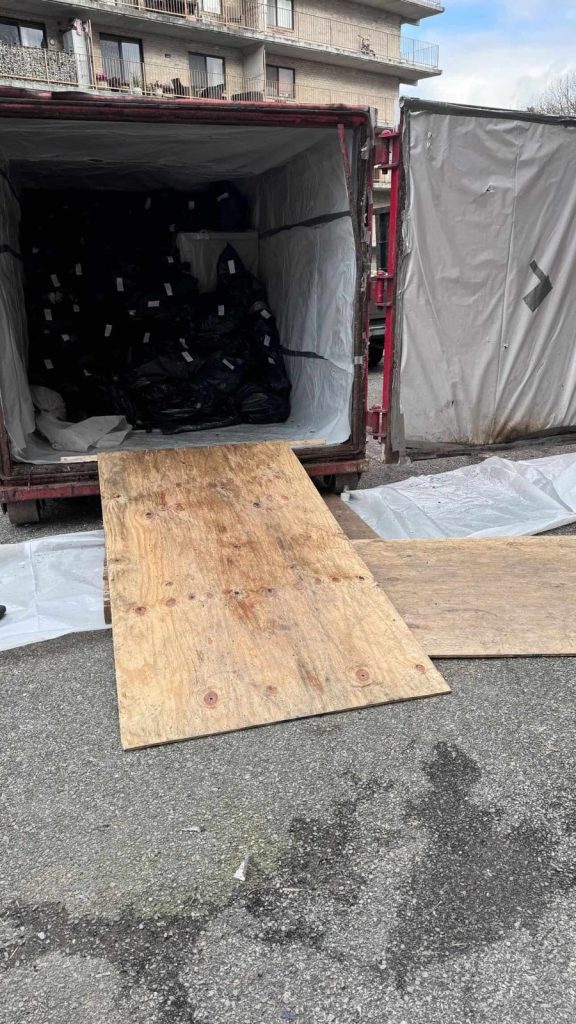
Asbestos disposal requirements decide what happens to asbestos waste after it leaves the wall, floor, or pipe. In NY, removed material cannot go into household trash or a regular dumpster. It has to be kept wet, sealed in labeled bags or containers, transported under the right paperwork, and buried at a landfill that is permitted to accept it. Abatement is the on-site work. Disposal is the chain of custody that starts when a sealed bag is ready to leave the building and ends when the landfill signs for it.
Written by the Bowerman Cleaning and Restoration Team · July 23, 2026
Key Takeaways
- Asbestos waste is kept wet and sealed in leak-tight, labeled bags or containers before it leaves the work area.
- A waste shipment record follows the material from the site to the landfill.
- Only landfills permitted for asbestos can accept it; household trash and ordinary dumpsters are not an option.
- Used plastic sheeting, disposable clothing, and filters from the work area are usually waste as well.
In This Guide
- How Must Asbestos Waste Be Packaged?
- How Is Asbestos Waste Transported?
- Where Can the Waste Go?
- How Does Disposal Differ From Abatement?
- Asbestos Disposal Requirements FAQs
How Must Asbestos Waste Be Packaged?
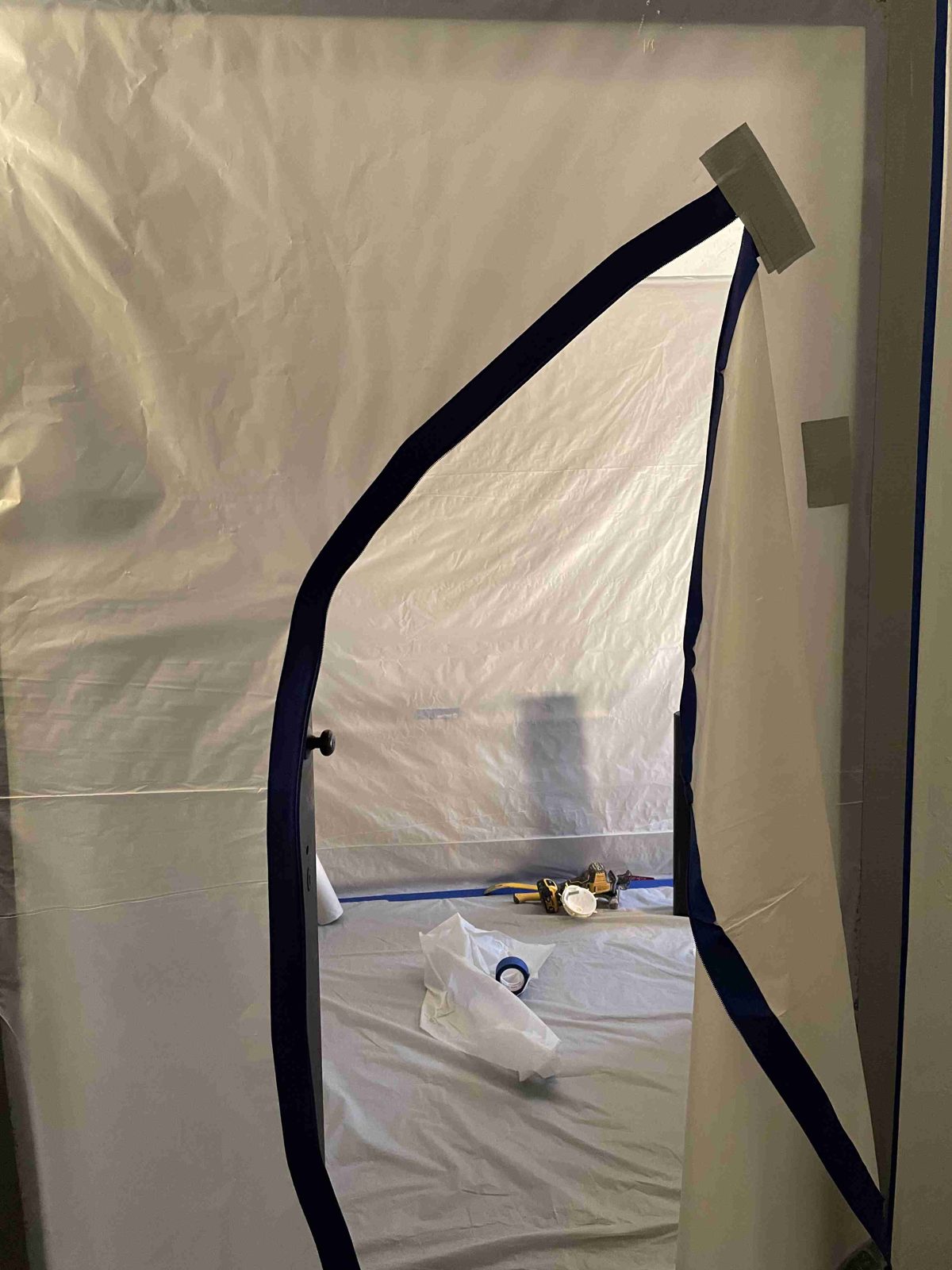
Short answer: wet the material, seal it in leak-tight bags or containers, and label each one. Sharp or bulky pieces may be wrapped or boxed so they do not tear the bags.
- Wet the material. Water with a wetting agent keeps fibers bound while the material is removed and bagged.
- Bag or wrap it. Waste goes into thick plastic bags, commonly 6-mil and often double-bagged, or into sealed containers for bulky pieces.
- Seal and label. Each bag or container is closed airtight and labeled with an asbestos warning and generator information.
- Clean the outside. Bags are wiped or HEPA-vacuumed in the load-out area so dust does not ride on the surface.
- Store securely. Sealed waste is kept in a closed, protected area until pickup, not in an open driveway pile.
Federal rules for regulated asbestos waste sit under the EPA asbestos NESHAP. New York adds its own requirements for asbestos projects through the NYS Department of Labor asbestos program. Together they are why a contractor cannot treat this waste like ordinary demolition debris.
How Is Asbestos Waste Transported?
Short answer: in an enclosed or covered vehicle, with a waste shipment record that the generator, the hauler, and the landfill sign. That record is the proof of where the material went.
The shipment record lists the quantity and type of waste, the generator, the transporter, and the receiving landfill. A signed copy should come back to the generator after disposal. Owners should ask for that copy and keep it with the abatement file. It is useful later for a sale, an insurance question, or a future project.
The vehicle should be enclosed or covered and, in practice, often lined so a torn bag does not spill onto the street. Bags that are damaged in transit are repackaged before the trip continues. A regular open dumpster at the curb does not meet this standard, and most municipal transfer stations do not accept asbestos waste from homeowners.
Some projects use the abatement contractor’s own transport. Others use a separate hauler. Either way, the paperwork and the permitted destination have to be in place before the bags leave.
Planning work around suspect asbestos material in Westchester County, NY? Bowerman Cleaning and Restoration answers 24/7.
Where Can the Waste Go?
Short answer: only to a landfill or facility permitted to accept asbestos waste. The contractor should name that facility in the plan, not leave it as an afterthought.
Permitted facilities have specific handling and burial practices for this waste. Mixing asbestos bags with household garbage, construction debris, or a neighbor’s dumpster is not allowed. If a bid is silent on the destination, that is a question to raise before work starts.
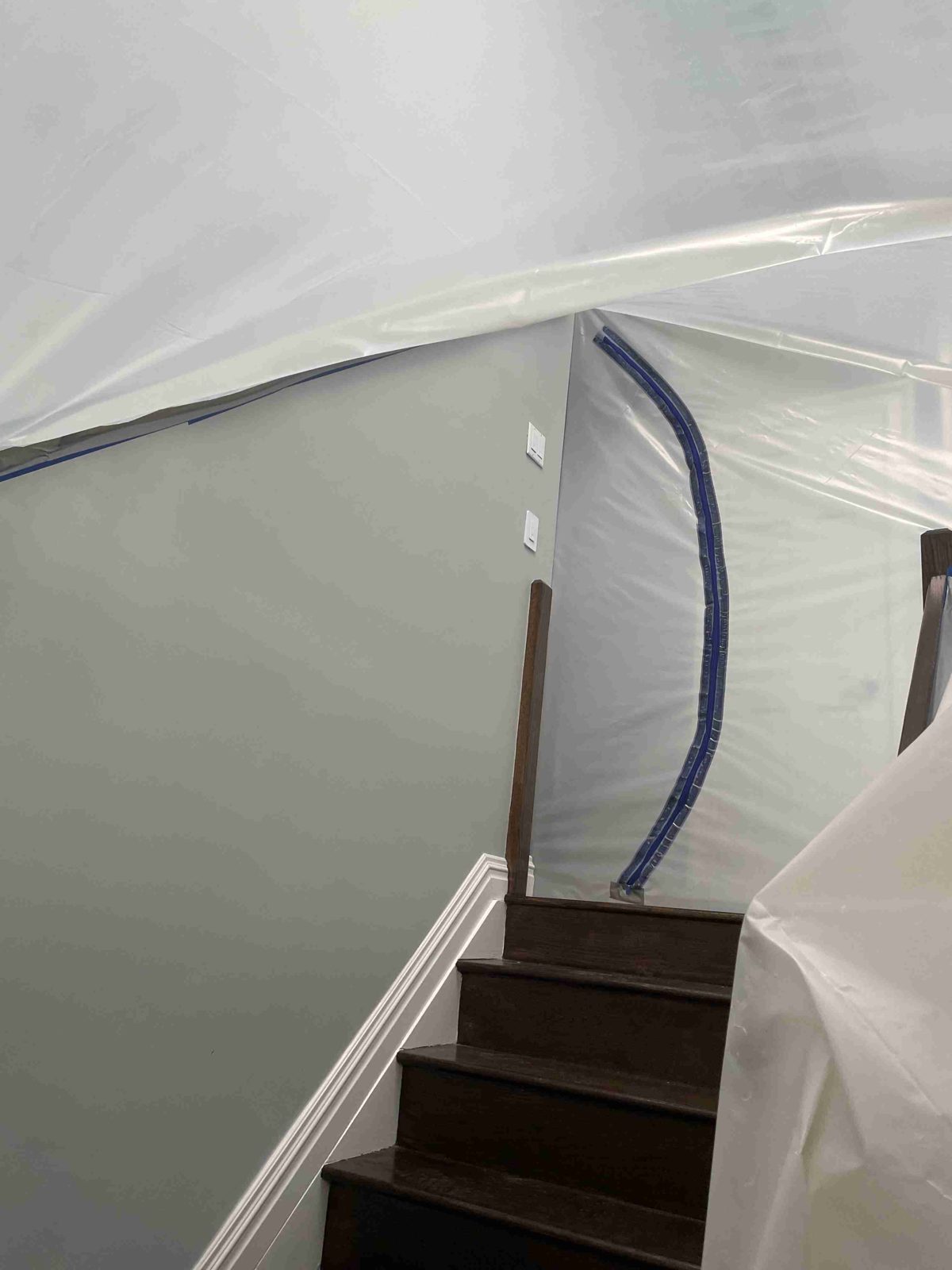
Waste is more than the removed tile or insulation. Poly sheeting, disposable suits, mop heads, and filters from the work area are typically treated as asbestos waste too. That volume can surprise owners who only pictured a few bags of flooring.
How Does Disposal Differ From Abatement?
Short answer: abatement is the removal or sealing of material on site; disposal is everything after the sealed bag is ready to leave the building. Both steps need to be in the scope, and they may involve more than one party.
| Stage | What happens | Who typically handles it |
|---|---|---|
| Abatement | Containment, wet removal or sealing, and cleaning | Abatement contractor |
| Clearance | Air sampling before containment comes down | Independent licensed inspector or lab |
| Transport | Sealed waste moved under a shipment record | Contractor or permitted hauler |
| Disposal | Burial at a permitted landfill | Landfill operator |
How asbestos abatement is done covers the on-site steps, and what is asbestos abatement explains the full scope. How asbestos removal is done describes the take-out methods that create the waste in the first place. For the service, see asbestos removal and abatement.
Owners should also ask how long sealed bags will remain on site and where they will be stored. A locked, enclosed area or a lined trailer is appropriate; an open pile at the curb is not. If the project produces a large volume of bagged poly and disposable gear as well as the removed material, the hauler’s schedule and the landfill’s receiving hours can affect the last day of the job. Those logistics belong in the plan at the start, so disposal does not lag behind the on-site work.
If a homeowner is ever told that leftover bags can go out with regular construction debris, that advice is wrong. The packaging, the labels, the shipment record, and the permitted destination are what make the disposal legal and traceable, and they should be treated as part of the job rather than as paperwork to finish later.
Asbestos Disposal Requirements FAQs
Can asbestos go in a regular dumpster?
No. Asbestos waste must be packaged, labeled, and taken to a landfill or facility permitted to accept it.
Can a homeowner drop off asbestos at a transfer station?
Most municipal transfer stations do not accept it. Local rules should be checked, but household drop-off is rarely an option.
What is a waste shipment record?
A form that tracks asbestos waste from the site to the landfill, signed by each party along the way. A copy should return to the generator.
Is contaminated plastic sheeting asbestos waste too?
Yes. Poly sheeting, disposable suits, and filters from the work area are typically disposed of as asbestos waste.
Should disposal paperwork be kept?
Yes. It is useful for a future sale, insurance questions, or later renovation.
Questions about asbestos disposal requirements for a Westchester NY project? Bowerman Restoration LLC d/b/a Bowerman Cleaning & Restoration, 7 Intervale Street, White Plains, NY 10606, answers 24/7 at (844) 269-3762.