
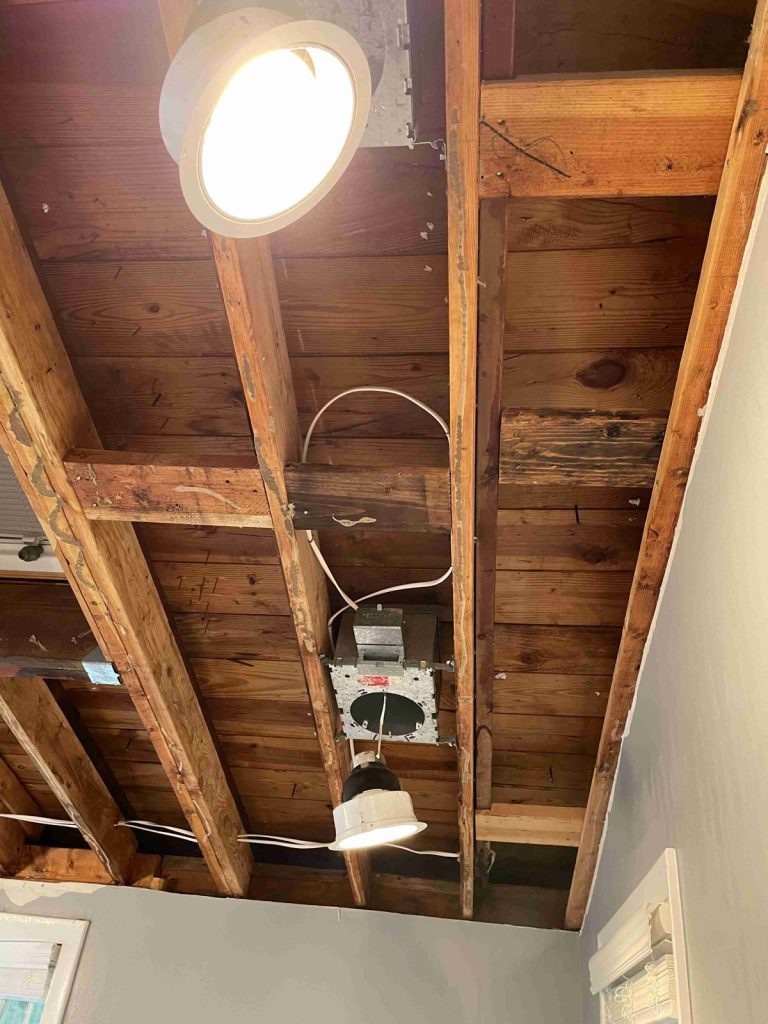
Ceiling vs flooring asbestos is a practical comparison in many older NY homes, because the two groups show up often and they do not behave the same. Textured or popcorn ceilings and some glued ceiling tiles can be dry, crumbly, and easy to disturb with a scraper or a light fixture change. Vinyl floor tile and the black mastic under it are often more stable while they stay stuck, then release fibers if they are sanded, soaked, or broken. Prep, method, and cost follow from those differences, not from a single rule for “asbestos in the room.”
Written by the Bowerman Cleaning and Restoration Team · August 10, 2026
Key Takeaways
- Ceiling texture is often more friable and can release fibers when it is scraped or when it is damaged by water.
- Floor tile and mastic are often non-friable while intact, and they are frequently hidden under later floors.
- Containment and cleaning still apply to both, but the details of prep and access differ.
- A survey should cover both the ceiling and the floor when a room will be opened, not only the finish that is obvious.
In This Guide
- How Do Ceiling and Flooring Asbestos Materials Differ?
- What Is Distinct About Ceiling Work?
- What Is Distinct About Flooring Work?
- How Should a Room With Both Be Planned?
- Ceiling vs Flooring Asbestos FAQs
How Do Ceiling and Flooring Asbestos Materials Differ?
Short answer: ceiling coatings are often more easily crumbled; flooring products are often better bound until they are broken or soaked. Both still need lab confirmation, and both can be present in the same kitchen or hall.
| Question | Ceiling materials | Flooring materials |
|---|---|---|
| Typical products | Textured or popcorn coatings, acoustic finishes, some ceiling tiles | Vinyl tile (often 9-inch), black mastic, sheet-flooring backing |
| Usual condition while intact | Can be dry and powdery, especially if already flaking | Often well stuck and non-friable |
| Common triggers | Scraping, new lighting, leaks, fire, or vibration | Floor replacement, sanding, water damage, hidden layers under later floors |
| Prep focus | Protect the room below, fixtures, and furnishings; contain downward fall of debris | Contain the room, manage broken tile and adhesive, watch for multiple layers |
The EPA overview of household products on protecting your family from asbestos includes both groups. Why asbestos is dangerous is the same health issue in either case: fibers that become airborne. The difference is how easily each product lets that happen, and what it takes to work around it.
What Is Distinct About Ceiling Work?
Short answer: debris falls, fixtures and the room below have to be protected, and water or fire can loosen the coating before anyone touches it. A textured ceiling should not be scraped as a test.
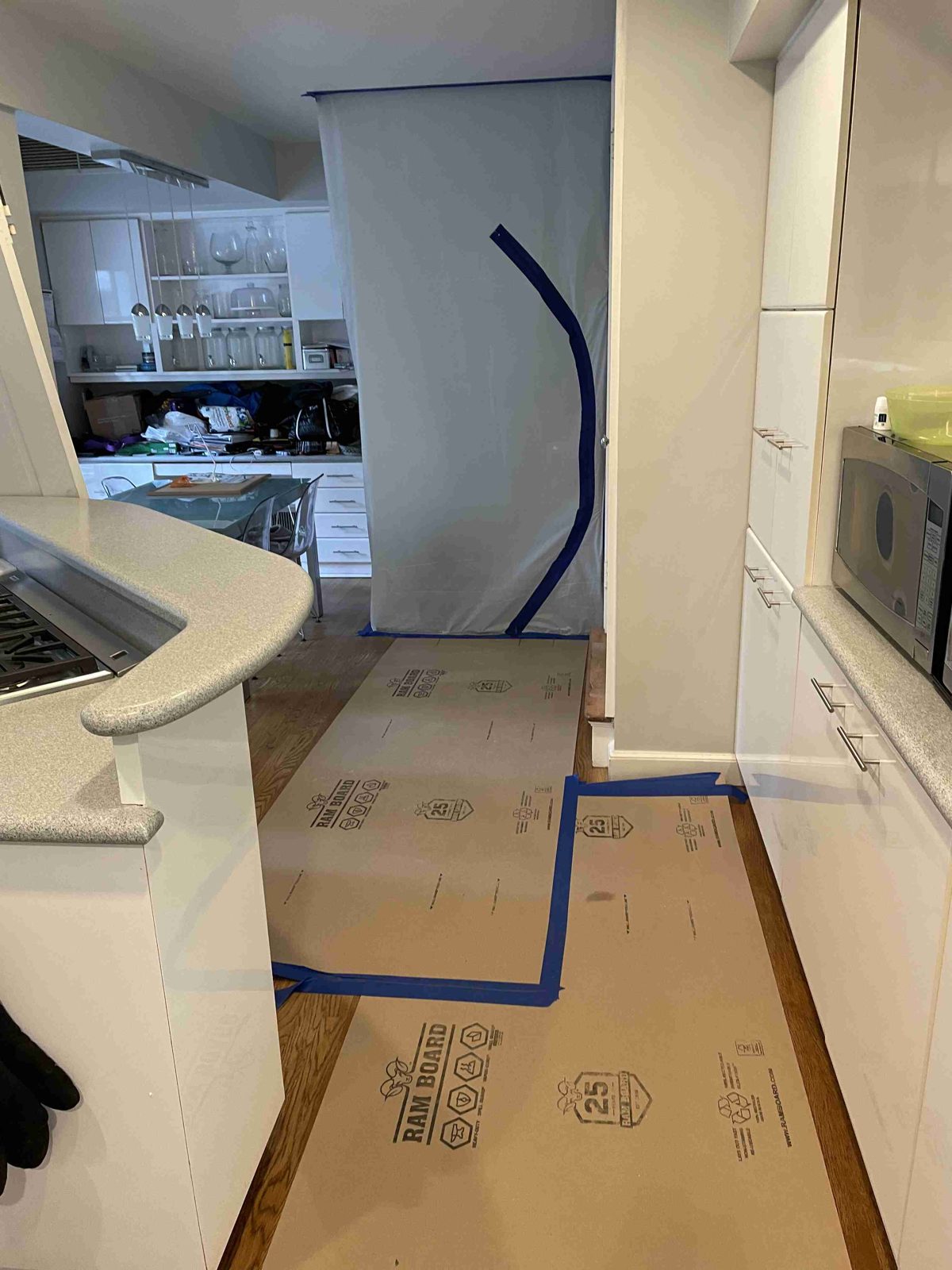
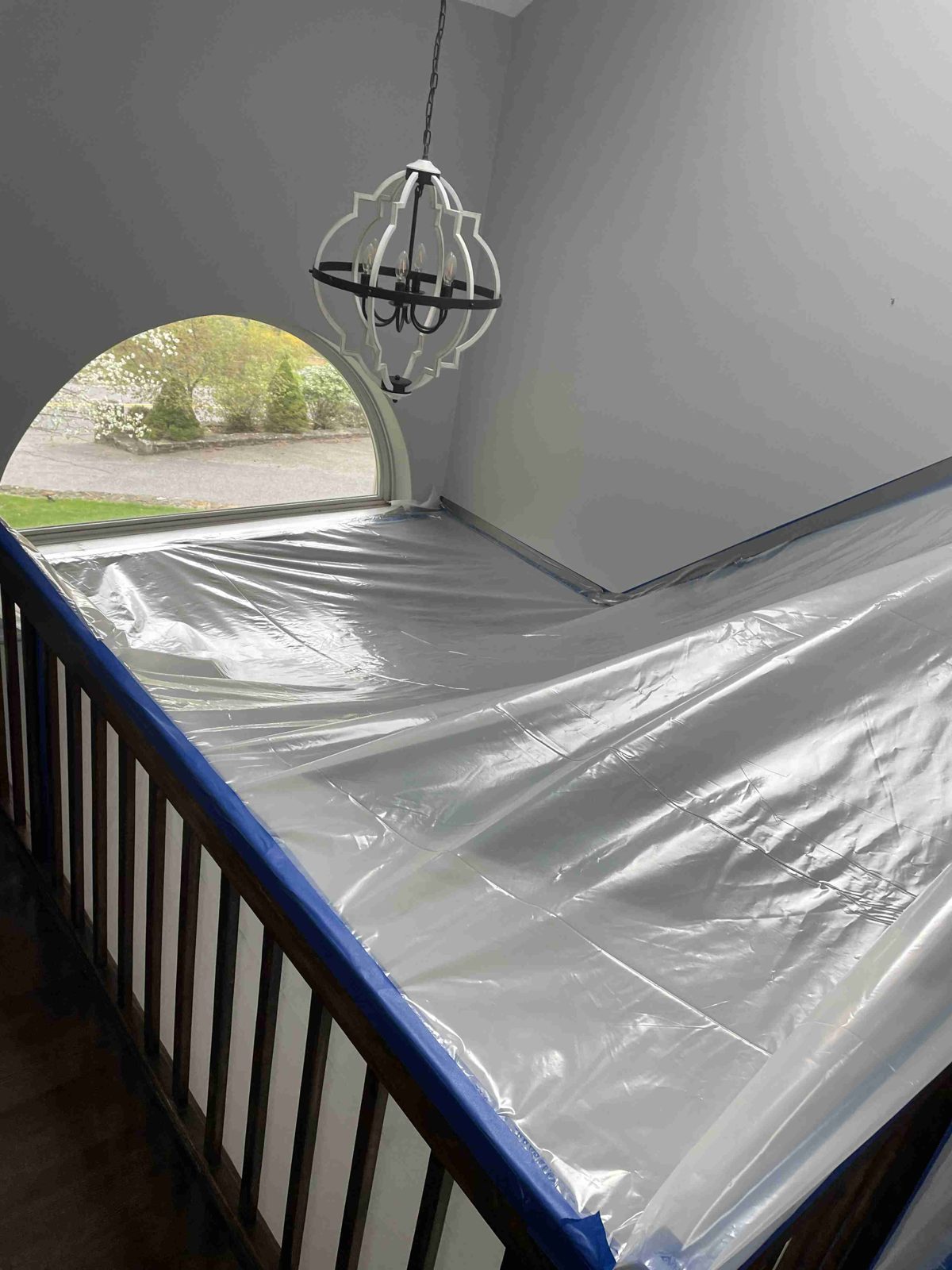
If a ceiling coating is confirmed, the room is usually contained as a whole, including floors and walls that would catch fallen material. Lights, detectors, and vents are protected or removed as part of the plan. Working overhead is slower than working on a floor, and cleaning has to include the tops of doors, trim, and any open cabinets. A leak-stained, sagging, or already flaking ceiling should be treated as damaged, not as a stable finish.
Attic work above a finished ceiling can also matter. Loose-fill insulation and older coatings are sometimes part of the same assembly. Opening a ceiling “just to look” can be a disturbance in its own right.
Planning work around suspect asbestos material in Westchester County, NY? Bowerman Cleaning and Restoration answers 24/7.
What Is Distinct About Flooring Work?
Short answer: layers are often hidden, mastic can be as important as the tile, and water is a frequent reason the product starts to break. A newer floor is not proof that an older one is gone.
Nine-inch tiles are a classic clue, but twelve-inch tiles and sheet goods can also be in the report. The black adhesive is often included in the scope because it can contain asbestos even when the visible tile is being replaced. Later vinyl, carpet, or wood may sit right on top. A kitchen or basement remodel that only budgets for the top layer can be stopped mid-job when the older layer appears. Asbestos abatement during a kitchen renovation is a typical setting for that surprise.
Intact tile that will stay, and will not be sanded or flooded, is sometimes left in place. Tile that has to come out, or that has already been soaked and lifted by a leak, is a removal job. The method should match that condition.
How Should a Room With Both Be Planned?
Short answer: by surveying the ceiling and the floor, then sequencing the work so one finish is not contaminated by the other. A single containment can often serve both, but the methods may still differ.
If both materials will be disturbed, it is usually better to address them in one planned window than to open the room twice. Ceiling work that falls onto a floor that has not yet been abated, or flooring work that stirs dust into a still-untreated ceiling, can complicate cleaning. How asbestos abatement is done is the process around that plan. For the wider definition of the work, see what is asbestos abatement. The service page is asbestos removal and abatement.
Cost and schedule often differ between the two as well. Ceiling texture can mean protecting an entire room and working overhead, which takes time even when the square footage looks modest. Flooring work may be faster on an empty slab and slower in an occupied kitchen with several hidden layers and mastic that has to come out too. A quote that prices only “the ceiling” or only “the tile,” without saying whether fixtures, mastic, or multiple layers are included, is hard to compare and easy to overrun once the room is open.
Ceiling vs Flooring Asbestos FAQs
Are popcorn ceilings more dangerous than old floor tile?
A dry, crumbling ceiling coating can release fibers more easily than intact, well-stuck tile. Damaged or sanded flooring can still be a significant source. Condition and the planned work matter as much as the location.
Can a new floor be installed over old tile?
Sometimes, if the old tile is intact and will stay undisturbed. That choice should follow a survey and a clear plan, because a later owner may want the floor opened.
Does a water stain on a textured ceiling change the job?
It can. Water can loosen the coating and make it more likely to fall or crumble, which is a reason to have it assessed before scraping or demolition.
Should lights be replaced before a ceiling is surveyed?
Cutting or moving a fixture in a suspect ceiling is a disturbance. Sampling should come first when the ceiling may contain asbestos.
Is mastic always included with tile removal?
Often yes, because the adhesive can contain asbestos even when attention is on the visible tile. The survey and the scope should say whether mastic is included.
Comparing ceiling vs flooring asbestos in a Westchester NY home? Bowerman Restoration LLC d/b/a Bowerman Cleaning & Restoration, 7 Intervale Street, White Plains, NY 10606, answers 24/7 at (844) 269-3762.