
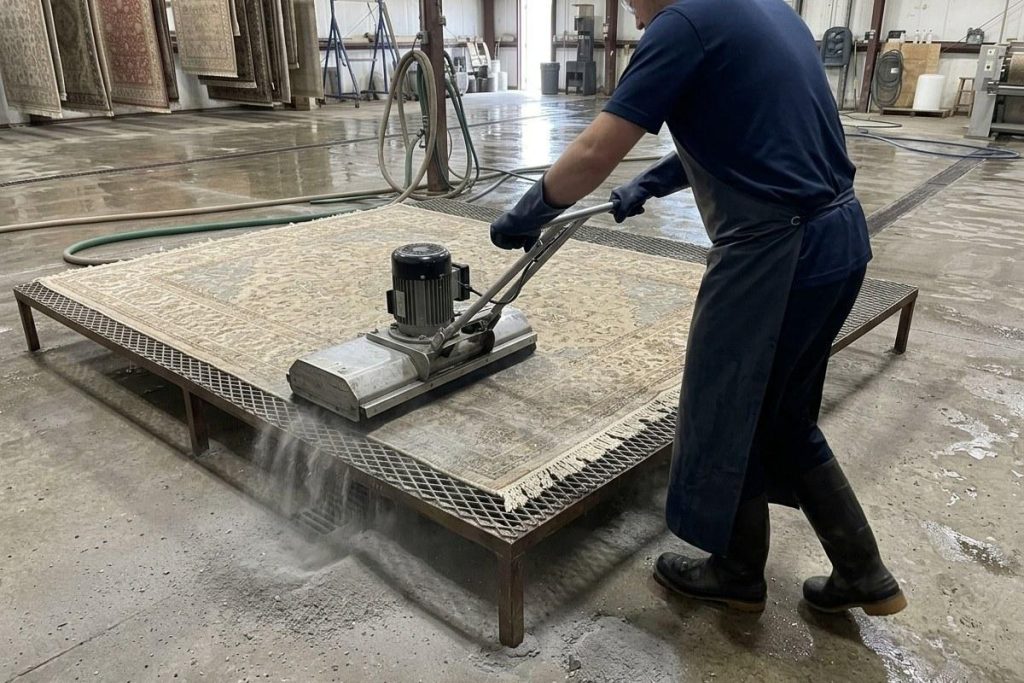
The main oriental rug cleaning methods are dusting, full immersion washing, hand washing on a flat floor, low-moisture cleaning, and on-site hot water extraction. In NY homes, the right method depends on the fiber, how stable the dyes are, the age and condition of the rug, and how much soil is packed into the foundation.
Written by the Bowerman Cleaning and Restoration Team · September 18, 2026
Key Takeaways
- Dusting comes before every wet method and can remove more soil than washing alone.
- Full immersion or flat-floor washing suits most sturdy wool rugs with stable dyes.
- Low-moisture cleaning is used when dyes are unstable or the rug is fragile.
- On-site hot water extraction fits many machine-made and synthetic area rugs, less often fine hand-knotted ones.
In This Guide
- How Do the Methods Compare?
- How Is the Right Method Chosen?
- Should a Rug Be Cleaned On-Site or Off-Site?
- Which Methods Can Damage an Oriental Rug?
- Oriental Rug Cleaning Methods FAQs
How Do the Methods Compare?
Short answer: each method trades cleaning depth against risk to dyes and fibers.
| Method | How it works | Best for | Use with care on |
|---|---|---|---|
| Dusting | Dry soil is beaten or vibrated out from the back of the rug | Every rug, before any wet cleaning | Very fragile or dry-rotted rugs |
| Full immersion washing | The rug is soaked and washed in a pit or tank, then rinsed until clear | Heavily soiled wool rugs with stable dyes, urine-affected rugs | Silk, unstable dyes, weak foundations |
| Flat-floor hand washing | Solution is worked through the pile on a wash floor, then flushed and rinsed | Most hand-knotted wool rugs | Rugs with bleeding dyes |
| Low-moisture cleaning | Minimal moisture with a compound or foam, then extraction or vacuuming | Fragile, antique, or dye-sensitive rugs | Deep soil and urine, which it cannot reach |
| On-site hot water extraction | Solution is sprayed into the pile and pulled back out by a truck-mounted unit | Machine-made and synthetic area rugs | Fine hand-knotted, silk, or antique rugs |
| Spot cleaning only | Single spills are treated without washing the whole rug | Fresh, small spills between full cleanings | General soil, which it spreads into rings |
The live service page on oriental and area rug cleaning describes how on-site and off-site cleaning are offered. The difference between the two settings mostly comes down to how well the rug can be rinsed and dried. A full overview of the work is in what is oriental rug cleaning and repair.
How Is the Right Method Chosen?
Short answer: by testing the dyes, checking the fiber and foundation, and judging how much soil and odor the rug holds.
- Identify the fiber. Wool, silk, cotton, and plant-based imitation silk each react differently to water, heat, and pH.
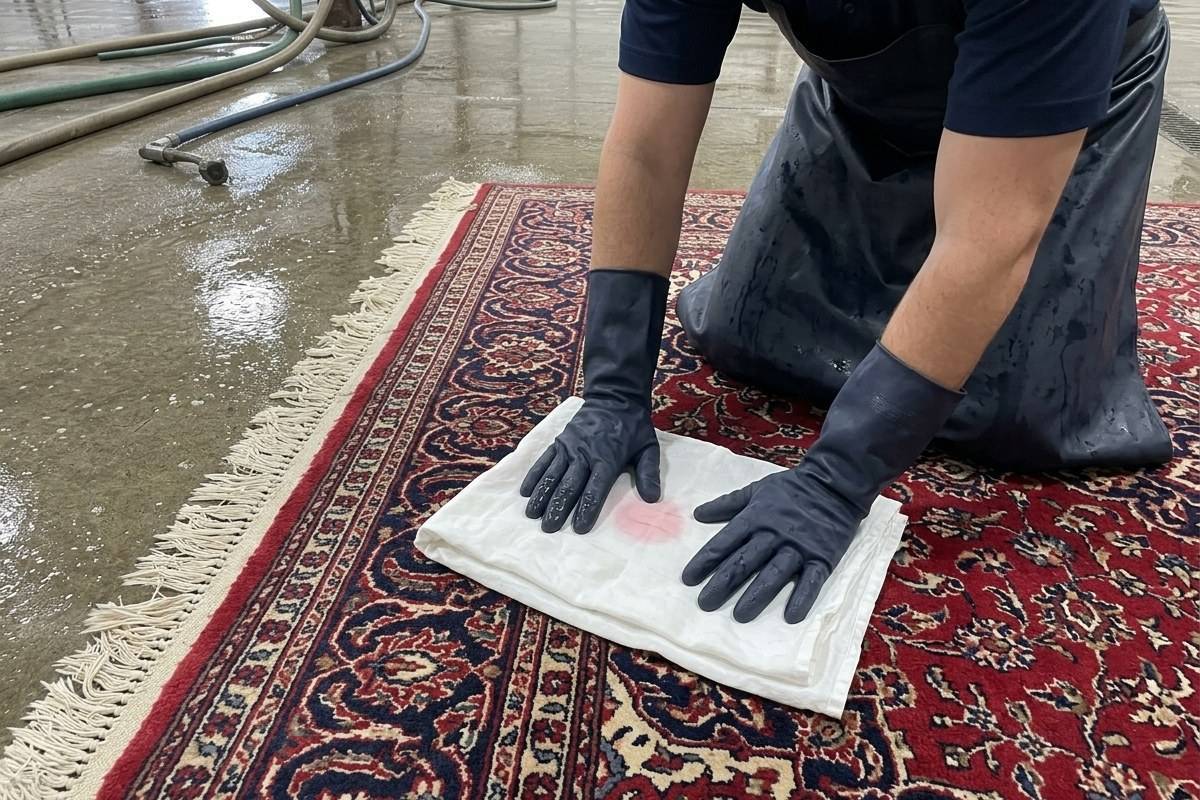
- Test the dyes. A damp white cloth is pressed on each color to see whether any dye transfers.
- Check the foundation. Brittle or dry-rotted cotton warps and wefts may not survive full immersion.
- Gauge the soil. Tipping the rug back and looking at the base of the pile shows how much grit is packed in.
- Look for urine and stains. Pet urine usually needs a full wash to reach the foundation, not a surface method.
Rugs that went through a fire or a water loss add another variable. Smoke residue and soot call for dry removal before any wet step, the same logic explained in the live guide to soot cleanup. Rugs soaked by a leak are covered in the live guide to salvageable items after water damage. The oriental rug cleaning process guide covers this in more detail. The wool vs silk rug cleaning guide covers this in more detail.
Fine rug that needs cleaning or repair in Westchester County, NY? Bowerman Cleaning and Restoration answers 24/7.
Should a Rug Be Cleaned On-Site or Off-Site?
Short answer: sturdy machine-made rugs often clean well on-site, while hand-knotted rugs usually do better off-site where washing and drying can be controlled.
On-site cleaning is convenient. The rug stays in the room, and a truck-mounted unit cleans it in an hour or two. It works well for synthetic and many machine-made rugs. The limits are rinsing and drying: soil packed in the foundation of a dense wool rug, and urine in particular, needs more water and more rinse time than extraction in a living room allows.
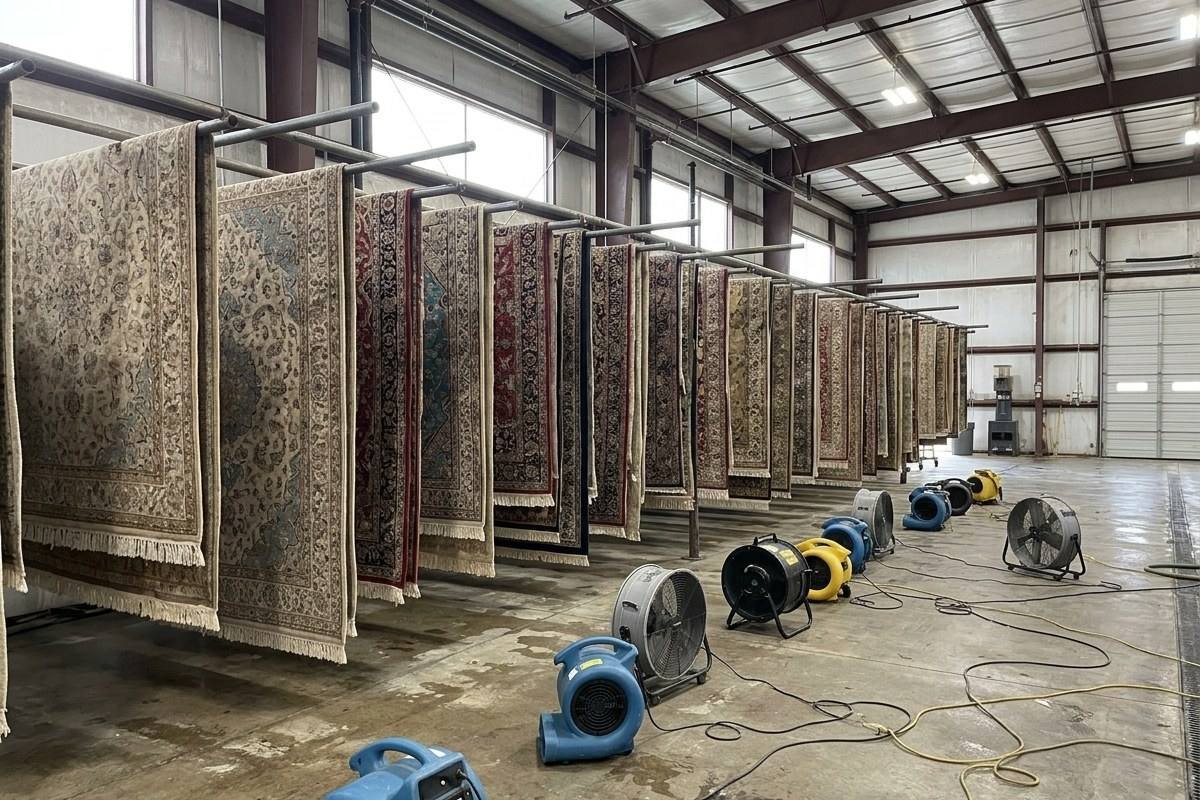
Off-site cleaning adds dusting equipment, a wash floor, and a drying room. Control of airflow and humidity during drying protects dyes and the cotton foundation. The same principle of measured drying applies to buildings, as the live guide to air movers vs dehumidifiers explains.
Which Methods Can Damage an Oriental Rug?
Short answer: harsh shampoos, high heat, beater bars, and over-wetting without proper drying cause most cleaning damage.
- Household carpet shampoos leave sticky residue that attracts soil. The Canadian Conservation Institute advises against commercial carpet shampoos on important rugs.
- High heat and steam can set stains, shrink wool, and damage silk.
- Highly alkaline cleaners and bleach strip natural oils from wool and fade dyes.
- Beater bars and power heads pull at knots and fringe during routine vacuuming.
- Slow drying after any wet method leads to dye bleeding, browning, and mildew odor.
Drying is where many home attempts go wrong. The live guide to the water damage drying process shows why airflow and dehumidification, not time alone, decide how fast wet materials recover.
Oriental Rug Cleaning Methods FAQs
What is the safest oriental rug cleaning method?
There is no single safest method. A careful dusting followed by a wash matched to the fiber and dye test is safest for most rugs.
Is steam cleaning safe for oriental rugs?
High-heat steam is risky for wool and silk and can set some stains. Most fine rugs are washed with cool or lukewarm water instead.
Can oriental rugs be dry cleaned?
Low-moisture or compound cleaning is used on fragile or dye-sensitive rugs, but it cannot reach deep soil or urine in the foundation.
Why is dusting so important?
Dry grit wears fibers like sandpaper and turns to mud when wet. Removing it first makes the wash cleaner and safer.
Does every rug need a full wash?
No. Lightly soiled rugs in low-traffic rooms may only need dusting and spot care between full cleanings.
Weighing oriental rug cleaning methods for a rug in a Westchester NY home? Bowerman Restoration LLC d/b/a Bowerman Cleaning & Restoration, 7 Intervale Street, White Plains, NY 10606, answers 24/7 at (844) 269-3762.