
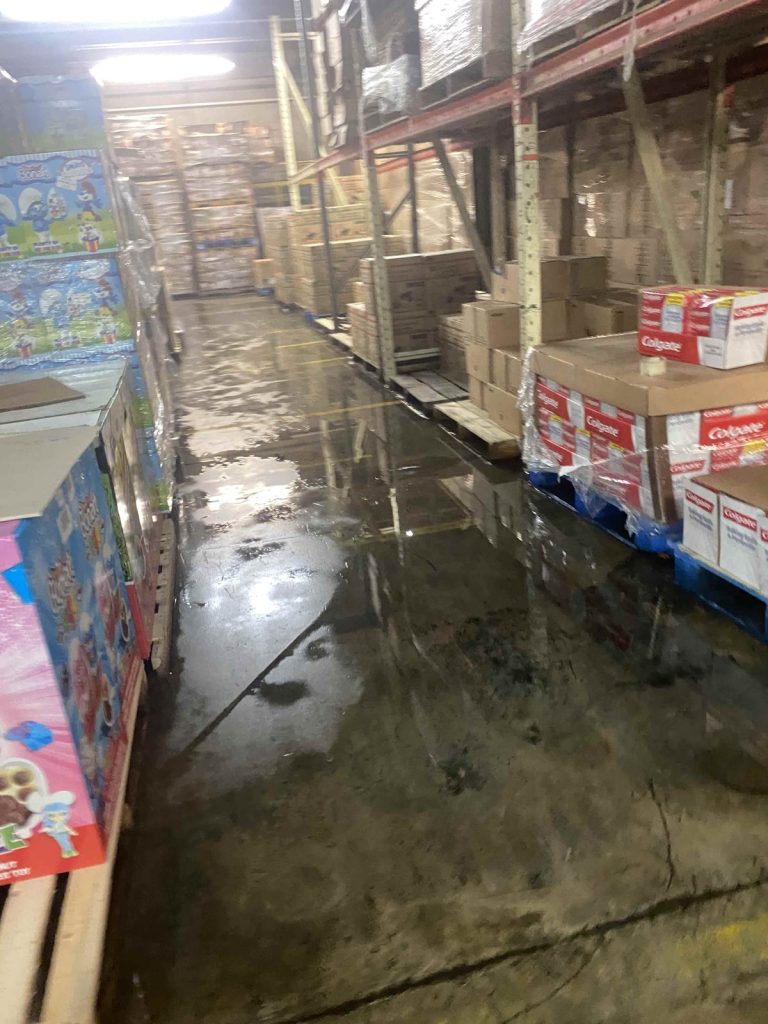
Black water cleanup is the hands-on removal of grossly contaminated water, usually sewage or outside floodwater, from a NY building. It runs in a fixed order: protect people, extract the water and solids, remove soaked porous materials, clean and disinfect the surfaces that remain, and dry the structure until readings confirm it is ready to rebuild.
Written by the Bowerman Cleaning and Restoration Team · August 18, 2026
Key Takeaways
- Black water is another name for Category 3 water, so the cleanup follows contaminated-water rules.
- Protective equipment goes on before anyone enters the wet area.
- Cleaning comes before disinfecting, because residue shields contaminants from the product.
- The job is done when moisture readings confirm the structure is dry, not when the floor looks clean.
In This Guide
- What Are the Steps in Black Water Cleanup?
- What Equipment Is Used?
- What Gets Removed and What Stays?
- Can Black Water Be Cleaned Up Without a Professional?
- Black Water Cleanup FAQs
What Are the Steps in Black Water Cleanup?
Short answer: set up, protect, extract, remove, clean, disinfect, then dry and verify.
- Assess and set up. Identify the source, mark the affected area, and set up a clean path in and out so contamination is not tracked through the building.
- Put on protective equipment. Gloves, boots, eye protection, and respiratory protection suited to the job go on before anyone enters the wet area.
- Extract water and solids. Pumps and truck-mounted or portable extraction units remove standing black water and debris.
- Remove soaked porous materials. Carpet, pad, insulation, and drywall above the wet line are cut out, bagged, and taken out through the clean path.
- Clean surfaces. Remaining floors, framing, and hard contents are scrubbed to remove residue, since disinfectant cannot work through grime.
- Apply a registered disinfectant. A product registered for the purpose is applied at the label dwell time.
- Dry and verify. Air movers and dehumidifiers run until readings confirm framing and subfloor are dry, then rebuild can start.
For a definition of the water itself, the live water damage categories guide explains where black water sits among the three categories. The step by step process of water damage restoration shows how the same stages work on a clean-water loss. A full overview of the work is in what is sewage damage cleanup.
What Equipment Is Used?
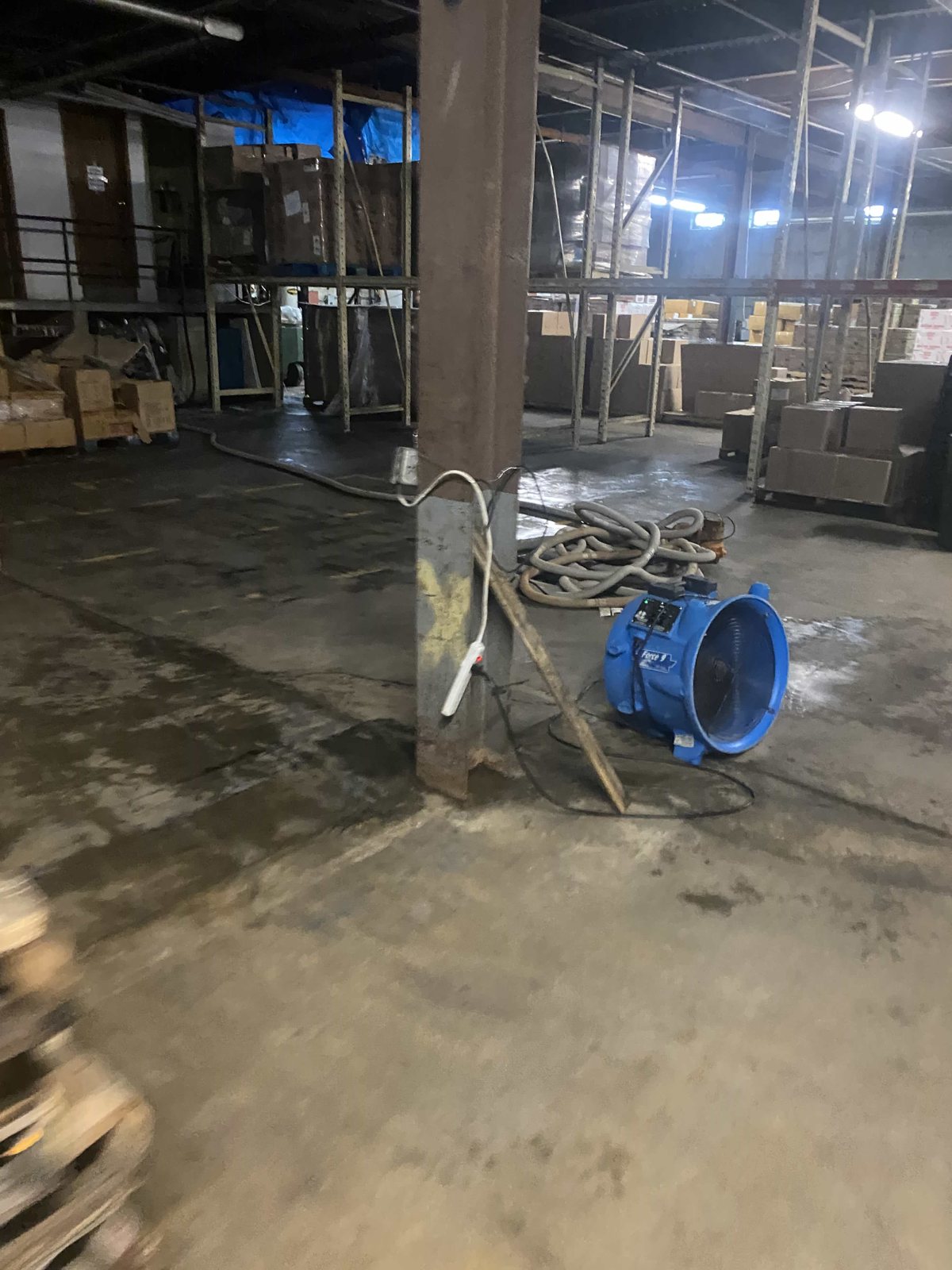
Short answer: extraction units, protective gear, air movers, dehumidifiers, moisture meters, and in some cases air filtration.
| Equipment | What it does | Why it matters with black water |
|---|---|---|
| Pumps and extraction units | Remove standing water and fine solids | Pulls contamination out instead of spreading it |
| Protective equipment | Gloves, boots, eye and respiratory protection | Limits contact with pathogens and splashes |
| Air filtration | Captures airborne particles in the work area | Helps keep odor and droplets from reaching clean rooms |
| Air movers and dehumidifiers | Dry framing, subfloor, and remaining surfaces | Wet materials left behind can grow microbes |
| Moisture meters | Measure moisture in wood, drywall, and concrete | Confirms when the structure is truly dry |
The balance between airflow and moisture removal is explained in air movers vs dehumidifiers. In a contaminated area, airflow is set up after removal and cleaning so the equipment is not blowing residue around.
Sewage backup at a Westchester County, NY property? Bowerman Cleaning and Restoration answers 24/7.
What Gets Removed and What Stays?
Short answer: soaked porous materials usually go; hard surfaces and solid framing usually stay after cleaning and disinfection.
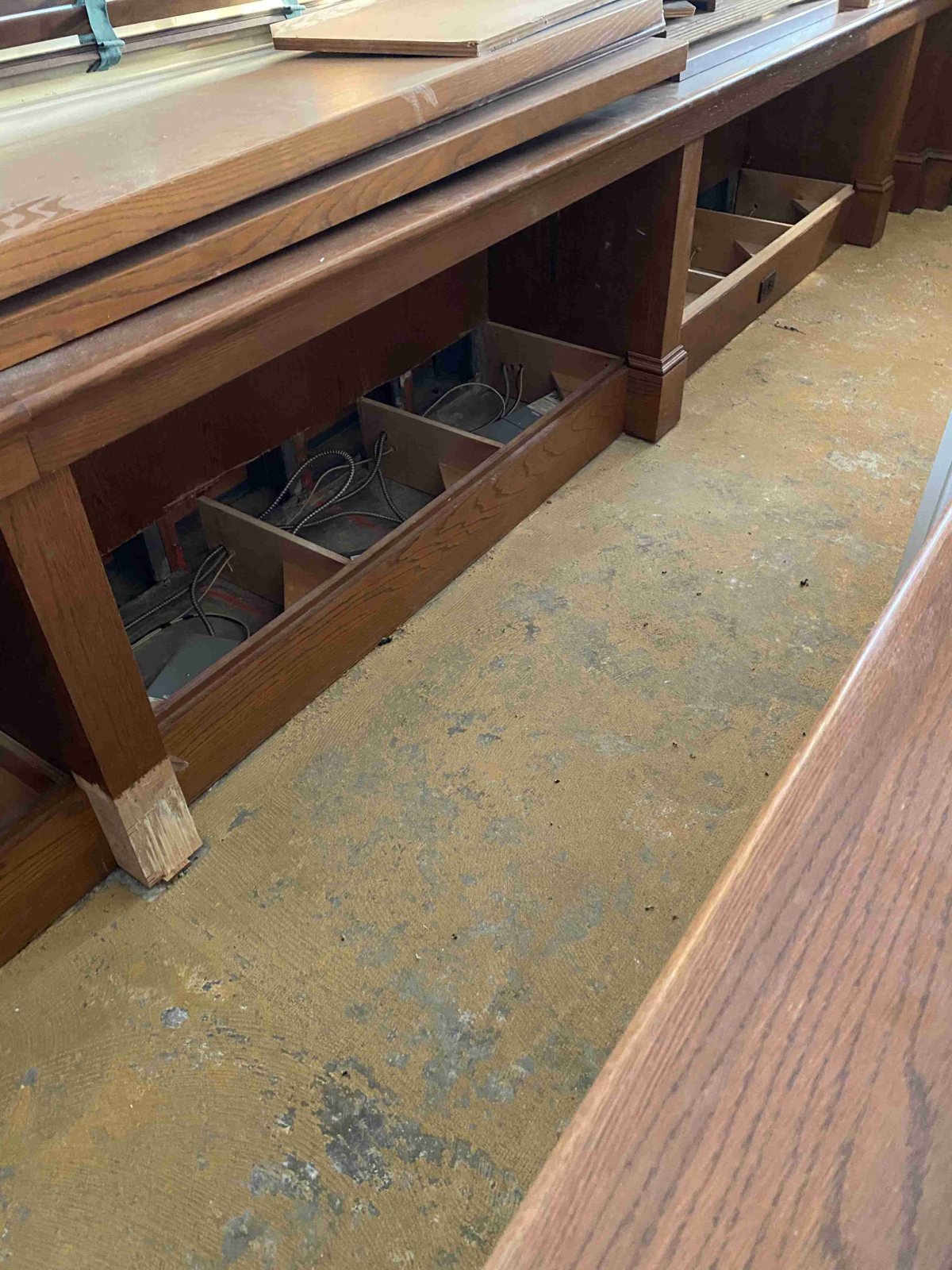
Carpet and pad, insulation, ceiling tiles, particleboard, and drywall that wicked water are typically removed. Concrete, solid wood framing, metal, and tile are usually cleaned, disinfected, and dried. Contents are sorted by material and value. Removed materials are bagged and carried out along the clean path so they do not drip through unaffected rooms.
Removing material is not the same as removing contamination. After tear-out, the exposed framing and slab still need cleaning, and the disinfectant needs time on the surface. The EPA keeps lists of registered disinfectants with label directions for contact time.
Can Black Water Be Cleaned Up Without a Professional?
Short answer: very small, contained spills on hard floors sometimes can; anything on carpet, drywall, or across a basement usually should not be.
A few cups of toilet backflow on a tile floor, cleaned with gloves and a disposable approach, is a different job from a basement that took on an inch of sewage. The larger the area and the more porous material involved, the more the job needs extraction equipment, controlled removal, and verified drying. OSHA guidance on flood response hazards lists the health and electrical risks that come with wet, contaminated spaces.
Before choosing a contractor, the questions in water damage company questions are a useful screen. The sewage damage cleanup and restoration page describes how a full black water job is scoped, and mold growth after water damage explains why leftover moisture matters after the cleanup ends.
Black Water Cleanup FAQs
Is black water the same as gray water?
No. Gray water, or Category 2, is significantly contaminated but not grossly so, such as washer discharge. Black water carries sewage or outside floodwater.
Why not just disinfect the carpet?
Carpet pad and backing hold wastewater deep in the fibers where cleaning cannot reach, so soaked wall-to-wall carpet is usually removed.
How long does black water cleanup take?
Extraction, removal, and cleaning often take one to two days, followed by several days of drying before rebuild.
Will the smell go away after cleanup?
When contaminated materials are removed and surfaces are cleaned, disinfected, and dried, the odor source is gone. A lingering smell usually means something wet or soiled was missed.
Can the house be lived in during cleanup?
Often, if the work area is closed off and the rest of the plumbing works. Large losses or ones that reach the HVAC system may call for staying elsewhere.
Facing black water cleanup in a Westchester NY property? Bowerman Restoration LLC d/b/a Bowerman Cleaning & Restoration, 7 Intervale Street, White Plains, NY 10606, answers 24/7 at (844) 269-3762.