
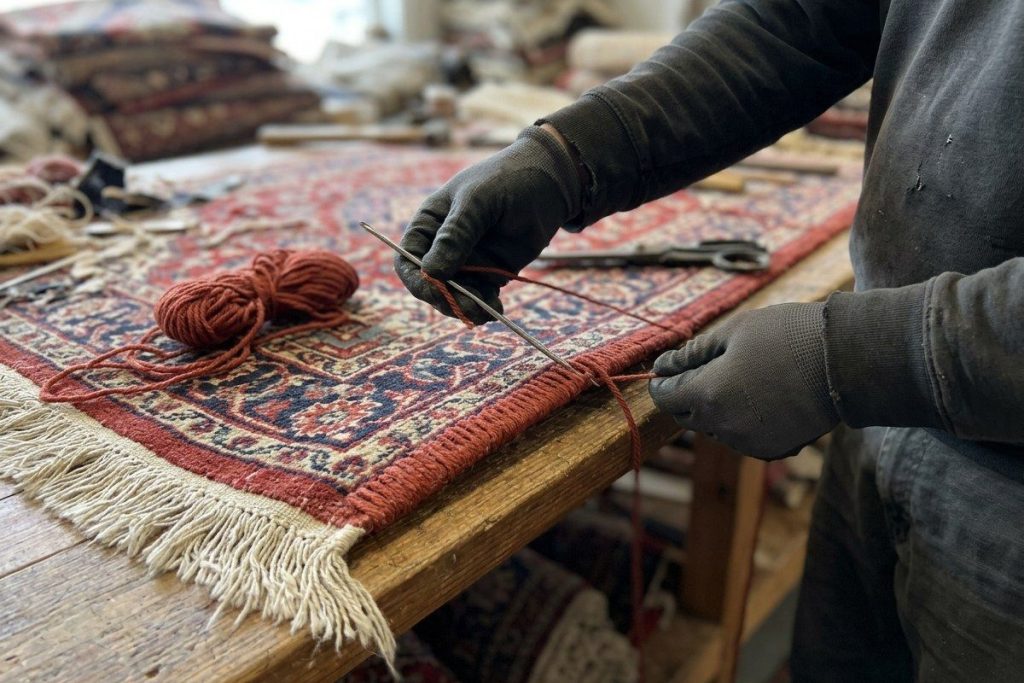
Common oriental rug repairs include securing or replacing fringe, rewrapping side cords, reweaving holes, reknotting moth-eaten or worn pile, stabilizing dry rot, and fixing curled or rippled edges. In NY homes, fringe and edges wear out first. Most repairs are simple when caught early and far more involved once damage spreads.
Written by the Bowerman Cleaning and Restoration Team · September 29, 2026
Key Takeaways
- Fringe and ends are the most frequent repair, because they take the most vacuum and foot traffic.
- Side cords are the next weak point, especially where furniture rubs.
- Holes and moth damage are fixed by reweaving and reknotting to match the pattern.
- Dry rot from past water damage can be stabilized, but badly rotted areas may need to be rebuilt.
In This Guide
- What Are the Most Common Repairs?
- Why Do Fringe and Edges Wear Out First?
- How Are Holes and Moth Damage Repaired?
- How Can Repairs Be Prevented?
- Common Oriental Rug Repairs FAQs
What Are the Most Common Repairs?
Short answer: fringe, side cords, holes, worn pile, moth damage, dry rot, and edge distortion account for most repair work.
| Repair | What is wrong | What the repair involves |
|---|---|---|
| Fringe and end securing | Fringe worn short or torn, knots at the ends loosening | Stitching the last rows so knots cannot unravel |
| Re-fringing | Fringe missing or too damaged to keep | Adding new fringe tied into the foundation |
| Side cord rewrapping | Wool wrapping on the edges worn through | Rewrapping the cords in matched yarn |
| Side cord rebuilding | Edge cords broken or missing | Replacing the cords, then rewrapping |
| Hole reweaving | Hole or tear through the foundation | Rebuilding warp and weft, then tying new knots |
| Reknotting worn pile | Bald or moth-eaten areas | Tying new knots into the existing foundation |
| Dry rot stabilizing | Brittle cotton foundation that cracks | Supporting or replacing weak sections |
| Curling or rippling correction | Edges curl or the rug will not lie flat | Blocking, adjusting tension, or stitching |
The live page on oriental and area rug repair lists the kinds of damage repair work addresses, from moths and water to holes and fraying. A full overview of the work is in what is oriental rug cleaning and repair.
Why Do Fringe and Edges Wear Out First?
Short answer: they are exposed to vacuums, feet, and furniture, and on most rugs the fringe is the warp itself, so losing it puts the knots at risk.
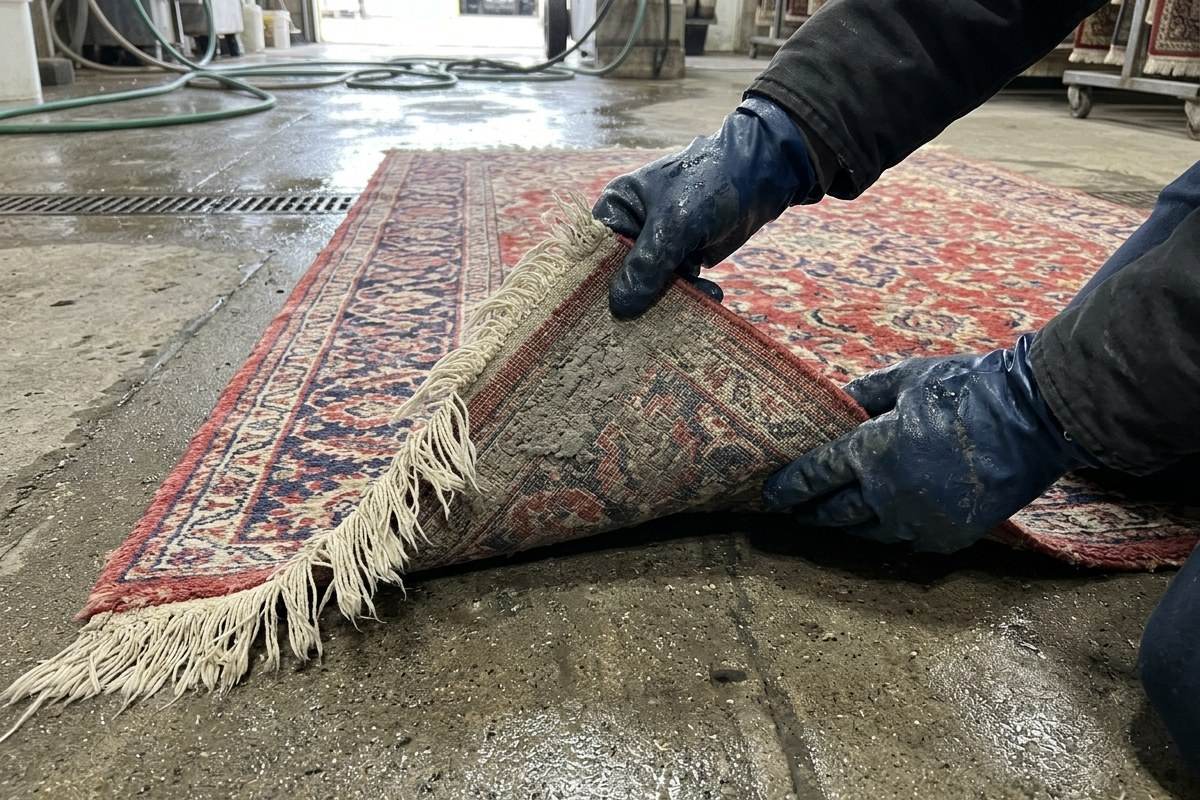
On a hand-knotted rug, the fringe is usually the ends of the warp threads that run through the whole rug. When the fringe wears down to the knots, the last rows can start to slip. Securing the ends early with a stitched finish keeps the pattern intact. Waiting means losing rows of the design along with the fringe.
Side cords take the same beating from vacuum heads, chair legs, and pets. The Canadian Conservation Institute notes that fringes on carpets get worn out with normal use and advises lifting furniture rather than dragging it across a rug. Rugs damaged in a fire or flood often need edge work too; the live guide to salvaging belongings after a fire explains why textiles are cleaned before repairs are judged.
Fine rug that needs cleaning or repair in Westchester County, NY? Bowerman Cleaning and Restoration answers 24/7.
How Are Holes and Moth Damage Repaired?
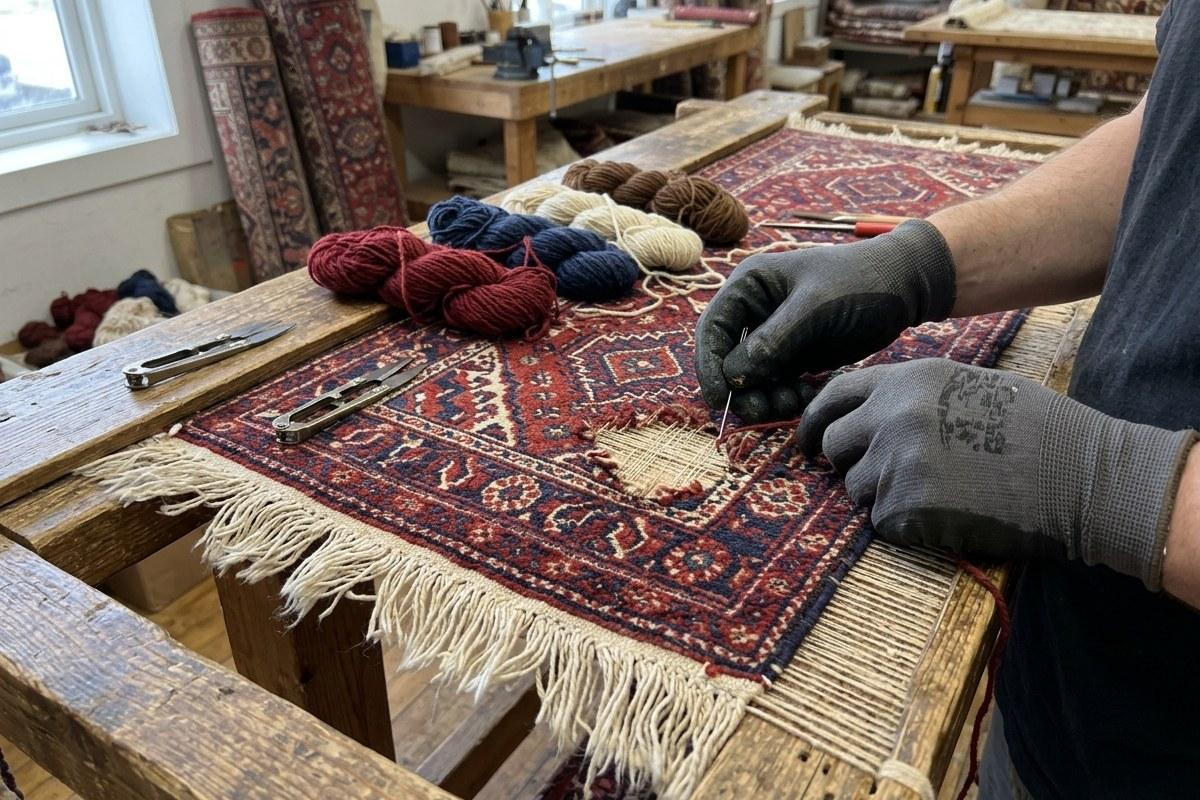
Short answer: the foundation is rebuilt where it is missing, then new knots are tied in matched yarn to follow the pattern.
- Clean and assess. The rug is cleaned so the full extent of the damage and any live insects are found.
- Treat for pests if needed. Moth or beetle activity is dealt with so new knots are not eaten too.
- Match the yarn. Wool or silk is chosen and dyed to blend with the surrounding colors.
- Rebuild the foundation. Missing warp and weft threads are replaced across the hole.
- Tie new knots. Knots are tied to the same density and trimmed to the surrounding pile height.
NC State Extension notes that moth and carpet beetle larvae do most damage when undisturbed, such as under heavy furniture, so bald patches there are common. Damage that started with water, such as dry rot, traces back to moisture left too long; the live guide to mold growth after water damage explains how fast damp materials degrade.
How Can Repairs Be Prevented?
Short answer: gentle vacuuming, rotation, pest checks, and drying any spill or leak quickly prevent most repair needs.
- Keep the vacuum off the fringe and use suction without a beater bar.
- Rotate rugs every 6 to 12 months to spread wear.
- Check under furniture a few times a year for moth webbing or bare spots.
- Use furniture cups to spread weight and avoid crushed pile.
- Dry any leak or spill fast; a wet foundation is the start of dry rot.
A rug soaked in a leak should be handled within a day or two. The live guide to salvageable items after water damage covers how textiles are triaged after a water loss.
Common Oriental Rug Repairs FAQs
What is the most common oriental rug repair?
Securing or replacing worn fringe and ends, followed by side cord repair. The oriental rug repair vs replacement guide covers this in more detail. The common oriental rug damage guide covers this in more detail.
Can moth holes be repaired?
Yes. Holes and bald areas are rebuilt by reweaving the foundation and tying new knots in matched yarn.
Is it better to cut off damaged fringe?
No. Cutting fringe shortens the warp and can let the end knots unravel. Securing the ends is safer.
Can dry rot be fixed?
Limited dry rot can be stabilized. Large areas of brittle foundation may need sections rebuilt, which is a bigger job.
Should a rug be cleaned before repair?
Usually yes. Cleaning shows the full damage and gives the repair a clean base.
Looking at common oriental rug repairs for a rug in a Westchester NY home? Bowerman Restoration LLC d/b/a Bowerman Cleaning & Restoration, 7 Intervale Street, White Plains, NY 10606, answers 24/7 at (844) 269-3762.