
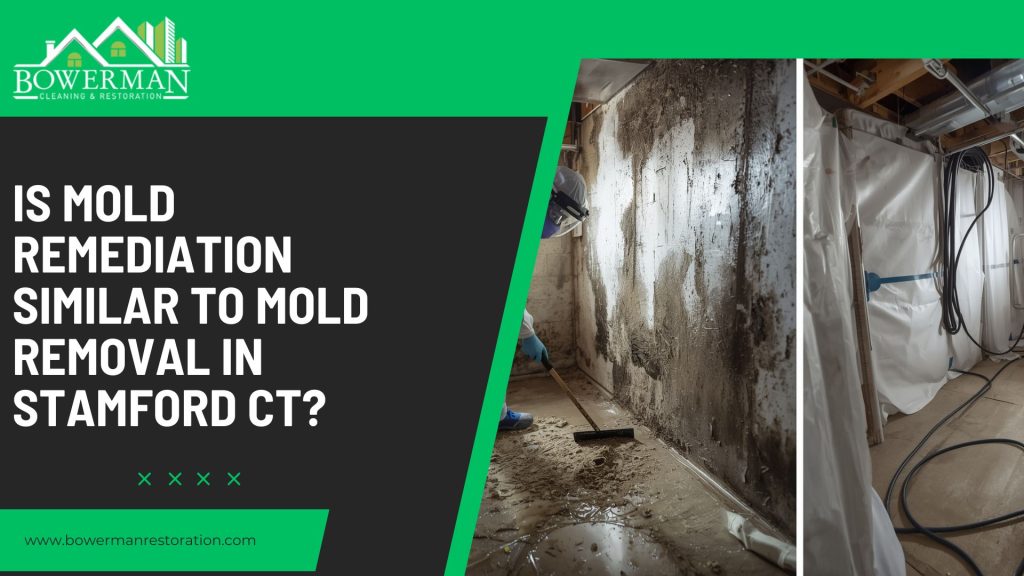

When homeowners in Stamford, Connecticut discover mold in their properties, they’re often faced with confusing terminology that can make choosing the right service challenging. Two terms frequently used interchangeably are “mold remediation” and “mold removal,” leading many to wonder: is mold remediation similar to mold removal in Stamford CT? While these terms might sound synonymous, they represent distinctly different approaches to addressing mold problems, each with unique methodologies, goals, and outcomes.
The confusion between these terms isn’t merely academic – it has real-world implications for property owners dealing with mold issues. Understanding the distinction can mean the difference between a temporary fix and a comprehensive solution that prevents future mold problems. In Stamford’s humid climate, where seasonal moisture fluctuations create ideal conditions for mold growth, choosing the right approach becomes even more critical for long-term property health.
Mold removal, as the name suggests, focuses primarily on the physical elimination of visible mold from surfaces. This approach typically involves scraping, wiping, or otherwise removing mold colonies that have established themselves on walls, ceilings, floors, and other surfaces. While this method can provide immediate visual relief and may seem like a straightforward solution, it often addresses only the symptoms rather than the underlying causes of mold growth.
Mold remediation, on the other hand, represents a more comprehensive approach that goes beyond simple removal. This process involves identifying and addressing the root causes of mold growth, implementing containment strategies to prevent spread during treatment, and establishing long-term prevention measures. Remediation considers the entire ecosystem that allows mold to thrive, including moisture sources, ventilation issues, and environmental factors specific to Stamford’s climate patterns.
The distinction becomes particularly important when considering the unique challenges faced by Stamford residents. The city’s proximity to Long Island Sound creates specific humidity patterns, while its mix of historic and modern buildings presents varying structural challenges. Older homes may have different ventilation systems and building materials that require specialized approaches, while newer constructions might face different moisture management issues. These factors influence whether a simple removal approach will be sufficient or if comprehensive remediation is necessary.
Key Takeaways
- Scope of Work: Mold removal focuses on eliminating visible mold colonies, while mold remediation addresses the entire mold ecosystem, including prevention and environmental controls. Remediation typically involves more extensive assessment, containment, and follow-up procedures.
- Long-term Effectiveness: Removal often provides temporary relief but may not prevent recurrence, whereas remediation aims to create conditions that discourage future mold growth through comprehensive moisture control and environmental management.
- Cost Considerations: While removal might appear less expensive initially, remediation often proves more cost-effective long-term by preventing recurring problems that would require repeated removal services.
- Health Impact: Remediation typically includes better containment and air quality management during the process, reducing exposure risks for occupants compared to simple removal methods that might disturb spores without proper containment.
- Regulatory Compliance: In Connecticut, certain mold situations require licensed remediation professionals, particularly in commercial properties or severe residential cases, making understanding the distinction crucial for legal compliance.
- Documentation and Warranty: Professional remediation services typically provide detailed documentation of the process and may offer warranties on their work, while removal services might not include such comprehensive reporting or guarantees.
- Stamford-Specific Factors: The city’s coastal climate and diverse building stock create unique challenges that often favor remediation approaches over simple removal, particularly in addressing humidity-related mold issues common to the area.
Understanding the Fundamental Differences
The primary distinction between mold remediation and mold removal lies in their philosophical approaches to addressing mold problems. Mold removal operates on a reactive principle, targeting visible mold growth with the goal of eliminating what can be seen and accessed. This approach typically involves physical removal techniques such as scraping, sanding, or wiping affected surfaces, often followed by the application of antimicrobial treatments to kill remaining spores.
Mold remediation, conversely, adopts a holistic approach that views mold growth as a symptom of underlying environmental conditions. This methodology begins with comprehensive assessment to identify not just where mold is present, but why it’s growing in those locations. Remediation professionals examine moisture sources, ventilation patterns, building materials, and environmental factors that contribute to mold-friendly conditions.
In Stamford’s context, this distinction becomes particularly relevant due to the area’s climate characteristics. The city experiences significant seasonal humidity variations, with summer months bringing high moisture levels from the nearby Sound, while winter heating cycles can create condensation issues in poorly ventilated spaces. These patterns mean that simple removal of visible mold often fails to address the cyclical nature of moisture problems that lead to recurring mold growth.
The remediation process typically begins with containment – establishing barriers to prevent mold spores from spreading to unaffected areas during treatment. This step is often minimal or absent in removal procedures, which can inadvertently spread contamination throughout a property. Professional remediation also includes air filtration systems that capture airborne spores during the process, protecting both workers and occupants from exposure.

The Science Behind Mold Growth and Treatment Approaches
Understanding why mold grows and spreads is essential to appreciating the differences between removal and remediation approaches. Mold requires three basic conditions to thrive: moisture, organic material to feed on, and appropriate temperature ranges. In Stamford homes, these conditions are often present year-round, making the choice between removal and remediation particularly significant.
Mold spores are microscopic and naturally present in virtually all indoor and outdoor environments. When these spores encounter suitable conditions, they begin to colonize and reproduce, creating the visible growth that homeowners typically notice. However, by the time mold becomes visible, colonies have often been established for weeks or months, and spores have likely spread to other areas of the property.
Simple mold removal addresses only the visible manifestation of this process. When technicians scrape or wipe away visible mold, they’re removing the fruiting bodies and surface growth, but they may not be eliminating the root system (mycelia) that can extend deep into porous materials. Additionally, the physical disturbance of mold colonies during removal can release thousands of spores into the air, potentially spreading contamination if proper containment isn’t established.
Remediation approaches this biological reality differently. Instead of focusing solely on visible growth, remediation considers the entire lifecycle of mold development. This includes identifying and eliminating moisture sources that allow spores to germinate, removing or treating materials that provide food sources, and modifying environmental conditions to make future growth less likely.
In Stamford’s coastal environment, moisture management becomes particularly complex. Humidity from Long Island Sound can create condensation issues, while seasonal temperature fluctuations can cause building materials to expand and contract, potentially creating new pathways for moisture infiltration. Remediation professionals account for these environmental factors when developing treatment plans, often recommending improvements to ventilation systems, moisture barriers, or building envelope modifications that removal services typically don’t address.
The treatment chemicals and methods used also differ significantly between approaches. Removal services often rely heavily on biocides and antimicrobial treatments to kill mold on contact. While these products can be effective for surface treatment, they don’t address underlying moisture issues and may not penetrate deeply enough into porous materials to eliminate embedded growth.
Remediation may use similar products but as part of a broader strategy that includes physical removal of contaminated materials, environmental controls, and prevention measures. The goal isn’t just to kill existing mold but to create conditions where new growth becomes unlikely.

Cost Analysis and Long-term Value Considerations
The financial implications of choosing between mold removal and remediation extend far beyond the initial service cost. While removal services often appear more affordable upfront, the total cost of ownership frequently favors comprehensive remediation approaches, particularly in Stamford’s challenging moisture environment.
Mold removal services typically charge based on the square footage of visible mold growth and the time required for physical removal. These costs can range from relatively modest amounts for small, isolated areas to more significant expenses for widespread visible growth. However, this pricing model doesn’t account for the likelihood of recurrence when underlying causes aren’t addressed.
Stamford homeowners who choose removal-only approaches often find themselves dealing with recurring mold problems, particularly during high-humidity seasons. Each recurrence requires additional removal services, and over time, these repeated costs can exceed the initial investment in comprehensive remediation. Additionally, recurring mold problems can indicate ongoing moisture issues that may be causing hidden damage to building materials, leading to more extensive and expensive repairs down the line.
Remediation services typically involve higher upfront costs due to their comprehensive nature. These services include detailed assessment, containment setup, air filtration, removal of contaminated materials, treatment of affected areas, moisture source identification and correction, and post-remediation verification. While this broader scope increases initial costs, it often eliminates the need for repeated treatments.
Insurance considerations also play a role in the cost equation. Many homeowner’s insurance policies in Connecticut have specific provisions regarding mold coverage, and some insurers may require professional remediation for claims to be valid. Additionally, properties with documented recurring mold problems may face higher insurance premiums or coverage limitations, making effective initial treatment an important financial consideration.
Property value impacts represent another significant cost factor. Homes with recurring mold problems often face challenges during sale processes, as buyers and inspectors may view repeated mold issues as indicators of underlying structural or moisture problems. Professional remediation with proper documentation can actually enhance property value by demonstrating that problems have been comprehensively addressed.
The economic impact extends to health-related costs as well. Ongoing exposure to mold can contribute to respiratory issues, allergies, and other health problems, particularly for sensitive individuals. While removal may provide temporary relief, remediation’s focus on comprehensive elimination and prevention can reduce long-term health risks and associated medical costs.
Regulatory Framework and Professional Standards in Connecticut
Connecticut has established specific regulatory requirements for mold assessment and remediation that significantly impact the choice between removal and remediation approaches. Understanding these regulations is crucial for Stamford property owners, as non-compliance can result in legal issues, insurance complications, and potential health risks.
The state requires licensing for mold remediation professionals working on projects exceeding certain square footage thresholds or involving specific building types. These regulations recognize the complexity of proper mold remediation and the specialized knowledge required to address contamination safely and effectively. Licensed professionals must demonstrate competency in containment procedures, air quality management, proper disposal methods, and post-remediation verification.
For commercial properties and multi-family residential buildings in Stamford, these licensing requirements often mandate professional remediation rather than simple removal approaches. The regulations recognize that improper handling of mold contamination can affect multiple occupants and require specialized expertise to address safely.
Professional standards established by organizations such as the Institute of Inspection, Cleaning and Restoration Certification (IICRC) and the American Conference of Governmental Industrial Hygienists (ACGIH) provide detailed protocols for mold remediation that go far beyond simple removal procedures. These standards emphasize containment, worker protection, air quality monitoring, and comprehensive documentation – elements typically absent from basic removal services.
Documentation requirements represent another significant difference between removal and remediation approaches. Professional remediation services typically provide detailed reports documenting the extent of contamination, remediation procedures performed, air quality testing results, and recommendations for preventing future problems. This documentation can be crucial for insurance claims, property sales, and ongoing maintenance planning.
Disposal regulations also favor remediation approaches. Connecticut has specific requirements for disposing of mold-contaminated materials, and professional remediation services typically handle these requirements as part of their standard procedures. DIY removal or basic removal services may not properly address disposal requirements, potentially creating legal liabilities for property owners.
Worker safety regulations under OSHA also impact the choice between approaches. Professional remediation requires specific safety protocols, including respiratory protection, protective clothing, and exposure monitoring. These requirements recognize the health risks associated with mold exposure and ensure that remediation work is performed safely.
Environmental Factors Specific to Stamford
Stamford’s unique geographical and climatic characteristics create specific challenges for mold prevention and treatment that often favor remediation over simple removal approaches. The city’s location on Long Island Sound creates a maritime climate with high humidity levels, particularly during summer months when warm, moist air from the Sound interacts with air-conditioned indoor environments.
Seasonal patterns in Stamford create cyclical moisture challenges that simple removal approaches often fail to address adequately. Spring brings increased rainfall and snowmelt, potentially creating moisture infiltration issues in basements and lower levels. Summer’s high humidity can overwhelm inadequate ventilation systems, creating condensation problems in walls and attics. Fall’s temperature fluctuations can cause building materials to expand and contract, potentially opening new pathways for moisture entry.
The city’s diverse housing stock presents additional challenges. Historic homes in neighborhoods like Shippan Point or downtown areas may have limited ventilation systems and building materials that are particularly susceptible to mold growth. These older structures often require specialized remediation approaches that address both the immediate mold problem and the underlying building characteristics that contribute to moisture issues.
Newer developments in areas like Harbor Point face different challenges, including modern building envelope issues and HVAC systems that may create unexpected moisture problems if not properly maintained. These properties may benefit from remediation approaches that include building system optimization and preventive maintenance recommendations.
Stamford’s urban density also creates unique considerations for mold treatment. Attached housing units, condominiums, and multi-family buildings require careful containment during any mold treatment to prevent cross-contamination between units. This necessity often mandates professional remediation approaches with proper containment and air filtration systems.
The city’s proximity to major transportation corridors and industrial areas can also impact indoor air quality and mold growth patterns. Remediation professionals familiar with local conditions can account for these factors when developing treatment and prevention strategies, while simple removal approaches typically don’t consider these broader environmental influences.
Frequently Asked Questions
Q: How long does mold remediation take compared to mold removal in Stamford?
A: Mold removal typically takes 1-3 days for most residential projects, while comprehensive remediation can take 3-7 days or longer, depending on the extent of contamination and underlying issues. The additional time for remediation includes assessment, containment setup, moisture source correction, and post-remediation verification.
Q: Can I perform mold removal myself, or do I need professional remediation?
A: Small areas (less than 10 square feet) of mold growth may be suitable for DIY removal, but larger areas or recurring problems typically require professional remediation. Connecticut regulations may require licensed professionals for certain situations, particularly in commercial buildings or severe residential cases.
Q: Will my insurance cover mold remediation differently than mold removal?
A: Insurance coverage varies by policy, but many insurers prefer or require professional remediation for coverage eligibility. Comprehensive remediation with proper documentation is more likely to satisfy insurance requirements than basic removal services.
Q: How do I know if I need removal or remediation for my Stamford property?
A: Factors include the size of affected area, recurrence history, underlying moisture issues, and building type. Professional assessment can help determine the appropriate approach based on your specific situation and local conditions.
Q: What happens if mold returns after removal or remediation?
A: Mold recurrence after removal is common if underlying causes aren’t addressed. Professional remediation typically includes warranties and addresses root causes, making recurrence less likely. If mold returns after proper remediation, it usually indicates new moisture sources or incomplete initial treatment.
Q: Are there health differences between removal and remediation approaches?
A: Remediation typically provides better health protection through proper containment, air filtration, and comprehensive elimination of contamination. Removal without proper containment can actually increase short-term exposure by disturbing mold colonies without adequate protection measures.
Q: How do Stamford’s coastal conditions affect the choice between removal and remediation?
A: The high humidity and seasonal moisture variations common in Stamford often make remediation more effective than removal alone. Coastal conditions require addressing underlying moisture management, which is typically included in remediation but not removal services.
Q: What credentials should I look for in a mold professional in Stamford?
A: Look for Connecticut state licensing for remediation work, IICRC certification, proper insurance coverage, and local experience with Stamford’s specific environmental challenges. Companies like Bowerman have the expertise to handle both assessment and remediation needs in the local market.
Conclusion
The question “is mold remediation similar to mold removal in Stamford CT?” reveals a fundamental misunderstanding that can have significant consequences for property owners. While these terms are often used interchangeably, they represent distinctly different approaches with varying outcomes, costs, and long-term effectiveness. Understanding this distinction is crucial for making informed decisions about addressing mold problems in Stamford’s unique environmental conditions.
Mold removal, with its focus on eliminating visible growth, may provide immediate satisfaction and apparent cost savings. However, this approach often fails to address the underlying conditions that allow mold to thrive, particularly in Stamford’s challenging coastal climate. The result is frequently recurring problems that ultimately cost more than comprehensive remediation would have initially.
Mold remediation’s comprehensive approach, while requiring greater upfront investment, typically provides more lasting solutions by addressing root causes, implementing proper containment, and establishing prevention measures. In Stamford’s environment, where seasonal moisture variations and diverse building stock create ongoing challenges, this thorough approach often proves more cost-effective and health-protective in the long term.
The choice between removal and remediation should be based on careful consideration of the specific situation, including the extent of contamination, underlying moisture issues, building characteristics, and long-term goals. Professional assessment can help determine the most appropriate approach for each unique situation, ensuring that the chosen method addresses both immediate concerns and long-term prevention needs in Stamford’s challenging environment.