
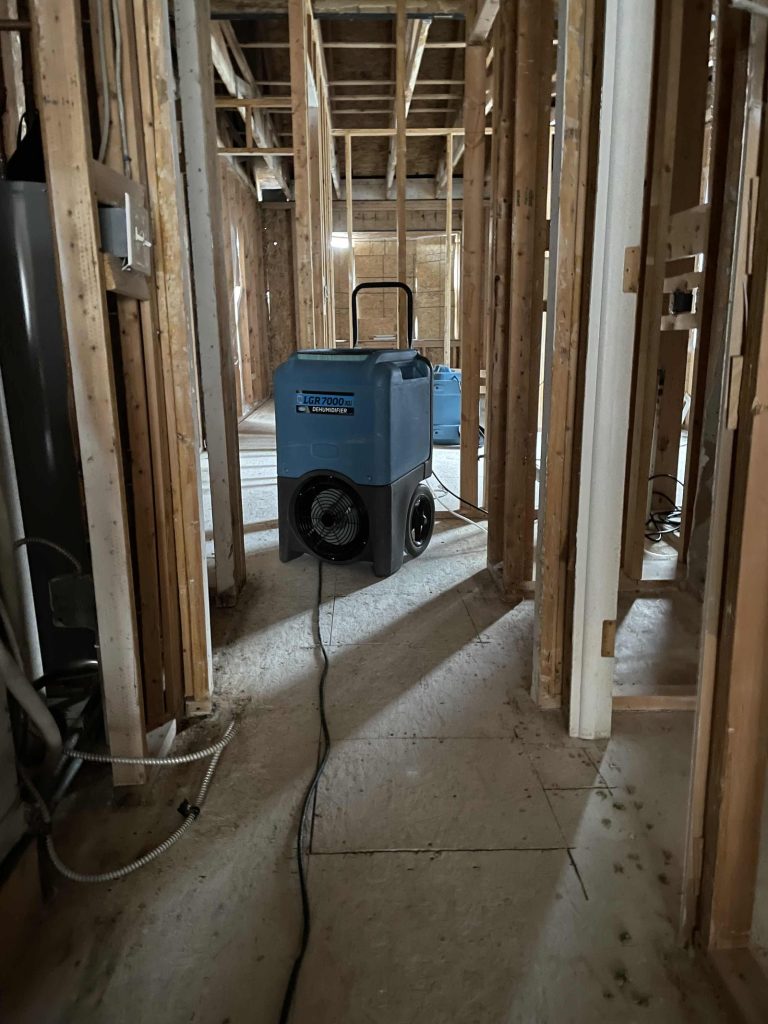
Water damage after a fire is common, even when the flames were confined to one room. In NY homes, firefighters may use large volumes of water, and melted pipes or fixtures can keep leaking after the fire is out. That water still has to be extracted and dried, or it can damage finishes and support later problems in the structure.
Written by the Bowerman Cleaning and Restoration Team · June 19, 2026
Key Takeaways
- Firefighting water and broken fixtures are a regular part of many fire losses, not a rare add-on.
- A floor that looks dry can still hide a wet wall cavity or wet insulation.
- Drying should be measured with readings, just as it is after other water losses.
- This water is usually reviewed with the fire claim, which is not the same as a flood from rising water, but the policy language controls.
In This Guide
- Where Does Water After a Fire Usually Come From?
- How Is Water Damage After a Fire Dried Out?
- Why Should Water After a Fire Be Handled Promptly?
- Water Damage After a Fire FAQs
Where Does Water After a Fire Usually Come From?
Short answer: firefighting hoses, melted or broken pipes and fixtures, and sometimes sprinklers in buildings that have them. The source matters for the cleanup and for how a claim is described.
Hose streams can soak floors, wall cavities, and rooms below the fire. A melted supply line can keep running until the water is shut off. In some Westchester County, NY apartments or commercial spaces, a sprinkler head can discharge a large volume in a short time. All of those are water losses attached to the fire, not a separate weather flood.
| Water source | Where it often shows up | Why it matters |
|---|---|---|
| Firefighting hoses | Floors, wall cavities, and rooms below the fire | A large volume can soak materials far from the flames |
| Melted or broken fixtures | Around baths, kitchens, or any pipe that failed in the heat | Water can keep running until the supply is shut off |
| Sprinkler discharge | The room of the fire and sometimes adjacent units | A short discharge can still wet ceilings and contents |
| Weather after a lost roof or window | Attics, upper floors, and exposed interiors | A later rain can add a second wetting that also has to be dried |
What fire damage restoration is includes this water work as part of the same project. A general overview of what water damage restoration is explains the extraction and drying logic in more detail.
How Is Water Damage After a Fire Dried Out?
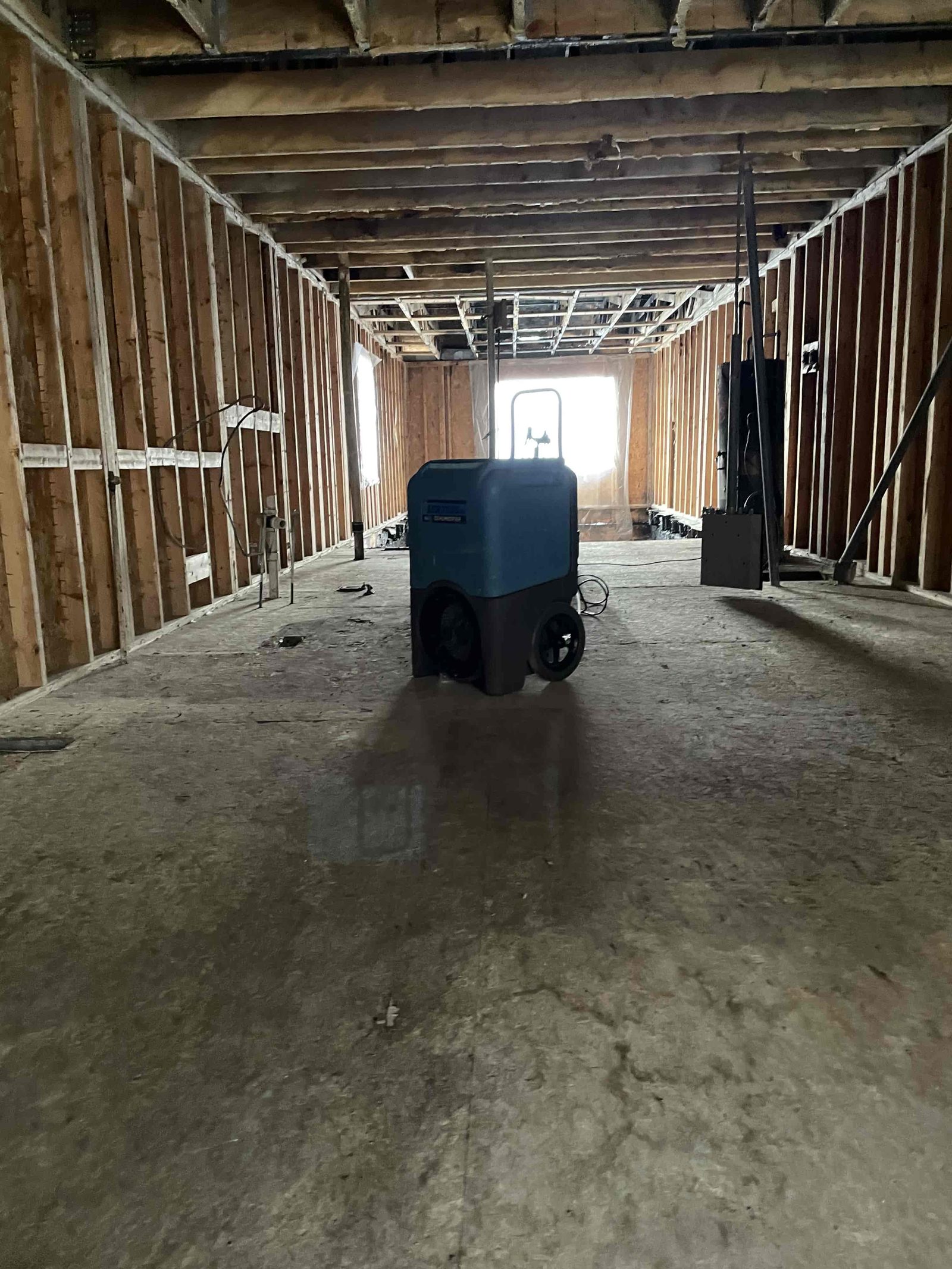
Short answer: standing water is extracted, wet materials are opened or removed as needed, and the structure is dried to a documented target. Soot cleaning and drying often have to be coordinated so one does not undo the other.
The IICRC S500 standard is the usual reference for the drying side, and the IICRC S700 standard covers the fire and smoke side. In practice, wet, sooty materials may need to come out rather than be dried in place. A careful water damage drying process still uses moisture readings, not look and touch, to decide when a cavity is ready to close.
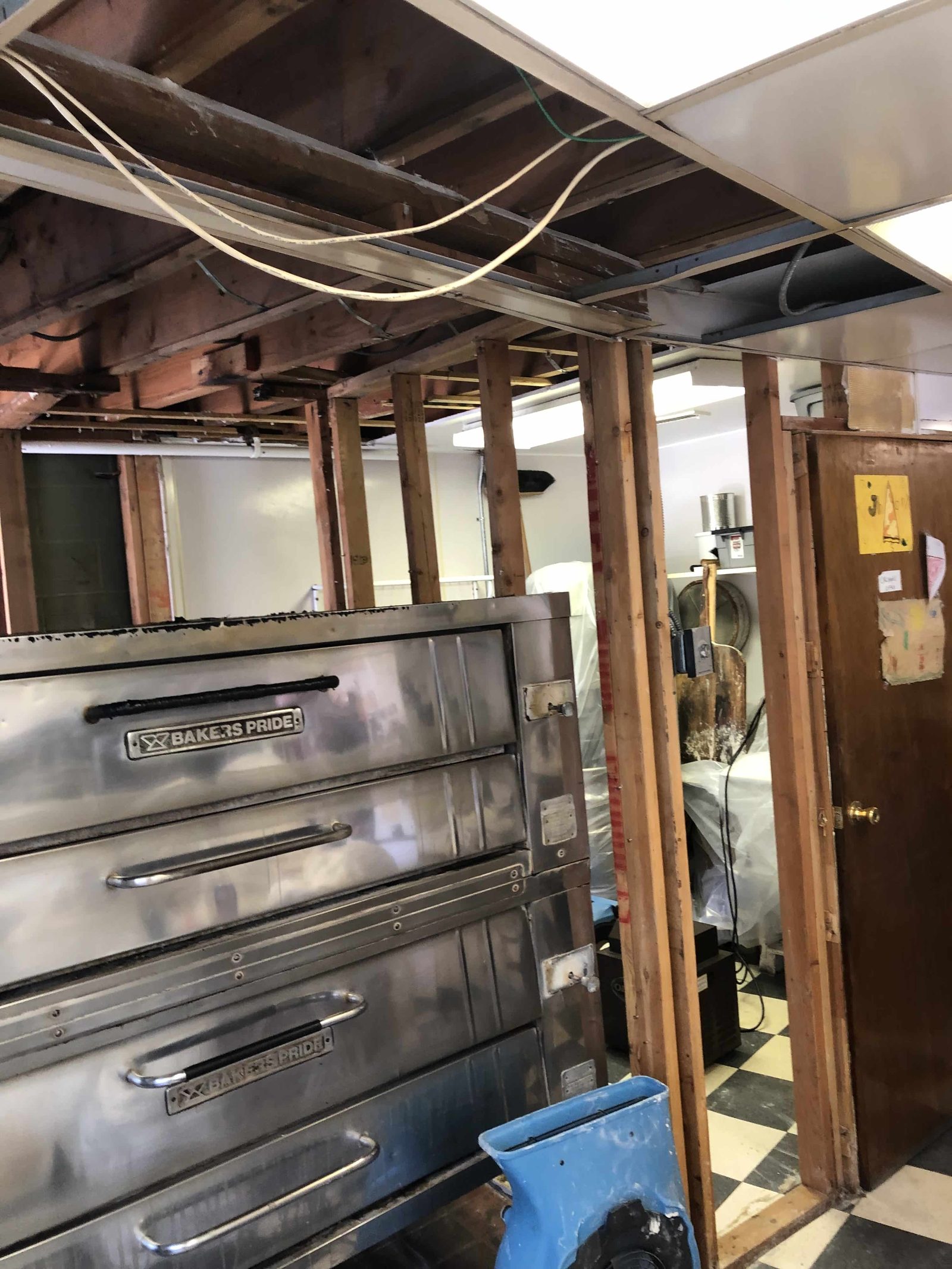
The fire damage restoration services page places this drying work inside the fire scope, rather than treating it as an unrelated project.
Questions about fire or smoke damage in Westchester County, NY? Bowerman Cleaning and Restoration answers 24/7.
Why Should Water After a Fire Be Handled Promptly?
Short answer: wet materials can swell, corrode, or support later growth if they stay damp, and they can also hold smoke odor. Waiting until the rebuild starts is usually too late.
The EPA notes that mold can begin growing on damp surfaces within 24 to 48 hours, which is a possibility when materials stay wet, not a fixed schedule. This article does not claim that mold will always follow a fire, and it does not involve mold testing. The practical step is to extract and dry the structure as part of the fire job.
Prompt drying also protects the rebuild calendar. Wet insulation, wet subfloors, or a damp ceiling cavity can force a later tear-out if the wall is closed too soon. That is one reason a fire job and a water job on the same house should stay on one plan, with readings that show when a material has reached a dry target.
In a multi-story Westchester County, NY home, water often appears on the floor below the fire, not only in the burned room. Check ceilings, light fixtures, and closets on that lower level even when the fire never reached them. Hidden wetting is easier to miss than a charred wall, and it is just as important to document.
Water Damage After a Fire FAQs
If the fire was small, can the water still be a problem?
Yes. A limited fire can still leave a soaked ceiling or a wet wall below if a hose or a sprinkler discharged in that area. The water has to be found, not assumed away.
Is firefighting water the same as a flood?
For the building, it is still water in the materials. For insurance, it is often reviewed as part of the fire loss, which is different from flood coverage for rising or overflowing water. The policy language controls.
Should drying wait until all the soot is cleaned?
The two jobs usually have to be planned together. Leaving standing water while only wiping soot can let moisture travel. Closing a sooty, wet wall is a worse option than sequencing both tasks.
Can a dehumidifier alone dry a house after a fire?
Not if standing water is still present or if wet materials are closed up. Extraction and opening of wet finishes come first.
Who documents the water part of a fire loss?
Photographs, moisture readings, and invoices that separate drying from smoke cleaning help the file. Ask the insurer how it wants that work described.
Have questions about water damage after a fire in a Westchester NY home? Bowerman Restoration LLC d/b/a Bowerman Cleaning & Restoration, 7 Intervale Street, White Plains, NY 10606, answers 24/7 at (844) 269-3762.