
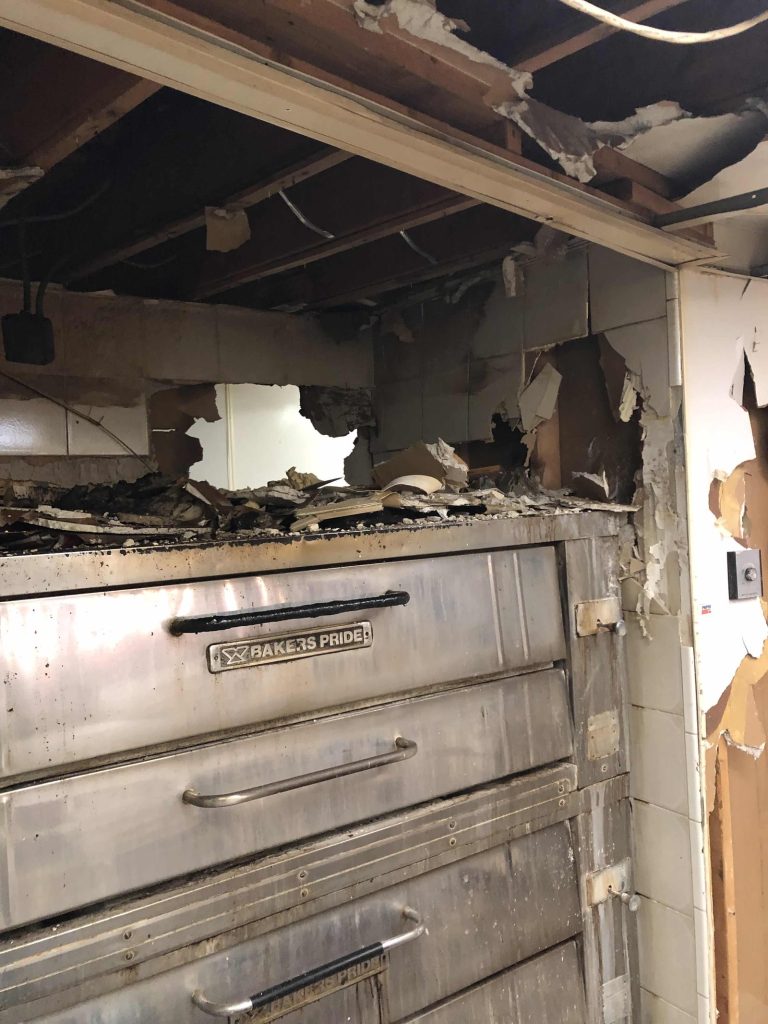
Soot cleanup is the careful removal of the fine, often oily or powdery residue left by a fire. In NY homes, soot can coat ceilings, appliances, and rooms far from the flames. It is not ordinary household dust. Wiping it with a wet cloth can smear a stain into paint or fabric that then has to be replaced.
Written by the Bowerman Cleaning and Restoration Team · June 12, 2026
Key Takeaways
- Soot is a combustion residue, not a simple layer of dust, and it can smear if it is cleaned the wrong way.
- Dry, powdery soot and sticky soot are not treated with the same method.
- A vacuum with the wrong tool, or a wet rag on a dry film, can push soot deeper into a finish.
- Soot cleanup is one part of fire damage restoration, not the entire job.
In This Guide
- What Is Soot, and Why Is It Hard to Clean?
- How Is Soot Cleanup Usually Done?
- What Are the Most Common Soot Cleanup Mistakes?
- Soot Cleanup FAQs
What Is Soot, and Why Is It Hard to Clean?
Short answer: soot is a fine residue from burning, and it can be dry and powdery or sticky, depending on what burned and how it burned. That difference is why a method that works on one fire can fail on another.
Dry soot from a fast, high-heat fire often looks like a dark powder. It can smear if it is wet too soon. Stickier soot, often from a slower fire or from plastics, can stain on contact. In either case, the particles are small and can work into porous paint, grout, or fabric.
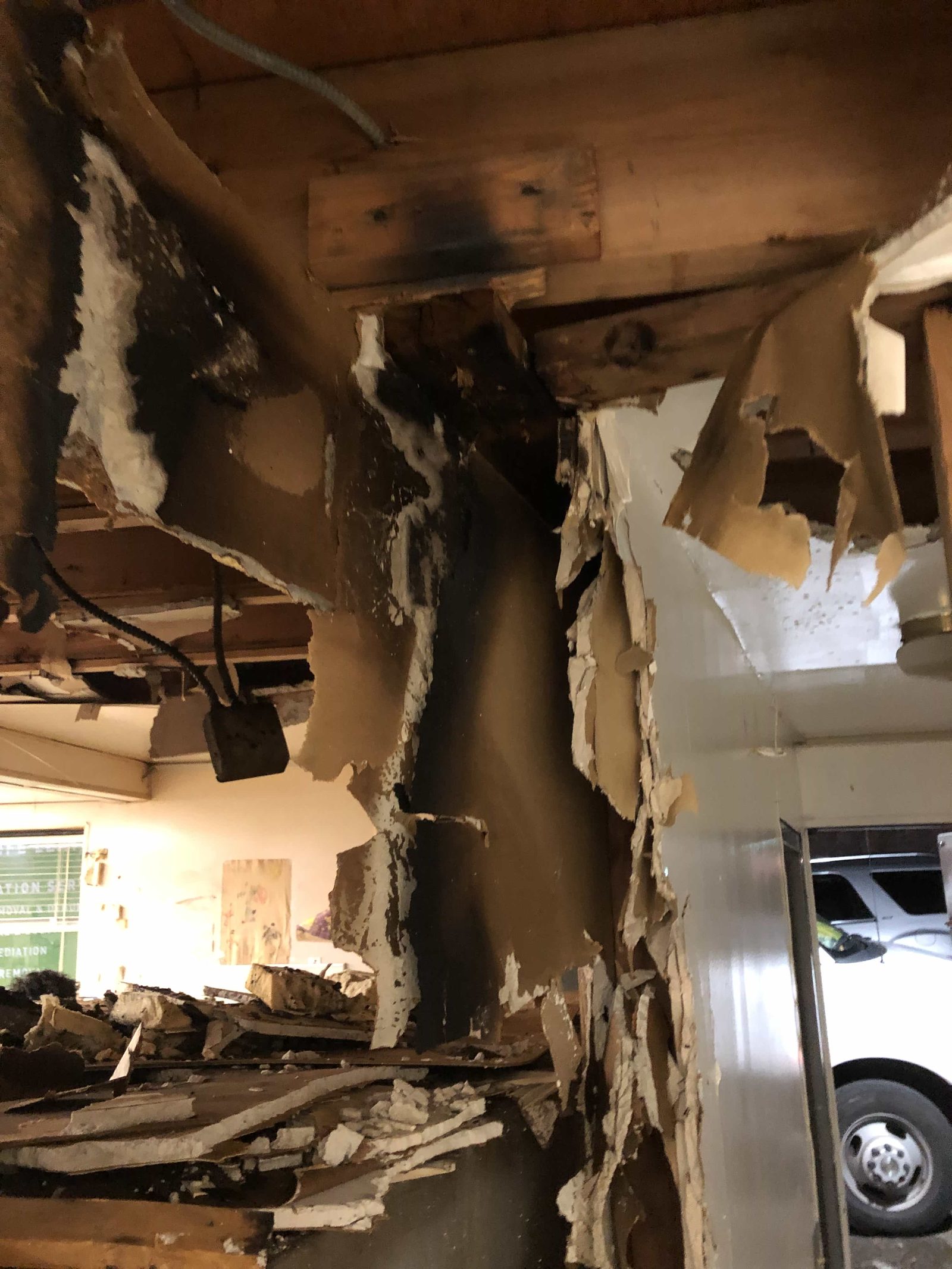
What electrical fire soot and smoke cleanup involve is a useful example of soot that may also sit in cavities around wiring. Kitchen fires leave their own residues; see what smoke damage restoration involves after a kitchen fire.
How Is Soot Cleanup Usually Done?
Short answer: dry removal comes first on many surfaces, then the right cleaner for the material, with replacements when the finish cannot be saved. The first pass is often about lifting the loose film, not soaking it.
| Approach | When it is typically used | Main risk if misused |
|---|---|---|
| Dry sponge or dry vacuum method | Loose, dry soot on a sound surface | A household vacuum can blow fine soot back into the air |
| Controlled wet cleaning | After loose soot is lifted, on surfaces that can tolerate it | Early wetting can smear a stain into paint or grout |
| Removal of the material | Porous finishes that have absorbed the residue | Leaving a stained board in place can hold odor |
The IICRC S700 standard is the usual professional reference for these choices. Everyday notes are also on the site’s fire, smoke, and soot tips page. Soot cleanup sits inside the broader fire damage restoration services scope, which also includes odor and any water from firefighting.
Questions about fire or smoke damage in Westchester County, NY? Bowerman Cleaning and Restoration answers 24/7.
What Are the Most Common Soot Cleanup Mistakes?
Short answer: wetting the film too soon, using a regular vacuum, and painting over a stain that has not been removed. Each of those shortcuts can make the next step harder.
- Wiping walls with a wet rag before loose soot is lifted.
- Using a household vacuum that exhausts fine particles back into the room.
- Painting or sealing a surface that still holds residue.
- Ignoring soot in a closet, a vent, or on the far side of a doorway.
A later guide in this series covers fire damage cleanup mistakes more broadly. For the definition of the overall job, see what fire damage restoration is.
A related mistake is treating every soot film the same way. Dry, powdery soot and a sticky wet-smoke residue do not respond to one household method. The comparison of wet smoke vs dry smoke explains why a first wipe should match the residue. A small test area is safer than washing an entire wall and then discovering a smear.
If a room looks worse after a first attempt, stop and change the method rather than repeating the same wipe. Smeared soot is harder to lift than loose soot, and paint applied over a smear will usually have to come off later. Document the condition before the next step so the claim file still shows what the fire left, not only what a rushed cleaning changed.
Soot Cleanup FAQs
Is soot the same thing as smoke damage?
Soot is the visible residue. Smoke damage also includes odor and the path the smoke took through the building. The two overlap, but a soot wipe is not automatically a complete smoke cleanup.
Can a household cleaner remove soot?
Some hard surfaces can be cleaned with care after loose soot is lifted. Many household products are too wet or too abrasive for painted walls or porous goods and can set a stain.
Does soot always mean the wall has to come out?
No. Some sound, well-cleaned surfaces can stay. If the residue has soaked into the finish, or if the board is also charred or wet, replacement is more likely.
Why is soot on metal or glass easier to clean than soot on drywall?
Hard, non-porous surfaces do not absorb the film the way paper-faced drywall or fabric does. The residue still has to be lifted carefully so it is not scratched in.
Should HVAC vents be included in soot cleanup?
Yes, if smoke traveled through the system. Leaving sooty ducts in place can redistribute residue after the rooms look clean.
Have questions about soot cleanup in a Westchester NY home? Bowerman Restoration LLC d/b/a Bowerman Cleaning & Restoration, 7 Intervale Street, White Plains, NY 10606, answers 24/7 at (844) 269-3762.