
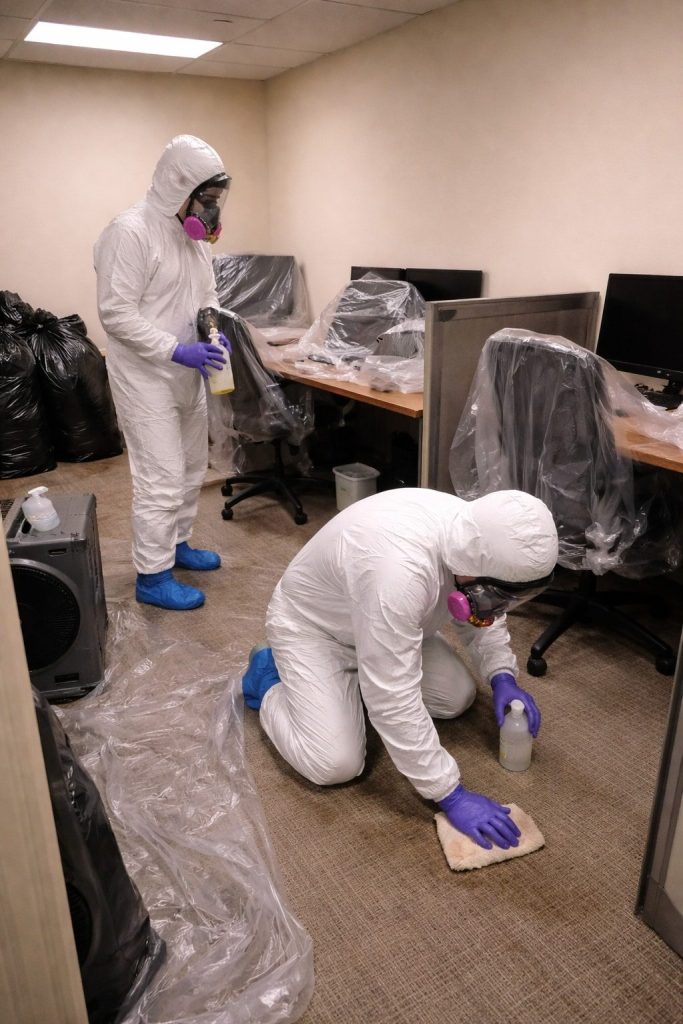
Materials removed in biohazard cleanup follow the path of the contamination, not a standard demolition list. In NY homes, carpet pad, drywall, and subfloor can all absorb blood or other bodily fluids. Some hard surfaces can be cleaned and kept. Porous materials that have been soaked often cannot. Knowing why an item is removed, and how that waste is handled, makes the scope easier to understand at a hard moment.
Written by the Bowerman Cleaning and Restoration Team · November 5, 2026
Key Takeaways
- Removal follows where fluids traveled, including hidden layers under a finished floor or inside a wall.
- Porous materials such as carpet, pad, insulation, and some drywall are often taken out rather than washed.
- Hard, non-porous surfaces may be cleaned and kept when they can be disinfected effectively.
- Removed materials are handled as regulated waste, not as ordinary construction debris.
In This Guide
- Why Are Building Materials Removed Instead of Just Cleaned?
- Which Materials Are Commonly Removed?
- What Can Often Be Cleaned and Left in Place?
- What Happens to Materials After They Are Removed?
- Materials Removed in Biohazard Cleanup FAQs
Why Are Building Materials Removed Instead of Just Cleaned?
Short answer: because many household materials absorb fluids and cannot be reliably disinfected all the way through. A stain that is no longer visible can still be in the pad, the underlayment, or a wall cavity.
Carpet, pad, upholstery, mattresses, and some ceiling tiles are porous. Fluids wick sideways and downward. Cleaning the face of a carpet does not reach a soaked pad. Drywall paper and gypsum can take on fluids from a floor or a wall. Once that happens, cutting out the affected section is often the sounder method. The goal is to remove the reservoir, then clean and disinfect what remains.
The same logic appears in other water-related losses, where wet porous goods are often discarded rather than dried in place. What water damage restoration is and the water damage drying process explain that material decision in a flood or leak. A biohazard job adds the further requirement that contaminated waste be packaged and tracked properly.
Which Materials Are Commonly Removed?
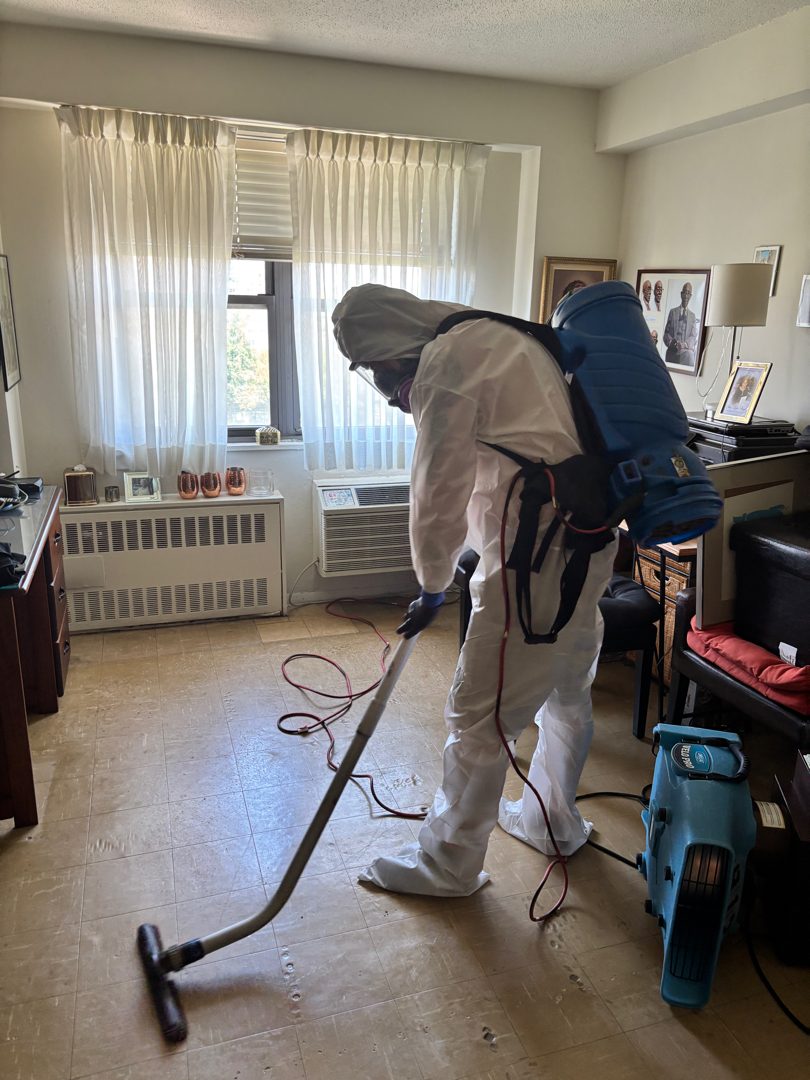
Short answer: carpet and pad, affected drywall, sections of subfloor, baseboards, insulation, and soaked contents, as the assessment requires. The list is a starting map, not a promise that every item on it will come out of every house.
| Material or item | Why it may be removed |
|---|---|
| Carpet and carpet pad | Pad holds fluid even after the face looks cleaner |
| Padding, underlayment, or sections of subfloor | Fluids can reach the wood or underlayment below a finished floor |
| Drywall and insulation | Walls and cavities can wick fluid up or down from the source |
| Baseboards, trim, and some door casings | Edges and hollows trap residue and hide the path |
| Mattresses, upholstered furniture, and drapes | Soft goods are difficult to disinfect all the way through |
| Clothing and soft household textiles | Often treated as waste if they were soaked or heavily stained |
Personal items with little porosity, such as some hard plastic, metal, or glass objects, may be cleaned when that is practical and when the owner wants them saved. Photographs and documents need special handling and may or may not be recoverable. Those decisions should be written into the scope rather than made in passing.
Personal belongings are a separate decision from building materials. Clothing, bedding, and porous contents that were directly involved are often set aside for disposal or for a specialist decision, while hard goods may be cleaned if the contamination did not soak in. That split should be written down, both for the household and for any later insurance conversation, in the same documentary spirit as water damage insurance coverage. Photographing items before they leave the room, when it is safe to do so, prevents later confusion about what was removed and why.
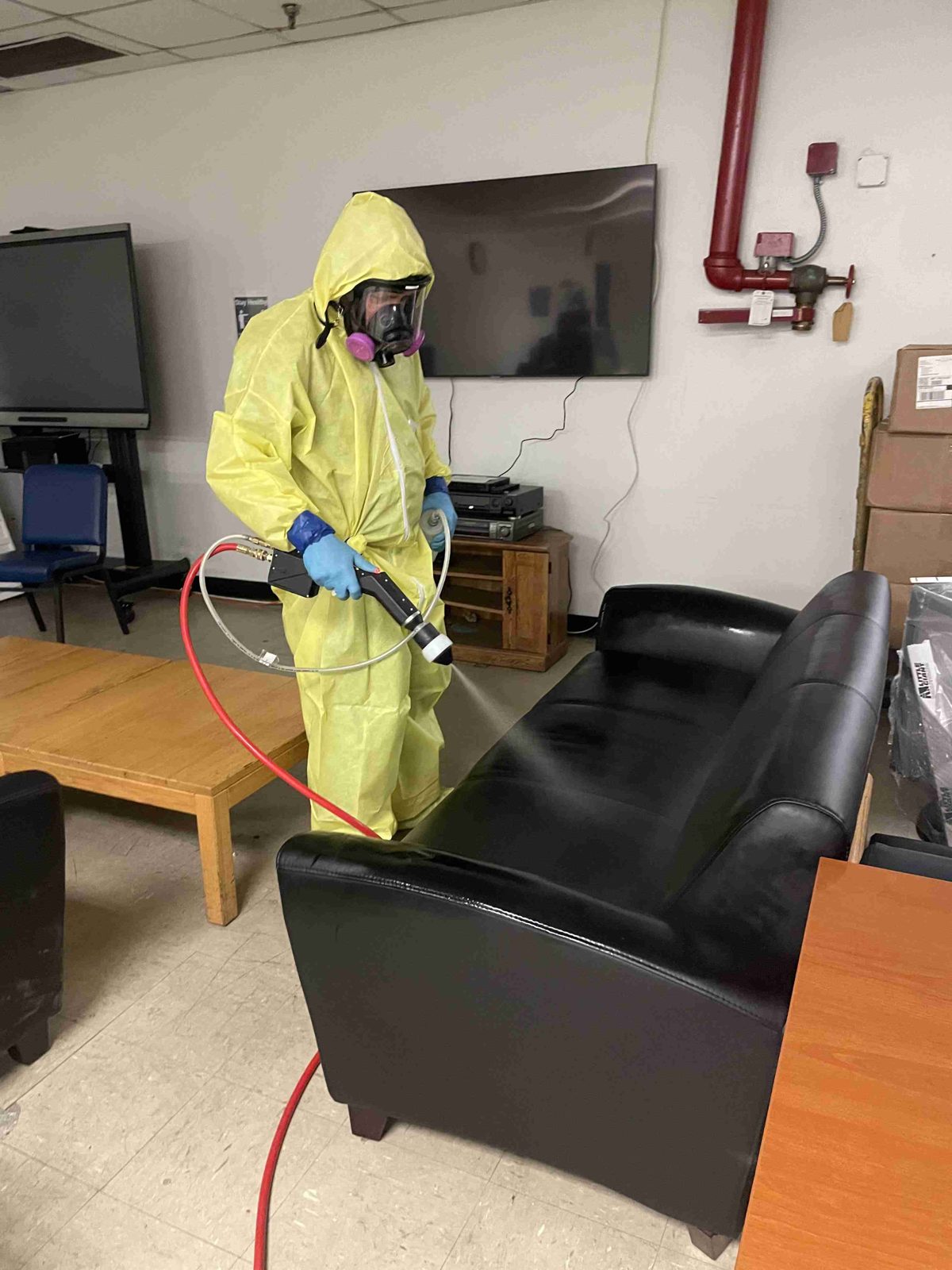
Facing a biohazard cleanup in Westchester County, NY? Bowerman Cleaning and Restoration answers 24/7, discreetly.
What Can Often Be Cleaned and Left in Place?
Short answer: hard, non-porous surfaces that can be reached and disinfected, once any soaked layers around them have been addressed. A clean-looking tile face is not enough if the grout, the pad, or the subfloor is still affected.
Glazed tile, sealed concrete, some vinyl, metal fixtures, and similar surfaces are more likely to stay, provided residue can be removed and a disinfectant can be applied for the required contact time. If fluid went through a seam into a wooden subfloor, part of that assembly may still have to come out. The assessment should say which is which, room by room.
Odor that remains after visible cleaning is often a sign that a porous material was left behind. The next step is to find that material, not to mask the room with a fragrance.
Hard, non-porous surfaces such as sealed tile, metal fixtures, or finished trim are more often candidates to stay, provided they can be reached and cleaned under a proper protocol. The opposite is true of a swollen baseboard, a delaminated cabinet toe-kick, or drywall that wicked fluid up from the floor. Appearance alone is a weak test. If a material cannot be cleaned thoroughly, or if leaving it would hide a contaminated cavity, removal is usually the more reliable path, even when the finished surface still looks intact.
What Happens to Materials After They Are Removed?
Short answer: they are packaged, labeled, and taken away under the rules that apply to that waste, not placed in a household dumpster. Ask for a record of what left the property.
A complete scope names who packages the waste, who transports it, and what documentation the owner will receive. That paperwork belongs with any insurance claim. For the service itself, see biohazard remediation. If the same event also involved a sewage backup, the sewage damage cleanup page describes materials that are often removed for a different, related reason. Hidden water damage signs is also useful when fluids may have traveled farther than the visible stain.
Materials Removed in Biohazard Cleanup FAQs
Is every carpet in the room always removed?
No. Removal depends on whether fluid reached that area. Unaffected rooms should be protected, not automatically torn out.
Can a hardwood floor be saved?
Sometimes, if the contamination is limited to a finish or a small area. If fluid reached seams or a subfloor, sections may still have to come out. The assessment should say so.
Are personal belongings automatically discarded?
No. Hard, cleanable items may be saved. Soft, soaked goods are more often removed. Owners should be asked before items with sentimental value are discarded.
Who decides what comes out?
The owner approves the scope, based on the assessment. A good scope explains why each material is listed.
Is the removed material ordinary construction debris?
Usually not. Contaminated materials from a biohazard job are typically handled as regulated waste, with packaging and tracking to match.
Questions about materials removed in biohazard cleanup in a Westchester NY home? Bowerman Restoration LLC d/b/a Bowerman Cleaning & Restoration, 7 Intervale Street, White Plains, NY 10606, answers 24/7 at (844) 269-3762.