
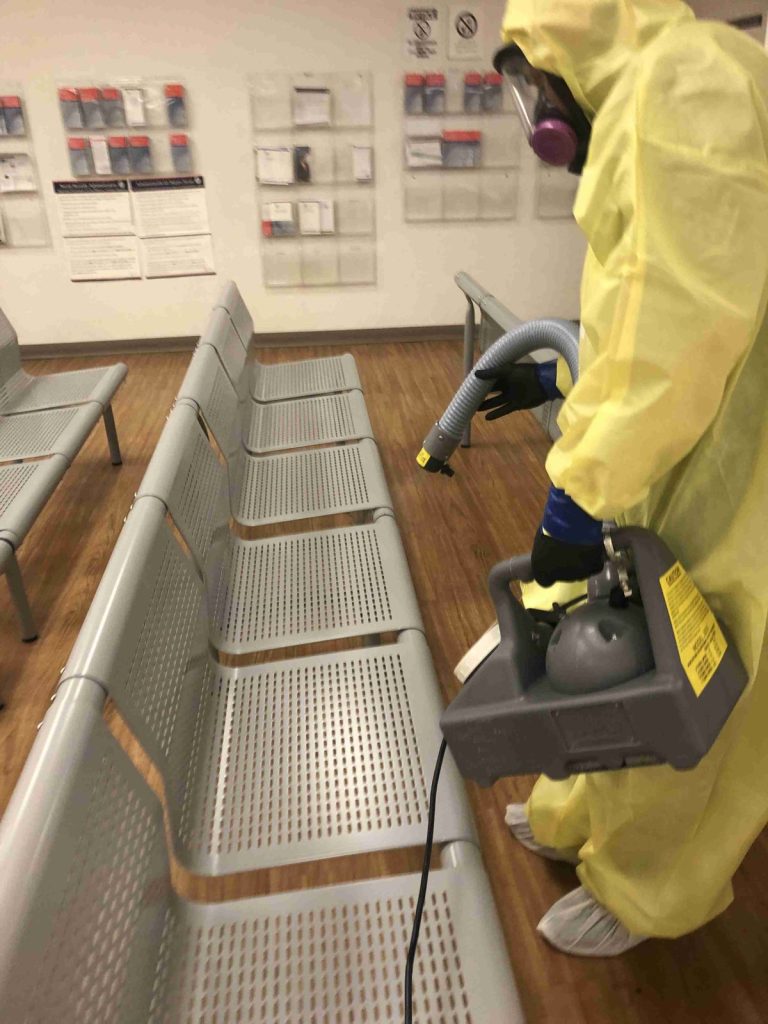
Biohazard cleanup equipment goes well beyond a mop. In NY work, a typical kit includes protective gear for the crew, tools to control the work area, EPA-registered disinfectants, equipment to remove or clean materials, and sealed containers for waste. Some firms also use meters to check cleanliness after the visible work is done. Understanding the kit helps an owner see why a household bucket and a spray bottle are not a substitute.
Written by the Bowerman Cleaning and Restoration Team · November 6, 2026
Key Takeaways
- Crews use protective equipment such as gloves, eye protection, suits, and, when needed, respirators.
- The work area is controlled with barriers, signage, and sometimes air filtration.
- Cleaning relies on registered disinfectants used for a required contact time, not on fragrance or a quick wipe.
- Waste leaves in sealed, labeled containers, including sharps containers when needles or broken glass are present.
In This Guide
- What Protective Equipment Do Crews Use?
- What Equipment Controls the Room and Cleans Surfaces?
- How Are Waste and Completion Handled?
- How Does This Compare With Ordinary Cleaning Tools?
- Biohazard Cleanup Equipment FAQs
What Protective Equipment Do Crews Use?
Short answer: gear that keeps fluids and particles off skin, eyes, and lungs, chosen for the scene rather than worn as a costume. The exact set depends on the assessment, but the principle is the same: do not rely on street clothes.
Gloves, eye protection, and protective clothing are basic. Shoe covers or dedicated boots keep contaminants from being walked into a hallway. Respirators are added when the assessment calls for them, for example when dust from demolition or strong odors is expected. The OSHA bloodborne pathogens standard is the worker-safety baseline behind much of this gear; OSHA’s bloodborne pathogens page summarizes the topic for a general audience.
Protective equipment is also a waste stream. Used suits, gloves, and wipes are typically packaged with the other contaminated materials rather than dropped in a kitchen trash can.
What Equipment Controls the Room and Cleans Surfaces?
Short answer: barriers, sometimes air-moving or filtering machines, and disinfectants that are used according to their labels. Shine is not the measure; contact time and coverage are.
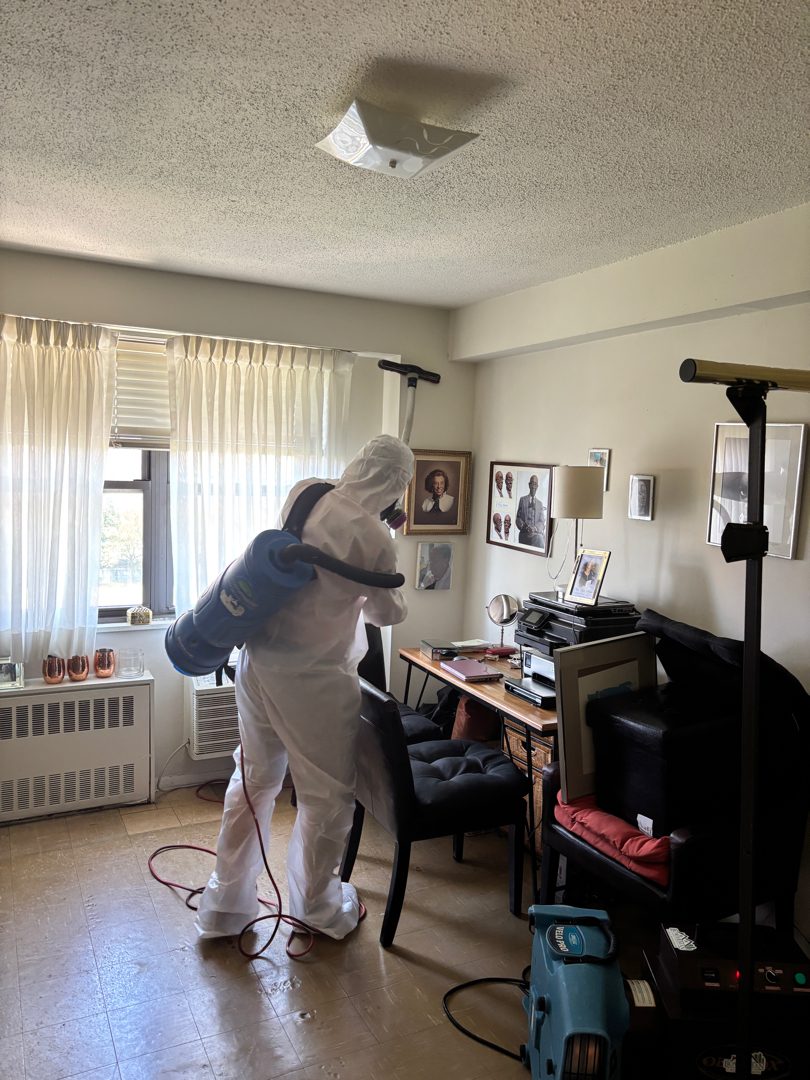
Plastic sheeting, tape, and signs keep other occupants out of the work area and limit tracking. In some jobs, a HEPA-filtered air machine is used while materials are being removed, so dust does not travel into the rest of the home. HVAC supplies and returns in the work area may be covered so the system does not move air from the scene into other rooms.
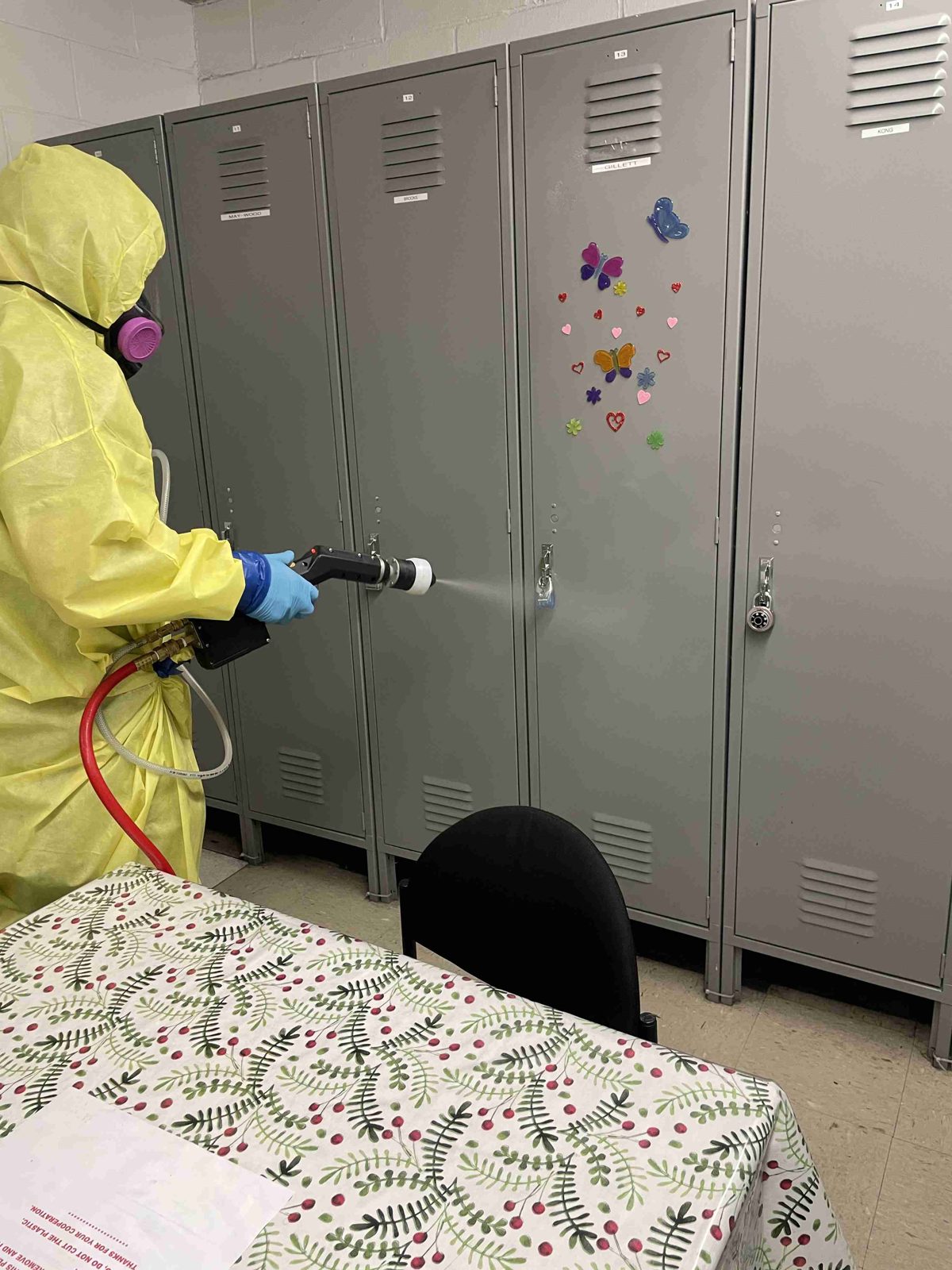
Disinfectants used in this work are products registered for the intended organisms and used at the dilution and wet-contact time on the label. A fragrant household spray that dries in a few seconds does not meet that standard. Tools include disposable wipes, brushes for seams, and HEPA vacuums for dry residue after liquids have been addressed, not a shop vac from the garage.
Air and moisture control can sit alongside the disinfection step when a room was also wet. That does not turn a biohazard job into an ordinary water loss, but it does mean some of the same drying tools described in the water damage drying process may be on site after contaminated water or fluids have been addressed. The sequence still matters: the hazardous material is controlled first, and ordinary drying equipment is not a substitute for containment and the right disinfectant. For a broader picture of how wet interiors are handled after the hazard is controlled, see what water damage restoration is.
Facing a biohazard cleanup in Westchester County, NY? Bowerman Cleaning and Restoration answers 24/7, discreetly.
How Are Waste and Completion Handled?
Short answer: sharps go in puncture-resistant containers; other waste is sealed and labeled; some firms also use hygiene meters as a check after cleaning. The meter does not replace a thorough visual inspection and a complete scope.
Needles, broken glass, and other sharps belong in a rigid, labeled sharps container, never in a loose bag. Soaked materials go into leak-resistant bags or boxes, which are sealed and taken by a hauler who can accept that waste. A copy of the tracking record should be available to the owner.
Some companies use ATP or similar hygiene meters on hard surfaces after disinfection, as one more data point. A low or high reading is not a medical test of the room, and it is not a substitute for removing soaked pad or drywall. If a firm mentions a meter, ask what it is measuring and what they do when a reading is poor.
How Does This Compare With Ordinary Cleaning Tools?
Short answer: a mop and a household cleaner can move fluid around and cannot package regulated waste. That is why a biohazard response looks more like a controlled project than a housecleaning visit.
Biohazard remediation is the service page for this work. Ordinary water extraction tools, such as those described in the water damage drying process, may appear when a scene is also wet, but they are used inside a biohazard plan rather than as the whole job. For a sewage backup, which uses related but distinct tools and waste rules, see sewage damage cleanup and restoration and sewage tips.
Marketing language such as hospital-grade can be confusing. What matters in practice is whether the disinfectant is suitable for the surface and the organism of concern, and whether it is used at the contact time on the label. Meters that check cleanliness are a supplement, not a medical diagnosis and not a replacement for a licensed laboratory when one is required. Households that want a third-party confirmation should ask how that is arranged, because it is a different service from the cleanup itself. Hidden soil in a pad or a cavity, a theme also covered in hidden water damage signs, is one reason a visual “it looks clean” check is not enough.
Biohazard Cleanup Equipment FAQs
Is a mop ever used in biohazard cleanup?
It is not the primary method for blood or bodily fluids on porous materials. If a mop is used at all, it is on an appropriate surface, with the right product and contact time, and the mop head is treated as waste.
Why is a respirator sometimes needed?
When dust, demolition, or strong odors are part of the work, respiratory protection may be required for the crew. The assessment decides that, not habit.
What is an ATP meter?
A device some firms use to check organic residue on a hard surface after cleaning. It is a hygiene aid, not a medical clearance of the house.
Can household disinfectant substitutes be used to save money?
The products and contact times should match the job. A random household spray is not a reliable substitute, especially on porous or hidden materials.
Who provides the waste containers?
The cleanup firm typically brings sealed bags, boxes, and sharps containers and arranges pickup. Those should not be improvised from kitchen bags.
Questions about biohazard cleanup equipment used in a Westchester NY home? Bowerman Restoration LLC d/b/a Bowerman Cleaning & Restoration, 7 Intervale Street, White Plains, NY 10606, answers 24/7 at (844) 269-3762.