
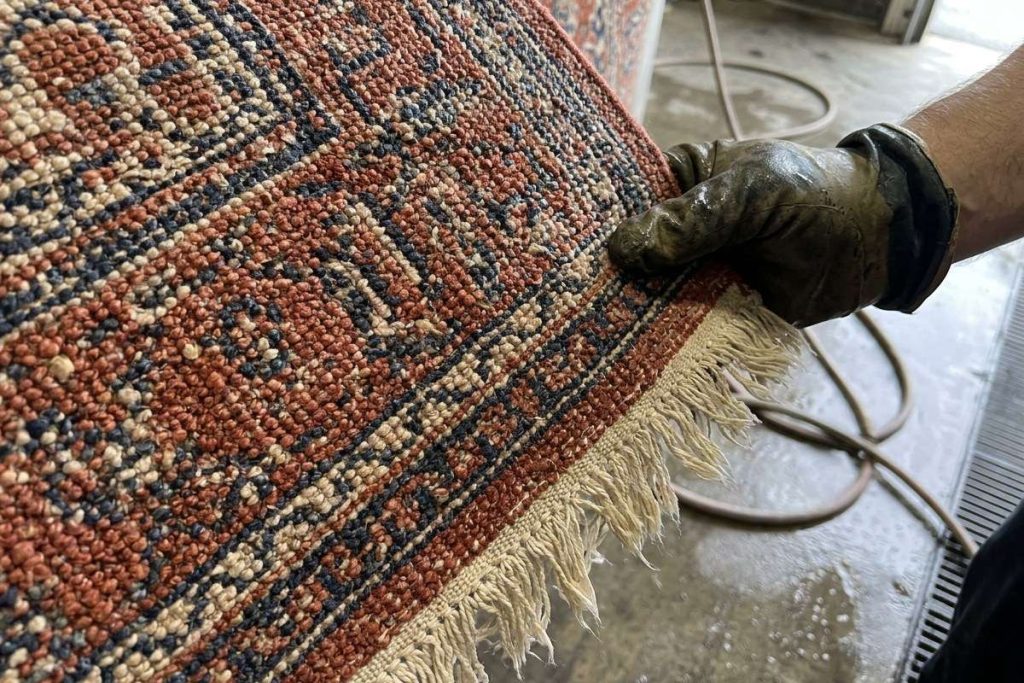
Types of oriental rugs are usually grouped by origin and construction: Persian, Turkish, Indian, Pakistani, Chinese, Turkmen, and Caucasian rugs are the ones seen most often in NY homes. Fiber, knot type, and dye method matter more for cleaning than the label on a tag. Silk, fine wool, and cotton foundations each need a different amount of moisture and handling.
Written by the Bowerman Cleaning and Restoration Team · September 30, 2026
Key Takeaways
- Origin is a starting point, not a cleaning recipe; fiber and dyes decide the method.
- Persian and Turkish knots are the two main structures, and both can be wool, silk, or a mix.
- Silk and fine wool need gentler washing and slower drying than a heavy all-wool tribal rug.
- A rug from India or China may be handmade or machine-assisted, so the back of the rug should be checked.
In This Guide
- What Are the Main Types of Oriental Rugs?
- How Does Construction Change Cleaning?
- How Can a Rug Type Be Identified at Home?
- Does Every Type Need the Same Care at Home?
- Types of Oriental Rugs FAQs
What Are the Main Types of Oriental Rugs?
Short answer: Persian, Turkish, Indian, Pakistani, Chinese, Turkmen, and Caucasian rugs cover most pieces found in homes, with wool and silk as the usual fibers.
| Type | Typical construction | Cleaning notes |
|---|---|---|
| Persian (Iran) | Asymmetric knot, often fine wool or silk on a cotton foundation | Dyes can be sensitive; test before any wash |
| Turkish | Symmetric knot, wool or wool-and-cotton, sometimes silk | Sturdy pile, but fringe and edges still wear first |
| Indian and Pakistani | Handmade or workshop pieces in Persian or Turkish styles | Quality varies widely; inspect knot density and dyes |
| Chinese | Often thicker pile and a heavier foundation | Can hold more water, so drying takes longer |
| Turkmen and Bokhara | Geometric wool designs, often red fields | Wool usually tolerates a full wash if dyes are stable |
| Caucasian | Bold geometric wool rugs, often on a wool foundation | Watch for older dyes that may bleed |
The live page on oriental and area rug cleaning covers how handmade rugs are handled as a group. A tag that says Persian or Turkish is useful, but the knot, fiber, and dye test still decide the wash. A full overview of the work is in what is oriental rug cleaning and repair.
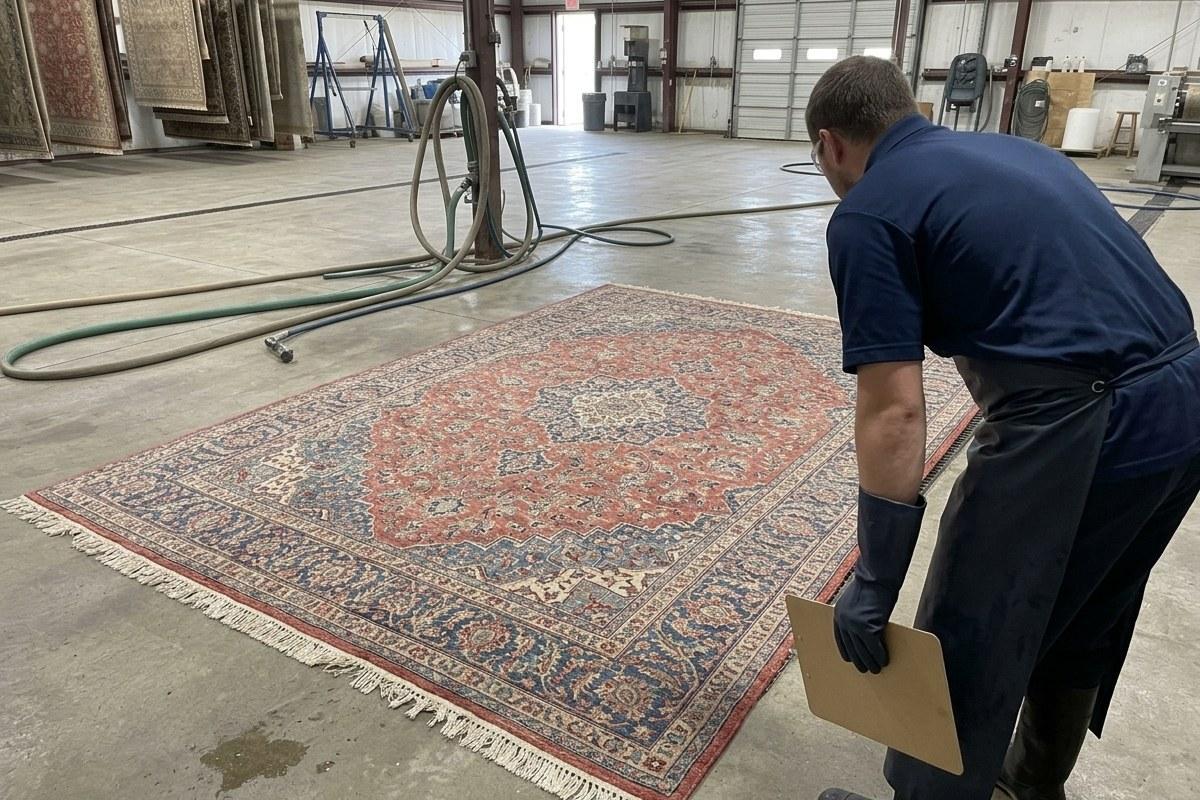
How Does Construction Change Cleaning?
Short answer: knot type, fiber, and the foundation decide how much water a rug can take and how long it needs to dry.
A fine silk or silk-highlight rug cannot be treated like a thick tribal wool rug. Silk fibers swell and lose strength when wet, and some vegetable dyes move if the wash is too alkaline or too hot. The Canadian Conservation Institute advises against commercial carpet shampoos on important rugs, because leftover residue pulls in new soil.
Cotton foundations, common on many city workshop rugs, can shrink or brown if they stay wet. Wool foundations are more stable but still need a thorough dry. Rugs stored for years can also hide moth damage in the wool; NC State Extension notes that larvae feed on wool and silk in quiet areas, such as under furniture or in a rolled rug.
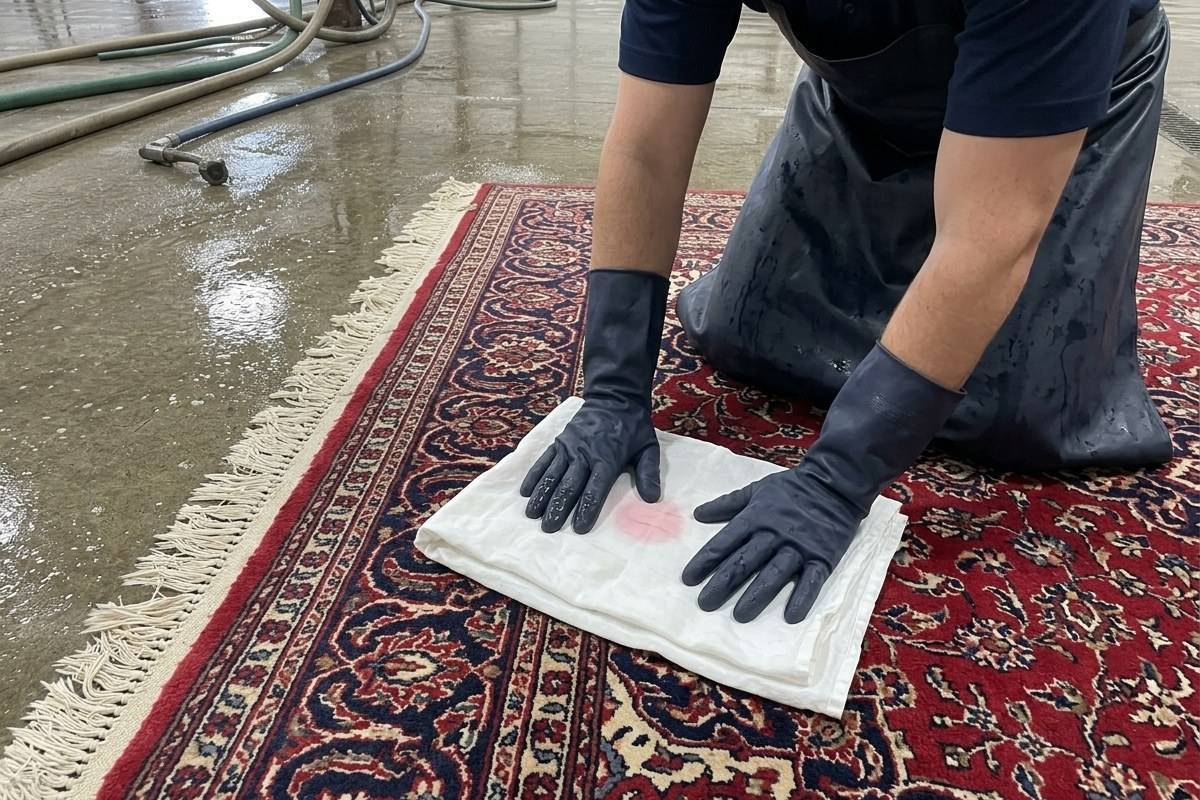
Fine rug that needs cleaning or repair in Westchester County, NY? Bowerman Cleaning and Restoration answers 24/7.
How Can a Rug Type Be Identified at Home?
Short answer: turn the rug over: hand-knotted pieces show individual knots, while many machine-made rugs show a uniform backing or stitched fringe.
- Look at the back. Hand-knotted rugs show the pattern in the knots. Machine-made rugs often have a stiff or uniform backing.
- Check the fringe. On many handmade rugs the fringe is the end of the warp, not a sewn-on trim.
- Feel the fiber. Wool has a slight spring; silk is cooler and smoother; viscose or “art silk” can look shiny and weaken when wet.
- Note the foundation. Cotton, wool, or silk warps behave differently in a wash.
Identification is the first step in any cleaning or repair plan. The live page on oriental and area rug repair explains how damage is assessed once the rug’s structure is known. Textiles that went through a fire or flood need that same inspection; the live guide to salvaging belongings after a fire covers why items are identified before they are cleaned. The hand knotted vs machine made rug cleaning guide covers this in more detail.
Does Every Type Need the Same Care at Home?
Short answer: no: all handmade rugs should be vacuumed gently and kept dry, but silk and antique pieces need extra caution with moisture and sunlight.
Everyday care is similar across types: vacuum in the direction of the pile without a beater bar on the fringe, rotate the rug, and blot spills quickly. Silk, antique, and very finely knotted rugs should not be wet at home beyond a light blot. A wool runner in a hallway can usually go longer between professional washes than a pale silk rug in a sunny room, but both still need a full cleaning on a schedule that matches traffic. The live guide to salvageable items after water damage is a reminder that a soaked rug of any type should be handled quickly, before dyes migrate or the foundation starts to rot. The page on mold growth after water damage explains how fast that damp foundation can degrade.
Types of Oriental Rugs FAQs
Is a Persian rug the same as an oriental rug?
Persian rugs are one type of oriental rug, traditionally made in Iran. Oriental is the broader term for handmade rugs from across the Middle East, Central Asia, and parts of South and East Asia.
Can a Chinese oriental rug be cleaned the same way as a Persian rug?
Not always. Many Chinese rugs have a thicker pile and a heavier foundation, so they hold more water and need a longer, controlled dry. Dye and fiber tests still come first. The wool vs silk rug cleaning guide covers this in more detail.
Are all oriental rugs handmade?
Most traditional oriental rugs are hand-knotted or hand-woven. Some newer rugs sold under the same style names are machine-made, which is why the back of the rug should be checked.
Does rug type change how often it should be cleaned?
Traffic, pets, and sunlight usually matter more than origin. Silk and very fine rugs, though, are less forgiving of soil and moisture, so they often need more careful, sometimes more frequent, professional care.
Can moths damage every type of oriental rug?
Wool and silk are the fibers moth and carpet beetle larvae eat. Cotton and synthetic elements are not a food source, but a mixed rug can still lose its wool or silk pile.
Trying to sort out the types of oriental rugs in a Westchester NY home before a cleaning or repair? Bowerman Restoration LLC d/b/a Bowerman Cleaning & Restoration, 7 Intervale Street, White Plains, NY 10606, answers 24/7 at (844) 269-3762.