
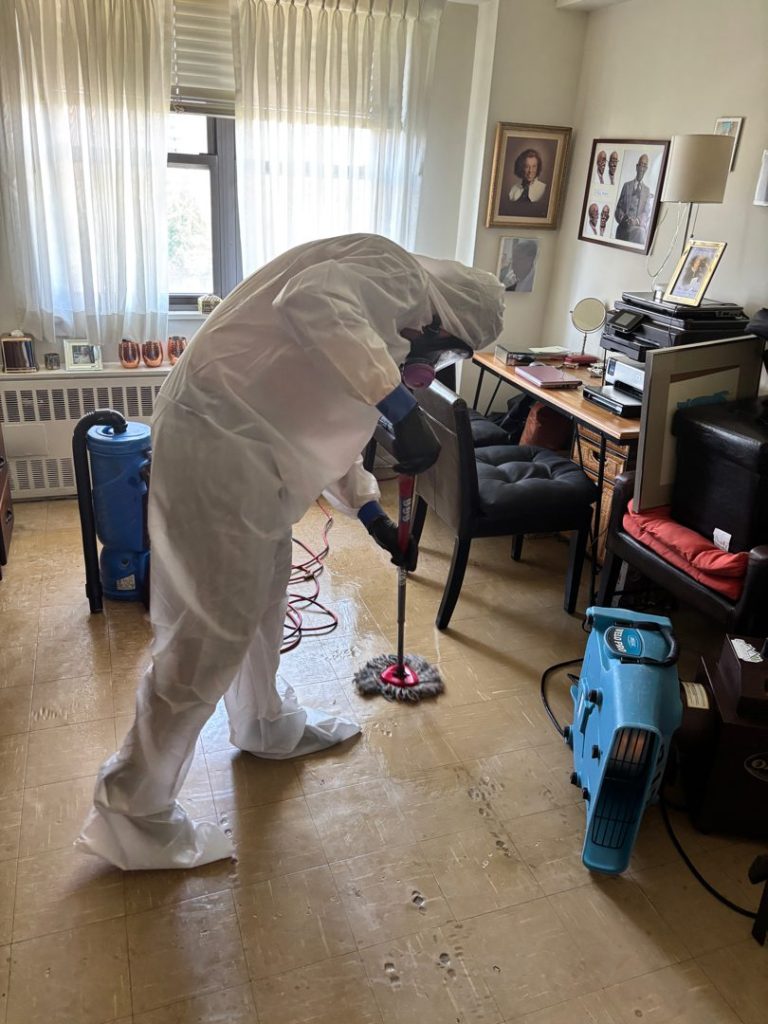
Biohazard cleanup mistakes often happen in the first hour, when someone is trying to help. In a NY home, mopping blood or bodily fluids with a household cleaner, bundling stained towels into a regular trash bag, or letting untrained people work without protective equipment can leave hidden contamination behind and expose anyone in the room. This guide covers the errors that come up most often and the safer order of work. It is general information, not a do-it-yourself manual. Blood, bodily fluids, and sharps should be left for a trained crew once the scene is safe and, if it is a crime scene, once it has been released.
Written by the Bowerman Cleaning and Restoration Team · November 3, 2026
Key Takeaways
- Do not mop, scrub, or soak blood or bodily fluids with household products and ordinary towels.
- Do not put contaminated materials in regular household trash or a curbside dumpster.
- Keep people and pets out, and do not enter a crime scene until it has been released.
- A trained crew uses protective equipment, registered disinfectants, and documented waste handling, not a mop-and-bucket approach.
In This Guide
- What Are the Most Common First-Hour Mistakes?
- Which Mistakes Leave Hidden Risk Behind?
- Why Is Hiring the Wrong Kind of Cleaner a Mistake?
- What Should Be Done Instead?
- Biohazard Cleanup Mistakes FAQs
What Are the Most Common First-Hour Mistakes?
Short answer: treating the scene like an ordinary mess: mopping, wiping, or vacuuming fluids with household tools. Those actions can spread contamination into grout, pad, subfloor, and the air, and they can expose the person doing the work.
- Mopping blood with household bleach or all-purpose cleaner. A surface can look clean and still hold residue in seams, under baseboards, or in porous materials. Household products are not a substitute for a disinfectant used according to a biohazard protocol.
- Using towels, clothing, or a household vacuum. Soft goods become contaminated waste. A household vacuum can exhaust particles back into the room.
- Working without protective equipment. Skin, eyes, and lungs can be exposed. Trained crews use gloves, eye protection, protective clothing, and, when needed, respiratory protection.
- Throwing stained items in regular trash. Contaminated sharps, fluids, and many porous materials have to be packaged and disposed of as regulated waste, not as household garbage.
- Letting family or neighbors “help clean up”. Good intentions increase the number of people exposed and the number of rooms that may need to be treated.
The OSHA bloodborne pathogens standard is written for workers, but it is a useful reminder that this is not ordinary housekeeping. See also the text of 29 CFR 1910.1030.
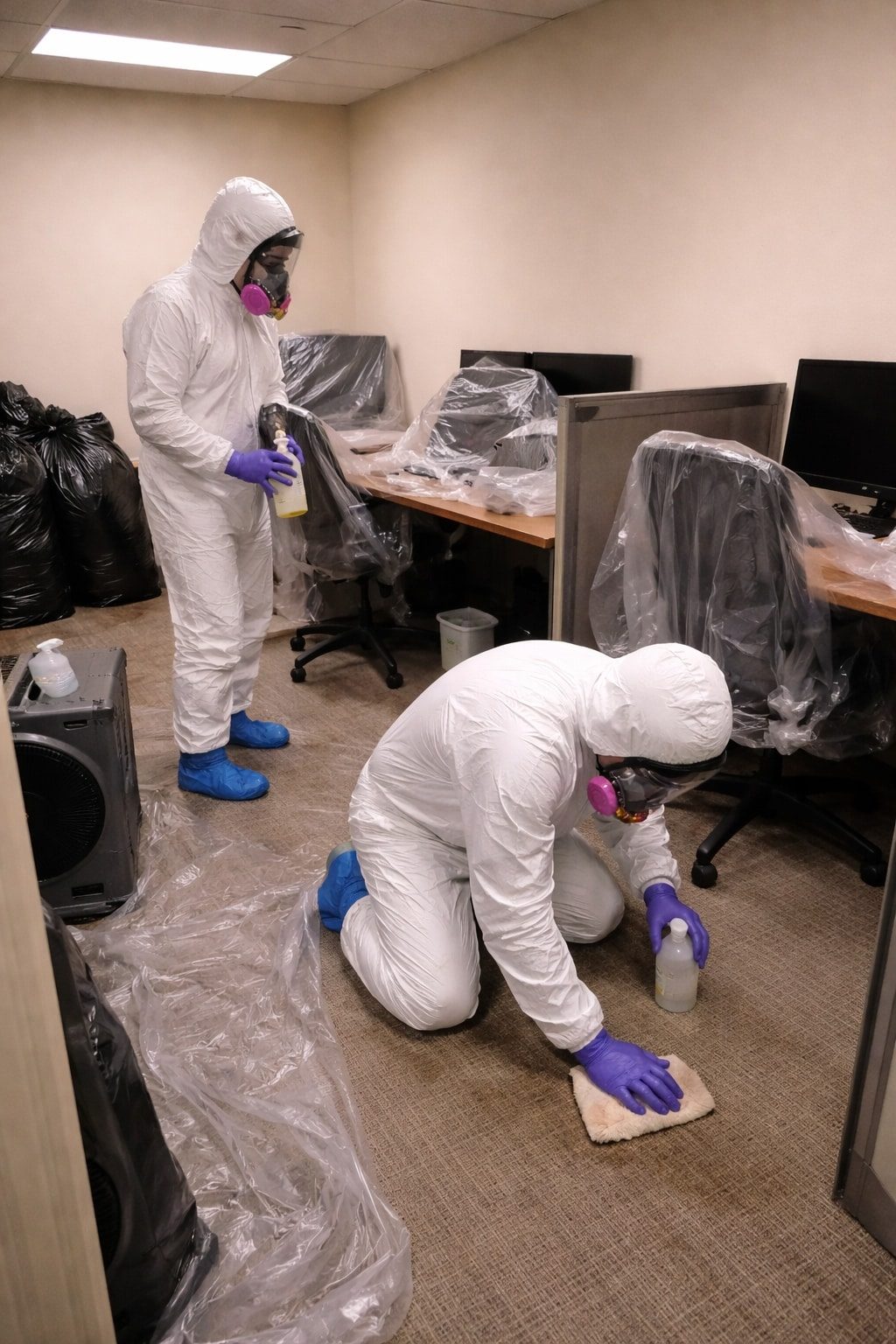
Which Mistakes Leave Hidden Risk Behind?
Short answer: cleaning only what is visible, delaying the work, or starting before a scene has been released. Fluids travel. Time and temperature also change how far odors and contamination spread.
Blood and other fluids can move into carpet pad, under a tub, along a subfloor, or down a wall cavity. Wiping the visible stain and stopping there is a common reason a smell returns days later. A proper cleanup follows the contamination, which may mean removing materials rather than washing a surface.
Delay is another problem. The longer fluids sit, the more they soak into porous goods and the harder odor control becomes. That is not a reason for an untrained person to start scrubbing. It is a reason to secure the room and arrange a trained response promptly.
If the event is under police investigation, entering or cleaning before the scene is released can disturb evidence and may be unlawful. Cleanup begins after official release, not when the first responders first leave the curb.
Porous finishes are a frequent source of that leftover risk. A carpet face can look acceptable after a household cleaner is used, while the pad, tack strip, or a seam in the subfloor still holds material that was never reached. The same idea shows up in water losses, where a surface dries and a cavity stays wet, as described in hidden water damage signs and the water damage drying process. Biohazard work has an added concern: the hidden material may still be a health risk, not only a stain. Opening or removing the right layer is a decision for a trained assessment, not for a second pass with a mop.
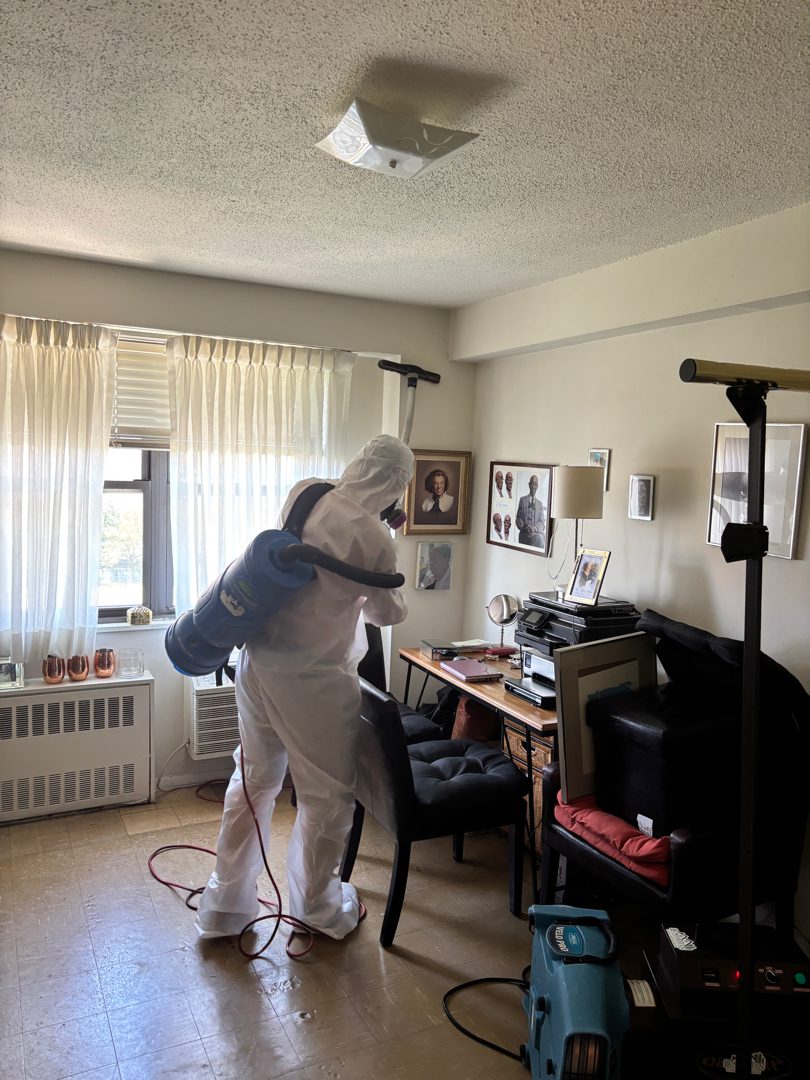
Facing a biohazard cleanup in Westchester County, NY? Bowerman Cleaning and Restoration answers 24/7, discreetly.
Why Is Hiring the Wrong Kind of Cleaner a Mistake?
Short answer: because a regular cleaning or janitorial service is not set up for biohazard work, waste, or verification. A low bid that only promises to “make it look clean” is not a complete scope.
Janitorial crews handle routine dirt. Biohazard work involves assessment, containment, removal of affected materials, disinfection, and documented disposal. Biohazard remediation is the service category for that work.
Related household incidents that involve contaminated water, such as a sewage backup, also need more than a mop. Sewage damage cleanup and restoration and the sewage tips page explain that side. For how water soaks into building materials in general, see what water damage restoration is and what to do first after water damage.
What Should Be Done Instead?
Short answer: secure the area, limit who enters, wait for any official release, and hire a firm that can handle biohazard work and waste. Do not try to “get a head start” with household cleaners.
- Keep people and pets out of the affected room and close the door if it is safe to do so.
- Avoid touching sharps, tissues, or soaked materials.
- Photograph from the doorway only if it is safe and allowed, especially if insurers will be involved later.
- Ask a prospective firm how waste will be packaged, who hauls it, and how the area will be verified after cleaning.
Those questions belong in a calm conversation, not in a rushed cleanup. A later post in this cluster will go deeper on company questions; the point here is that skipping them is itself a mistake.
Household bleach is often the first product reached for, and it is easy to overestimate what it can do. Contact time, the surface type, and ventilation all matter, and bleach is a poor match for some finishes and for soiled or porous materials. It is also not a method for deciding which building materials can stay. The safer first-hour pattern is to limit access, avoid stirring the area, and leave the technical cleaning and waste handling to a crew that works under a bloodborne-pathogen protocol rather than a household routine.
Biohazard Cleanup Mistakes FAQs
Is it a mistake to use bleach on blood?
Household bleach is not a complete biohazard cleanup. It can be used incorrectly, it does not fix contamination in pad or subfloor, and mopping can spread fluid. Leave the work to a trained crew.
Can contaminated towels go in the regular trash?
Generally no. Items soaked with blood or bodily fluids, and many materials removed from the scene, have to be handled as regulated waste, not household garbage.
Should windows be opened to air out the room?
Uncontrolled airflow can move odors and droplets. A trained crew manages ventilation as part of a plan, rather than simply opening the house.
What if cleaning already started?
Stop, keep people out, and tell the firm what was already done, including where waste was placed. The scope may need to include those areas and those items.
Does a clean-looking floor mean the job is finished?
No. Appearance is not proof. Porous materials and hidden paths may still be contaminated, which is why assessment and, when used, verification matter.
Trying to avoid biohazard cleanup mistakes in a Westchester NY home? Bowerman Restoration LLC d/b/a Bowerman Cleaning & Restoration, 7 Intervale Street, White Plains, NY 10606, answers 24/7 at (844) 269-3762.