
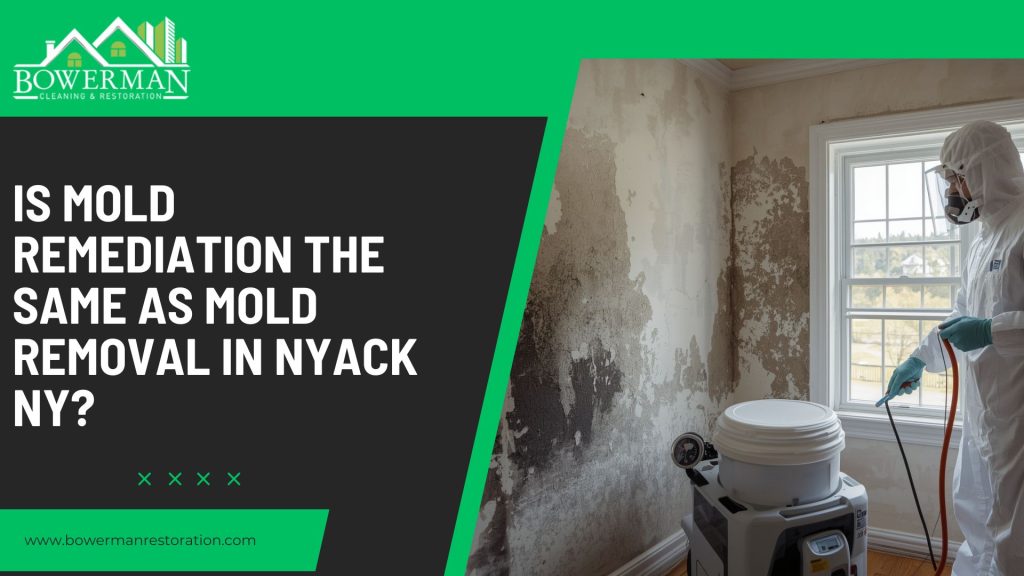

When homeowners in Nyack, NY discover mold in their properties, they’re often confronted with confusing terminology that can make an already stressful situation even more overwhelming. Two terms that frequently cause confusion are “mold remediation” and “mold removal,” and many people wonder whether these processes are actually the same thing. The answer isn’t as straightforward as you might expect, and understanding the distinction could significantly impact both the effectiveness of your mold treatment and your long-term property health.
The confusion between mold remediation and mold removal stems from the fact that both processes address mold problems, but they approach the issue from fundamentally different perspectives. While the terms are often used interchangeably by some contractors and even homeowners, professional mold specialists recognize important distinctions that can affect everything from treatment methodology to final outcomes. In Nyack’s unique climate conditions, where humidity from the Hudson River and seasonal weather patterns create ideal environments for mold growth, understanding these differences becomes even more critical.
Mold removal, as the name suggests, focuses primarily on eliminating visible mold from surfaces and materials. This approach treats mold as something that can be completely eradicated from an environment. However, mold remediation takes a more comprehensive approach, recognizing that mold spores are naturally present in virtually all environments and that the goal should be to return mold levels to normal, acceptable ranges rather than attempting complete elimination. This fundamental philosophical difference shapes every aspect of how these two approaches handle mold problems.
For Nyack residents, this distinction matters more than you might realize. The Hudson Valley’s climate, with its seasonal humidity fluctuations and proximity to water sources, creates conditions where mold can quickly return if underlying moisture issues aren’t properly addressed. A simple removal approach might clear visible mold temporarily, but without addressing the root causes and implementing proper prevention strategies, homeowners often find themselves dealing with recurring mold problems. Professional remediation, on the other hand, focuses on creating long-term solutions that prevent future mold growth while safely managing current contamination.
Key Takeaways
- Fundamental Approach Differences: Mold removal focuses on eliminating visible mold, while mold remediation aims to restore normal mold levels and prevent future growth through comprehensive treatment of underlying causes.
- Scope of Work: Removal typically involves cleaning or disposing of contaminated materials, whereas remediation includes moisture control, air quality improvement, prevention strategies, and addressing structural issues that contribute to mold growth.
- Long-term Effectiveness: Remediation provides more sustainable results because it addresses root causes like moisture sources, ventilation problems, and environmental conditions that allow mold to thrive in Nyack’s climate.
- Professional Standards: True mold remediation follows industry protocols established by organizations like the IICRC and EPA, including proper containment, air filtration, and post-remediation verification testing.
- Cost Considerations: While remediation may cost more initially, it often proves more economical long-term by preventing recurring mold problems that would require repeated removal treatments.
- Health and Safety: Remediation protocols prioritize occupant safety through proper containment and air quality management, while simple removal might not adequately protect against spore dispersal during the cleaning process.
- Documentation and Verification: Professional remediation includes pre- and post-treatment testing to verify successful completion, providing homeowners with measurable proof that the problem has been properly addressed.
Understanding Mold Remediation vs. Mold Removal: The Core Differences
The distinction between mold remediation and mold removal begins with understanding what mold actually is and how it behaves in indoor environments. Mold spores exist naturally in outdoor air and routinely enter buildings through normal air exchange, on clothing, pets, and through various other pathways. Complete mold removal—meaning the elimination of every single mold spore from an indoor environment—is not only impossible but unnecessary for maintaining healthy indoor air quality.
Mold removal approaches typically focus on visible mold growth and contaminated materials. Contractors following this methodology might clean moldy surfaces with bleach solutions, remove visibly affected drywall or insulation, and consider the job complete once no mold is visible to the naked eye. While this approach can address immediate aesthetic concerns and reduce mold levels temporarily, it often fails to address the underlying conditions that allowed mold to grow in the first place.
Professional mold remediation, conversely, recognizes that successful mold management requires a systematic approach that addresses not just the visible symptoms but the entire ecosystem that supports mold growth. This includes identifying and correcting moisture sources, improving ventilation, addressing humidity levels, and implementing long-term prevention strategies. In Nyack’s climate, where seasonal humidity changes and proximity to the Hudson River create ongoing moisture challenges, this comprehensive approach proves essential for lasting results.
The remediation process typically begins with a thorough assessment that goes far beyond identifying visible mold. Professional remediators examine building systems, moisture patterns, air quality, and environmental conditions to understand the complete scope of the problem. This assessment phase, often skipped in simple removal approaches, provides the foundation for developing an effective treatment strategy that addresses both current contamination and future prevention.

The Science Behind Effective Mold Management
Understanding why mold grows and spreads helps explain why remediation proves more effective than simple removal. Mold requires three basic conditions to thrive: moisture, organic material to feed on, and appropriate temperatures. In most indoor environments, temperature and organic materials (like wood, paper, fabric, and even dust) are consistently present, making moisture control the primary factor in preventing mold growth.
When mold removal focuses solely on cleaning visible growth, it often overlooks the moisture sources that created the problem initially. Bleach solutions, commonly used in removal approaches, can kill surface mold but don’t penetrate porous materials where mold roots (hyphae) may remain. Additionally, bleach introduces additional moisture to the treatment area, potentially exacerbating the underlying problem. In Nyack’s humid climate, this added moisture can actually accelerate mold regrowth.
Professional remediation addresses mold growth from a scientific perspective, recognizing that successful treatment must disrupt the conditions that support mold development. This includes identifying hidden moisture sources like plumbing leaks, condensation problems, or inadequate ventilation. Remediators use specialized equipment including moisture meters, thermal imaging cameras, and air quality monitors to detect problems that aren’t visible during standard inspections.
The remediation process also considers mold spore dispersal during treatment. Disturbing mold growth without proper containment can actually spread contamination to previously unaffected areas. Professional protocols include establishing containment barriers, using negative air pressure systems, and employing HEPA filtration to prevent cross-contamination during the treatment process. These precautions, typically absent from simple removal approaches, protect both workers and building occupants while ensuring that treatment doesn’t inadvertently worsen the problem.
Air quality management represents another critical aspect of scientific mold remediation. While removal focuses on surfaces, remediation recognizes that airborne spores can cause health problems and recontaminate cleaned areas. Professional remediators monitor air quality throughout the treatment process and use specialized equipment to capture and filter airborne contaminants, ensuring that the indoor environment meets acceptable standards for mold spore concentrations.

Industry Standards and Professional Protocols
The mold remediation industry operates under established standards and protocols developed by organizations like the Institute of Inspection, Cleaning and Restoration Certification (IICRC), the Environmental Protection Agency (EPA), and the American Conference of Governmental Industrial Hygienists (ACGIH). These standards provide detailed guidelines for assessment, containment, removal, cleaning, and verification procedures that ensure consistent, effective results.
Professional remediation follows the IICRC S520 Standard for Professional Mold Remediation, which outlines specific procedures based on the extent and type of contamination. This standard categorizes mold problems into different classes and conditions, with corresponding protocols for each situation. Class 1 remediation might involve less than 10 square feet of contamination and require minimal containment, while Class 4 remediation addresses extensive contamination requiring full containment and specialized procedures.
These industry standards also specify requirements for worker protection, including appropriate personal protective equipment (PPE), training, and safety procedures. Professional remediators undergo certification training and must demonstrate competency in proper techniques, safety protocols, and industry best practices. This training ensures that remediation work protects both workers and building occupants while achieving effective results.
Verification procedures represent a crucial component of professional remediation that’s typically absent from simple removal approaches. Industry standards require post-remediation verification to confirm that treatment objectives have been achieved. This may include visual inspections, air quality testing, moisture measurements, and clearance testing by independent third parties. These verification steps provide objective evidence that the remediation has been successful and that the environment is safe for reoccupancy.
Documentation requirements under professional standards also differ significantly from typical removal approaches. Remediation projects require detailed documentation including pre-treatment assessments, work plans, daily logs, material disposal records, and post-treatment verification reports. This documentation provides a complete record of the remediation process and serves as valuable information for insurance claims, real estate transactions, and future maintenance planning.
Health and Safety Considerations
The health implications of mold exposure make the distinction between removal and remediation particularly important for Nyack residents. Mold can cause various health problems ranging from minor respiratory irritation to serious allergic reactions and, in some cases, toxic effects from mycotoxin exposure. The approach used to address mold contamination can significantly impact both immediate exposure risks during treatment and long-term health outcomes.
Simple mold removal often involves disturbing mold growth without adequate containment or protection measures. This can release large quantities of spores into the air, potentially exposing building occupants to higher concentrations than they experienced before treatment began. DIY removal attempts using household cleaners or improper techniques can be particularly problematic, as they may spread contamination while providing a false sense of security about the problem being resolved.
Professional remediation prioritizes health protection through comprehensive safety protocols. Containment procedures prevent spore dispersal to unaffected areas, while negative air pressure systems and HEPA filtration remove airborne contaminants. Workers use appropriate respiratory protection and protective clothing to prevent exposure, and building occupants are typically relocated during treatment to eliminate exposure risks.
The choice of cleaning agents and treatment methods also affects health outcomes. Professional remediation avoids harsh chemicals that can create indoor air quality problems or leave harmful residues. Instead, remediators use EPA-registered antimicrobials specifically designed for mold treatment, along with physical removal techniques that eliminate contaminated materials rather than attempting to clean heavily affected items that cannot be adequately restored.
Long-term health protection represents another advantage of comprehensive remediation over simple removal. By addressing underlying moisture problems and implementing prevention strategies, remediation reduces the likelihood of future mold growth and the associated health risks. This proactive approach proves particularly valuable for individuals with mold sensitivities, asthma, or compromised immune systems who may be more susceptible to mold-related health problems.
Cost-Benefit Analysis: Short-term vs. Long-term Value
When Nyack homeowners compare mold removal and remediation options, cost often becomes a primary consideration. While mold removal typically costs less initially, a comprehensive cost-benefit analysis reveals that professional remediation often provides better long-term value through reduced recurring problems, improved property values, and lower health-related costs.
Simple mold removal might cost anywhere from a few hundred to a few thousand dollars, depending on the scope of visible contamination. However, this approach often fails to address underlying causes, leading to recurring mold problems that require repeated treatment. Homeowners who choose removal may find themselves dealing with the same issues multiple times, with cumulative costs eventually exceeding the price of comprehensive remediation.
Professional remediation involves higher upfront costs due to the comprehensive assessment, specialized equipment, containment procedures, and verification testing required. However, this investment typically provides lasting results that eliminate the need for repeated treatments. The cost of remediation varies based on the extent of contamination, the complexity of moisture issues, and the size of the affected area, but the long-term value often justifies the initial expense.
Insurance coverage considerations also affect the cost equation. Many insurance policies cover mold remediation when it results from covered water damage events, but coverage may be limited or excluded for recurring problems that could have been prevented through proper initial treatment. Professional remediation documentation and industry-standard procedures often facilitate insurance claims and provide the evidence needed to support coverage decisions.
Property value implications represent another important cost consideration. Homes with documented mold problems or histories of recurring mold issues may face reduced market values and difficulties during sale processes. Professional remediation with proper documentation and clearance testing helps maintain property values and provides assurance to potential buyers that mold problems have been properly addressed. For Nyack residents in a competitive real estate market, this protection of property value can be particularly important.
Bowerman: Professional Mold Remediation Services
When Nyack residents need professional mold remediation services, Bowerman provides the expertise and comprehensive approach necessary for effective, lasting results. Understanding the critical differences between mold removal and proper remediation, Bowerman’s certified technicians follow industry-standard protocols to address both visible contamination and underlying causes that contribute to mold growth in Hudson Valley homes.
Bowerman’s remediation process begins with thorough assessment and testing to understand the complete scope of mold contamination and identify moisture sources that must be addressed for long-term success. Using advanced detection equipment and following IICRC standards, their team develops customized remediation plans that address each property’s unique challenges and environmental conditions.
The company’s commitment to proper remediation techniques includes full containment procedures, negative air pressure systems, and HEPA filtration to prevent cross-contamination during treatment. Bowerman’s technicians use appropriate personal protective equipment and follow safety protocols that protect both workers and building occupants throughout the remediation process.
Post-remediation verification and documentation represent key components of Bowerman’s service approach. The company provides comprehensive reports that document the remediation process and verify successful completion through appropriate testing and inspection procedures. This documentation provides homeowners with confidence that their mold problems have been properly addressed and creates valuable records for insurance, real estate, and future maintenance purposes.
Frequently Asked Questions
Q: How long does mold remediation take compared to simple mold removal?
A: Mold removal might be completed in a day or two, while professional remediation typically takes 3-7 days depending on the extent of contamination and complexity of moisture issues. The additional time allows for proper assessment, containment, treatment, and verification procedures that ensure lasting results.
Q: Can I use bleach to remove mold myself instead of hiring professionals?
A: While bleach can kill surface mold on non-porous materials, it doesn’t penetrate porous surfaces where mold roots remain, and it adds moisture that can worsen the problem. DIY removal also lacks proper containment, potentially spreading spores to unaffected areas.
Q: What makes Nyack’s climate particularly challenging for mold prevention?
A: Nyack’s proximity to the Hudson River, seasonal humidity fluctuations, and regional weather patterns create ideal conditions for mold growth. These factors make comprehensive remediation more important than simple removal for achieving lasting results.
Q: How do I know if my contractor is performing true remediation or just removal?
A: Professional remediation includes moisture assessment, containment procedures, air quality monitoring, and post-treatment verification testing. Contractors should be certified, follow industry standards, and provide detailed documentation of their work.
Q: Will my insurance cover mold remediation costs?
A: Coverage depends on your policy and the cause of the mold problem. Mold resulting from covered water damage events is often covered, while mold from ongoing maintenance issues may not be. Professional documentation helps support insurance claims.
Q: How can I prevent mold from returning after treatment?
A: Effective prevention requires controlling moisture through proper ventilation, humidity management, prompt repair of water leaks, and regular maintenance. Professional remediation includes recommendations for long-term prevention strategies specific to your property.
Q: What health risks are associated with improper mold removal?
A: Improper removal can increase spore exposure during treatment and fail to eliminate health risks from remaining contamination. Professional remediation protects health through proper containment and complete treatment of contaminated areas.
Q: How do I choose between different mold treatment contractors in Nyack?
A: Look for certified professionals who follow industry standards, provide detailed assessments and written protocols, offer verification testing, and have experience with local climate challenges. Avoid contractors who only offer surface cleaning or promise unrealistic results.
Conclusion
The distinction between mold remediation and mold removal represents more than just terminology—it reflects fundamentally different approaches to addressing mold contamination that can significantly impact both immediate results and long-term outcomes. For Nyack residents dealing with mold problems, understanding these differences is crucial for making informed decisions that protect their health, property values, and financial interests.
While mold removal might seem like a cost-effective solution for addressing visible mold growth, its focus on surface treatment often fails to address the underlying conditions that allowed mold to develop initially. In Nyack’s challenging climate, where humidity and moisture issues can quickly lead to recurring problems, this approach frequently results in temporary fixes that require repeated treatment and escalating costs over time.
Professional mold remediation, though requiring a larger initial investment, provides comprehensive solutions that address both current contamination and future prevention. By following industry standards, implementing proper safety protocols, and focusing on long-term moisture control, remediation offers sustainable results that protect both property and occupant health. The scientific approach of professional remediation, combined with proper documentation and verification procedures, provides homeowners with confidence that their mold problems have been truly resolved rather than merely hidden.
As you consider your options for addressing mold issues in your Nyack property, remember that the cheapest initial solution is rarely the most economical in the long run. Investing in proper remediation from certified professionals like Bowerman ensures that you receive comprehensive treatment that addresses the root causes of mold growth while protecting your family’s health and your property’s value. The peace of mind that comes from knowing your mold problem has been professionally and completely addressed makes the investment in true remediation worthwhile for any homeowner serious about maintaining a healthy, safe living environment.