
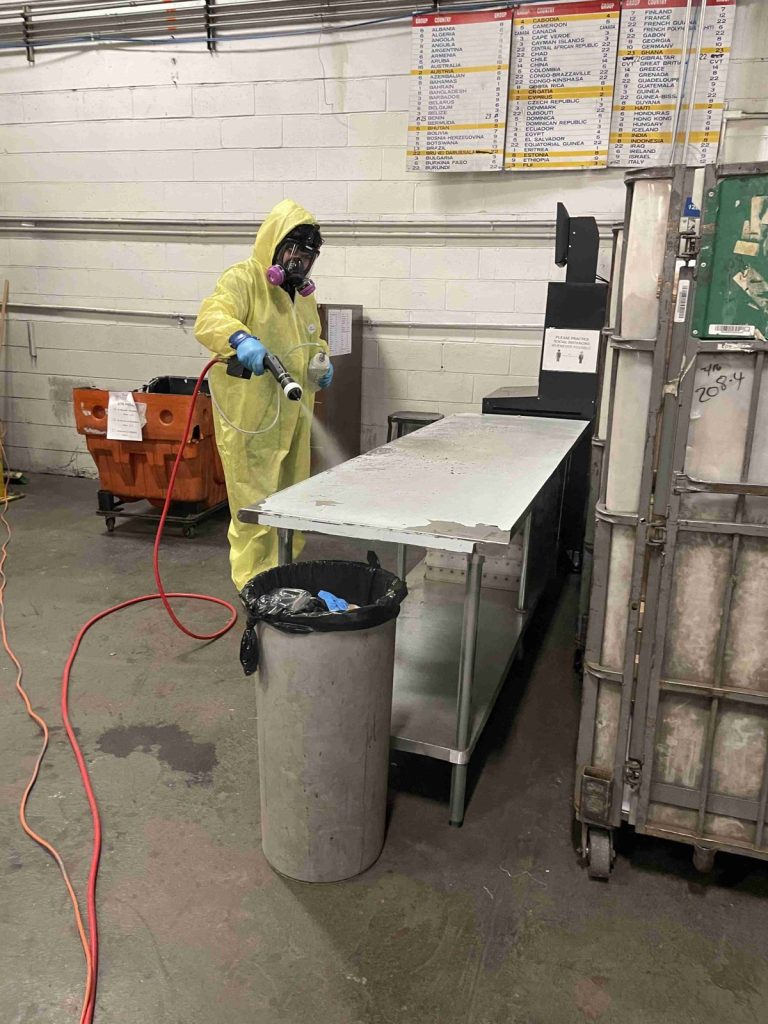
The sewage sanitizing process in a NY building is a sequence, not a single spray. Soaked porous materials are removed first, every remaining surface is cleaned to lift residue, a registered disinfectant is applied and left wet for its label contact time, and the structure is dried. Skipping any step leaves contamination behind.
Written by the Bowerman Cleaning and Restoration Team · August 25, 2026
Key Takeaways
- Removal comes first: porous materials soaked by sewage cannot be sanitized reliably.
- Cleaning before disinfecting: residue and biofilm shield contaminants from any product.
- Use a registered disinfectant and follow the label, including the full dwell time.
- Drying is part of sanitizing, because wet materials can support new growth.
In This Guide
- What Are the Steps in the Sewage Sanitizing Process?
- What Is the Difference Between Cleaning, Sanitizing, and Disinfecting?
- Which Products Are Used, and How Are They Used Safely?
- How Can an Owner Tell the Sanitizing Was Done Right?
- Sewage Sanitizing Process FAQs
What Are the Steps in the Sewage Sanitizing Process?
Short answer: remove, clean, rinse, disinfect, wait out the dwell time, then dry and verify.
- Remove contaminated materials. Soaked carpet, pad, drywall, insulation, and other porous materials are cut out and bagged first, because they cannot be sanitized reliably.
- Clean every remaining surface. Floors, framing, and hard contents are scrubbed with a detergent solution to lift residue and biofilm.
- Rinse and extract. Dirty cleaning solution is rinsed and extracted so it does not dry back onto the surface.
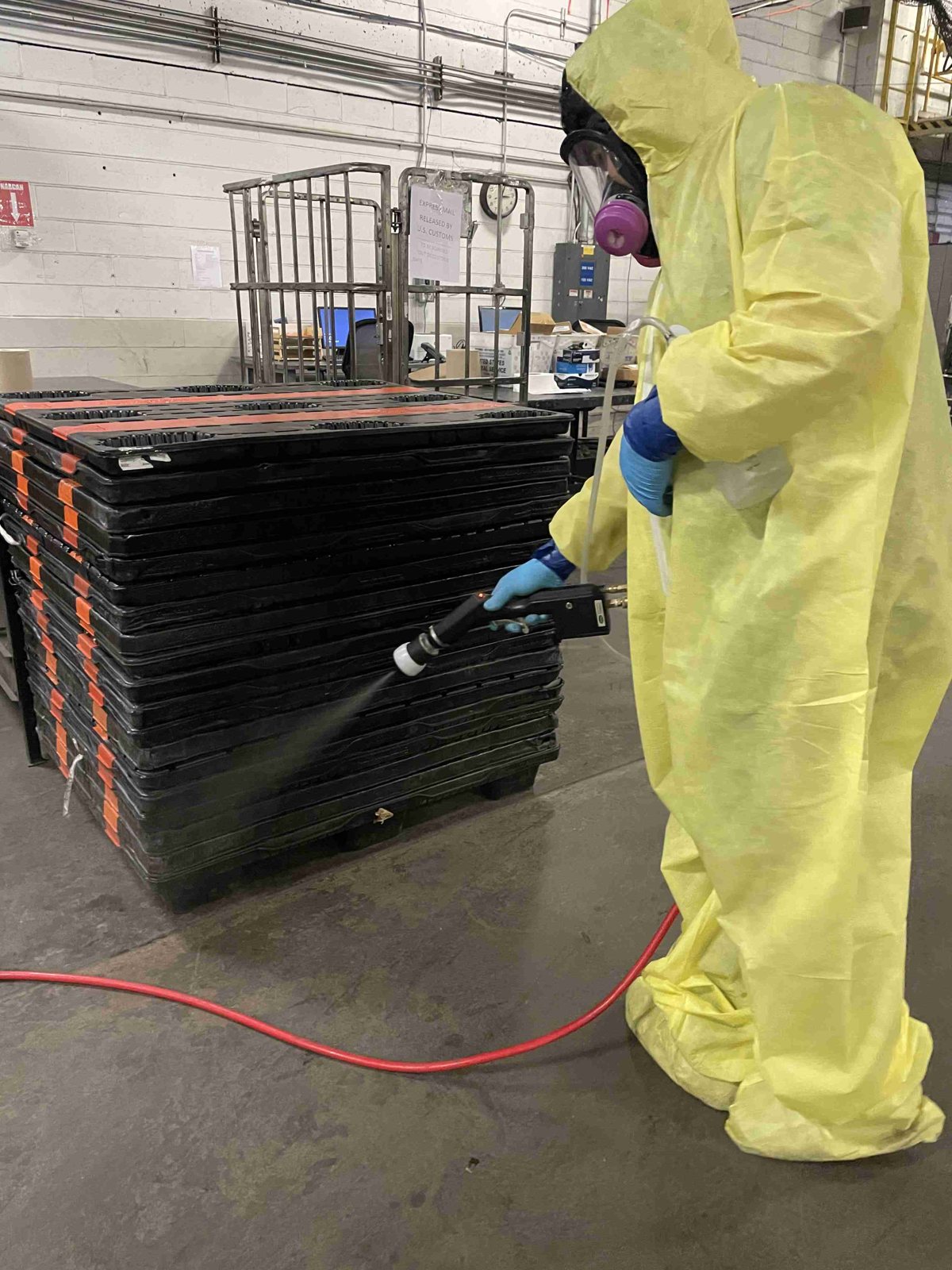
- Apply a registered disinfectant. A product registered for the use is applied by sprayer or other method, following the label directions.
- Respect the dwell time. The surface stays wet for the full contact time on the label so the product can work.
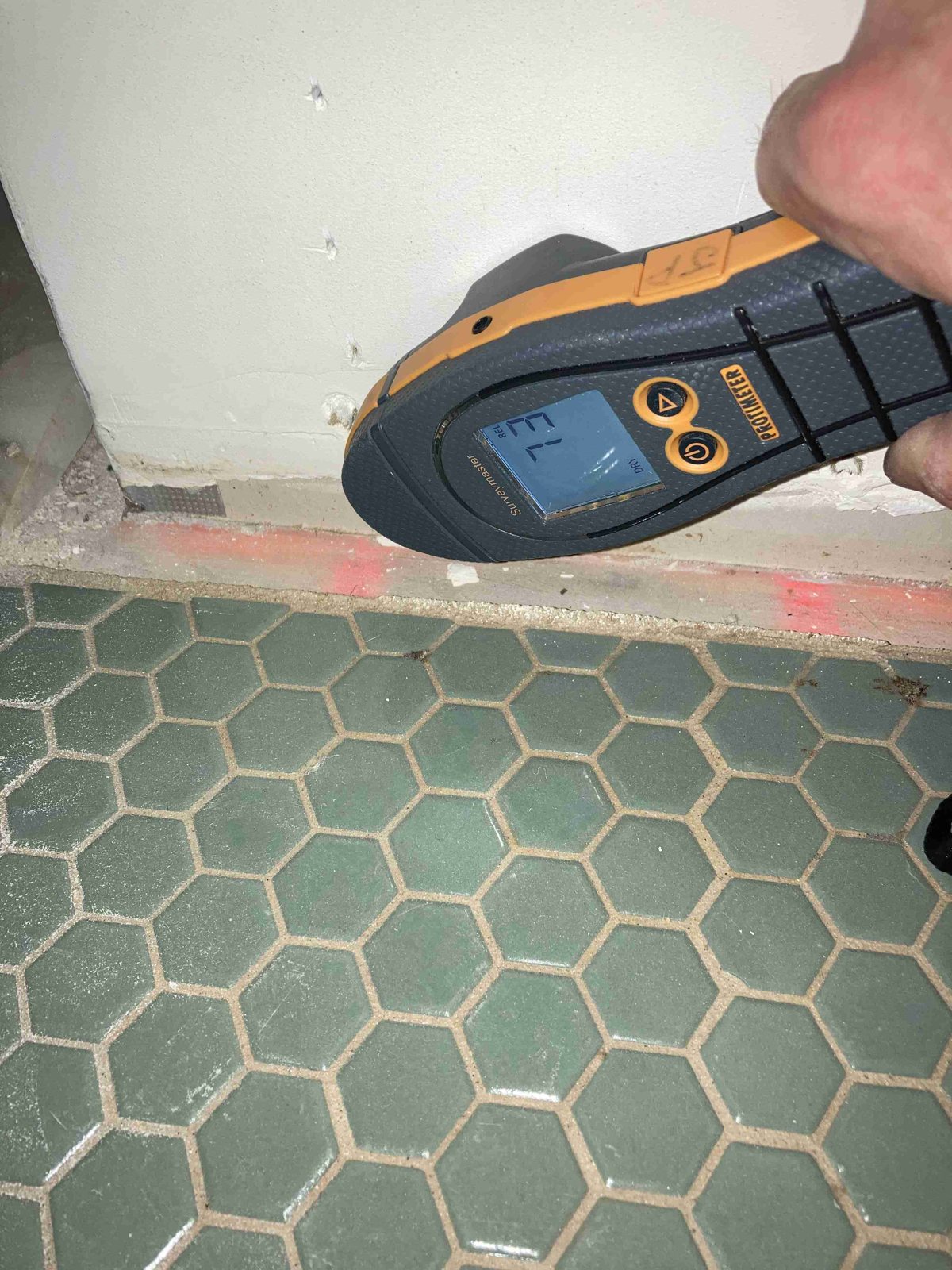
- Dry and verify. Drying equipment runs and readings confirm framing and subfloor are dry before rebuild.
The order is the point. Spraying disinfectant on a floor that still has residue, or on carpet that is still soaked, gives a false sense of safety. The live step by step process of water damage restoration shows where cleaning and disinfection fit into the larger job. A full overview of the work is in what is sewage damage cleanup.
What Is the Difference Between Cleaning, Sanitizing, and Disinfecting?
Short answer: cleaning removes residue, sanitizing lowers germ levels, and disinfecting kills listed germs on a surface when the label is followed.
| Term | What it does | Where it fits after sewage |
|---|---|---|
| Cleaning | Physically removes soil, residue, and biofilm | Always first; makes the next steps work |
| Sanitizing | Reduces germs to a lower level | Common on food-contact and some hard surfaces |
| Disinfecting | Kills the germs listed on the product label | Applied to cleaned surfaces in the affected area |
| Drying | Removes the moisture microbes need | Final step before rebuild; verified with readings |
In everyday language people say sanitize for all of these. In practice, a sewage job uses cleaning plus a disinfectant chosen from products registered for the purpose. The EPA publishes lists of registered disinfectants with the organisms each product is tested against and the contact time required.
Sewage backup at a Westchester County, NY property? Bowerman Cleaning and Restoration answers 24/7.
Which Products Are Used, and How Are They Used Safely?
Short answer: registered disinfectants applied by trained crews in protective equipment, following label directions.
Bleach is not a shortcut. It loses strength on dirty surfaces, can damage materials, and is dangerous if mixed with ammonia or acid cleaners. Professional crews use detergent cleaners first, then a registered disinfectant suited to the surface. They wear gloves, eye protection, and respiratory protection, and they ventilate the work area. OSHA guidance on flood response covers the chemical and contact hazards involved.
- Never mix cleaning products.
- Follow label directions for dilution and contact time.
- Keep people and pets out until the area is dry and ventilated.
- Bag and remove used wipes, mop heads, and pads with the contaminated waste.
The equipment side, from sprayers to air filtration, overlaps with what is described in biohazard cleanup equipment.
How Can an Owner Tell the Sanitizing Was Done Right?
Short answer: ask what was removed, which product was used and for how long, and see the drying readings.
A good closeout includes photos of the removed materials, the name of the disinfectant and its contact time, and a drying log showing readings coming down to normal. The area should not smell of sewage once it is dry. A lingering odor usually means a soaked material was missed, often under a cabinet, behind a baseboard, or in a wall cavity.
The sewage damage cleanup and restoration page outlines the full scope of a sewage job. Water damage company questions lists questions to ask any contractor, and mold growth after water damage explains why the drying step cannot be skipped.
Sewage Sanitizing Process FAQs
Can carpet be sanitized after a sewage backup?
Wall-to-wall carpet and pad soaked by sewage are usually removed, because sanitizing cannot reach contamination deep in the pad and backing.
Is bleach enough to sanitize after sewage?
No. Bleach does not remove residue, weakens on dirty surfaces, and can react with other cleaners. Cleaning first and a registered disinfectant are the safer approach.
How long does a disinfectant need to sit?
It depends on the product. The label lists a contact time, often several minutes, during which the surface must stay wet.
Do the walls need to be sanitized too?
Yes, wherever water or splash reached. Drywall that wicked water is usually removed; studs and remaining surfaces are cleaned and disinfected.
Is fogging enough on its own?
No. Fogging or spraying without removal and cleaning leaves residue that shields contaminants. It can be one part of the process, not the whole process.
Need the sewage sanitizing process done right in a Westchester NY property? Bowerman Restoration LLC d/b/a Bowerman Cleaning & Restoration, 7 Intervale Street, White Plains, NY 10606, answers 24/7 at (844) 269-3762.