
Signs of asbestos in a home are clues, not proof. In NY houses, age, finish type, and condition can suggest a product is worth checking. Only a licensed independent inspector and an accredited lab can confirm it. Do not break, sand, or scrape a material to see whether it is asbestos.
Written by the Bowerman Cleaning and Restoration Team · July 30, 2026
Key Takeaways
- A house built before about 1980 is a starting clue, not a diagnosis.
- Familiar product looks, such as pipe wrap, 9-inch floor tile, or popcorn texture, are worth noting, not treating as a test result.
- Damage, water, or a planned renovation raises the urgency of a survey of the work area.
- Looking is not testing: leave the material alone until an independent inspector samples it.
In This Guide
- What Counts as a Sign of Asbestos in a Home?
- Which Visual Clues Are Worth Noting?
- What Is Not a Reliable Sign?
- What Should Happen After a Sign Is Noticed?
- Signs of Asbestos in a Home FAQs
What Counts as a Sign of Asbestos in a Home?
Short answer: a combination of house age, product type, and condition, or a plan to disturb that product. A sign is a reason to pause and have the material checked, not a reason to start demolition.
The most useful signs come in combination: the year the house was built, the kind of product in view, and whether that product is intact, damaged, or about to be cut. A pre-1980 Westchester County house with original mechanical insulation is a stronger cue than a later addition with modern finishes, and even then it is only a prompt for a survey. Asbestos in older homes explains how era and later remodels affect that first read.
Location helps as context, but it is a different question from signs. Room-by-room lists belong in common asbestos locations in homes. This guide stays with what an owner can reasonably notice: age, appearance, condition, and upcoming work. None of those observations identifies the fibers in a product; that step is sampling by a licensed independent inspector, with analysis at an accredited lab.
Condition changes the urgency more than it changes the identity of the material. Intact tile left in place is a different situation from crumbling pipe wrap, a water-stained ceiling, or a kitchen floor about to be pulled up. Those last cases are a reason to stop and get a survey of the work area before more material is opened.
Which Visual Clues Are Worth Noting?
Short answer: certain products have a familiar look, but look-alikes are common and appearance is never confirmation. The table below lists clues that are worth writing down and leaving alone until they are checked.
| Clue | What it actually means |
|---|---|
| House built before about 1980 | Many asbestos products were used then. Later houses can still have some, and not every older product contains asbestos. |
| White or corrugated pipe and boiler insulation | A common suspect in older mechanical rooms. Similar wraps were also made without it. |
| 9-inch vinyl floor tile or black mastic | Classic older kitchen and basement flooring. Later floors can hide it. |
| Textured or popcorn ceilings | Some coatings contained asbestos; many did not. Scraping to check is a disturbance. |
| Gray-brown pebble attic fill (vermiculite) | The EPA advises treating vermiculite as if it may contain asbestos and leaving it alone. |
| Cement siding, older roofing felt, or crumbling plaster and joint compound | Exterior and wall products of the right era belong on the suspect list before sanding or tear-off. |
Product families are easier to recognize than the presence of asbestos itself. Types of asbestos materials groups those products by use and by how easily they can release fibers. A tile, pipe wrap, or pebble-like attic fill can be named as a product type on sight. Whether that sample contains asbestos is a laboratory question.
The EPA page on protecting your family from asbestos lists many of the same household products and advises leaving them alone until they are checked. Look-alikes were sold without asbestos, and some asbestos-containing products were later covered by new floors or paint, so what is visible is not always the layer that matters.
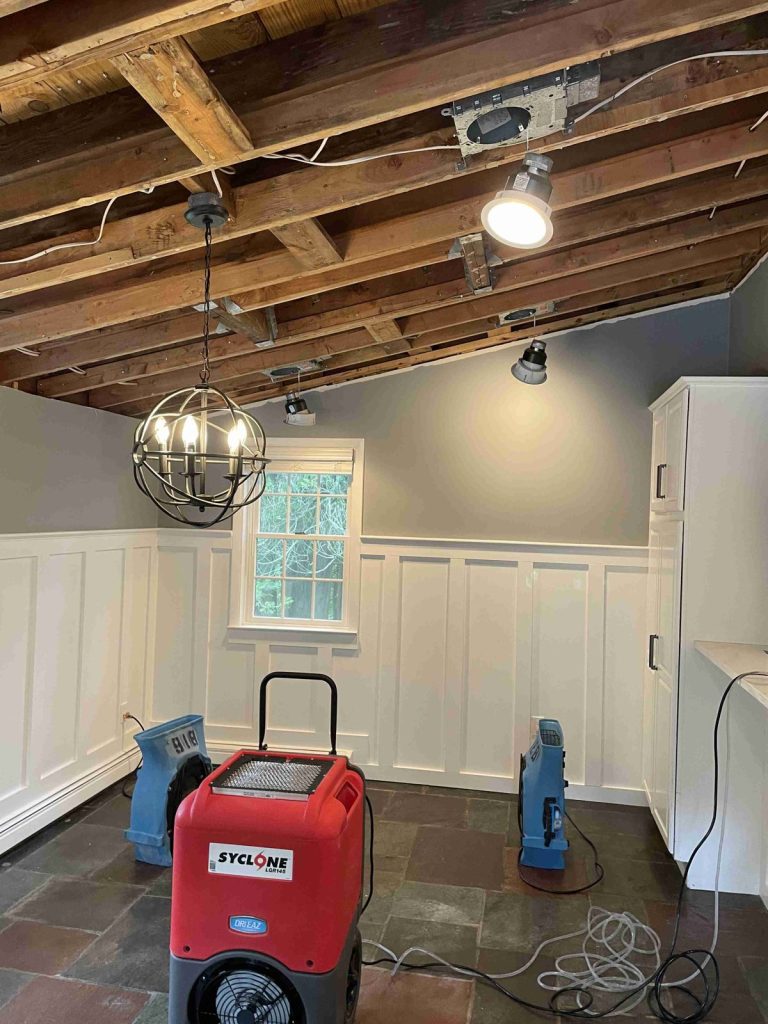
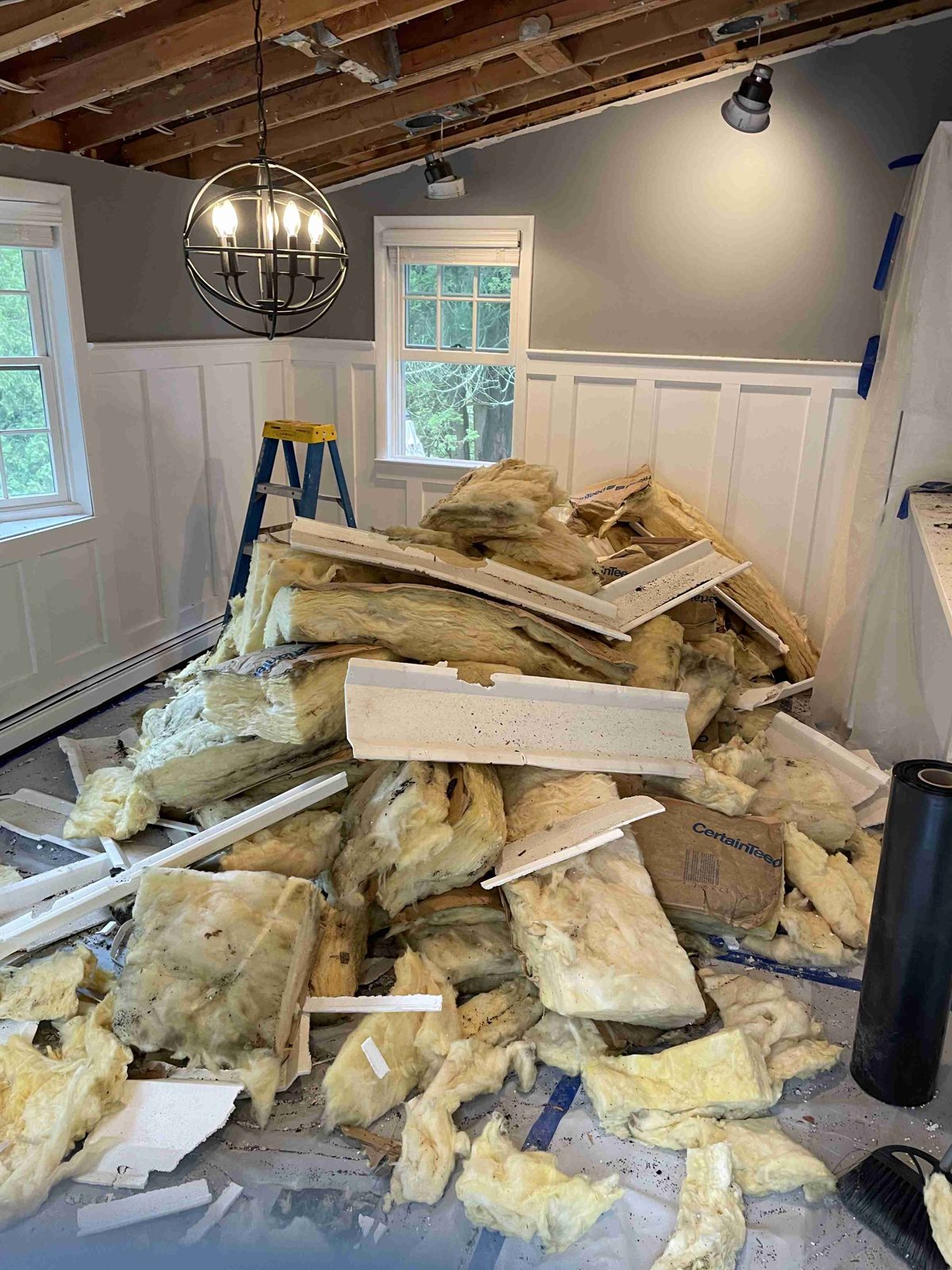
Opened assemblies are often the moment these clues appear. A ceiling comes down during a leak repair, a later kitchen floor is lifted, or a boxed-in pipe is opened in a closet. That is a sign that older layers are in the work path. A survey of the remaining work area should come before the next cut.
Planning work around suspect asbestos material in Westchester County, NY? Bowerman Cleaning and Restoration answers 24/7.
What Is Not a Reliable Sign?
Short answer: smell, color alone, a neighbor story, or a casual walk-through guess cannot confirm or rule out asbestos. A general home inspection note is a useful flag, not a laboratory result.
Asbestos does not have a reliable household smell, and color alone is a poor guide. White wrap, black mastic, gray attic fill, and painted ceiling texture can all go either way. A material that looks new can still sit on an older layer. Treating appearance as a yes-or-no answer is how buildings get disturbed for the wrong reason, or left unexamined before a remodel.
Stories from nearby houses are not evidence about a specific wall or floor. Two houses on the same street can have different heating systems and remodel histories. Unless there is a survey and, if work was done, a record of what was removed, the current project still needs its own check of the area that will be opened.
Homeowners should not break a corner off a tile, sand a patch of ceiling, or use a household kit that requires disturbing the material in order to be sure. Those acts can release fibers and still leave the rest of the work area untested. Why asbestos is dangerous explains the health reason for not treating suspect dust as ordinary construction dirt. Sampling belongs to a licensed independent inspector who can send properly collected material to an accredited lab.
What Should Happen After a Sign Is Noticed?
Short answer: leave the material alone, limit access if it is damaged, note what was seen, and have an independent inspector sample it before further disturbance. If the result is positive and the material is in the path of work, abatement comes first.
- Leave it alone. Do not sand, scrape, drill, or break the material to get a better look.
- Limit access if it is damaged. Keep people and pets away from crumbling insulation, broken tile, or a failing ceiling coating.
- Write down the clue. Note the location, the product type if it is recognizable, and whether the material is intact or already broken, without taking a sample.
- Arrange a survey. A licensed independent inspector collects samples and an accredited lab analyzes them. That work is separate from any later abatement.
- Plan the next step from the report. If the result is negative for the work area, the project can continue. If it is positive and the material will be disturbed, abatement and clearance come first.
That order matters most when a renovation is already on the calendar. Renovations that disturb asbestos lists the kitchen, bath, heating, ceiling, attic, and exterior jobs that most often reach these materials. The survey should be booked against that list before demolition starts.
The pillar what is asbestos abatement explains the work that follows a confirmed result. For the service category, see asbestos removal and abatement. Intact material that will not be touched is often left in place; the report should drive that decision.
Signs of Asbestos in a Home FAQs
Can you tell asbestos by looking at it?
No. Age, location, and appearance are clues. Only lab analysis of samples collected by a licensed independent inspector can confirm whether a specific material contains asbestos.
Are popcorn ceilings a sure sign of asbestos?
No. Many textured ceilings were made without it. Older coatings are still worth sampling before they are scraped, because scraping is a disturbance.
What is the most useful first clue in a house?
The combination of a pre-1980 construction date, a recognizable product type such as pipe wrap or vinyl floor tile, and a plan to cut or remove that material.
Should a homeowner take a sample to be sure?
No. Sampling disturbs the material. An independent licensed inspector should collect the samples and send them to an accredited lab.
If nothing looks damaged, is a survey still needed?
Yes, before a remodel or repair that will open older floors, walls, ceilings, or mechanical insulation. Intact material can still contain asbestos.
Wondering about the signs of asbestos in a home in Westchester NY? Bowerman Restoration LLC d/b/a Bowerman Cleaning & Restoration, 7 Intervale Street, White Plains, NY 10606, answers 24/7 at (844) 269-3762.