
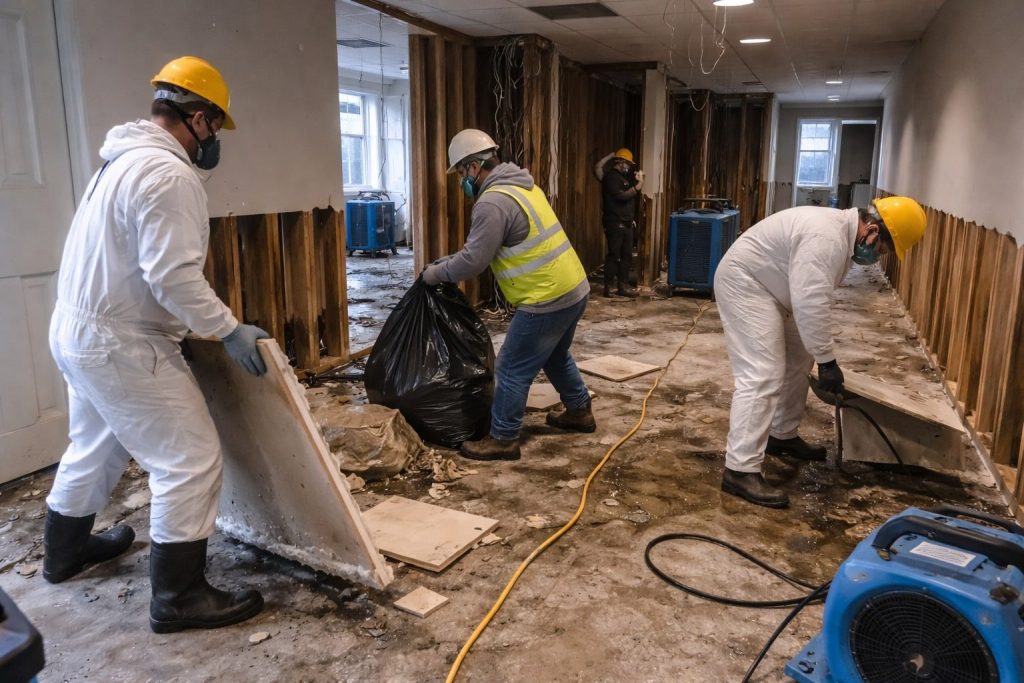
Storm damage repair in a NY home is the lasting work that comes after the site is safe and the wet structure is under control. Shingles, siding, windows, drywall, and flooring can all belong on the same job, but they should not all start on the first day. A repair that goes in over a still-wet wall, or under a roof that is still open, often has to be done twice. The useful order is to stabilize the envelope, dry the building, then repair from the outside in and from the wet materials out.
Written by the Bowerman Cleaning and Restoration Team · November 23, 2026
Key Takeaways
- Lasting repairs are different from a temporary tarp or a boarded window.
- Drying should be far enough along before new drywall, insulation, or flooring is installed.
- Roof, siding, and interior trades often have to work in sequence, not all at once.
- The repair plan should follow a documented scope, not only the first visible hole.
In This Guide
- How Is Repair Different from Temporary Protection?
- When Should Lasting Repairs Start?
- What Parts of the House Are Usually in the Repair Scope?
- How Does Repair Fit the Overall Timeline?
- Storm Damage Repair FAQs
How Is Repair Different from Temporary Protection?
Short answer: a tarp or a board-up stops more weather from entering; repair replaces or restores the damaged building parts so the temporary cover can come off. Both matter. One is not a substitute for the other.
A roof tarp after a storm is a dry-in. Replacing the damaged deck and shingles is a repair. Boarding a broken window is protection; installing a new sash is a repair. The temporary step is covered in more detail in storm damage board up and tarping. What storm damage restoration is places both steps in the larger job. See also the storm damage service page.
It is also reasonable to ask, in writing, how long a temporary cover is expected to last and who will check it after later weather. That question keeps a tarp from quietly becoming the only “repair” on the calendar. Once a lasting start date is set, the cover should stay in place until the finished work can actually replace it, not come off for a measurement visit and then leave the opening bare overnight.
When Should Lasting Repairs Start?
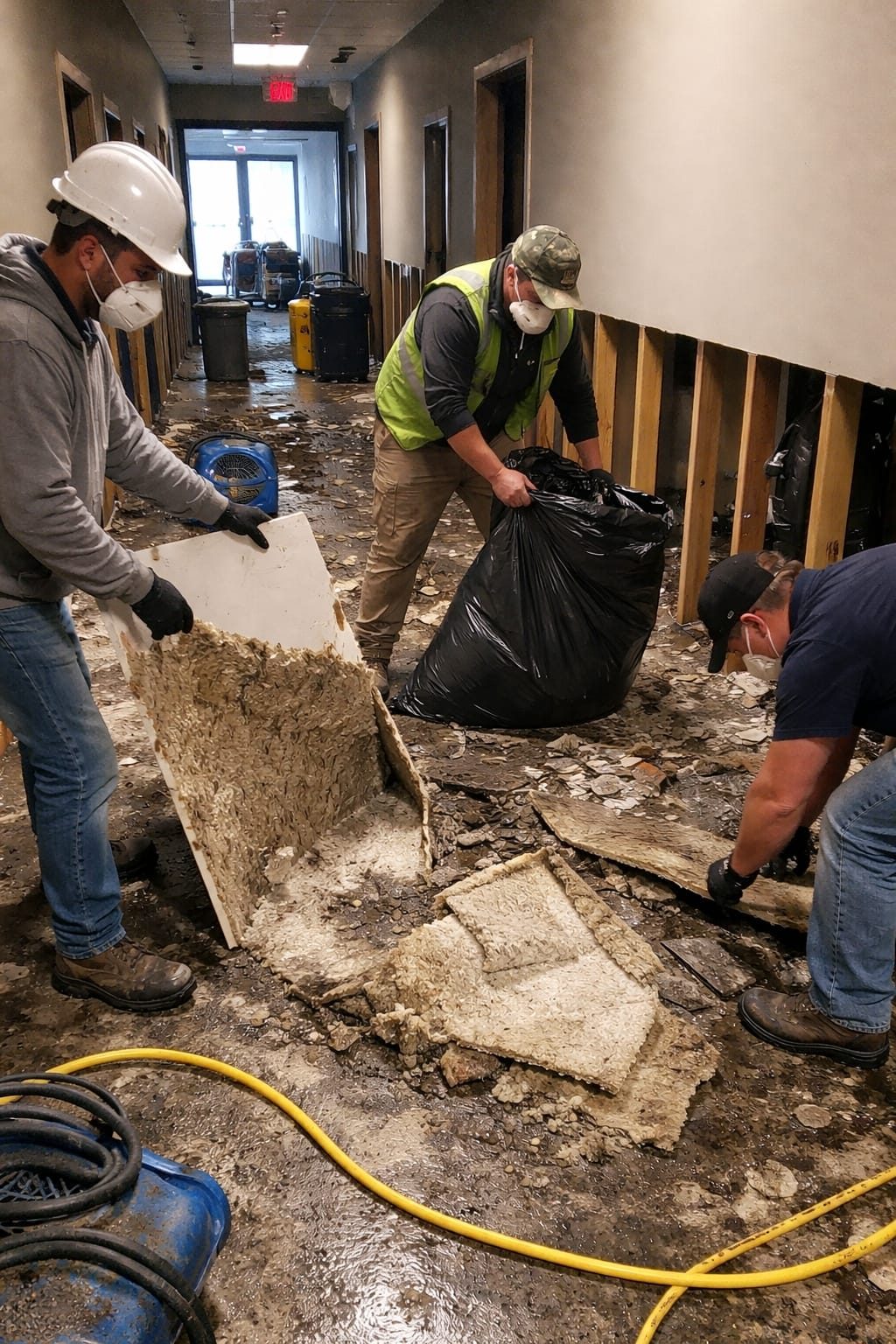
Short answer: after the opening is stable and after wet assemblies have been dried enough that new materials will not be installed over a moisture problem. Starting too early is a common reason repairs fail or have to be opened again.
Interior finishes are the ones most often started too soon. If drywall goes back up while the cavity is still wet, stains, odor, or swelling can follow. The water damage drying process and what water damage restoration is describe that waiting period. Exterior repairs can sometimes proceed in parallel once the dry-in is in place, but a roofer and a restoration crew still need a shared plan so one is not undoing the other.
Ice-dam damage is a related winter path that also has to be repaired only after the leak is understood, as in what ice dam water damage restoration involves and the ice dam damage repair page.
Storm damage at a Westchester County, NY property? Bowerman Cleaning and Restoration answers 24/7.
What Parts of the House Are Usually in the Repair Scope?
Short answer: the roof and openings first, then siding or trim if they were damaged, then interiors that got wet or were opened for drying. The first hole is not always the full list.
A tree or a wind event may have cracked a window, loosened siding, or damaged a gutter line as well as the shingles. Water may have traveled into a hallway or a basement that was not under the opening, a path described in the cluster post on water intrusion after a storm. Live event guides such as what restoration involves when a tree hits a house and basement flood restoration after heavy rain show how the repair list is built from a specific loss. The scope should be written from what was found, not only from what could be seen from the curb.
Trim, insulation, and paint are easy to leave off a first list and expensive to add later, when a wet cavity has already been closed. A walk-through that follows the water, not only the missing shingles, produces a more complete repair scope. If a second opening is found in a valley, a skylight, or a wall cap, it belongs on the list before new interiors go in. Repairing the obvious hole and painting over a still-damp stain is how callbacks start.
How Does Repair Fit the Overall Timeline?
Short answer: emergency protection can be quick; drying takes days or longer; lasting repairs follow materials, inspections, and sometimes insurance decisions. The cluster guide on the storm damage repair timeline covers that calendar in more detail.
A homeowner who is told that “repairs start tomorrow” should ask whether that means a tarp, a tear-out, or a finished interior. Those are different days in the same job. Ready.gov’s severe weather material is useful for the first safety and documentation steps that make later repairs easier to plan and to claim.
Contents and soft goods have their own repair path as well. Furniture, rugs, and stored items that got wet may need to be moved, dried, or discarded before the room is rebuilt, or they will go back into a finished space that then smells or spots. That work should be in the scope, not left as an afterthought on the last day. For a sense of how interior drying and rebuild are usually ordered, the water damage restoration timeline is a close companion, with the storm envelope added on top.
Storm Damage Repair FAQs
Can a tarp stay on as a long-term repair?
No. A tarp is temporary protection. Wind, UV, and later storms will eventually fail it. Lasting roof work should be scheduled, not postponed indefinitely.
Should drywall be replaced immediately?
Not while the cavity or the source is still wet. Unsalvageable material can come out early; new board should wait for a dry enough assembly.
Do roof repairs and interior repairs happen at the same time?
They can overlap once the envelope is stable, but interiors should not be finished under an opening that is still taking on weather.
Is storm damage repair the same as a cosmetic remodel?
No. The work is driven by what the storm damaged and by what had to be opened to dry the structure, not by a design wish list.
Where does insurance fit?
Documentation, a clear scope, and a record of temporary protection all support a claim. Coverage still depends on the policy. See the cluster post on storm damage insurance claims and the live guide to water damage insurance coverage.
Questions about storm damage repair in a Westchester NY home? Bowerman Restoration LLC d/b/a Bowerman Cleaning & Restoration, 7 Intervale Street, White Plains, NY 10606, answers 24/7 at (844) 269-3762.