
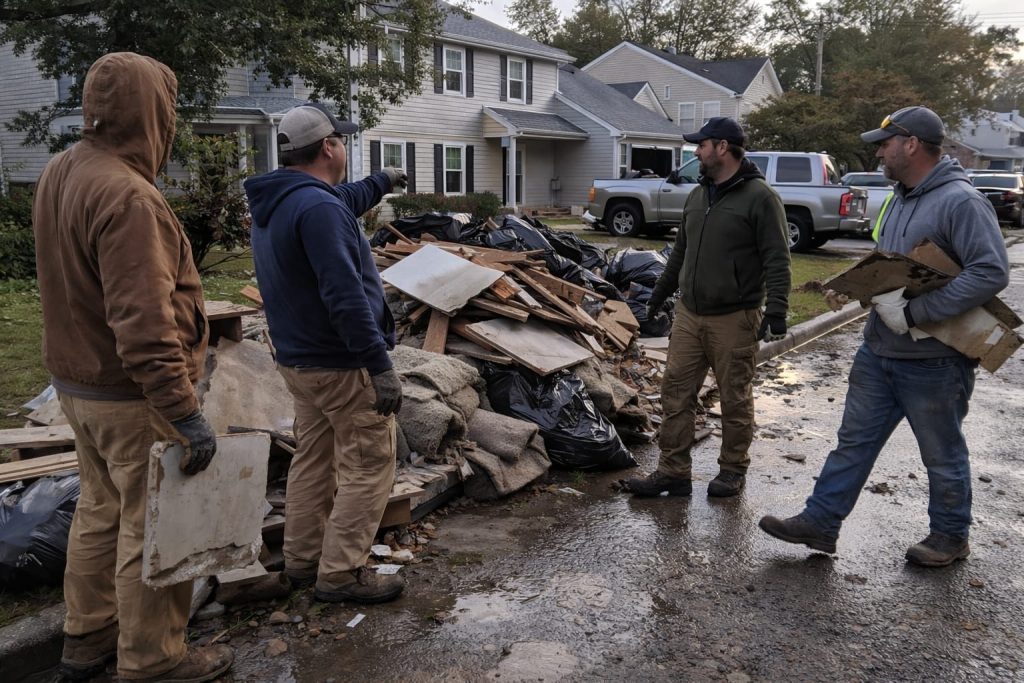
What to do first after tree damage in a NY home starts well before any chainsaw. A limb through the roof, on a car, or on a service line changes the hazards immediately. The first jobs are to keep people away from the tree, the roof opening, and any wires; to document what can be seen from a safe place; and to get a temporary cover over an opening if that can be done without climbing into danger. Cutting the tree is not the first step, and it is sometimes the most dangerous step if it is done too soon.
Written by the Bowerman Cleaning and Restoration Team · November 20, 2026
Key Takeaways
- Stay away from the tree if it is on or near power lines, and assume downed wires are live.
- Do not start a chainsaw or climb a damaged roof as a first move.
- Photograph the damage from safe ground, then arrange a temporary dry-in if it can be done safely.
- The later restoration work is a separate question; this guide is about the first hours.
In This Guide
- What Are the First Safety Steps After a Tree Hits?
- What Should Be Documented, and When Can the Opening Be Covered?
- What Should Be Done About Water Under the Opening?
- Who Comes After the First Hour?
- What to Do First after Tree Damage FAQs
What Are the First Safety Steps After a Tree Hits?
Short answer: get people out of the affected rooms, treat lines as live, and leave the tree alone until the hazards are clear. A tree that looks stable can still be loading a damaged roof or a wire.
- Move people to a safe part of the house or to another location. Rooms under a pierced roof, a cracked ceiling, or a wall that took a limb are not gathering places.
- Look for service lines before anyone approaches the tree. A limb on a line, or a line under a limb, is a utility problem first. Stay back and report it. Ready.gov’s severe weather guidance makes the same point about downed wires.
- Leave cutting to people who can do it safely. A homeowner with a saw is at risk from springing limbs, a second break, and electrical contact. Cutting may also make a later insurance or removal plan harder if it is done without a record.
This first-hour list is deliberately narrower than the live restoration guide on what storm damage restoration involves when a tree hits a house. That article covers the full job after a strike. This one stays with what to do before any of that work begins.
What Should Be Documented, and When Can the Opening Be Covered?
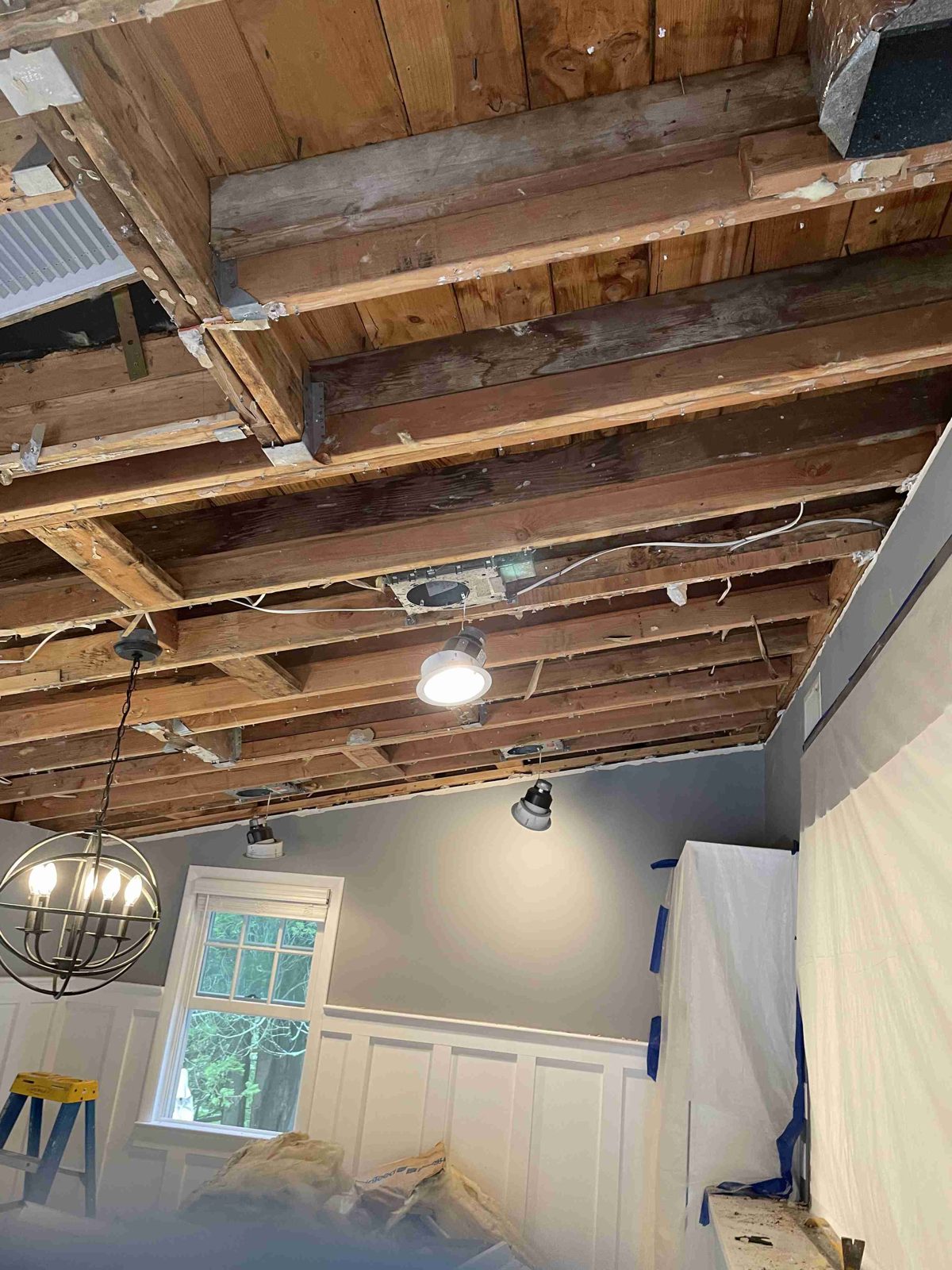
Short answer: photograph the tree, the opening, and the wet rooms from the ground or from a stable interior, then arrange a professional dry-in. Do not climb a wet, damaged roof to get a closer picture or to throw a tarp.
Insurers and later contractors need to see where the tree sat and what it damaged. Take photographs before the tree is removed if it is safe to wait that long, or at least from enough angles on the ground that the opening and the interior wetting are clear. Then a crew can tarp or board the opening so the next rain does not follow the same path. What to do first after storm damage covers the same idea for storms in general; this page is the tree-specific version.
If darkness, ice, or high wind makes even a professional dry-in wait until morning, keep the rooms under the opening closed and catch what water can be caught from a safe floor. Do not climb into an attic with a flashlight to “see how bad it is” while the tree is still on the roof. A morning photograph of the same rooms is still useful, and it is better than an injury in the dark.
Storm damage at a Westchester County, NY property? Bowerman Cleaning and Restoration answers 24/7.
What Should Be Done About Water Under the Opening?
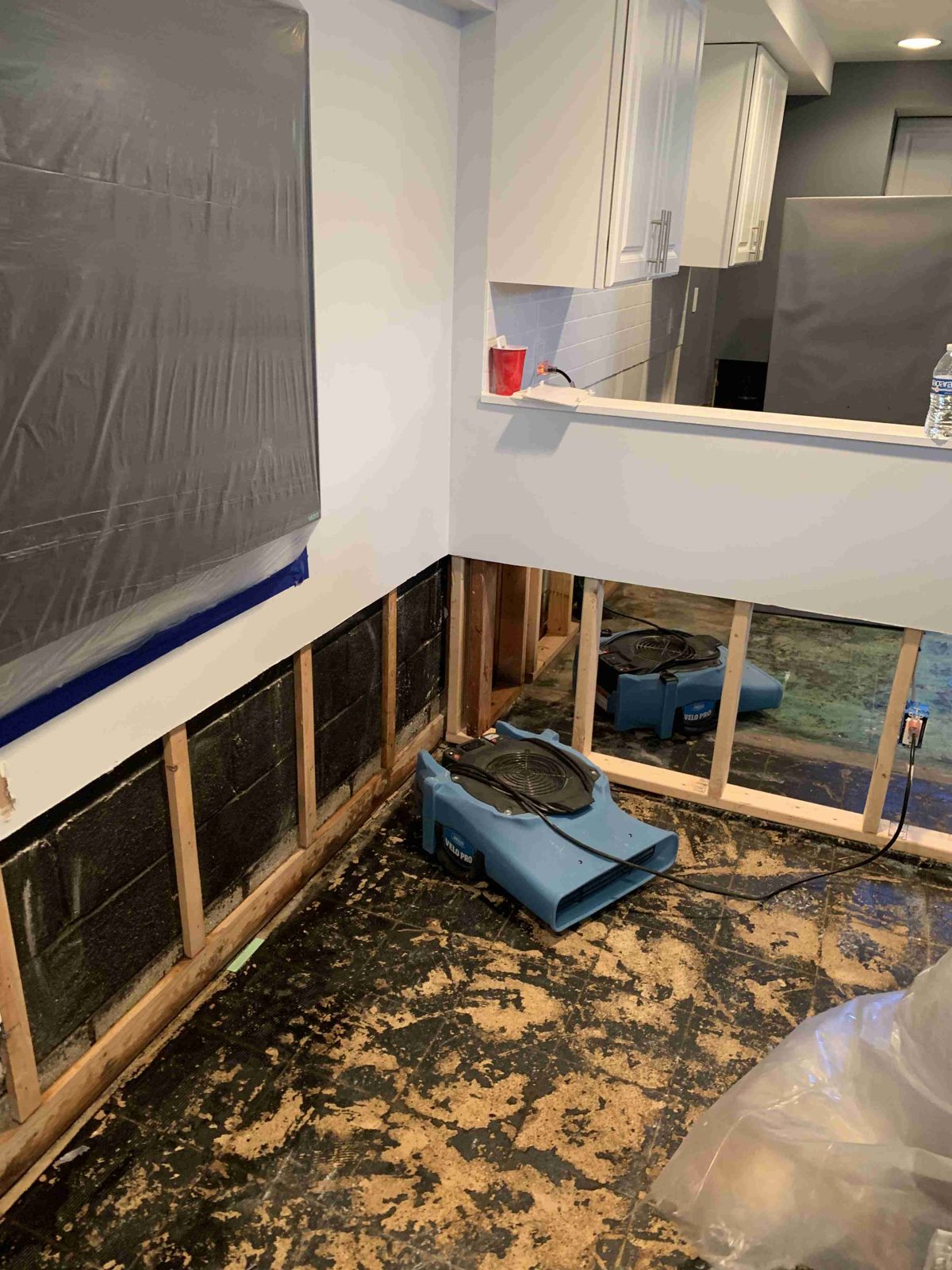
Short answer: treat it as an active water loss: keep people off unsafe ceilings, and arrange extraction and drying once the incoming weather is controlled. Removing the tree does not dry the rooms.
Rain that entered through a pierced roof can travel along joists and appear in a hallway or a room that looks far from the hole. What water damage restoration is and what to do first after water damage explain those interior steps. What storm damage restoration is places them in the larger storm job, and the storm damage service page describes the work as well.
Who Comes After the First Hour?
Short answer: the utility if lines are involved, the insurer, a tree service that can work around the structure, and a restoration plan for the dry-in and the interior. Those parties should not all start cutting or tearing out at once without a simple order.
Tree removal that would disturb a still-live wire, or that would open the roof further in a rainstorm without a cover ready, should wait. Once the site is safe and documented, temporary protection and interior drying can start even if a permanent roof date is days or weeks away.
If a car, a fence, or a neighbor’s roof was also involved, those losses should be photographed separately so they are not lost in the house file. Utility crews, tree services, and restoration crews should be told what the others are doing that day, especially if a limb still has to come off a wire or a roof. Inside, once it is safe, look past the room under the hole. Water may have moved along the ceiling or into a wall, a pattern described in hidden water damage signs. That check belongs after the first-hour hazards are controlled, not in place of them.
What to Do First after Tree Damage FAQs
Should the tree be cut off the house immediately?
Not if lines are involved, the roof is unstable, or conditions are still unsafe. Safety and a record of the damage come first; cutting is scheduled around those.
Can a homeowner climb up and tarp the hole?
A damaged roof after a tree strike is a poor place for an untrained climb, especially in wet or windy weather. A professional dry-in is the safer option.
What if the tree is still leaning on the house?
Treat it as an unstable load. Stay out of the rooms it is bearing on and have the situation evaluated before anyone starts cutting.
Is this the same as a general storm-damage first-steps list?
The safety themes are the same, with extra attention to the tree, the roof opening, and power lines. The companion storm-damage first-steps guide covers the wider event.
Where can the full restoration process be read?
The live article on what storm damage restoration involves when a tree hits a house covers that later work in detail.
Looking for what to do first after tree damage in a Westchester NY home? Bowerman Restoration LLC d/b/a Bowerman Cleaning & Restoration, 7 Intervale Street, White Plains, NY 10606, answers 24/7 at (844) 269-3762.