
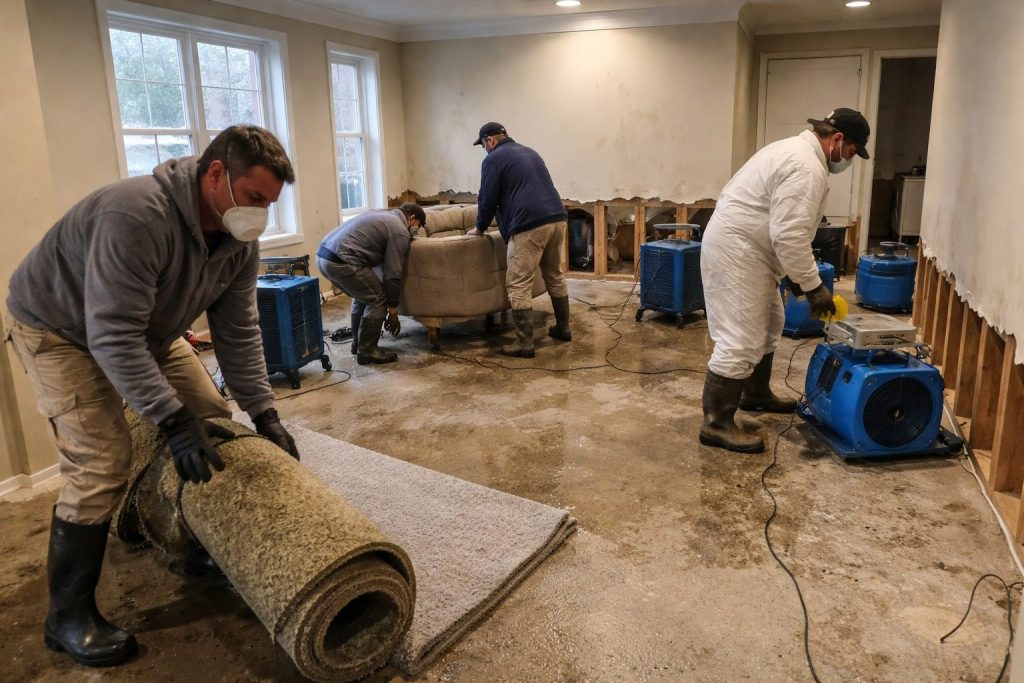
The step by step storm damage cleanup process in NY is built to stop a small opening from becoming a much larger interior loss. The useful order is to make the site safe, document it, put on a temporary dry-in, remove the water that is already inside, dry the structure, and only then rebuild finishes. Skipping ahead to cosmetic repairs, or waiting to cover an opening until a contractor can do a permanent roof, is how rooms stay wet through the next rain.
Written by the Bowerman Cleaning and Restoration Team · November 18, 2026
Key Takeaways
- Safety and documentation come before anyone starts tearing out finishes.
- A temporary dry-in stops more weather from entering while a lasting roof or window repair is arranged.
- Water that is already inside still needs extraction, opening of wet materials, and measured drying.
- Rebuild of drywall, flooring, and finishes should wait until the source is stable and the structure is drying.
In This Guide
- What Is the Step by Step Order?
- Why Should Drying Come Before Rebuild?
- Who Is Usually Involved at Each Step?
- What Slows the Process Down?
- Step by Step Storm Damage Cleanup Process FAQs
What Is the Step by Step Order?
Short answer: secure, document, dry in, extract, dry the structure, then repair. Each step protects the next. The details change with the storm; the order usually does not.
- Make the site safe. Stay out of rooms with sagging ceilings, avoid downed lines, and treat structural damage as a hazard until it is evaluated. Ready.gov’s severe weather guidance starts with the same idea.
- Document the loss. Photograph openings, wet rooms, and damaged contents before large items are moved, if it is safe to do so. Those photos support the later claim and the scope.
- Provide a temporary dry-in. Tarp a roof opening or board a broken window so the next rainfall does not add to the loss. This is temporary protection, not the final repair.
- Extract standing water. Remove water that is already on floors and in reachable cavities, then place drying equipment. This is the same discipline as the water damage drying process.
- Open and dry wet assemblies. Remove unsalvageable soaked materials and dry what can stay, using moisture readings rather than guesswork.
- Repair and rebuild. Roofing, siding, windows, and interior finishes are completed once the envelope is stable and the structure is dry enough for new materials.
The sequence is a plan, not a script that never changes. A house with a small roof hole and a dry attic may move through the first three steps quickly. A house with water in several rooms, or with a still-active leak, will spend more time on extraction and drying. What should not change is the refusal to start finished interiors under an opening that is still taking on weather. Hidden water damage signs is worth reading once the visible water is gone, because a ceiling or a wall can hide a path that the first walk-through missed.
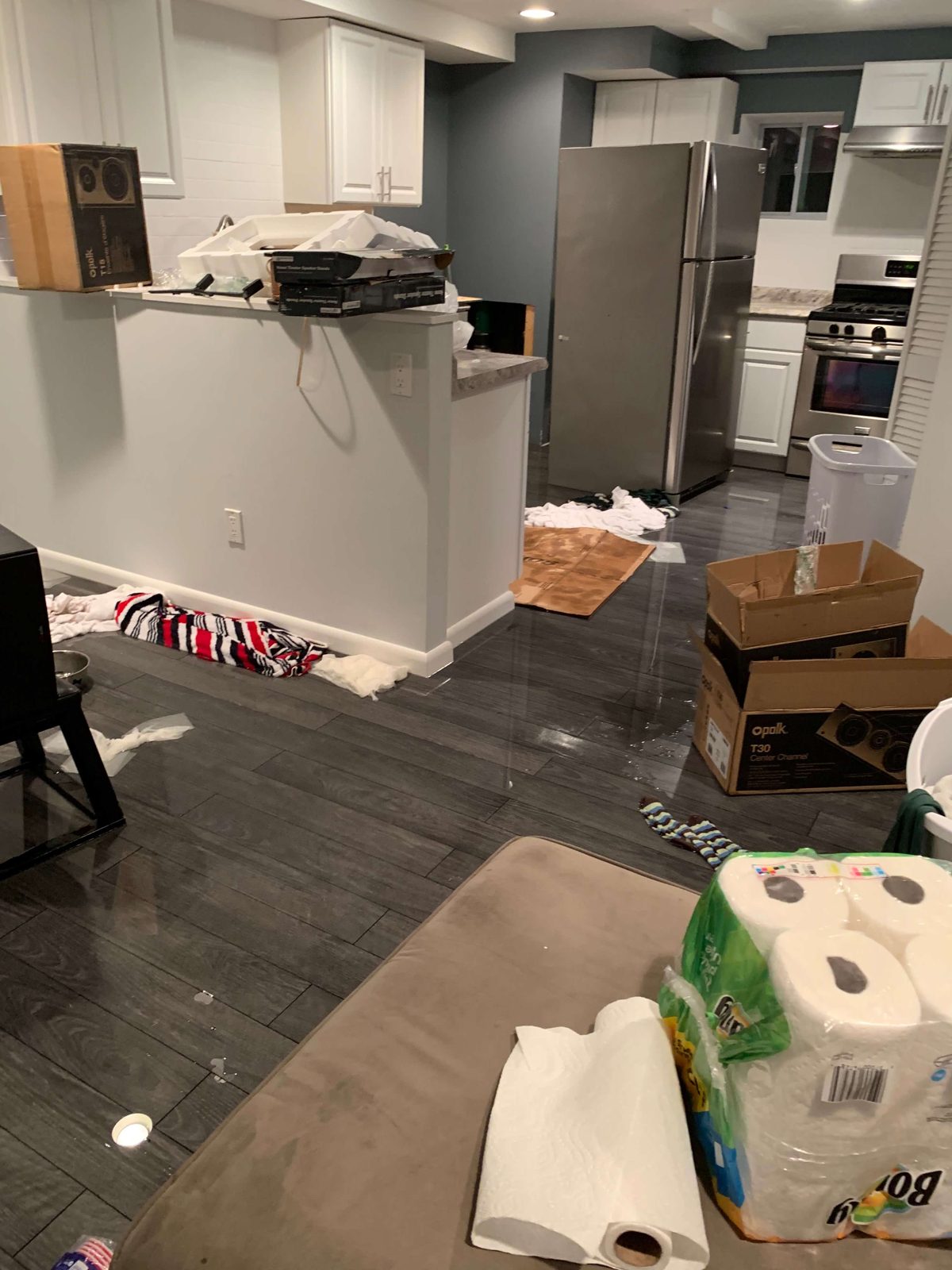
Why Should Drying Come Before Rebuild?
Short answer: because new drywall, flooring, or insulation will fail or hold odor if it is installed over a still-wet assembly, or under a still-open roof. A finished-looking room that is still receiving rain is not a completed cleanup.
What storm damage restoration is places this sequence inside the larger job. The storm damage service page and what water damage restoration is are useful overviews as well. Specific events are also covered in what restoration involves when a tree hits a house and basement flood restoration after heavy rain.

Storm damage at a Westchester County, NY property? Bowerman Cleaning and Restoration answers 24/7.
Who Is Usually Involved at Each Step?
Short answer: a restoration firm for water and interiors, a roofer or exterior contractor for lasting envelope repairs, and sometimes an adjuster in parallel. The cleanup process still needs one clear order, even when more than one trade is on the property.
Temporary tarping and interior drying often start before a permanent roof date is available. The trades should not work against each other: a roofer should know where drying equipment sits, and a restoration crew should know when the dry-in will be opened again for permanent work. If a flood or surge was the main event, the live case studies on storm surge flood restoration and urban flood restoration after a severe storm show how the same sequence is adapted.
What Slows the Process Down?
Short answer: an active leak that has not been covered, late documentation, materials that were closed up wet, and long lead times for roofing or windows. Most delays are easier to prevent at the start than to repair later.
If the opening is still taking on water, drying equipment is fighting the weather. If wet finishes were replaced too soon, they may have to come out again. If there are no photos from day one, the insurance conversation is harder. The cleanup process is, in large part, a way of avoiding those stalls.
Weather itself is another stall. A second storm can lift a weak tarp, and a week of rain can delay a lasting roof. Those delays are easier to absorb when the temporary dry-in is solid and the interior is already on a drying plan. They are harder when the house was left open, or when wet finishes were closed back up to make the rooms look finished for a visit. A written sequence, even a short one, keeps everyone honest about which stage the job is actually in.
Step by Step Storm Damage Cleanup Process FAQs
Can the interior be rebuilt the same week as the storm?
Only if the opening is stable and the affected assemblies are dry enough. Many interiors need a drying period first, which can run days or longer depending on how wet the materials are.
Is a tarp a step in the cleanup process or a repair?
It is a temporary dry-in, a cleanup and protection step. It is not a lasting roof repair.
Should wet carpet always be removed in this process?
It depends on the water, the time it sat, and the material. Storm rain that soaked a pad for a long period is often a removal. The assessment should say so.
Where does documentation fit?
As early as it is safe, before large contents are discarded or walls are opened, so the later repair and the claim have a record.
Is this process the same after a tree strike and after a flood?
The order is the same: safety, document, stop more water, extract, dry, repair. The first hazards and the volume of water can be very different.
Questions about the step by step storm damage cleanup process in a Westchester NY home? Bowerman Restoration LLC d/b/a Bowerman Cleaning & Restoration, 7 Intervale Street, White Plains, NY 10606, answers 24/7 at (844) 269-3762.