
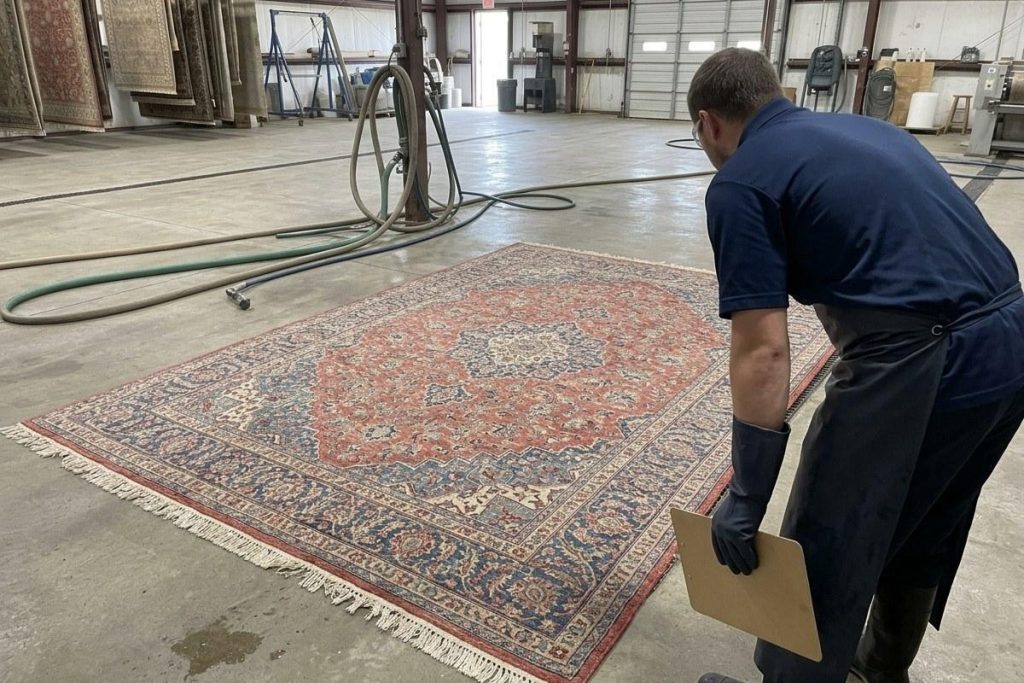
Oriental rug cleaning and repair is the specialized care of hand-knotted and hand-woven rugs. Cleaning removes deep soil with dusting, a fiber-safe wash, and controlled drying. Repair fixes fringe, edges, holes, and worn pile so damage stops spreading. In NY homes, both are usually done together, since repairs hold best on a clean rug.
Written by the Bowerman Cleaning and Restoration Team · September 17, 2026
Key Takeaways
- Cleaning means dusting, washing, rinsing, and controlled drying, not a quick surface shampoo.
- Repair covers fringe, side cords, holes, moth damage, and worn areas before they grow.
- Fiber and dyes decide the method, so every rug is inspected and tested first.
- Most rugs are cleaned off-site, where they can be washed and dried under control.
- Small problems grow: loose fringe and open edges unravel faster with every vacuuming.
In This Guide
- What Does Oriental Rug Cleaning and Repair Cover?
- How Is It Different From Carpet Cleaning?
- How Does the Cleaning Process Work?
- What Kinds of Repairs Are Common?
- When Does a Rug Need Professional Care?
- Related Guides
- Oriental Rug Cleaning and Repair FAQs
What Does Oriental Rug Cleaning and Repair Cover?
Short answer: cleaning restores the fibers and colors, and repair restores the structure that holds the rug together.
| Service | What it addresses | Typical work |
|---|---|---|
| Dusting | Grit packed into the foundation | Removing dry soil from the back before washing |
| Washing | Body oils, traffic soil, odors | Full wash with a fiber-safe solution and thorough rinse |
| Spot and odor treatment | Pet urine, food, and drink spills | Targeted treatment matched to the fiber and dye |
| Controlled drying | Water left after washing | Drying flat or hung with airflow and humidity control |
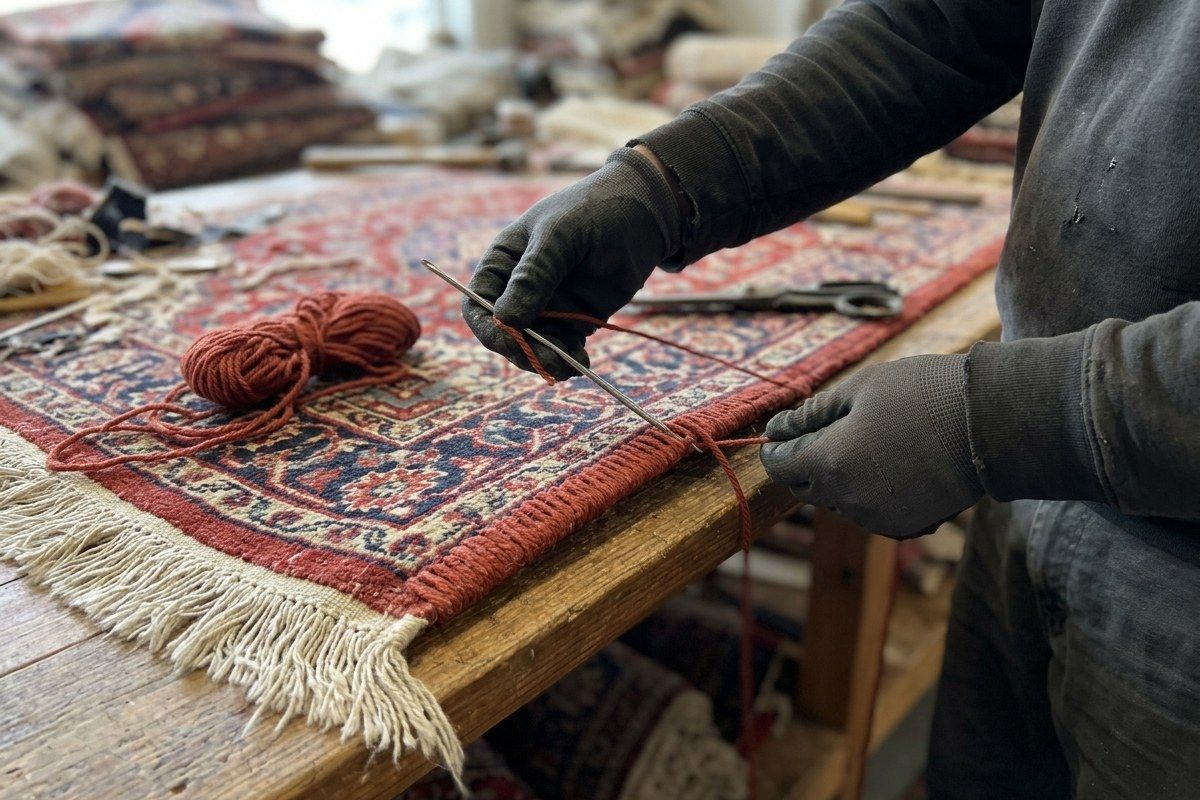
| Fringe and end repair | Worn, torn, or missing fringe | Securing the ends so knots cannot unravel |
| Side cord repair | Loose or worn edge wrapping | Rewrapping or rebuilding the side cords |
| Reweaving and reknotting | Holes, moth damage, worn pile | Rebuilding the foundation and pile in matching yarn |
The live service pages for oriental and area rug cleaning and oriental and area rug repair describe how the two services are offered. Rugs damaged by smoke or water often need cleaning before any repair is judged, the same order used for other belongings salvaged after a fire.
How Is It Different From Carpet Cleaning?
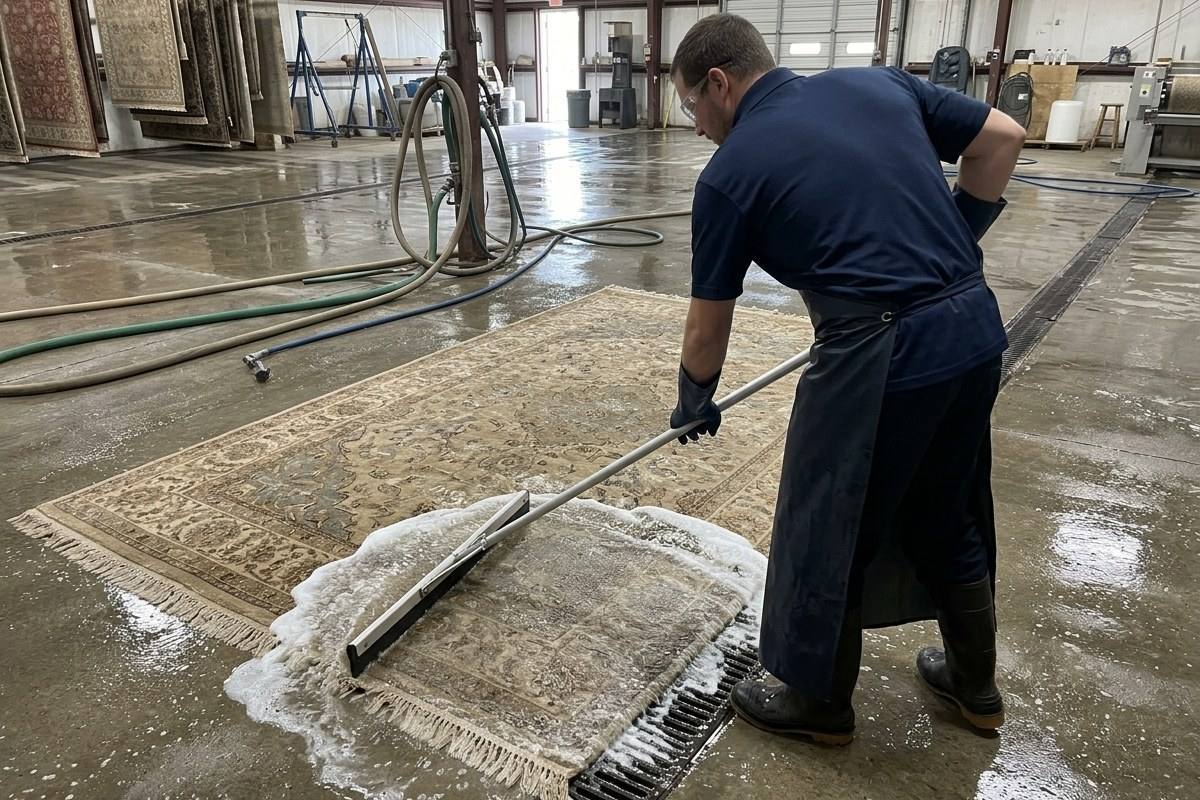
Short answer: a rug is a loose, hand-made textile with natural dyes and a cotton or wool foundation, so it is cleaned off the floor and dried under control.
Wall-to-wall carpet is fixed to the floor, made mostly of synthetic fibers, and cleaned in place with hot water extraction. An oriental rug is usually wool or silk on a cotton foundation, with dyes that can bleed if the wrong chemistry or too much heat is used. Soil also settles deep in the knots, where surface cleaning cannot reach it.
The Canadian Conservation Institute advises against commercial carpet shampoos on important rugs, because residue attracts new soil. For everyday carpet spills, the live carpet cleaning tips page covers blotting and spot removal; fine rugs need gentler handling than those steps.
Fine rug that needs cleaning or repair in Westchester County, NY? Bowerman Cleaning and Restoration answers 24/7.
How Does the Cleaning Process Work?
Short answer: in a set order: inspect, dust, pre-treat, wash, rinse, dry, and groom.
- Inspect and test. Fiber, construction, existing damage, and dye stability are checked and recorded before any water is used.
- Dust. Dry soil is shaken or beaten out of the foundation from the back of the rug.
- Pre-treat. Spots, pet urine, and heavy soil get targeted treatment matched to the fiber.
- Wash and rinse. The rug is washed with a fiber-safe solution and rinsed until the water runs clear.
- Extract and dry. Water is removed, then the rug dries flat or hung in a controlled room.
- Groom and repair. The pile is set, fringe is cleaned, and any repairs are made on the clean rug.
Drying is the step that protects the rug most. A rug that stays damp can bleed, shrink, brown, or start to rot in the cotton foundation. The same principle of measured, controlled drying is explained for buildings in the water damage drying process.
What Kinds of Repairs Are Common?
Short answer: fringe, side cords, holes, moth damage, and worn pile are the most frequent repairs.
- Fringe wears first because it takes vacuum and foot traffic. Once it goes, knots at the ends can start to loosen.
- Side cords fray where furniture and vacuums rub the edges.
- Moth and carpet beetle damage shows up as bare patches, often under furniture. NC State Extension notes that larvae feed on wool and silk, especially where rugs sit undisturbed.
- Holes and tears can come from pets, furniture, or dry rot in a foundation that stayed wet.
- Water damage can cause dye bleeding, shrinkage, and weak spots that need stabilizing.
Repairs are easier and less costly when caught early. Rugs that went through a water loss should be dealt with quickly; the live guide to salvageable items after water damage explains why fast action matters for textiles.
When Does a Rug Need Professional Care?
Short answer: when it looks dull or gritty, smells, has spills or pet accidents, or shows loose fringe, open edges, or bare spots.
A rug that has gone several years without a full wash usually holds more soil than it shows. Odors that return in humid weather, color bleeding after a spill, and fringe that keeps getting caught in the vacuum are all signs that cleaning or repair is due. Smoke odor in a rug after a fire is a cleaning job too; the live guide to smoke damage cleanup vs smoke odor removal explains why odor needs more than airing out.
Related Guides
- Oriental Rug Cleaning Methods
- Oriental Rug Cleaning Process
- Oriental Rug Repair vs Replacement
- Oriental Rug Water Damage Restoration
- Wool vs Silk Rug Cleaning
- Oriental Rug Cleaning Frequency
- Oriental Rug Pet Odor Removal
- Common Oriental Rug Repairs
- Types of Oriental Rugs
- Common Oriental Rug Damage
- Signs an Oriental Rug Needs Cleaning
- Oriental Rug Care Mistakes
- Oriental Rug Cleaner Questions
- Oriental Rug Stains
- Oriental Rug vs Carpet Cleaning
- Hand Knotted vs Machine Made Rug Cleaning
- Oriental Rug Repair vs Oriental Rug Restoration
- Oriental Rug Cleaning vs Area Rug Cleaning
- Professional Rug Cleaning vs Store Bought Rug Cleaners
Oriental Rug Cleaning and Repair FAQs
Is oriental rug cleaning the same as area rug cleaning?
They overlap. Many machine-made area rugs can be cleaned on-site, while hand-knotted oriental rugs are usually cleaned off-site so they can be washed and dried under control.
Can an oriental rug be cleaned at home?
Regular vacuuming without a beater bar and quick blotting of spills are safe. Full washing at home risks dye bleeding, shrinkage, and slow drying.
Should a rug be cleaned before it is repaired?
Usually yes. Cleaning shows the true extent of damage and gives the repair a clean, stable base.
How long does oriental rug cleaning take?
Often one to two weeks from pickup to return, mostly because of inspection and drying time. Repairs can add more time.
Can a water-damaged oriental rug be saved?
Often, if it is handled within a day or two. Waiting longer raises the risk of dye bleeding, mildew, and foundation rot.
Wondering what oriental rug cleaning and repair would involve for a rug in a Westchester NY home? Bowerman Restoration LLC d/b/a Bowerman Cleaning & Restoration, 7 Intervale Street, White Plains, NY 10606, answers 24/7 at (844) 269-3762.