
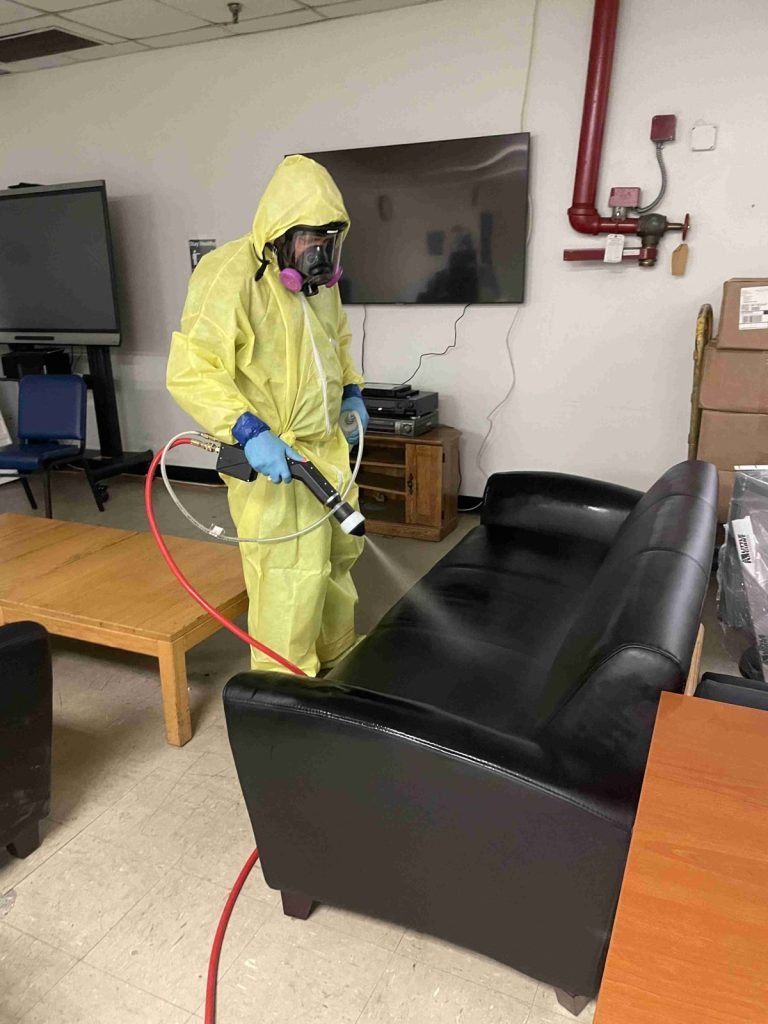
Types of biohazards in NY homes and buildings include blood, bodily fluids, sharps, animal or wildlife waste, some medical wastes, and other potentially infectious materials. Each type has a different risk, handling rule, and often a different disposal path. Appearance is a poor guide: a small stain can still be a serious exposure.
Written by the Bowerman Cleaning and Restoration Team · October 29, 2026
Key Takeaways
- Blood and certain body fluids are the types most often tied to trauma, injury, or a death in the property.
- Sharps need a puncture-resistant container, not a loose bag.
- Animal waste, some hoarding conditions, and medical disposables can also be biohazards, with their own disposal rules.
- Sewage is a related contamination problem with a distinct cleanup path.
In This Guide
- What Are the Main Types of Biohazards in a Property?
- How Do Risk and Disposal Paths Differ by Type?
- Which Problems Are Related but Not the Same Type?
- How Can a Type Be Identified Before Anyone Starts Cleaning?
- Types of Biohazards FAQs
What Are the Main Types of Biohazards in a Property?
Short answer: blood, bodily fluids, sharps, animal waste, certain medical wastes, and other potentially infectious materials, plus related problems such as sewage.
| Type | Where it turns up | Handling note |
|---|---|---|
| Blood | Injuries, trauma, some deaths, accidents | Can seep into pad, grout, and wood; treated as potentially infectious |
| Other bodily fluids | Illness, deaths, unsanitary conditions | Scope depends on what is present and what it reached |
| Sharps | Needles, lancets, broken contaminated glass | Go in a proper container, never loose in a bag |
| Animal or wildlife waste | Infestations, nesting, neglected properties | Volume and species change the risk and the method |
| Medical or laboratory disposables | Home care, small clinics, spilled samples | May be regulated waste even in small amounts |
| Sewage and some flood water | Backups, laterals, contaminated flooding | A related category with its own process |
The live biohazard remediation page covers work across several of these types. OSHA’s bloodborne pathogens guidance is written around blood and other potentially infectious materials, which is why those types sit at the center of most trauma and death cleanups. A full overview of the work is in what is biohazard cleanup.
How Do Risk and Disposal Paths Differ by Type?
Short answer: each type is assessed for exposure risk, then packaged and sent out under the rule that actually applies to that material.
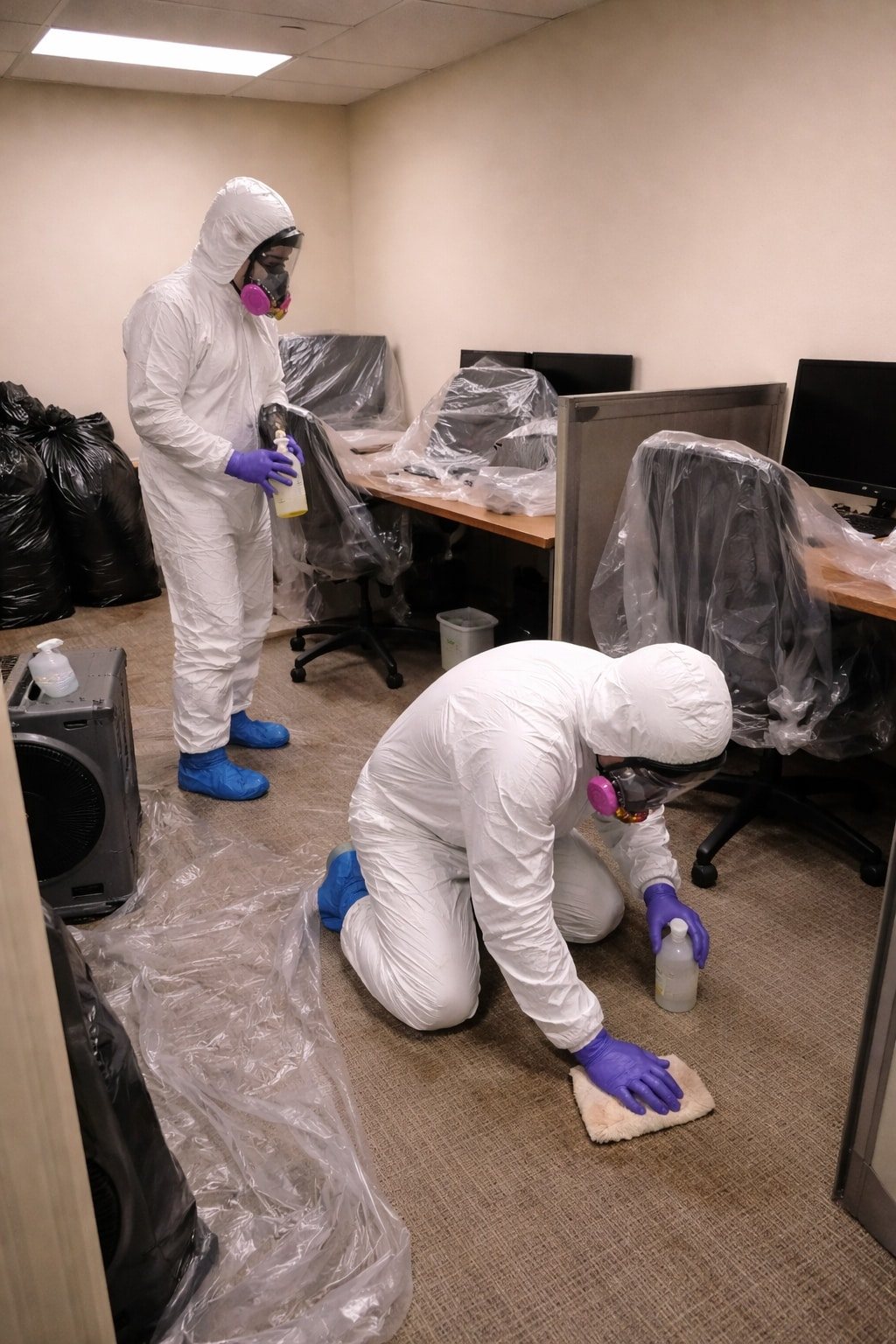
Blood-soaked porous goods and sharps are not handled like a bag of household trash, and they are not handled identically to each other either. Sharps need a rigid, puncture-resistant container. Soaked materials are often bagged and labeled as regulated waste. Animal waste may follow a different disposal route depending on volume and local rules. Mixing every type into one unlabeled bag creates a hazard for anyone who touches it later.
Cleaning chemistry also changes with the material and the surface. Soil is removed first, then a suitable disinfectant is applied. The EPA lists selected registered disinfectants as a reference for product choice. The live article on materials removed in biohazard cleanup shows how often the “disposal path” starts with taking carpet, pad, or contents out of the room.
A biohazard or trauma cleanup question in Westchester County, NY? Bowerman Cleaning and Restoration answers 24/7.
Which Problems Are Related but Not the Same Type?
Short answer: sewage backups, some hoarding scenes, and ordinary dirt or odor jobs that have no infectious material.
Sewage is contaminated and can carry pathogens, but the cleanup process, the water category, and much of the equipment plan are distinct. The live comparison of biohazard cleanup vs sewage cleanup draws that line. A hoarding situation may include food waste, animal waste, or nothing that meets a biohazard definition; the assessment has to name what is actually present.
Ordinary dirt, a musty room with no contamination, or a routine office clean is not a biohazard type. The live articles on biohazard cleanup vs regular cleaning and biohazard company vs janitorial service are useful when a building is tempted to assign the wrong crew. The guide to biohazard cleanup equipment shows the gear that belongs with true biohazard types, not with nightly cleaning.
How Can a Type Be Identified Before Anyone Starts Cleaning?
Short answer: by a careful look at the source, the materials involved, and any official information about the event, without guessing from color or odor alone. The when biohazard cleanup is needed guide covers this in more detail.
- Start with the known source (an injury, a death, a needle, an animal infestation, a backup).
- Look at what the material touched (fabric, pad, hard floors, vents, adjacent rooms).
- Do not taste, smell, or handle unknown residues to “figure them out.”
- Keep the area closed until a crew prepared for that type can assess it.
Types of Biohazards FAQs
Is all bodily waste a biohazard?
Not every unpleasant mess meets the definition. Blood, certain body fluids, sharps, and other potentially infectious materials do. An assessment should name the type rather than using “biohazard” as a catch-all.
Are used needles a biohazard even if they look clean?
Yes. Sharps are handled as a puncture and exposure risk, regardless of how clean they appear, and they need a proper container.
Is mold a biohazard in this sense?
Mold is a contamination problem with its own methods and limits. It is not the same category as bloodborne materials, and it should not be folded into a blood-cleanup plan by default.
Does animal waste always need a biohazard crew?
Volume, location, and whether the waste is from pets, wildlife, or a large infestation all matter. A small, fresh accident is different from a long-neglected space.
Can two types be present in one job?
Yes. A scene can include blood and sharps, or animal waste and sewage. The plan should cover each type rather than treating the site as a single generic mess.
Sorting out the types of biohazards in a Westchester NY home or building before anyone starts cleaning? Bowerman Restoration LLC d/b/a Bowerman Cleaning & Restoration, 7 Intervale Street, White Plains, NY 10606, answers 24/7 at (844) 269-3762.