
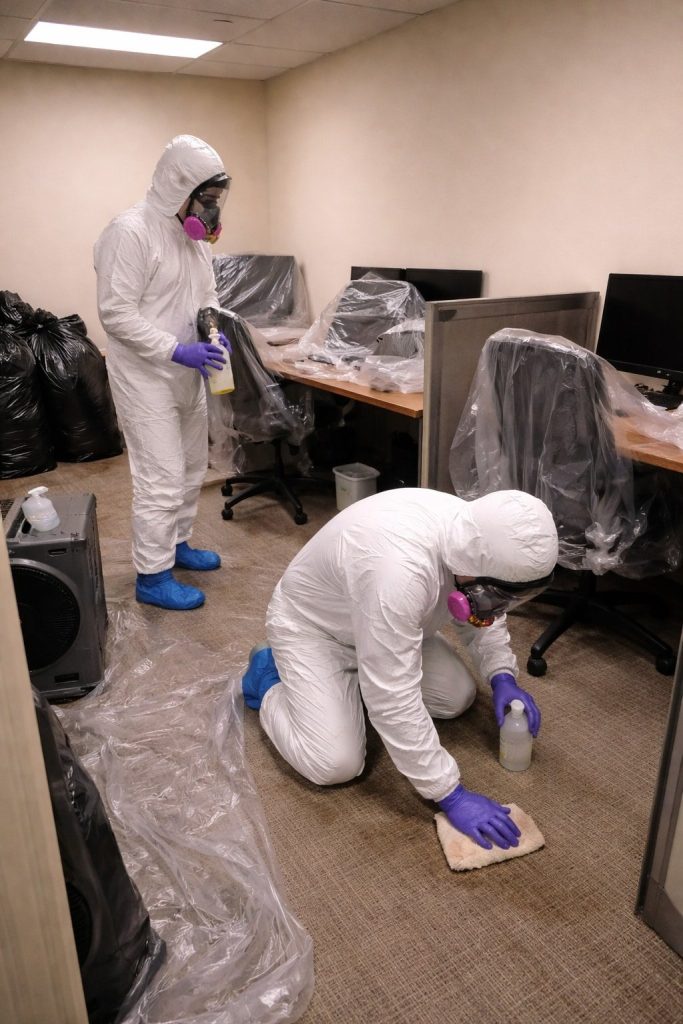
Biohazard cleanup is the controlled removal, cleaning, and disposal of blood, bodily fluids, sharps, and other potentially infectious materials. In NY, the work relies on personal protective equipment, containment, and regulated waste handling, not household soap and a mop. It begins after first responders or investigators have released the scene.
Written by the Bowerman Cleaning and Restoration Team · October 16, 2026
Key Takeaways
- Biohazard cleanup is not regular cleaning. Blood, fluids, and sharps need protective gear, containment, and proper disposal.
- The work starts after the scene is released by police, medical examiners, or other authorities when they have been involved.
- Porous materials that cannot be cleaned are often removed, bagged, and sent out as regulated waste.
- Household products are not a substitute for a process built around disinfection and documentation.
In This Guide
- What Does Biohazard Cleanup Cover?
- How Is Biohazard Cleanup Different From Regular Cleaning?
- How Does the Work Usually Proceed?
- When Is This Kind of Cleanup Needed?
- Related Guides
- What Is Biohazard Cleanup? FAQs
What Does Biohazard Cleanup Cover?
Short answer: blood and bodily fluids, trauma or death scenes, sharps, and other potentially infectious materials, plus the surfaces and contents they reached.
| Situation | What is usually involved | Why a standard clean is not enough |
|---|---|---|
| Trauma or blood loss | Fluids on floors, walls, and contents | Blood can seep into grout, pad, and subfloor |
| Unattended death | Time, odor, and materials below the surface | Scope often goes past what is visible |
| Sharps or medical waste | Needles, lancets, and contaminated disposables | These are regulated waste, not regular trash |
| Bodily fluids or unknown stains | Cleaning plus disinfection of affected areas | Pathogen risk is not obvious from appearance |
| Hoarding or animal waste with pathogens | Targeted removal and disinfection | Volume and contamination can both be high |
The live biohazard remediation service page outlines this category of work. OSHA’s bloodborne pathogens guidance explains why blood and certain body fluids are treated as potentially infectious, which is the starting assumption for cleanup planning.
How Is Biohazard Cleanup Different From Regular Cleaning?
Short answer: it adds containment, protective equipment, material removal, disinfection, and regulated waste handling that a household or janitorial clean does not include.
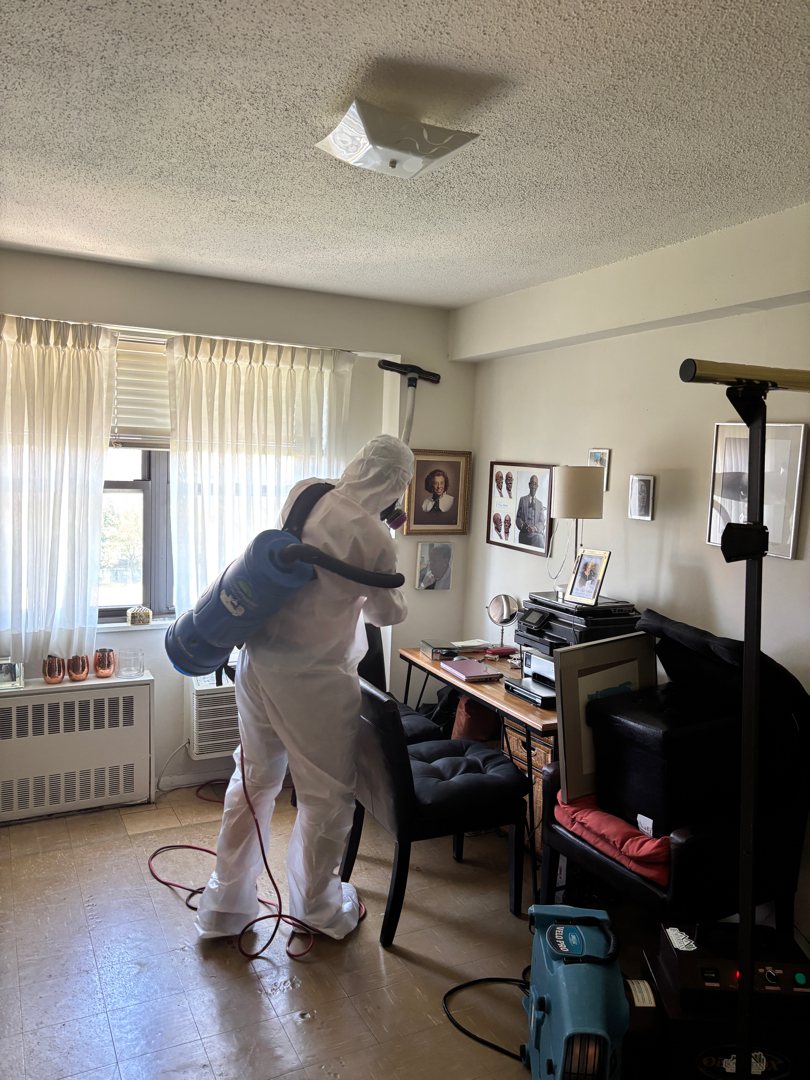
A regular cleaning addresses dirt and routine surfaces. Biohazard work assumes that blood, fluids, or sharps may still be present in cracks, padding, and porous goods. Technicians use barriers, suits, and respirators as the scene requires, and they follow a waste path that ordinary trash service cannot accept. The live comparison of biohazard cleanup vs regular cleaning walks through that line, and biohazard company vs janitorial service explains why a nightly cleaning crew is not the right fit after a trauma or similar event.
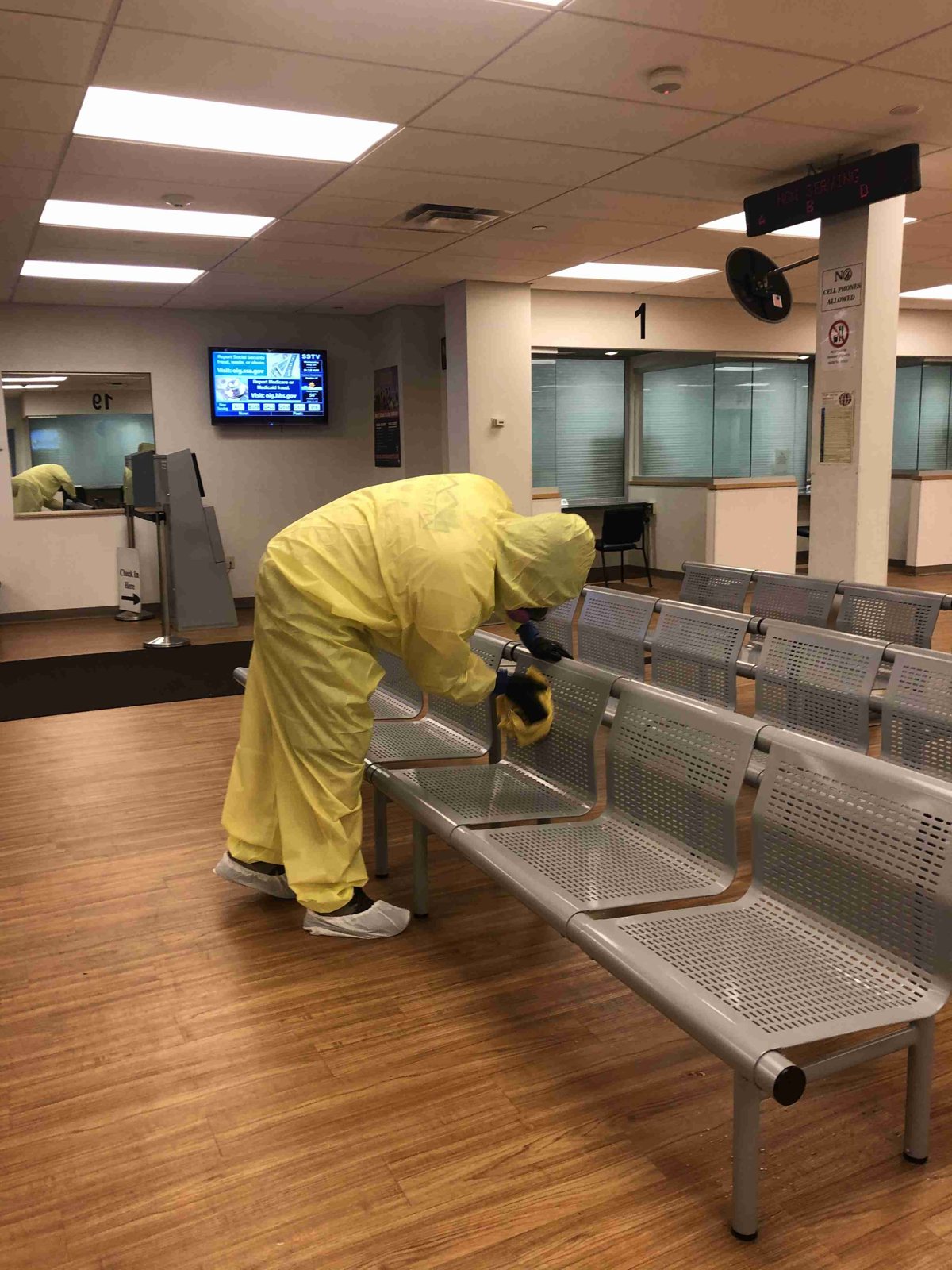
Disinfection is also different. Surfaces are cleaned of soil first, then treated with an appropriate product. The EPA publishes lists of selected registered disinfectants so the chemistry can be matched to the job, rather than borrowed from under a kitchen sink.
A biohazard or trauma cleanup question in Westchester County, NY? Bowerman Cleaning and Restoration answers 24/7.
How Does the Work Usually Proceed?
Short answer: in a set order: assessment, containment, removal, cleaning and disinfection, waste handling, and a final check.
- Assess and plan. The scene is reviewed, the affected area is identified, and a written scope is set after any investigation has released the space.
- Contain and protect. The work area is isolated, and technicians wear personal protective equipment suited to the materials present.
- Remove and clean. Affected porous materials are removed as needed, and remaining surfaces are cleaned and disinfected.
- Handle waste and verify. Regulated waste is packaged for proper disposal, and the area is checked before it is returned to use.
Equipment such as sprayers, air movers, and protective clothing supports that sequence. The live guide to biohazard cleanup equipment shows the kinds of tools used, and materials removed in biohazard cleanup covers why carpet, padding, and other porous goods are often taken out rather than wiped.
When Is This Kind of Cleanup Needed?
Short answer: when blood, bodily fluids, sharps, or other potentially infectious materials are present, or when a death or trauma has left contamination behind.
Not every mess is a biohazard job. A tracked-in dirt spill is not. A scene with blood, bodily fluids, or needles is. So is many an unattended death, where time has allowed fluids and odor to move into flooring and furnishings. The live comparison of biohazard cleanup vs trauma scene cleanup helps separate the broader category from one common type of scene. Sewage backups are a related but distinct problem; the live article on biohazard cleanup vs sewage cleanup explains where those paths overlap and where they do not.
Related Guides
- Step by Step Biohazard Cleanup Process
- Unattended Death Cleanup Process
- Trauma Scene Cleanup
- Bloodborne Pathogen Cleanup Standards
- Biohazard Cleanup Cost
- Biohazard Cleanup Insurance Coverage
- Biohazard Cleanup in Apartments
- Death Cleanup in a Home
- Types of Biohazards
- When Biohazard Cleanup Is Needed?
What Is Biohazard Cleanup? FAQs
Is biohazard cleanup the same as crime scene cleanup?
Not exactly. Crime scene work begins after investigators release the site, and it is one type of biohazard job. Biohazard cleanup also covers deaths, injuries, sharps, and other incidents that were never a crime scene.
Can the area be cleaned with household bleach?
Household products are not a complete plan. They do not replace protective equipment, removal of contaminated porous materials, or proper waste disposal, and they can be used incorrectly on the wrong surfaces.
Who calls for biohazard cleanup?
Families, property managers, attorneys, or facilities staff often make the call once authorities have released the scene. The property should not be opened to a regular cleaning crew in the meantime.
How long does biohazard cleanup take?
A small, contained area may be finished in a day. Scenes that involve subfloors, cavities, or heavy odor can take longer. The assessment sets a more realistic range.
Is the waste thrown out with regular trash?
No. Items that meet the definition of regulated or medical waste are packaged and sent through a proper disposal path, not a household or ordinary commercial dumpster.
Looking for a clear answer to what is biohazard cleanup after an incident in a Westchester NY property? Bowerman Restoration LLC d/b/a Bowerman Cleaning & Restoration, 7 Intervale Street, White Plains, NY 10606, answers 24/7 at (844) 269-3762.