
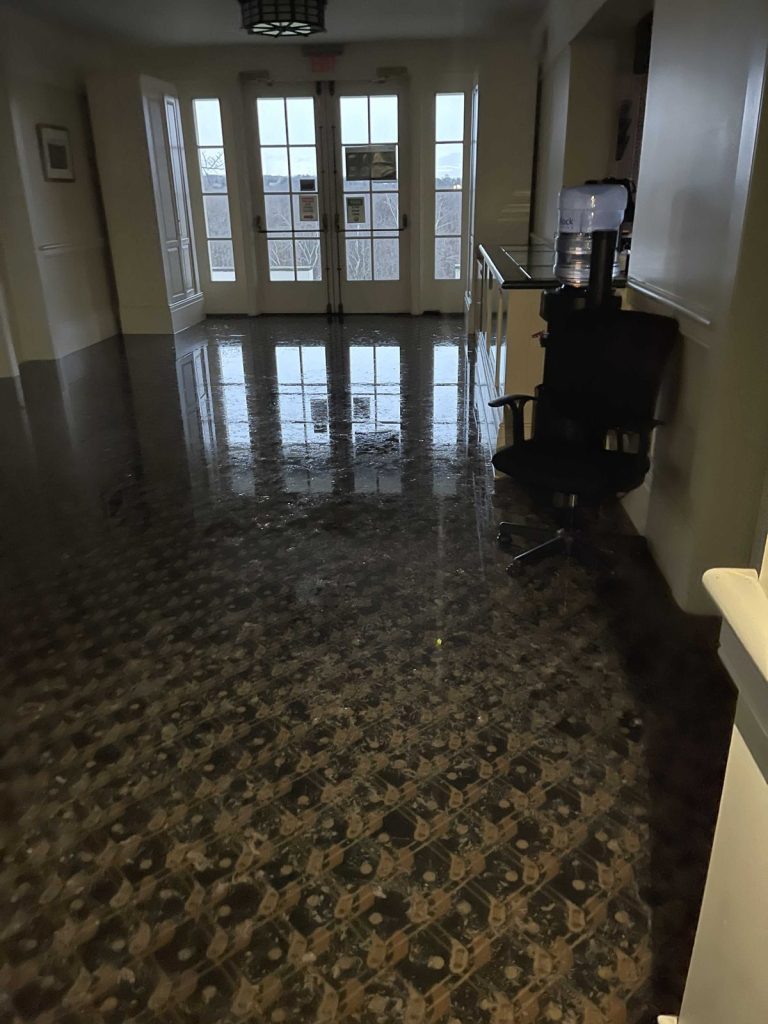
Sewage backup vs clean water flooding is a first-hour question of where the water came from. Clean water starts at a supply line, water heater, or appliance. A sewage backup rises from drains and carries waste. In NY homes, the source decides what is safe to do, who to call, and which coverage may apply.
Written by the Bowerman Cleaning and Restoration Team · September 16, 2026
Key Takeaways
- Look at the source first: water coming from above or from a supply line is usually clean, while water rising from floor drains, toilets, or tubs is usually sewage.
- Color, odor, and the main-valve test help confirm it: gray or brown water, a sewer smell, and water that keeps rising after the main is closed point to a backup.
- Safety in the first hour is not the same: clean water allows limited hands-on steps after power is safe; sewage means keeping people and pets out of the wet area.
- Record the source while it is visible, then call a plumber, the insurer, and, for sewage, a contaminated-water cleanup company.
- Coverage often differs: sudden pipe bursts, sewer backups, and outside flooding are frequently treated as three separate questions on a policy.
In This Guide
- How Can You Tell Which One You Have?
- What Should Happen in the First Hour?
- What Should Be Documented in the First Hour?
- Who to Call and How Coverage Differs
- Sewage Backup vs Clean Water Flooding FAQs
How Can You Tell Which One You Have?
Short answer: trace the water to where it entered; drains that push water up mean a backup, a broken line or appliance means clean water.
| Clue | Clean water flooding | Sewage backup |
|---|---|---|
| Where it starts | Burst pipe, supply hose, water heater, ceiling leak | Floor drain, toilet, tub, or shower at the lowest level |
| Color | Clear at the start | Gray, brown, or carrying solids |
| Odor | Little or none at first | Sewer or rotten-egg smell |
| Other fixtures | Drains work normally | Several drains slow, gurgle, or back up at once |
| Timing | Any time, often sudden | Often during heavy rain or after heavy water use |
| Shutting the main valve | Stops the water | Does not stop water already coming from the sewer |
The main shutoff test is one of the most useful clues. If closing the main water valve stops the flow, the source is the supply side. If water keeps rising from a drain with the main closed, it is coming from the sewer line. For how water sources are graded, see the live guide to water damage categories. A full overview of the work is in what is sewage damage cleanup.
What Should Happen in the First Hour?
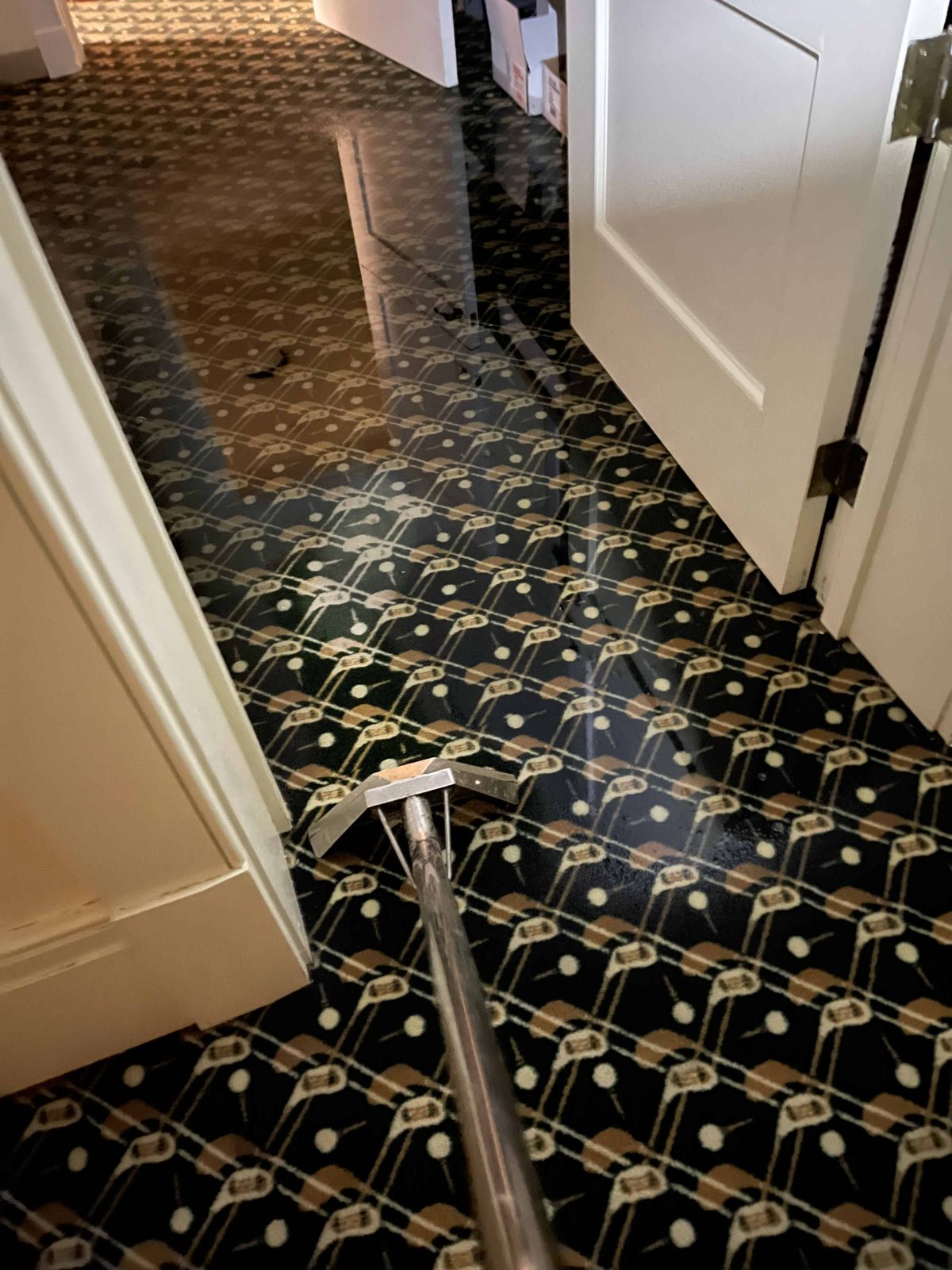
Short answer: clean water allows limited hands-on steps after power is safe; sewage means keeping people out, stopping drain use, and leaving the wet area alone until help arrives.
With clean water flooding, the main valve is closed, and power to wet areas is shut off if it is safe to reach the panel without standing in water. Valuables can then be lifted off wet floors, and light blotting is usually low risk in the first hours. The live checklist of what to do first after water damage covers that sequence.
With a sewage backup, the priority is keeping people and pets away from the water. Fixtures in the building should not be used, because every flush or drain can add to the backup. A household wet vac can spread contamination through its exhaust and hose, and bleach is not a first-hour plan. OSHA treats flood and wastewater work as a job that calls for gloves, boots, and eye protection at a minimum, so wading in to salvage items is a poor first move.
| First-hour step | Clean water flooding | Sewage backup |
|---|---|---|
| People and pets | Keep them in dry rooms, off wet floors near outlets | Keep everyone out of the wet area |
| Power | Shut off if it is safe to reach the panel | Same; do not stand in the water to reach a switch or panel |
| Stopping the water | Close the main valve or the fixture supply | Closing the main will not stop a sewer backup; stop using drains and toilets |
| What can be moved | Lift valuables and furniture off wet floors after power is safe | Photograph from a dry spot; do not wade in to salvage |
| What to avoid | Standing in water near electrical outlets or appliances | Household wet vacs, a bleach-and-mop plan, and flushing fixtures |
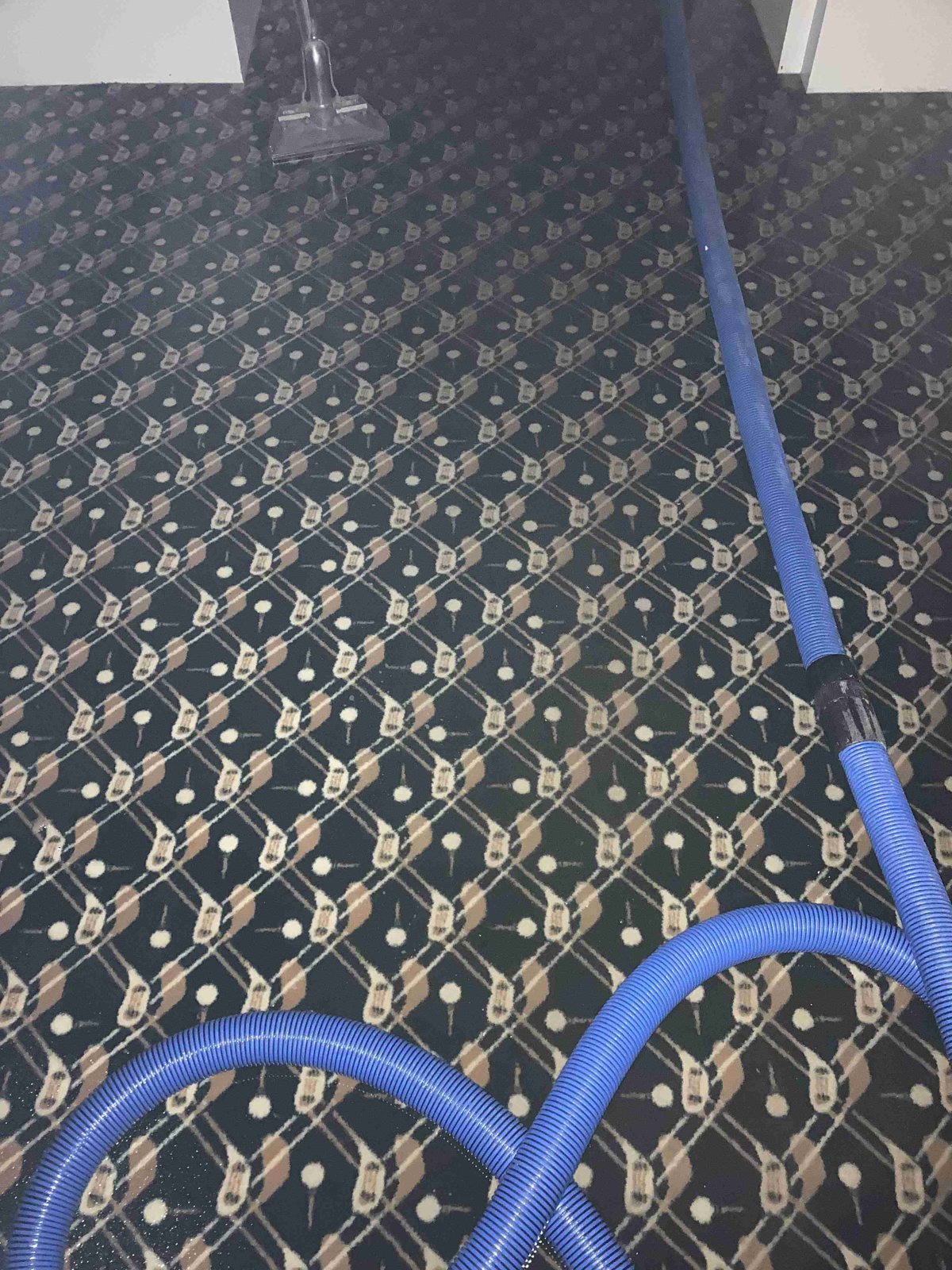
Sewage backup at a Westchester County, NY property? Bowerman Cleaning and Restoration answers 24/7.
What Should Be Documented in the First Hour?
Short answer: photos of where the water entered, which fixtures backed up, how high it reached, and what the plumber found help the insurer and the later cleanup crew reach the same answer.
The first people on site often disagree about the source once the water is gone, so the evidence is easiest to collect while it is still visible. A short record made in the first hour supports the plumber, the claim, and whoever handles the cleanup later.
- Entry point: a photo of the drain, toilet, or tub pushing water up, or of the failed pipe, hose, or appliance.
- Water line: a photo with a tape measure against the wall shows how high the water reached and how far it spread.
- Fixture behavior: a note of which drains gurgled or backed up, and whether closing the main valve stopped the flow.
- Timing: when the water was found, and whether it was raining hard or a washer or dishwasher was running.
- Plumber findings: the written cause, such as a root intrusion, a collapsed lateral, or a burst supply line, plus any camera inspection notes.
- Items in the wet area: a quick list or photo of damaged belongings, taken before anything is discarded.
If neighbors on the same street have water coming up through their drains at the same time, the problem may be in the municipal main, and the local sewer or public works department should be told. The EPA notes that sanitary sewer overflows often follow heavy rain, when storm and groundwater enter the sewer. A supply-line leak that also triggered a drain backup should be recorded as both events. For a clean-water example of how a source is traced and documented, see burst pipe flood restoration.
Who to Call and How Coverage Differs
Short answer: clean water usually starts with a plumber and a drying crew; sewage starts with a plumber and a contaminated-water cleanup company, and the policy wording differs for each.
| Question | Clean water flooding | Sewage backup |
|---|---|---|
| First call | Plumber or building maintenance to stop the leak | Plumber to clear the line; sewer department if neighbors are affected |
| Cleanup company | A water-damage or drying crew | A contaminated-water cleanup crew, in addition to the plumber |
| Typical coverage question | Was it sudden and accidental? | Does the policy include a water or sewer backup endorsement? |
| Outside water entering | Surface flooding is usually a flood policy question | Backup through drains is usually an endorsement question |
Many standard homeowners policies treat a sudden pipe burst differently from a backup through a drain, and outside surface water is handled by flood insurance, such as policies through FloodSmart. Notify the insurer promptly, and keep the photos and the plumber’s notes; coverage is not automatic. The live guide to water damage insurance coverage explains those lines in more detail. Clean water losses are handled through water damage restoration, while contaminated losses fall under sewage damage cleanup and restoration. Once the source is identified, the comparison of sewage vs water damage cleanup covers how the professional work itself differs, including tear-out and sanitizing. The live comparison of biohazard cleanup vs sewage cleanup shows where sewage sits among other contaminated jobs. The sewage damage insurance coverage guide covers this in more detail.
Sewage Backup vs Clean Water Flooding FAQs
Is water from a floor drain always sewage?
Not always. A clean-water leak can drain toward a floor drain. If the drain itself is pushing water up, or the water is gray or smells, treat it as sewage.
Does shutting off the main water stop a sewage backup?
No. It stops supply water, but sewage comes from the drain side. Stopping water use in the building helps limit the backup.
Who should be called first, a plumber or a cleanup company?
If a supply line is still running, a plumber or someone who can shut the water comes first. For a sewage backup, call a plumber to address the line and a contaminated-water cleanup company for the standing water; those calls can be made together. If neighbors have the same problem, the local sewer or public works department should be notified as well.
Should the insurance company be called in the first hour?
Yes, once people are safe and the water has been stopped as far as it can be. Photos and a short note about the source should be ready, or taken right after the call. The cause and the policy wording, not the first-hour phone call alone, decide what is covered. The what to do first after a sewage backup guide covers this in more detail.
What if neighbors also have water coming up through their drains?
That pattern points to the municipal sewer main rather than a single home. The local sewer or public works department should be notified, and each home still needs its own first-hour safety steps and documentation.
Not sure whether a Westchester NY basement has a sewage backup vs clean water flooding? Bowerman Restoration LLC d/b/a Bowerman Cleaning & Restoration, 7 Intervale Street, White Plains, NY 10606, answers 24/7 at (844) 269-3762.