
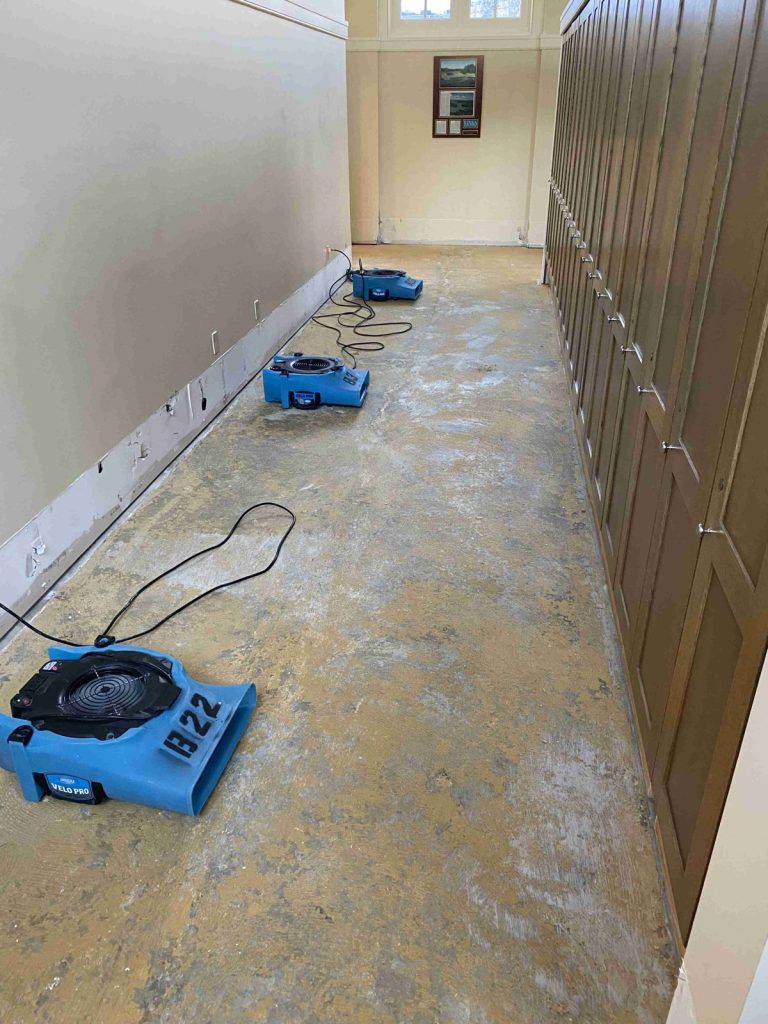
Sewage vs water damage cleanup comes down to contamination. Clean water from a supply line can often be extracted and dried in place, while sewage in NY homes calls for protective gear, removal of soaked porous materials, cleaning and disinfection of what stays, and then drying. The equipment looks similar, but the steps and the tear-out are not.
Written by the Bowerman Cleaning and Restoration Team · September 10, 2026
Key Takeaways
- Clean water from a supply line or appliance can often be dried in place if the response is fast.
- Sewage is treated as contaminated, so soaked porous materials are removed rather than dried.
- Sewage cleanup adds steps: protective gear, containment, cleaning, and disinfection before drying.
- Clean water can become contaminated if it sits, touches soil, or mixes with backflow.
In This Guide
- What Is the Difference at a Glance?
- Why Does Sewage Cleanup Involve More Tear-Out?
- Which Sanitizing Steps Does Sewage Cleanup Add?
- When Does Clean Water Damage Become a Sewage-Level Job?
- Sewage vs Water Damage Cleanup FAQs
What Is the Difference at a Glance?
Short answer: same extraction and drying tools, but sewage adds removal, cleaning, and disinfection.
| Factor | Clean water damage cleanup | Sewage cleanup |
|---|---|---|
| Typical source | Burst supply line, appliance leak | Toilet or drain backflow, sewer backup |
| Water category | Usually Category 1 at the start | Category 3 |
| Carpet and pad | Often dried and saved if caught early | Usually removed and discarded |
| Drywall | Often dried in place | Cut above the wet line and removed |
| Protective gear | Basic | Gloves, boots, eye and respiratory protection |
| Containment | Rarely needed | Often used to protect clean areas |
| Disinfection | Not usually needed | Required on surfaces that stay |
| Typical timeline | Days of drying | Longer, because of removal and cleaning first |
Water categories are defined in the live guide to water damage categories. The live comparison biohazard cleanup vs sewage cleanup shows where sewage sits next to other contaminants. How to tell a sewage backup from clean water flooding in the first hour, including what to record and who to call, is covered in sewage backup vs clean water flooding. A full overview of the work is in what is sewage damage cleanup.
Why Does Sewage Cleanup Involve More Tear-Out?
Short answer: porous materials soak up contamination that cannot be cleaned out, so they are removed instead of dried.
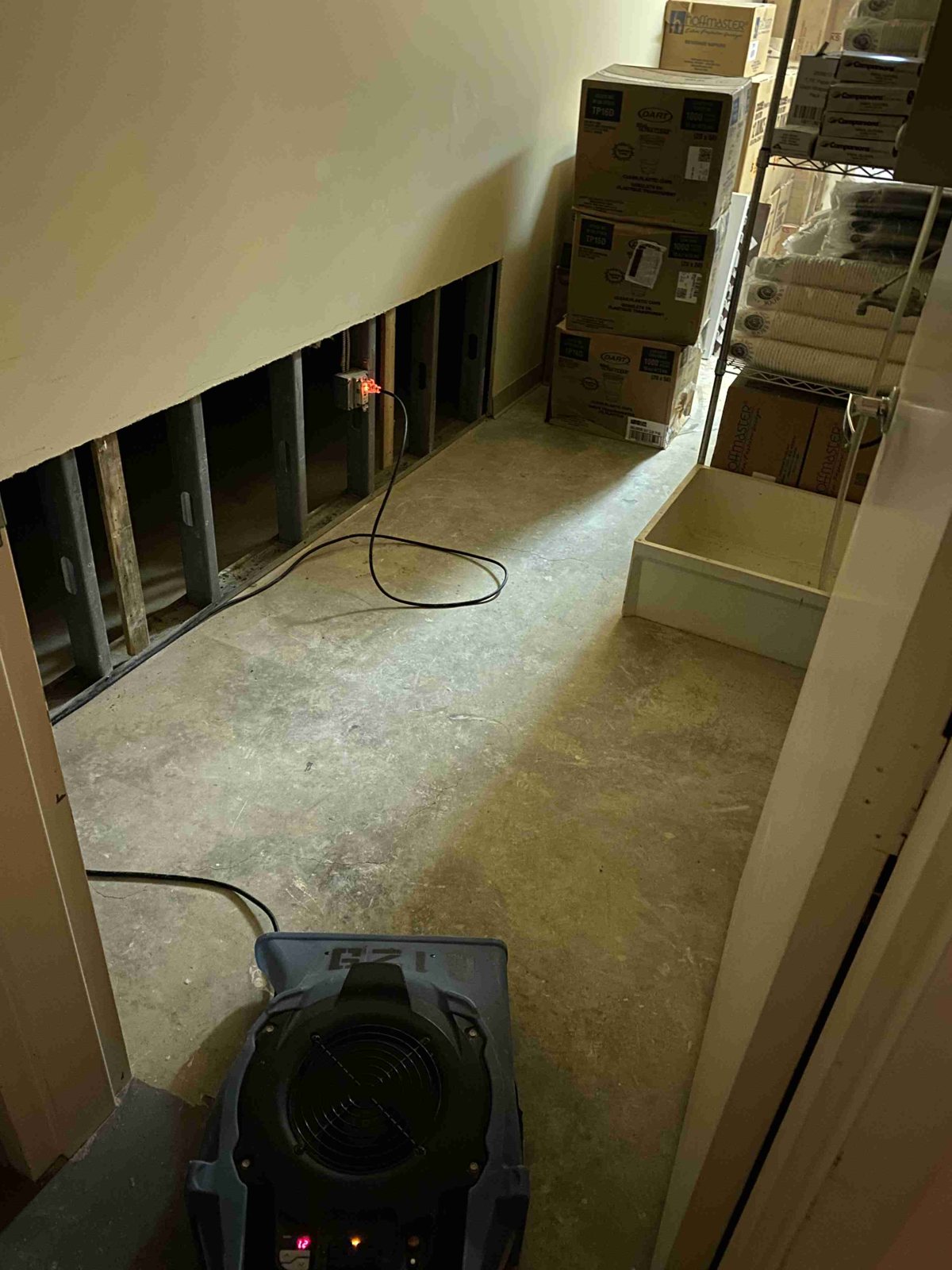
In a clean-water loss, drying equipment can pull moisture out of carpet, pad, and drywall, and those materials go back into service. In a sewage loss, the same materials absorb bacteria and residue along with the water. Drying them only leaves the contamination in place. That is why carpet pad, drywall below the wet line, and insulation are usually cut out.
The CDC cleanup guidance recommends removing drywall and insulation contaminated with sewage or floodwater. The overall sequence of a water job, from inspection to repair, is laid out in the step by step process of water damage restoration.
Sewage backup at a Westchester County, NY property? Bowerman Cleaning and Restoration answers 24/7.
Which Sanitizing Steps Does Sewage Cleanup Add?
Short answer: cleaning every surface that stays, then applying a registered disinfectant for its full contact time.
- Contain the area. Plastic barriers and closed doors keep residue from spreading.
- Extract the water. Standing wastewater is pumped or vacuumed out with dedicated equipment.
- Remove porous materials. Soaked carpet, pad, drywall, and insulation are bagged and removed.
- Clean surfaces. Remaining hard surfaces and framing are cleaned with detergent to remove residue.
- Disinfect. A product from the EPA list of registered disinfectants is applied and left wet for the label contact time.
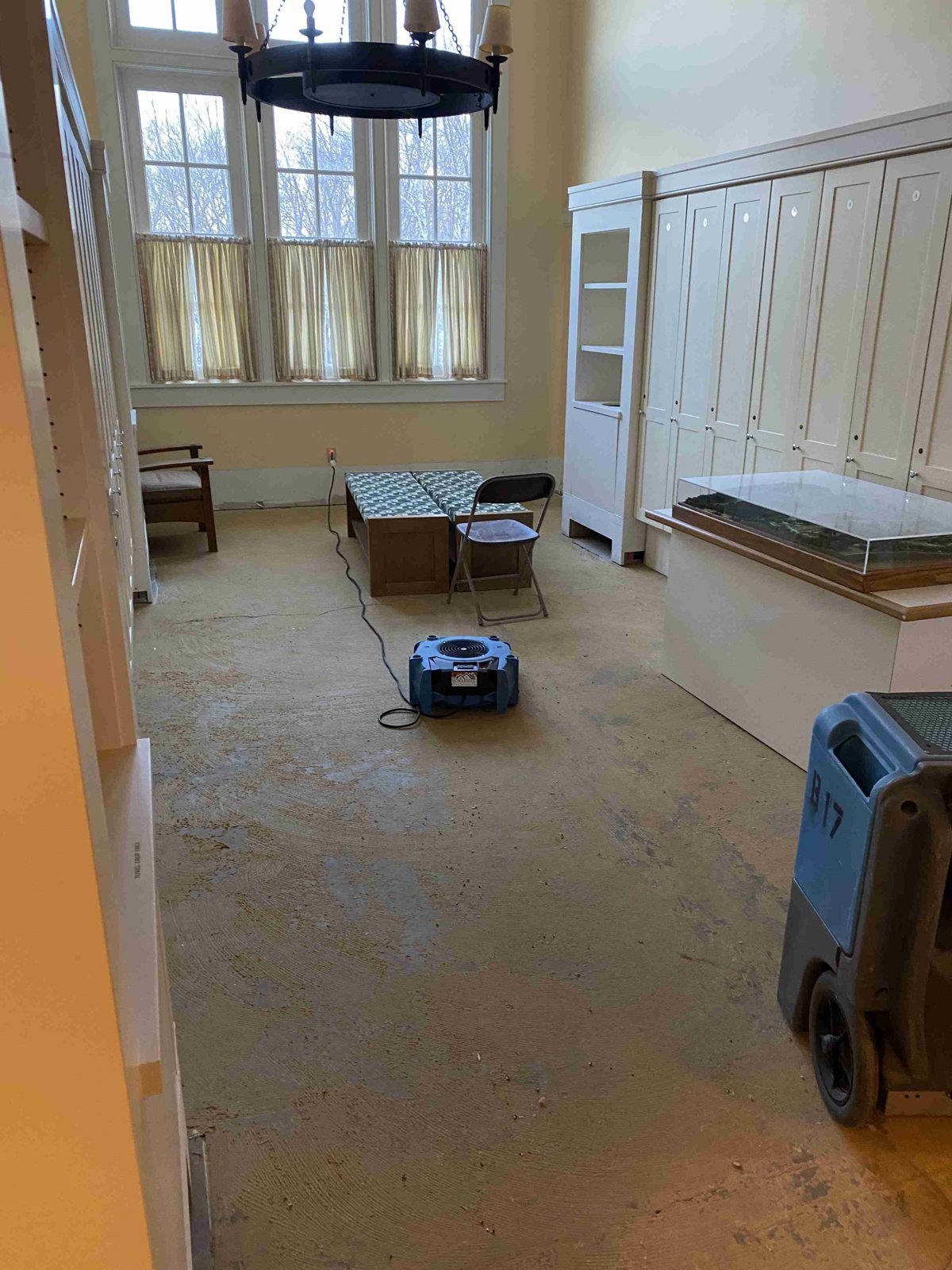
- Dry and verify. Air movers and dehumidifiers run until readings show the structure is dry.
Clean-water jobs usually start at step 2 and skip steps 3 through 5 for most materials. The drying stage that both share is covered in the water damage drying process. The sewage sanitizing process guide covers this in more detail.
When Does Clean Water Damage Become a Sewage-Level Job?
Short answer: when it sits long enough to degrade, picks up soil or other contaminants, or mixes with backflow.
Water from a burst pipe starts clean, but it does not stay that way. After a day or two in a warm basement, or after running across dirty floors and through wall cavities, it can be treated as Category 2 or 3. A supply line leak that triggers a floor drain backup is a mixed loss and is handled as contaminated from the start.
The live guide to water damage category and class explains how categories shift over time, and the case study on burst pipe flood restoration shows a clean-water job. When contamination is involved, the sewage damage cleanup and restoration page outlines the full scope. The sewage backup vs flood water cleanup guide covers this in more detail.
Sewage vs Water Damage Cleanup FAQs
Is sewage cleanup more expensive than water damage cleanup?
Usually, because more material is removed and replaced and extra cleaning and disinfection steps are needed.
Can the same equipment be used for both?
Extraction and drying equipment overlap, but anything used on sewage must be cleaned and disinfected before it is used elsewhere.
Is a toilet overflow sewage?
It depends. Clean tank water or urine-only overflow is usually Category 2. Overflow containing feces is treated as Category 3, the same as sewage.
Does clean water damage ever need disinfection?
Sometimes. If the water sat for a while or touched contaminated surfaces, cleaning and disinfection may be added.
How long does each type take?
Clean-water drying often takes a few days. Sewage cleanup takes longer because removal, cleaning, and disinfection come before drying.
Unsure whether a Westchester NY loss calls for sewage vs water damage cleanup? Bowerman Restoration LLC d/b/a Bowerman Cleaning & Restoration, 7 Intervale Street, White Plains, NY 10606, answers 24/7 at (844) 269-3762.