
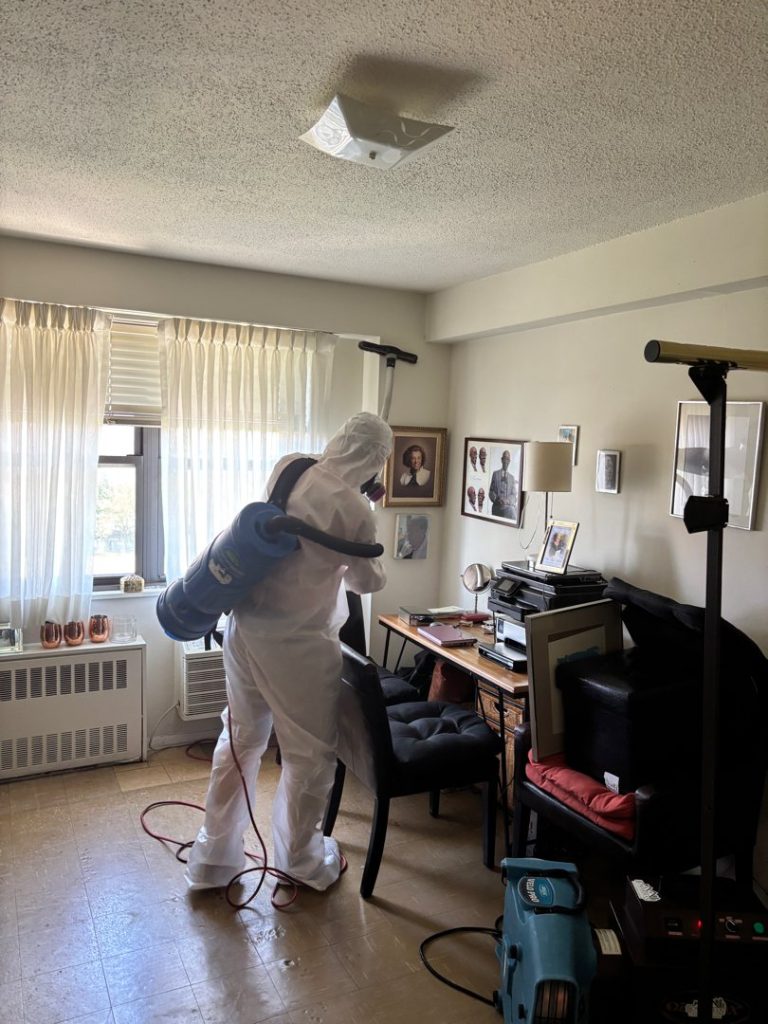
Biohazard cleanup in apartments follows the same safety steps as a house, with extra coordination. In NY buildings, shared walls, hallways, elevators, and HVAC can spread contamination or odor if the unit is not contained. The building manager usually needs to be involved for access, waste removal, and any work in common areas.
Written by the Bowerman Cleaning and Restoration Team · October 27, 2026
Key Takeaways
- Containment matters more in a building, because hallways and shared air can carry odor or contaminants.
- The property manager is usually part of the plan for access, parking, elevators, and after-hours work.
- Common areas and adjacent units may need a check if fluids or odor have traveled.
- Waste has to leave through shared spaces in a controlled way, not in the regular building trash.
In This Guide
- How Is Biohazard Cleanup in Apartments Different From a House?
- Who Should Be Involved When an Apartment Is Affected?
- How Are Containment, Air, and Waste Handled in a Building?
- How Are Neighbors and Privacy Considered?
- Biohazard Cleanup in Apartments FAQs
How Is Biohazard Cleanup in Apartments Different From a House?
Short answer: shared access, neighbors, building rules, and the chance that contamination or odor will leave the unit.
| Building factor | Why it changes the job | Typical extra step |
|---|---|---|
| Hallways and stairs | Tracking or odor can reach other residents | Containment at the door; protected walk-off path |
| Elevators | Waste and crews must move through a shared cab | Reserved time, protection of walls and floors |
| Shared walls and stacks | Fluids or odor can travel to the unit next door or below | A check of adjacent spaces when the scope suggests it |
| HVAC and vents | Air can move odor between units | Containment and careful air management inside the unit |
| Building rules | Access hours, insurance certificates, and vendor sign-in | Coordination with management before arrival |
| Trash rooms | Regulated waste cannot go in the compactors | A separate, planned waste path |
The live biohazard remediation page covers the core work. In a building, that work is planned around other occupants. OSHA’s bloodborne pathogens guidance still applies to the crew; the extra task is keeping residents out of the controlled path. A full overview of the work is in what is biohazard cleanup.
Who Should Be Involved When an Apartment Is Affected?
Short answer: the occupant or their representative, the building or property manager, and, if needed, the insurer and adjacent neighbors.
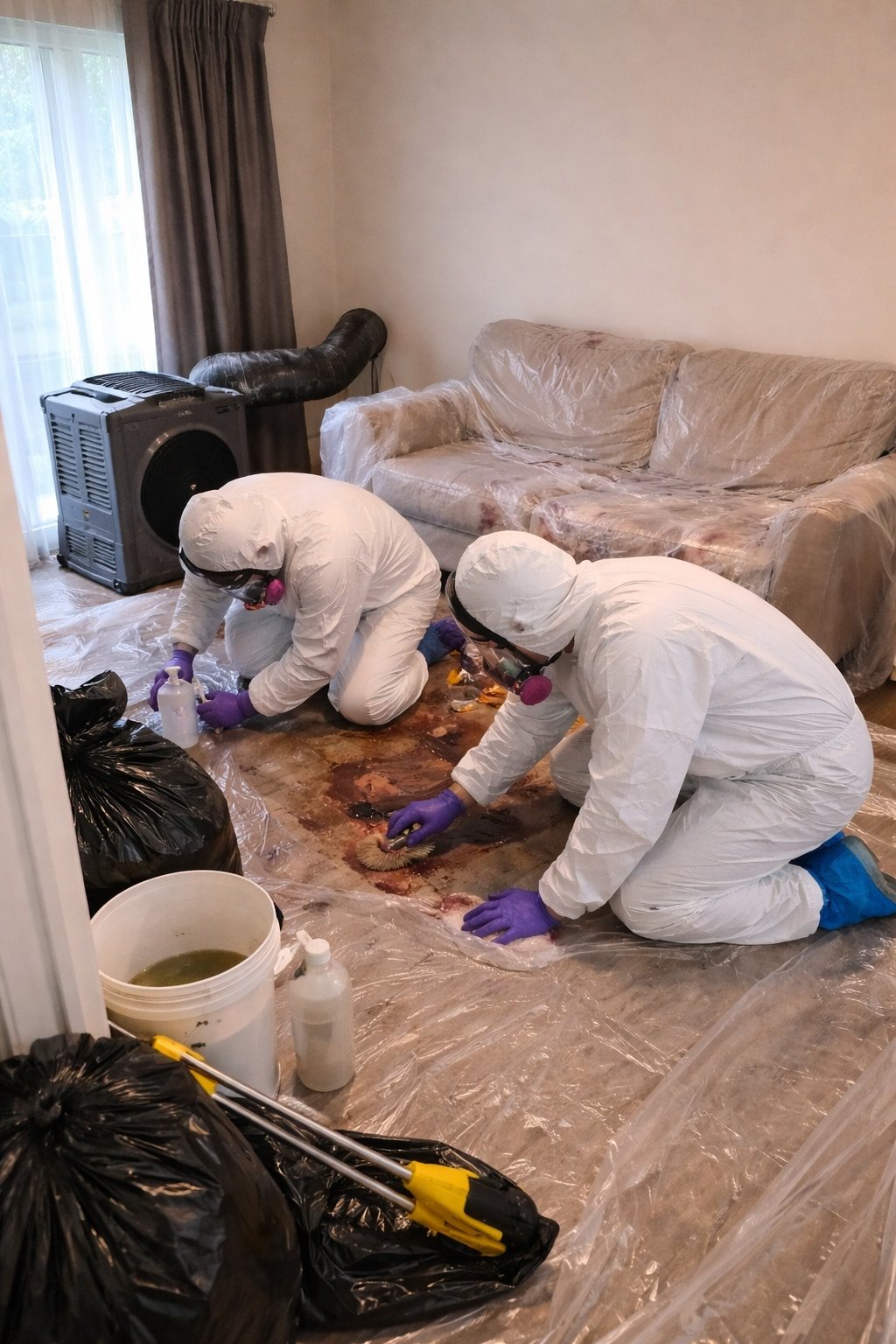
A renter, family member, or estate representative can authorize work inside a unit, but management usually controls keys, elevators, loading docks, and after-hours entry. Telling the manager early prevents a porter from being sent in with household supplies, and it gives the building a chance to plan hallway protection. If an adjacent unit may be affected, that conversation should happen before demolition opens a floor or wall.
The live comparison of biohazard company vs janitorial service is especially relevant in apartment buildings, where a night crew already works in the halls. That crew should not be asked to clean blood or a death scene. Questions to settle with both the company and management are listed in biohazard cleanup company questions.
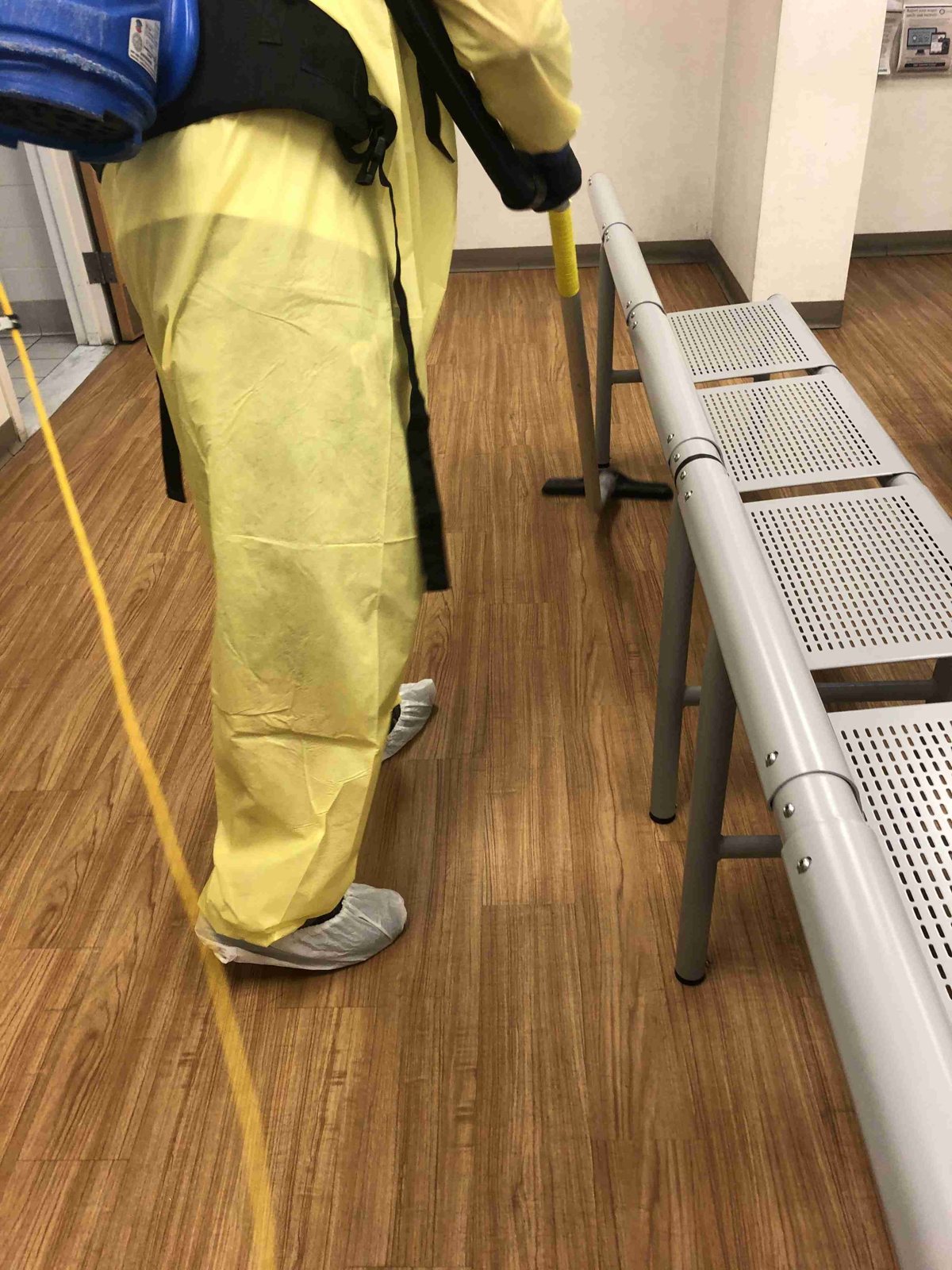
A biohazard or trauma cleanup question in Westchester County, NY? Bowerman Cleaning and Restoration answers 24/7.
How Are Containment, Air, and Waste Handled in a Building?
Short answer: the unit is isolated first, shared routes are protected, and packaged waste is taken out on a planned path.
Barriers at the door, protective floor coverings in the hall, and a reserved elevator time are common. Air movers are used so they do not push odor into a corridor or a shared shaft. Disinfection of remaining surfaces follows cleaning, using a product suited to the job; the EPA lists selected registered disinfectants. The live guide to biohazard cleanup equipment shows the gear used inside the unit.
Waste bags and containers should not sit in a trash room or a stairwell. The live article on materials removed in biohazard cleanup explains what often leaves a residential unit. In a building, those items also need a loading plan so they do not travel unprotected past other doors. The death cleanup in a home guide covers this in more detail.
How Are Neighbors and Privacy Considered?
Short answer: with limited hallway time, discreet access, and communication that stays factual and brief.
- Work can be scheduled to reduce traffic in the corridor.
- Descriptions should stay general when neighbors need only to know that a unit is being serviced.
- Adjacent units are checked if odor or moisture suggests a shared assembly is involved.
Discretion is part of the job in a multi-family building. The live guide to biohazard cleanup mistakes includes leaving a scene open to hallways or using household fans at the door, both of which are harder on neighbors and on the cleanup itself.
Biohazard Cleanup in Apartments FAQs
Does the landlord or the tenant arrange biohazard cleanup in apartments?
It depends on the lease, the cause, and who is responsible for the unit. Management should still be notified so access and common areas can be planned, even when a tenant or estate hires the crew.
Can other residents stay home while the unit is cleaned?
Usually yes, if the work is contained and the waste path is controlled. A brief notice may still be needed if hallways or elevators will be used for removal.
What if odor is noticed in the hallway or the apartment next door?
That should be reported to management and included in the assessment. Shared stacks, vents, or a door left open can move odor outside the original unit.
Is building insurance involved?
It can be, along with a renter’s or owner’s policy. Who pays is a coverage question; the cleanup still needs to happen so the building and the unit are safe.
Can the building porter do a first pass?
No. A regular building cleaner should not be asked to handle blood, bodily fluids, or a death scene. The unit should stay closed until a proper cleanup is arranged. The unattended death cleanup process guide covers this in more detail.
Arranging biohazard cleanup in apartments in a Westchester NY building and need a plan that includes management and neighbors? Bowerman Restoration LLC d/b/a Bowerman Cleaning & Restoration, 7 Intervale Street, White Plains, NY 10606, answers 24/7 at (844) 269-3762.