
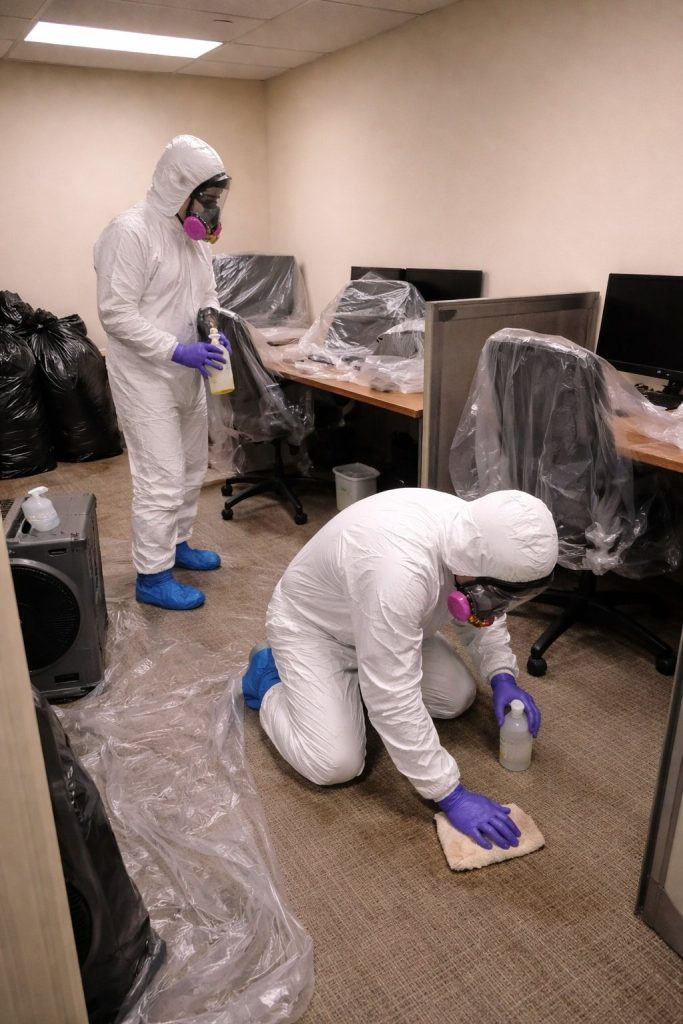
Trauma scene cleanup is the work of cleaning a property after a serious injury or traumatic event, once police and first responders have left and the scene has been released. In NY, that work covers blood and other fluids, affected materials, and odor, using protective equipment. It is not part of the investigation.
Written by the Bowerman Cleaning and Restoration Team · October 21, 2026
Key Takeaways
- Cleanup starts after the scene is released, not while an investigation is still underway.
- Blood and fluids often travel into grout, padding, and cavities that are not obvious at first.
- Porous materials are frequently removed, then remaining surfaces are cleaned and disinfected.
- Trauma scene cleanup is a type of biohazard work, not a separate category with different safety rules.
In This Guide
- What Does Trauma Scene Cleanup Involve?
- What Happens After Police and First Responders Leave?
- How Are Fluids, Materials, and Odor Handled?
- Who Should Not Take On the Cleanup?
- Trauma Scene Cleanup FAQs
What Does Trauma Scene Cleanup Involve?
Short answer: released-scene assessment, containment, removal of affected materials, cleaning and disinfection, odor treatment, and regulated waste handling.
| Stage | What happens | Why it matters |
|---|---|---|
| Release and assessment | The site is reviewed only after authorities have finished | Cleanup must not disturb an active investigation |
| Containment | The affected area is isolated | Prevents tracking into hallways and other rooms |
| Removal | Porous, saturated materials come out | Fluids hide in pad, fabric, and sometimes subfloor |
| Cleaning and disinfection | Remaining surfaces are cleaned, then treated | Disinfectant works only after soil is removed |
| Waste and closeout | Regulated waste is packaged; the area is checked | Ordinary trash service cannot take this material |
The live biohazard remediation service page includes trauma scenes in this category. The already published comparison of biohazard cleanup vs trauma scene cleanup explains how trauma work sits inside the broader biohazard category; this guide focuses on what the cleanup itself includes once responders have left. A full overview of the work is in what is biohazard cleanup.
What Happens After Police and First Responders Leave?
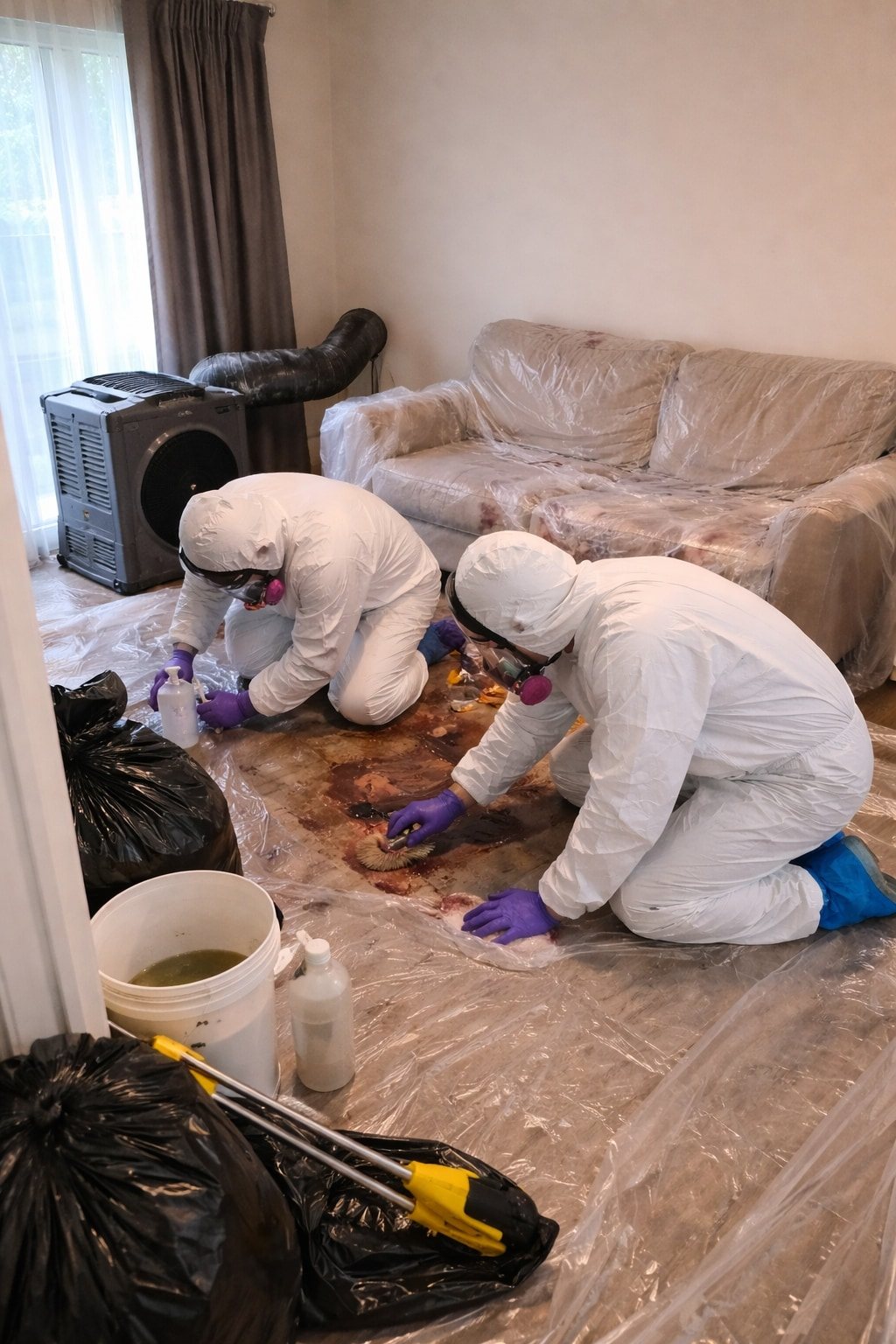
Short answer: the property is often still contaminated, even though the emergency itself is over, and a cleanup plan can then begin.
Emergency crews treat the people involved and, when needed, secure evidence. They do not leave a residence or workplace ready for ordinary use. Blood, bodily fluids, and damaged contents can remain on floors, walls, furnishings, and in vehicles. Until a cleanup is finished, those areas should be kept closed to family, staff, and a regular cleaning crew.
If the event was a crime, investigators must release the scene first. The live comparison of biohazard cleanup vs crime scene cleanup describes that line. OSHA’s bloodborne pathogens guidance is why technicians treat remaining blood and fluids as potentially infectious, even when the room looks only stained.
A biohazard or trauma cleanup question in Westchester County, NY? Bowerman Cleaning and Restoration answers 24/7.
How Are Fluids, Materials, and Odor Handled?
Short answer: the path of the contamination is traced, materials that cannot be cleaned are removed, and odor is treated at the source.
Fluids move along grout lines, under baseboards, and into carpet pad. A wall that looks lightly marked can hide saturation in the cavity behind it. Those findings decide what is cleaned in place and what leaves the property. The live article on materials removed in biohazard cleanup lists the kinds of contents and building materials that are often taken out.
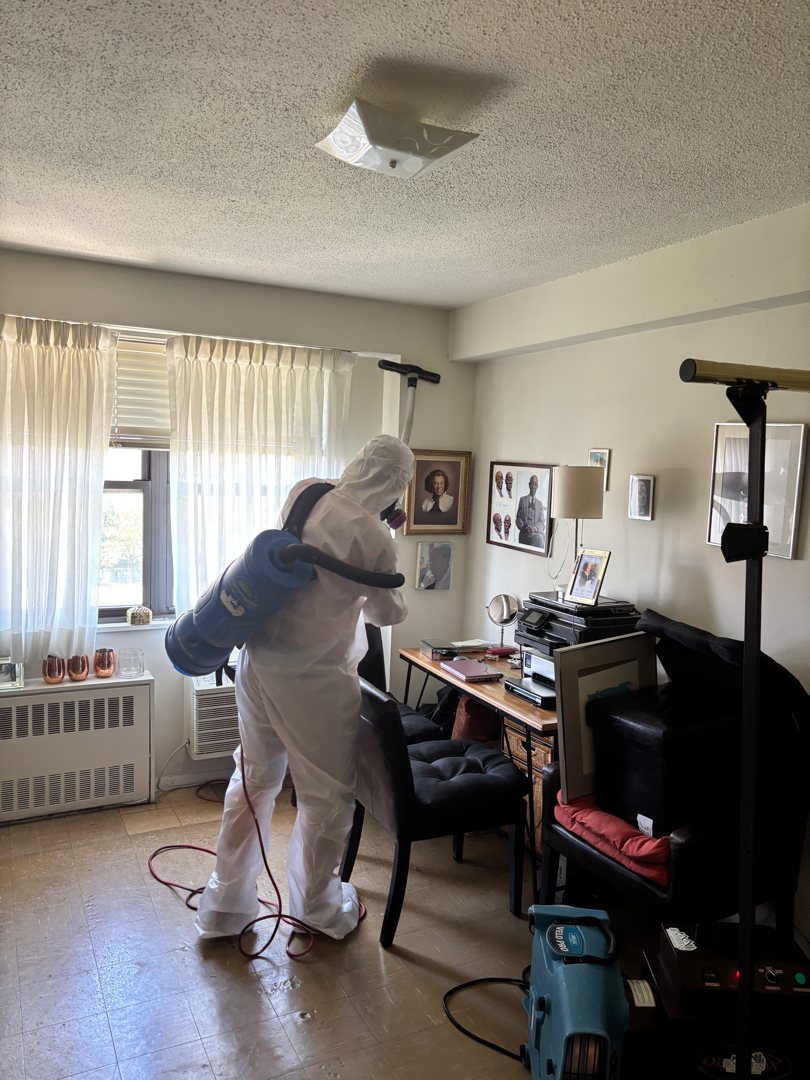
Odor is addressed after removal and cleaning, not covered with fragrance. The EPA lists selected registered disinfectants used on remaining surfaces. Equipment for application and airflow is covered in biohazard cleanup equipment. A trauma scene in a commercial space still follows the same safety steps; only access and after-hours planning may change.
Who Should Not Take On the Cleanup?
Short answer: family, coworkers, and janitorial staff should not be asked to clean blood or trauma residues with household supplies.
- There is a health risk from blood and other potentially infectious materials.
- Household cleaners and trash bags are not a complete or proper disposal plan.
- Well-meaning cleanup can spread contamination or, if a case is still open, interfere with evidence.
The live article on biohazard cleanup mistakes covers attempts to clean a scene too soon or with the wrong tools. The comparison of biohazard company vs janitorial service is also relevant in offices and buildings, where a night crew may be on site but is not equipped for trauma work.
Trauma Scene Cleanup FAQs
Is trauma scene cleanup the same as crime scene cleanup?
A crime scene is one kind of trauma scene, and it can be cleaned only after investigators release it. Trauma scene cleanup also covers injuries and events that were never a crime. The death cleanup in a home guide covers this in more detail.
Do first responders clean the blood before they leave?
Generally no. Their job is emergency care and, when needed, investigation. The property is usually still in need of cleanup after they go.
Can a trauma scene be in a car or workplace, not just a home?
Yes. The same rules apply: wait for release, contain the area, remove what cannot be cleaned, and handle waste properly.
Will insurance help with trauma scene cleanup?
Some policies respond to sudden events, depending on the cause and the coverage. Documentation from the assessment helps a claim review, but coverage is not automatic.
How soon should trauma scene cleanup start?
As soon as the scene is released. Delay lets fluids travel farther and makes odor harder to resolve, especially in warm rooms. The unattended death cleanup process guide covers this in more detail.
Facing trauma scene cleanup at a Westchester NY home or workplace after first responders have left? Bowerman Restoration LLC d/b/a Bowerman Cleaning & Restoration, 7 Intervale Street, White Plains, NY 10606, answers 24/7 at (844) 269-3762.